Teresina
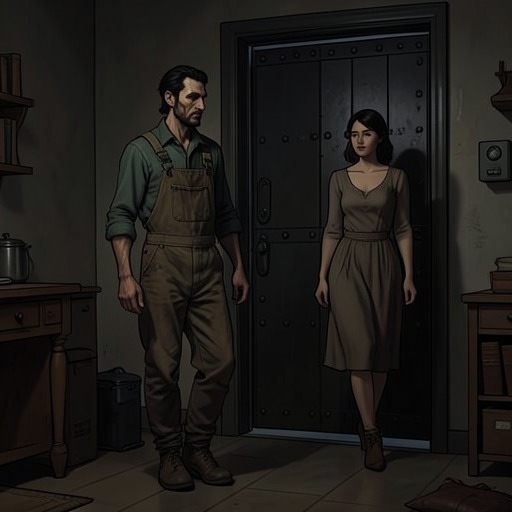
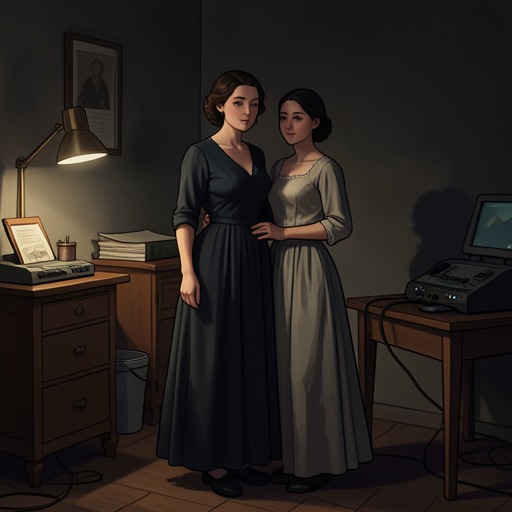
LeilaTeresina is a longtime servant in Marcello Trento’s household and one of the closest observers of Lelia Camin’s private distress. Devoted to Marcello and protective of Lelia, she moves between practical caregiving and anxious discretion: she attends to a frightening episode in Marcello’s study, conceals Lelia’s nighttime absences, and eventually tells Donna Fedele what she has witnessed. Her loyalty makes her a quiet but consequential intermediary, though it also leaves her struggling to judge when protecting Lelia means keeping a secret and when it means seeking help.
Identity and Service
Teresina’s devotion to Marcello is presented as an extension of her long service to his late wife. She had been devoted to the wife for twenty years; the woman had died two years before the events in the study. When Teresina sees Marcello suffer a sudden, disturbing episode, she is frightened enough to summon help and send for Lelia. Marcello recovers and describes what happened as a fit of sleep. Teresina accepts that account with visible relief, pleased that her master continues to believe he had merely slept.
Her response is both watchful and restrained. She returns to the study still shaken, but approaches Marcello smiling so that he will not see her fear. She does not press him with questions after he has recovered. The scene establishes her characteristic method: she notices physical signs, acts quickly when she believes someone may be in danger, and then tries to spare the person she serves further alarm. The episode’s seriousness is underscored by Marcello’s private recollection that his father had experienced a similar spell at the same age, before a physician warned the family of arteriosclerosis and the father died five months later. Teresina does not share that knowledge in the scene; for her, the immediate task is to care for Marcello and preserve his composure.
Her working life also places her among the household’s confidants and messengers. She once nursed Andrea Trento’s injured ankle after an outing with him, and later remembers that connection when she helps prepare Massimo Alberti for his first meeting with Marcello. She asks Massimo to act tired from the journey and retire early, explaining that Marcello is not in good health and that the meeting will move him. She adds that Lelia wants the same. Her intervention is practical, but it also shows how carefully she attends to the emotional and physical limits of the people around her.
A Watchful Witness to Lelia Camin
Teresina reads Lelia’s conduct through small, repeated signs rather than through confidences. She has befriended Donna Fedele and told her about the flowers and the closed windows at the house. Those details lead Donna Fedele to suspect that Lelia is in love but ashamed of her feelings, and that she feels bound by honor to Andrea’s memory and by trust in Marcello. Teresina does not present this interpretation as certainty: her own understanding of Lelia shifts, and she knows the young woman can be difficult to read.
After Lelia obtains a key to Velo Park, the signs become harder to dismiss. For two evenings she goes alone after dark and remains there for hours. Teresina does not know what Lelia does inside the park, but she is made to tell Marcello that Lelia is in bed with a headache whenever he asks after her. She must then wait at the gate until eleven; on one night Lelia returns at midnight. Teresina is frightened by the secrecy and asks Don Aurelio to convey the situation to Donna Fedele, who has been unwell and absent from her usual visits. The report is not a betrayal in Teresina’s eyes so much as an appeal for guidance: she is afraid, but equally afraid of what may happen if she speaks without Lelia’s consent.
When Lelia insists on going to the park again, Teresina begs and threatens to tell, but receives a severe rebuke and settles for hoping it will be the last time. She is due to go to Schio the following morning. Before leaving, Lelia takes a sealed letter from her desk, beside another letter that she had handled repeatedly on the evening Massimo arrived. Teresina notices these objects and gestures, although she cannot know all that they mean. Her attention to them reflects her position throughout: she can see the traces of Lelia’s inner conflict, but cannot compel Lelia to explain it.
Loyalty, Secrecy, and Household Conflict
Teresina’s suspicions about Lelia are sharpened by what she sees in Massimo. She senses that he is becoming more deeply attached to Lelia, and she has also noticed a subtle change in Marcello’s manner. She interprets the atmosphere as a possible encouragement of Massimo’s feelings, though Lelia herself remains enigmatic. When Massimo leaves, Lelia reacts with relief at first, then cautiously asks Teresina whether his departure might be connected to Don Aurelio’s departure and whether he intends to shorten his stay. Teresina’s answers become a means by which Lelia tests what others know without openly disclosing her own feelings.
After Marcello’s death, Teresina remains entangled in the household’s changing fortunes. The opening of his handwritten will establishes Lelia as universal heir and leaves Teresina a daily allowance of five lire, exempt from tax. The same notice reports that Girolamo da Camin has declared himself Lelia’s father and is expected to arrive that evening. Teresina’s place in the household is thus acknowledged materially, even as the inheritance and the arrival of Lelia’s biological father change the conditions of her service.
When Lelia later comes to the house to collect photographs of Andrea, Teresina is not expecting her. Lelia says she has come for the photographs left in Marcello’s room and in Massimo’s room, and makes clear that she will not return to the Trento family Villa Montanina. Teresina understands that Lelia intends to go alone and does not challenge her. She also tells Donna Fedele that Girolamo da Camin has left that morning. Afterwards, Teresina cries and insists that she had believed she was doing the right thing and had, in the end, told the truth. The account captures the cost of her intermediary role: she has tried to respect Lelia’s wishes, but fears that speaking or remaining silent may each have caused harm.
Under a New Master
Teresina’s loyalty to Lelia continues after a new household arrives at the villa. She receives the newcomers with Giovanni, but her face is funereal, in contrast to his near amusement at their unusual clothing. The new governess recognizes her as Lelia’s former maid and uses a familiar, popular form of Lelia’s name. The change of household is not merely a change of employers for Teresina: it places her in the daily company of a master whose behavior she finds increasingly repellent.
She has already resisted his lascivious advances, made despite her mature age. After meeting her rebuffs, he changes tactics, becoming flattering and respectful; having noticed her devotion to Lelia, he speaks to her at length about Lelia as if she were a device for listening. Teresina’s judgment of him is shaped by more than those advances. She also dislikes his parsimony, personal uncleanliness, and the contrast between his frequent religious observances and the conduct she has witnessed. Her growing revulsion gives her later protectiveness a sharper context: she is not simply a servant carrying messages, but someone wary of the power and motives of the man controlling Lelia’s home.
When Lelia shuts herself in her room and refuses to come out for dinner, Teresina is pressed to leave her alone. Lelia says she only wants solitude and time to write to Donna Fedele. Remembering Lelia’s earlier nighttime flight from the villa, Teresina is alarmed enough to spend the night sitting in the corridor. Her vigil is a physical expression of care: she cannot make Lelia confide in her, but she stays close in case the young woman tries to escape again.
Departure and Continuing Care
As Lelia prepares to travel, Teresina observes a striking change in her. Lelia turns to devotional books and sacred images that had previously meant little to her, studies a railway timetable, wonders aloud whether anyone would mind if her hair were cut, and asks whether Teresina has ever thought of becoming a nun. Teresina interprets these signs as a feverish disturbance rather than a settled religious vocation. Her insistence that Lelia should not be understood as having a genuine calling is her own reading of the situation, not a decision Lelia has explained to her.
At five-thirty in the morning, half an hour before the train, Teresina accompanies Lelia to the station at Arsiero with Giovanni, who carries the suitcase. Lelia asks Teresina to keep an eye on Giovanni and the cook, whom she suspects of being involved with one another, and gives detailed instructions for the day of her return. She wants a bath ready, many flowers in her room, and promises to send a telegram. Teresina takes comfort from these arrangements: they allow her to imagine Lelia’s departure as temporary and return as expected.
That expectation breaks when Teresina learns of Lelia’s escape from a custodian, who had heard the account from a railway worker at the station inn. She goes to Donna Fedele in tears, hoping that she might know what has happened. At first Teresina, too, suspects that Lelia may have fled to a convent, because of the recent devotional signs; the reported escape leaves her searching for an explanation rather than possessing one. Donna Fedele later discusses with Massimo the possibility of Lelia going with her to Turin and onward to her cousin in Santhià, while arranging for letters to be forwarded there. The evidence does not show Teresina directing those plans, but her report has brought Lelia’s disappearance to Donna Fedele’s attention at a moment when the older woman is deciding how to protect her.
Across these episodes, Teresina’s role is defined by attention: she notices a master’s failing health, a young woman’s guarded gestures, the hazards of a secret night journey, and the unsettling conduct of a new employer. Her care is neither omniscient nor unambiguous. She sometimes lies for Lelia, sometimes reports what she knows, and sometimes mistakes signs of spiritual retreat for an impending convent life. The tension between those choices makes her more than a household witness. She is one of the people through whom Lelia’s private crisis becomes visible to others, and whose practical acts of watchfulness help preserve a path back to care.