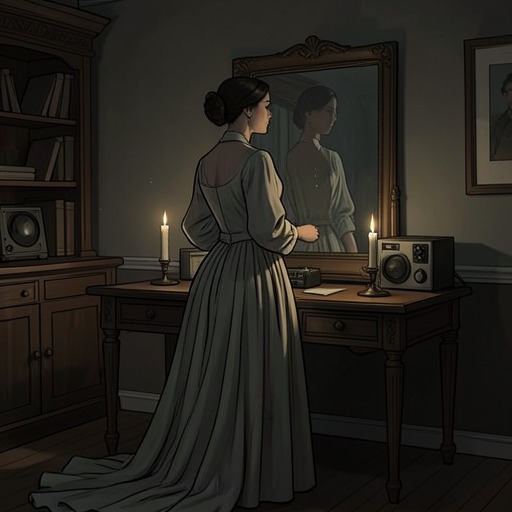
La riconciliazione di Lelia e Massimo a Pian di Nava
LeilaThe reconciliation of Lelia and Massimo at Pian di Nava is the turning point in their guarded relationship: after Lelia appears alone on the mountain path, her unspoken appeal overcomes Massimo’s suspicion and hurt, and they acknowledge a love that she says has endured all along. Their reunion offers a promise of a shared future, but not an immediate resolution. Donna Fedele’s intervention soon makes clear that Lelia cannot remain with Massimo in Valsolda, and that their feelings must again contend with family authority, propriety, and practical uncertainty.
Background and approach
The meeting follows Marcello’s death and the funeral, which have drawn Massimo back into contact with Donna Fedele. At the cemetery in San Giorgio, the two had prayed beside the fresh grave, each laying a rose on the earth. The burial and its aftermath leave the reunion shadowed by grief; Massimo’s thoughts on the way to Pian di Nava return to Lelia, while the earlier visit to the grave had given him a sense that Donna Fedele’s sorrow exceeded his own. The new encounter therefore arrives not in an untroubled interval but amid mourning and unsettled attachments.
Lelia reaches the Valsolda region after a separate journey from the circumstances that have kept her under her father’s control. The agent’s report after Marcello’s will was opened identifies her as universal heir and records that Girolamo da Camin had claimed her as his daughter and announced his arrival. It also reports Lelia’s age as twenty and a few months, although her father regarded her as older. When Girolamo later visits Donna Fedele at the Villino delle Rose, he behaves deferentially and presents Lelia with money, while speaking of rendering an account in a few months. Behind this awkward encounter lies his plan to secure as much as possible of the movable property and to obtain favorable terms from his creditors; he also knows that Lelia may reject his request to come home. By the time she meets Massimo, the prospect of remaining under her father’s roof has become part of the pressure behind her flight.
Massimo, meanwhile, is walking from Dasio after visiting a convalescent in Muzzaglio with a basket of eggs, broth, and wine. At San Rocco he sits among pasture, cattle bells, and the sound of the river, which recalls the Posina he used to hear from his room at Montanina. Lelia’s memory comes back to him on the road. He pauses over cyclamens in the woods before emerging into Pian di Nava, where he sees a woman in light clothing seated some two hundred paces ahead, about twenty paces off the path toward Terra Morta.
Recognition on the path
Massimo initially takes the seated stranger for an ordinary visitor and does not look at her. When she rises as he draws level, he turns toward her but still fails to recognize her. Her pallor and altered appearance make her almost unrecognizable; only the fixed, glassy intensity of her eyes makes him understand who stands before him. Lelia falters, reaches behind herself for the tree beside which she had been sitting, and remains upright with her head bowed. Massimo starts forward to support her, then stops, removes his hat, and struggles to believe what he sees.
The encounter first takes the form of questions and denials. Massimo supposes that Donna Fedele has brought Lelia to the region and asks if she is there with her; Lelia signals no. He asks whether she has come with her father, and she again indicates that she has not. Only then does he grasp the truth suggested by her hesitant movement toward him: she has come alone. He understands the implication, but cannot immediately answer it with a gesture or words. Lelia’s lowered face and restraint make the recognition at once intimate and uncertain; the emotional change begins before either can speak plainly.
When Massimo asks whether she is alone, Lelia covers her face with her hands. He takes them, and at first they yield in a wave of abandon. Then they stiffen. Lelia has seen two customs officers passing on the path, and the danger of being observed interrupts their closeness. Massimo reads the warning in her glance and tries to speak casually, although his voice trembles. Once the men have passed, Lelia’s hands offer themselves again, but with greater caution; both of them keep watch on the path. He takes her hands and offers his arm, which she accepts, blushing at his firm hold. Their reunion is made bodily and visible, yet still governed by the possibility of interruption.
A renewed promise
At first Massimo is so overwhelmed that he cannot decide where to go. He turns toward Dasio, but Lelia gently guides his captive arm toward the woods. She walks ahead along the narrow track, looking back every few steps. Her gaze moves between tenderness and a sudden dark intensity, as if the strength of what she feels becomes difficult to bear. Once they are among the trees, they walk side by side. Massimo puts an arm around her waist; she leans toward him, and their kiss is light, marked by a shared sense that something solemn and enduring has begun.
Lelia takes off her hat and returns to the kiss, then rests her face against Massimo’s chest. He abandons the bitter judgments he had formed about her and asks whether their bond will last for ever. She answers by pressing her forehead against him. The promise is emotional rather than practical: neither can settle where they will live or how they will overcome the barriers surrounding them. Yet the encounter has changed the meaning of their separation. Lelia has not come under Donna Fedele’s direction or her father’s escort; she has chosen Massimo for herself.
Voices of women in the wood make them resume the path. As they pass the cyclamens Massimo had examined earlier, he picks one for Lelia. She kisses the hand that offers it and asks why he is smiling. Later, when she worries that she has done wrong, he calls her his bride. Lelia answers that she has always loved him. The exchange makes explicit what the silent gestures have already disclosed: her journey was not merely an attempt to escape Velo, but a return to the man she has continued to love. When they meet women at the edge of the wood, Massimo decides not to conceal their closeness behind excessive caution and says he will introduce Lelia to the innkeepers as his fiancée. Lelia agrees, adding that the declaration is for his sake, not hers; even before, she says, she had accepted it for him.
The limits of the reunion
The reunion does not allow Lelia simply to remain with Massimo. Donna Fedele, already seriously unwell, refuses Massimo’s suggestion that she see a doctor immediately, saying that she must act as the physician for both him and Lelia, though not yet. She asks what the couple intends to do. When told that Lelia has written to her father and is awaiting an answer, Donna Fedele considers refusal almost certain and says that, regardless of the reply, Lelia cannot stay there. She does acknowledge the possibility that the answer may not be negative and is pleased to hear that Massimo hopes to obtain the position of public doctor in Valsolda. Even so, she and Massimo agree that Lelia must leave with her.
Lelia protests. She had hoped Donna Fedele would stay in Valsolda to rest and that she herself might accompany her to Turin; returning to Velo is what she dreads, while only months remain before she will be of age and able to direct her own life. Donna Fedele points out that Turin would leave her without support. After reflection, she proposes that Lelia could stay with her cousin at Santhià if Girolamo permits it. The plan is then arranged: Donna Fedele will rest for the day, see a doctor the next morning, and, if authorized to travel, go with Lelia to Turin; her cousin will meet Lelia at Santhià, while a companion continues with her. Donna Fedele also agrees to have letters sent on to Santhià. She yields on the question of paternal permission because she trusts the safety of her cousins’ home and knows how strongly Lelia recoils from Velo.
Massimo accepts Donna Fedele’s demand that he leave and that Lelia see him again only in her presence that evening. Lelia begins to resist, but Massimo gently calls her by a changed form of her name, and she quiets at once. The moment shows both the tenderness restored between them and the continuing limits on their independence: their affection is now acknowledged, but their next steps remain subject to illness, travel arrangements, family permission, and Donna Fedele’s judgment. The meeting closes not with a settled domestic future but with a promise tested immediately by separation.