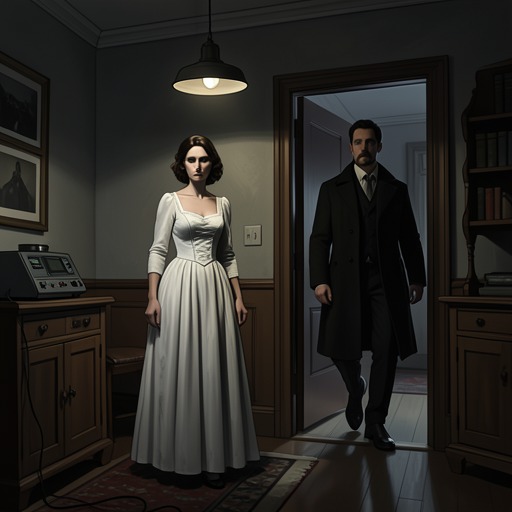
The death of Andrea Trento
LeilaAndrea Trento’s death transformed a blocked courtship into a lasting family bond: his parents took Lelia into their household in his memory, while Lelia came to treat the loss as a reason never to love again. The novel gives no account of how or when he died; it traces instead the intimate and moral consequences that outlasted him.
The Love Before His Death
Andrea loved Lelia when she was still nearly a child and wanted to marry her. His parents had resolutely opposed the match. At sixteen, Lelia believed she returned his love, but her acceptance had come more from gratitude and the pleasure of being admired and desired than from a fully shared feeling. She found Andrea too young and cheerful to understand the moral struggle she carried within her. Handsome, intelligent, and generous, he was also humble, and admired both Lelia and his friend Massimo Alberti.
Death and the Trento Household
After Andrea died, his parents took Lelia into their home, Montanina, hoping to preserve the girl their son had loved from what they considered the corruptions of the world. The gesture also answered their remorse—not a confession of wrongdoing so much as the pain of having caused their beloved son to suffer by resisting his marriage. Lelia’s father presented the arrangement as a sacrifice made for her benefit, but she recognized the bargain beneath his words and felt her dignity affronted. She eventually accepted, thinking of Andrea and recoiling from the degradation she associated with her father’s conduct.
Her entry into the household was therefore neither simple adoption nor uncomplicated refuge. A condition of the arrangement was that her father could not set foot at Montanina. Lelia both welcomed and suffered that exclusion. At first she behaved coldly toward Andrea’s parents, seeing herself as a living relic of their son rather than as someone welcomed for her own sake. The bond with Marcello Trento remained troubled before music and the gentleness of Andrea’s mother helped soften it.
Grief, Memory, and Later Consequences
Lelia’s grief made her exaggerate the measure of her love for Andrea: she could not separate love from pity. Three years after his death, she still associated Massimo Alberti’s name with Andrea’s remembered suggestion that Alberti would have been a worthier husband for her. Massimo had attended Andrea’s funeral; afterward he did not return to Montanina, though he remembered Marcello on anniversaries and at New Year. Marcello sometimes spoke of his absent friend to Lelia, and those mentions sharpened her aversion rather than easing it.
Lelia interpreted her growing, unwanted response to the possibility of new love as a betrayal. She made it her duty never to love again: a duty to Andrea’s memory, to Marcello, who had tacitly accepted her as a living reminder of his son, and to her own ideal of exceptional purity. Andrea’s death thus continued to govern Lelia’s choices long after the funeral, shaping both her place in the Trento family and her resistance to the affection that might follow.