The uncanny (Unheimlich)
LimonovThe uncanny (Unheimlich) is the sensation that something familiar has become profoundly alien. In Emmanuel Carrère’s account of post-revolutionary Romania, it becomes a way to describe a society in which political appearances, public accusations, and private loyalties no longer seem trustworthy. The effect is not supernatural: the terror comes from recognizing ordinary people and institutions while doubting what they are, what they have done, and whom they serve.
A familiar world made alien
Carrère calls Romania a landscape of the uncanny, a shadowland suspended between light and darkness. Rumors described the country as honeycombed with secret-police passageways through which people disappeared; the tunnels belong to disturbing hearsay, not to an established account of what he witnessed. The image nevertheless gives physical form to the suspicion surrounding the country: beneath the visible streets might lie another, concealed system.
Bucharest’s tens of thousands of stray dogs, competing for scraps with tens of thousands of children who were also described as stray, seemed less frightening to Carrère than the people around them. His comparison of men to wolves turns the familiar human figure into something threatening without making it literally monstrous. Hatred, suspicion, and slander become an atmosphere so pervasive that, in his description, it is like toxic gas that makes breathing impossible.
Faces and uncertain identities
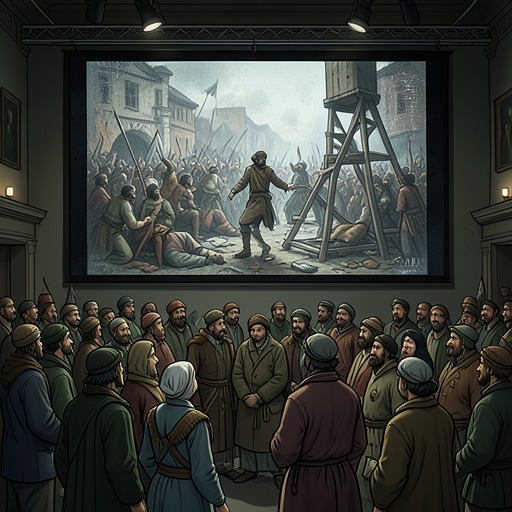
The uncanny also appears in a former exile’s reaction to the people he encounters. After thirty years in France, the old Romanian had recently returned to his country. He saw poverty and dirt, but what most disturbed him was the bitter suspicion and malicious fear he read in people’s faces. He felt that these were no longer his people and could not understand who they had become.
Carrère compares the man’s trembling to the horror of the hero in Invasion of the Body Snatchers, who discovers that the people around him have been replaced by dangerous beings despite looking unchanged. The comparison makes the uncanny a crisis of recognition: a face remains familiar, yet the person behind it seems alien. The old exile’s disorientation is not proof that the people have literally changed into something else; it registers the depth of his estrangement from a society transformed by its recent history.
Political continuity beneath change
The atmosphere of uncertainty has a political counterpart. Carrère describes a former official who spoke of his inward resistance to the regime, then declined to name other supposed opponents, citing discretion and mercy. The explanation was that the Securitate had recruited its most zealous informers from among figures presented as oppositionists. Carrère’s interlocutors treated this as an open secret. A claim of resistance could therefore coexist with suspicion that the claimant, or the people around him, had served the very system they denounced.
That instability extends from individual reputations to the state. Carrère recalls that the Communist Party, though banned and charged with crimes, had effectively survived by changing its name and leadership as the National Salvation Front. Its sizable victory in the March 1990 elections made the appearance of a break with the past harder to distinguish from political continuity. In this setting, the uncanny is not merely an image for frightening surroundings. It describes the uneasy recognition that the new order may contain the old one, and that the people and institutions presented as familiar may conceal identities their public appearance does not reveal.