Imprisonment
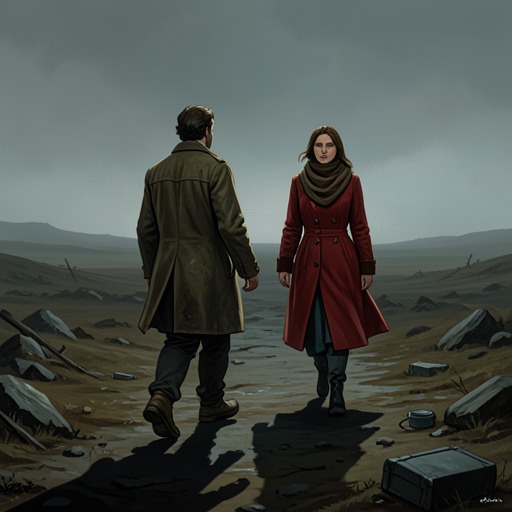
LimonovFor Eduard Limonov, imprisonment is not only a punishment imposed by the state but an ordeal he has imagined as part of his life’s story since childhood. From the sealed cells of Lefortovo Prison to the work camp at Penal Colony 13 at Engels, he meets confinement with physical discipline and deliberate self-fashioning. The decisive reversal comes near the end: prison, which he has survived by making it his own, has become so central to his inner life that release threatens to take something from him.
Origins and Meaning
The idea of prison has accompanied Eduard Limonov since he read The Count of Monte Cristo as a boy. Another formative image came from his father, a prison guard, who told his mother about a courageous young condemned man who remained calm and master of himself. That figure became the hero of Eduard’s adolescence. The adult’s incarceration therefore enters a story he has long been preparing to inhabit: for someone who thinks of himself as the hero of a novel, prison is a chapter that must not be missing.
The narrator presents this anticipation against the concrete indignities of entering a prison: surrendering clothes and possessions, receiving a uniform, undergoing a medical examination that includes a cavity search, and being led through successive corridors, fences, and gates. The passage ends at the small cell in which a prisoner may spend months or years. This procedural sequence makes confinement an imposed fact, but also a test of character. Its form echoes Eduard’s own heroic expectations: the institution takes control of his body and movements, while the narrative asks what kind of self he can maintain inside it.
Isolation at Lefortovo
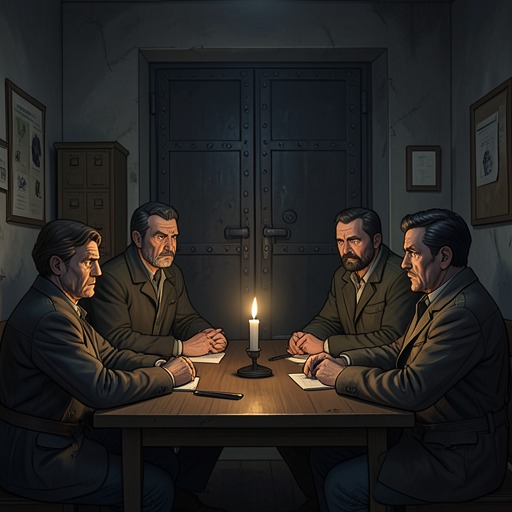
Eduard spends fifteen months at Lefortovo, a secretive fortress near Moscow associated with major political prisoners and high-level terrorists. At first he does not know what he and his companions are accused of. He has not seen a lawyer and cannot receive visitors; he does not know when the trial will begin, what is being said about his arrest outside, or whether those closest to him even know where he is. The confinement is thus defined not only by locked doors but by a forced uncertainty about the legal case and the world beyond the prison.
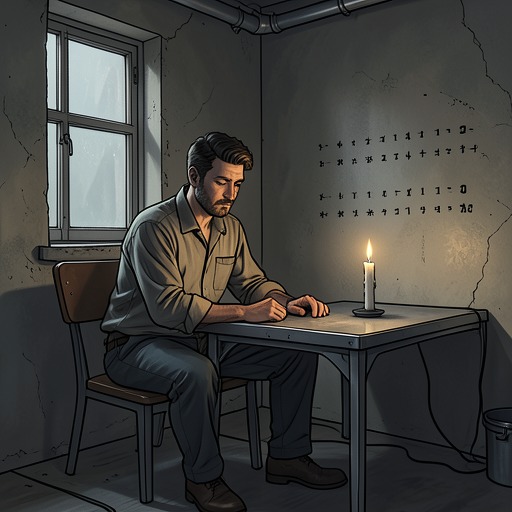
Lefortovo’s conditions complicate the familiar image of brutal imprisonment. Its white, sterile cells are neither dirty nor overcrowded, and the account contrasts it with prisons where inmates may be beaten or raped. Its central punishment is isolation. Television is available throughout the day, but the narrator describes its constant presence as a route into apathy and depression. Exercise takes place on the roof in isolated, fenced-off spaces; loud music prevents prisoners from speaking to one another. In winter, when it is dark and bitterly cold, many choose not to go out at all.
Eduard insists on going. Although the guards tell him that the temperature is minus twenty-five degrees, he demands the exercise permitted by the prison regulations. Throughout his time at Lefortovo, he goes onto the roof for half an hour each day, running on his allotted square of concrete, doing push-ups and sit-ups, and boxing the icy air. The guards resent having to leave their warm locker room for a single prisoner, yet they are impressed by his persistence. The routine turns a space designed to isolate him into a daily proving ground: he cannot choose the conditions, but he can choose to use them.
He also lets his hair grow, since prisoners at Lefortovo are not required to shave or cut it. As he writes, it swishes across the table and threatens to reach the floor. The narrator links the growing hair first to Edmond Dantès, the imprisoned hero of The Count of Monte Cristo, and then to Abbé Faria, Dantès’s prison companion. The detail makes Eduard’s physical appearance part of his imaginative performance, while the shift between the two figures suggests that his prison identity is not a single fixed role.
Trial and Transfer
After fifteen months, Eduard is transferred in a government Antonov aircraft under a conspicuous police escort to Saratov, on the Volga, where he is to be tried. The stated reason for holding the trial there is jurisdiction: Saratov is the Russian jurisdiction closest to Kazakhstan, where he is alleged to have committed the crimes. The change in setting also changes the texture of imprisonment. In Saratov, he must repeatedly state not only his full name but the provisions of the criminal code under which he is held. He learns the formula by heart: Savenko, Eduard Venyaminovich, Articles 205, 208, 222 paragraph 3, and 280. The legal charges become a recitation attached to his identity, one that still comes to his lips when he wakes with a start.
The sentence ultimately imposes a less severe term than Eduard had feared. The prosecutor Verbin calls for fourteen years, but the judge sentences him to four, half of which he has already served. The narrator presents the remaining two years as a reprieve: Eduard had been preparing for twelve. That relief does not remove the danger of confinement, since officers can punish an inmate with solitary confinement and, in the account’s example, a drunken junior officer arbitrarily extends a prisoner’s sentence by a year over poor shaving. At Engels, Eduard understands that a careless confrontation could have serious consequences. He therefore tries to make himself invisible while still looking for an angle that will let him shape what happens to him.
The Work Camp and an Unfinished Release
Penal Colony 13 at Engels appears strikingly different from the wire-fenced image of a camp. It has brightly colored walls, rosebushes, and sinks described as pseudo Philippe Starck designs. The institution is presented to human-rights advocates as evidence that prison conditions in Russia are improving. But the narrator sets this polished display against the camp’s bad reputation among Russian prisoners: some inmates injure themselves in the hope of avoiding a transfer there. The contrast exposes the gap between a carefully presented setting and the fear attached to the place among those who may be sent to it.
Eduard responds to the camp’s risks by watching his step and avoiding officers who might resent his fame. Yet by the time a television crew films the prison, he has become more than a man enduring a sentence. He follows the instructions, performs himself at roll call, and recites his name and the articles of conviction. During filming, he has to repeat the scene because the director is dissatisfied with the first takes. In the mess hall he pours sauce onto his food while trying to speak naturally with the other inmates; the director asks them to behave as though the cameras are not there. Eduard thinks he was foolish to agree to the television appearance and feels the strangeness of leaving in front of a camera, though he longs to regain his freedom and see Nastia and his party comrades.
The deeper complication is that the camp has become, through his own mental discipline, almost hospitable to him. Its three daily roll calls are likened to religious services, and meditation to prayer. The narrator connects this spiritual transformation to a process that began in the Altai with the trapper Zolotarev and that is nearing what Eduard experiences as a lasting liberation. That private freedom does not depend on leaving the camp; it has taken shape within its repeated routines. Consequently, release carries an unexpected fear: freedom from prison might deprive him of the truer freedom he has found there. Confinement remains coercive, but the chapter ends with its most unsettling reversal. The place he had prepared himself to survive has become the setting in which he believes his inner liberation is approaching completion, and he worries that the best chapter of his life is already behind him.