ImpSec’s compromised internal security system
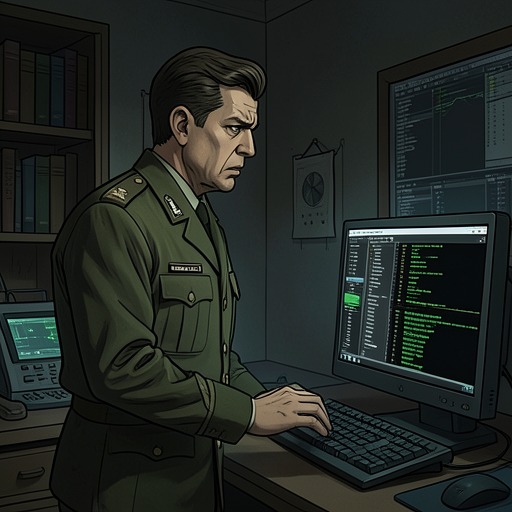
MemoryImpSec’s compromised internal security system is the breach Miles Vorkosigan uncovers when records that should establish his movements instead support a fabricated visit to the evidence room. The false account is reinforced by an altered entry desk log, while the video record for the relevant day is missing. The danger is therefore not merely that a security archive has been tampered with: the agency’s own tools for verifying events can no longer be accepted at face value. Miles and General Haroche must confront both the intrusion and the difficulty of investigating it without worsening the vulnerability.
Discovery and the altered timeline
Miles presents the discovery to Ivan Vorpatril with an unusually exuberant description of the problem, calling the compromised security system a joy. The contrast between his apparent cheer and Ivan’s assessment of him as manic gives the revelation a charged, unsettled tone. Ivan responds cautiously, asking what the system is saying; Miles explains that it claims he visited the evidence room on the day he returned from his last mission.
The false visit is supported by a second record. The entry desk log upstairs has also been changed, making it appear that Miles left the building half an hour later than he actually did. That added time supplies a plausible window for a groundcar journey to Vorkosigan House. But security records there still show the real time of his arrival, and Miles points out the decisive detail: he walked home that day. The records do not merely disagree in the abstract; their manufactured timeline depends on a journey that his actual movements rule out.
A missing evidence-room video cartridge removes the most direct possible check on the disputed visit. Ivan correctly guesses that the cartridge is missing, completing a pattern in which the electronic account has been altered and the visual record that might test it is unavailable. The combination makes the incident more serious than a single inaccurate log: evidence capable of corroborating the false account has been revised or removed.
From false records to an internal mole
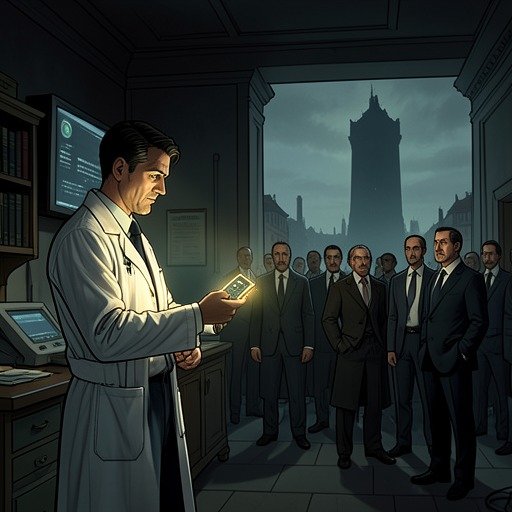
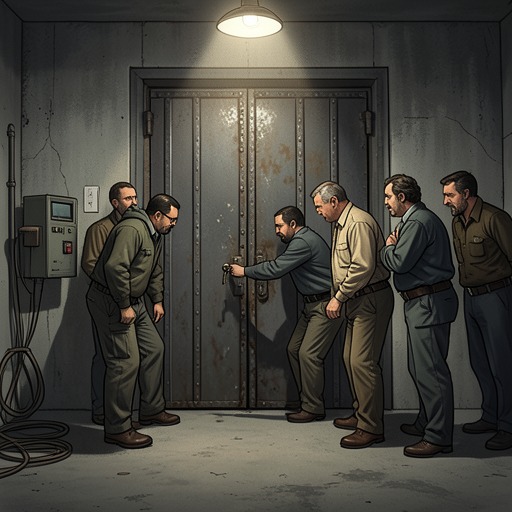
Miles carries the discovery to General Haroche, bringing the evidence-room personnel with him. Haroche reacts immediately to Miles’s expression, seals his office doors, shuts down his comconsole, and asks what has been found. Miles summarizes the falsified interval as approximately twenty-five minutes of revised history and tells Haroche that the comconsoles have been compromised. He then explains how the added time was identified, with corroboration from the evidence-room supervisor, and reports the missing video record.
Once the evidence-room men have been sent to wait outside and instructed to go nowhere and speak to no one, Miles states what he considers certain: there is a mole in ImpSec’s internal security systems. His wording marks a shift from checking an anomalous record to treating the anomaly as deliberate internal penetration. The altered logs, missing cartridge, and supporting detail form a coherent warning, even though the identity of the mole and the means of the tampering remain unresolved in this exchange.
The problem of investigating ImpSec
Miles lays out two unattractive ways to respond. ImpSec could be taken offline entirely while outside experts examined it, but that would leave the agency without its systems for a week or more as outsiders learned how they worked. Miles regards that interruption as an invitation to disaster. Alternatively, an internal investigation could preserve normal operations, but investigators drawn from the compromised organization might themselves be vulnerable to interference or suspicion.
Haroche acknowledges the dilemma and proposes a controlled internal check. At least three personnel would work together at all times, watching one another rather than allowing any one investigator to act alone. The group would be selected at random, and the system could be frozen in sections, limiting disruption to ImpSec’s continuing duties. Haroche offers to provide a list of qualified personnel for Miles to select from. This is a response designed around the breach’s two defining constraints: the investigation cannot assume internal trust, yet taking the whole organization offline would create its own security risk.
Containment and significance
Miles considers the proposal and agrees to it. Haroche’s visible relief at Miles’s reasonableness underscores the pressure behind the choice: the response must be stringent enough to investigate a mole, but proportionate enough to keep ImpSec functioning. The compromise does not establish that the system is secure again, nor does it identify who altered the records. It sets out a method for checking the system while containing the practical cost of that check.
The episode makes institutional trust a technical as well as a personal problem. A log can be made to agree with another altered log; the missing cartridge denies investigators a straightforward comparison; and a system intended to secure the agency becomes part of the deception. Miles’s insistence on the groundcar detail exposes the false chronology by bringing recorded time back against lived movement. The resulting investigation must therefore proceed without treating the agency’s own records as self-authenticating, while still relying on carefully constrained ImpSec personnel to find out how far the compromise extends.