Miles Vorkosigan’s post-cryo-revival seizures
MemoryMiles Vorkosigan’s post-cryo-revival seizures turn what appeared to be a fading aftereffect into a danger to others and, eventually, a breach of trust with ImpSec. The attacks are intermittent and initially unwitnessed, but a severe convulsion during a rescue makes their consequences impossible to keep private.
Onset and the First Witnessed Crisis
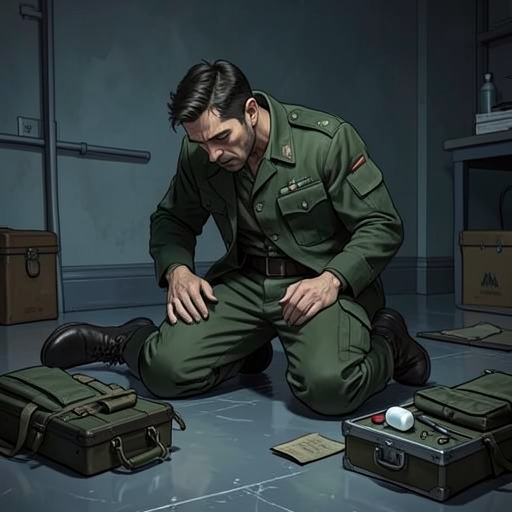
After Miles’s cryo-revival, he began having convulsions lasting two to five minutes, apparently brought on by extreme stress. His surgeon thought they might resolve on their own, as his memory loss and shortness of breath had. The attacks were rare and seemed to be tapering off, so Miles believed the problem might be passing; more than two months had gone by since his previous brief, unwitnessed collapse. He also thought medication had brought the condition under control.
During a Dendarii rescue, however, Miles suffered his worst attack to date. When he regained consciousness, a medtech reported that the field test had found no apparent cause and no toxins, while cautioning that the test was basic and a fuller examination would have to wait until they returned to the ship’s sick bay. Miles had been unconscious for about half an hour—far longer than before—and immediately understood that the episode had overturned his hope that the seizures were over.
The attack had also made the rescue itself perilous. In recounting what happened, Elli Quinn explained that Miles’s weapon had cut across the rescued man’s legs, though the beam cauterized the wounds and prevented him from bleeding to death. Miles had blown through several walls while thrashing in his armor; four people were needed to restrain his arm and open the suit. Quinn stunned him at the back of the neck in desperation, after which he went limp. The intervention helped explain his prolonged unconsciousness and headache, but left Quinn facing the more urgent question of whether this was an isolated crisis. Miles acknowledged that he suspected the seizures were an aftereffect of his cryo-revival, then admitted they had happened several times before.
Medical Uncertainty and Operational Risk
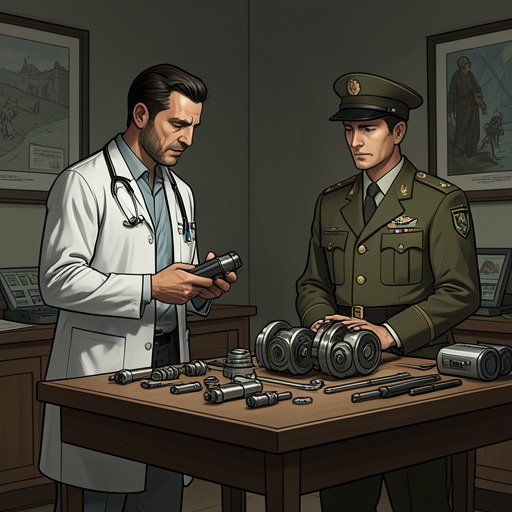
The medical examination offered no clear mechanism or reliable route to prevention. Miles’s scans remained at baseline, with no obvious abnormalities, and the surgeon said that meaningful diagnostic progress might require monitoring him during an attack. Earlier stress tests, electroshock, and other laboratory stimuli had failed to provoke one. The standard anticonvulsant had seemed to Miles to be working, but the surgeon questioned whether he had taken it properly and concluded that the medication was not the answer.
The surgeon instead suspected an unusual form of cryonic damage at the cellular or subcellular level and urged Miles to consult the most highly qualified cryo-neurology specialist available. That conclusion left the condition unresolved: the attacks could be severe and consequential even when ordinary tests showed nothing. Miles, however, was eager to return to prisoner interrogations. Although he had to acknowledge that he should have stayed aboard the Peregrine, he had been assigned to secure Vorberg, and ImpSec had trusted him with the Barrayaran Imperial recognition codes. The surgeon allowed him to leave but told him not to go armed, turning a medical precaution into an immediate limit on his work.
Concealment and Its Exposure
The seizures became an institutional breach because Miles had kept them from the physicians assessing his fitness for duty. The decisive evidence arrived months after his cryo-revival: complete copies of his surgeon’s records had taken time to surface amid the Durona Group’s hurried departure from Jackson’s Whole, with records scattered between Escobar and House Fell. House Fell supplied no extra data, and ImpSec’s analysis section needed further time to process the material and recognize its significance. The delay did not soften what the records revealed; it made the discovery a retrospective reckoning with information Miles had hoped was no longer relevant.
When Simon Illyan confronted him, he distinguished the medical condition from the deception. The seizures themselves troubled him less than Miles’s concealment from the ImpSec physicians trying to return him to duty, which meant Miles had also withheld the truth from his chief. Simon Illyan had obtained an independent report from the Dendarii, including the fleet surgeon’s records kept in her cabin rather than her sick-bay office. Their arrival the previous night closed off the possibility that Miles could simply continue to deny the attacks.
Miles’s first response was to reach for the explanation that his surgeon had said the seizures might go away. He corrected himself: they might, not would. The distinction exposes how hope had become a practical excuse. Because the attacks were rare, seemed to be diminishing, and appeared to follow the pattern of other post-revival symptoms, Miles had treated uncertainty as permission not to report them. The same concealment that let him preserve his working identity now made his fitness and judgment matters for others to assess.
At Vorkosigan House, Ivan Vorpatril and Duv Galeni pressed him to explain what had happened. After drinking tea for rehydration, Miles chose to begin at the beginning rather than build a defense from the excuses and denials he knew well. He described the two-to-five-minute convulsions, their apparent connection to extreme stress, and his surgeon’s expectation that they might resolve as his memory loss had. He admitted that, because the episodes were rare and seemed to be tailing off, he had not told his ImpSec doctors when he returned home. Mark had known. The confession turns a private medical history into a question of trust: the attacks were involuntary, but deciding who would know about them had not been.
Significance of the Condition
The seizures persist in the gap between visible crisis and invisible evidence. During the rescue, their effects were unmistakable: Miles’s convulsions turned his armored body and weapon into hazards, while scans and earlier laboratory tests had shown no obvious abnormality and no test had reliably produced an attack. The discrepancy leaves the condition medically uncertain without making its practical consequences uncertain. Nor could the apparent improvement settle the matter: other post-revival symptoms had eased, and the seizures seemed to be receding, but the prolonged episode showed that an unwitnessed history of brief collapses was no guarantee of safety.
That uncertainty also separates involuntary illness from choices made around it. Miles did not choose the attacks, but he chose not to disclose them to the physicians assessing his fitness for duty; his hope that they would disappear helped him treat an unresolved risk as a private matter. Once the Dendarii records reached Simon Illyan, that distinction became central: the medical problem required diagnosis, while the concealment had already damaged the trust on which Miles’s service depended. The evidence establishes neither a confirmed mechanism nor a successful treatment. It leaves the seizures as both a bodily aftereffect of cryo-revival and an unresolved test of how Miles’s sense of duty accommodates limits he cannot command.