Miles’s despair and Ivan and Galeni’s intervention
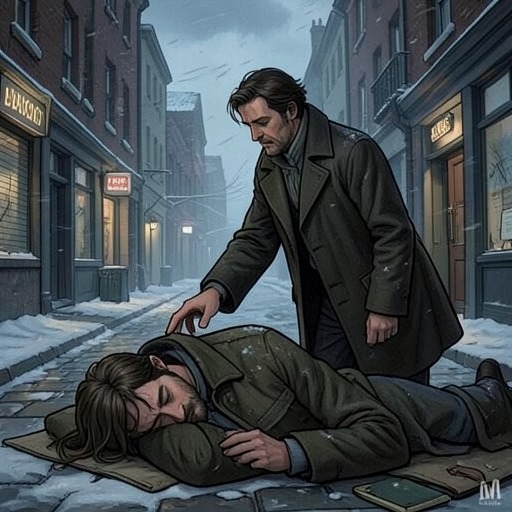
MemoryMiles Vorkosigan’s despair and Ivan Vorpatril and Duv Galeni’s intervention form an episode in which a private crisis is interrupted not by argument or reassurance but by persistent, physical demands. After leaving ImpSec, Miles Vorkosigan shuts himself away at Vorkosigan House, unable to bear being alive yet unwilling to die; Ivan Vorpatril and Duv Galeni find him and, through cold water, food, and blunt familiarity, bring him back into contact with the world.
Retreat into Vorkosigan House
Miles Vorkosigan reaches Vorkosigan House under the watch of an ImpSec driver. He keeps his shoulders from sagging until the doors close behind him, then collapses into the first chair he finds, still covered. He spends another hour shivering. The small physical detail makes the arrival less a homecoming than a withdrawal: only once the outside observer is shut out does he allow his body to show what the journey has cost him.
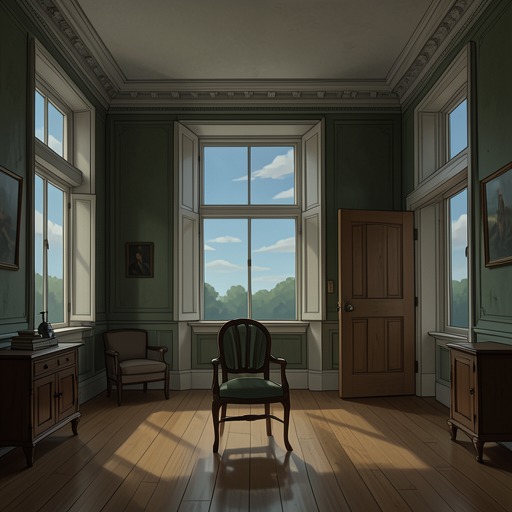
Later, bodily necessity gets him out of the chair, but movement brings no renewed purpose. He considers getting drunk, retrieves brandy from the cellar, and retreats to a fourth-floor former servant’s room so small it could almost pass for a closet. The brandy remains sealed. Having gone to the trouble of fetching it, he has no energy left to open the bottle; instead, he curls into an old wing chair. The failed gesture toward intoxication establishes the depth of his inertia: even the means he has selected for escape demand more effort than he can summon.
Sometime after midnight, Miles Vorkosigan returns from the bathroom with his grandfather’s dagger and places it beside the unopened brandy. He examines the blade and presses it to his wrists and throat, including the thin scars left by his cryonic preparation. His thoughts narrow to the throat as the only option that would count, rejecting any half measure. Yet this is contemplation, not an accomplished attempt: the knife stays beside him, and the bottle remains unopened. Both objects mark possible forms of escape without resolving the crisis.
Death and the failed refuge of sleep
The prospect of death does not offer Miles Vorkosigan the clean mystery or hope that might make it attractive. He has already died once, and the experience has not solved what he faces now. Worse, he fears that those who once sacrificed so much to revive him might try again and do the work badly. He has seen cryo-revivals leave minds broken inside once-human bodies; the possibility makes survival itself seem frightening. His distinction is stark: he does not want to die, but cannot bear being alive at that moment.
Sleep might provide a temporary passage between states, but it will not come. The scene refuses an easy release: neither alcohol nor the dagger is used, and the natural refuge of unconsciousness is withheld. Miles Vorkosigan remains in the chair while the light returns through the window. A square of sunlight travels across the worn rug, and the city’s sounds soften as twilight approaches, but his private darkness remains sealed off from the world like a cryo-chamber. The slow movement of light measures time passing without implying that his distress has lifted.
When distant voices call his name, he recognizes Ivan Vorpatril and refuses to answer. He hopes that doing nothing will make the searchers leave. Instead, Ivan Vorpatril’s loud call to Duv Galeni announces that they have found him. Duv Galeni’s response, a startled recognition of the seriousness of the scene, contrasts with Miles Vorkosigan’s deliberate silence: the crisis has become visible to the people who came looking, even though he has made no move to ask them for help.
Ivan Vorpatril and Duv Galeni intervene
Ivan Vorpatril first tries to read the room through the objects at hand. He assumes that Miles Vorkosigan has got himself drunk, then discovers that the brandy bottle is still sealed. He notices the unsheathed knife beside it. Duv Galeni recalls that Simon Illyan had been right, while Ivan Vorpatril resists treating this particular episode as unprecedented. He says he has seen this sort of thing many times and reasons that, if Miles Vorkosigan were going to kill himself, he would have done it years earlier. His familiarity is not proof that the danger is absent; it is the basis on which he acts rather than freezing in alarm.
The intervention turns physical when the two men take Miles Vorkosigan to a tub holding about a hundred liters of water and roughly fifty kilograms of floating ice. The cold is not a random torment: Ivan Vorpatril knows that Miles Vorkosigan hates it, ever since a spell as a weather officer at Camp Permafrost. He pushes him under, and when Miles Vorkosigan comes up shouting, pushes him in again. Ivan Vorpatril’s teasing and Duv Galeni’s effort to keep clear of the splashing make the encounter comic in its handling, but the comedy works through forceful contact rather than denial of the crisis.
Miles Vorkosigan fights free, climbs out, and swings at his cousin. His fist connects with Ivan Vorpatril’s chin; the pain feels welcome, and the hit is a personal first: he has never before managed to slug Ivan Vorpatril successfully. When Ivan Vorpatril holds him at arm’s length to avoid the next swing, Miles Vorkosigan stops and stands shivering. His assertion that his arm no longer breaks marks a bodily change in the moment: the familiar limitation no longer prevents him from striking back. The scene does not turn that punch into a cure, but it gives him an action and a consequence after a long stretch of stillness.
Food, conversation, and the scene’s outcome
Ivan Vorpatril keeps pressing after the bath, but his next demands are small and practical. He takes Miles Vorkosigan to a nearby restaurant and threatens him sotto voce until he eats a few bites. Once he begins, Miles Vorkosigan discovers that he is very hungry; Ivan Vorpatril then stops pushing. The shift matters because it gives the intervention a concrete measure of change. The crisis has not been solved by a declaration of recovery, but Miles Vorkosigan can again respond to hunger, chew, and swallow.
Only after this does Ivan Vorpatril ask what is going on. Miles Vorkosigan looks toward both captains and asks first whether Simon Illyan sent them. The question leaves the episode open: the search has brought him out of isolation and into an exchange, but the conversation about its cause has only just begun. The ending preserves both the scale of his despair and the limited success of the intervention. Ivan Vorpatril and Duv Galeni do not erase what brought him to the room; they keep him present long enough for him to eat and speak.