Asher's World
Mickey7Asher's World is the point of origin for a failed colony expedition whose story gives concrete force to the risks of settling a world known only through limited observations. Its importance lies less in any description of the planet itself—the account supplies none—than in the fate of the expedition it launched: the settlers reached a target whose atmosphere had suggested habitability, only to find a world too hot for liquid water, with neither the time nor the failing ship needed to begin again.
Location and place in interstellar settlement
Asher's World lies far toward the rim of human settlement, where stars are spread thin. More than a century before Mickey Barnes reflects on its expedition, colonists departing from there aimed for a world over twenty lights away, at the outer reach of what a colony ship could manage, and perhaps beyond it. The account does not identify that target as Asher's World; it distinguishes the launching world from the destination whose conditions defeated the expedition.
The distance shaped what the settlers could know before departure. Colony ships could not readily scout multiple prospective destinations in advance, so planners had to rely on observations available from their home system. A destination’s atmospheric oxygen could suggest life without establishing that its surface was habitable. The expedition from Asher's World thus stands at the intersection of geographic remoteness and informational limits: its reach exceeded its ability to verify what awaited it.
The expedition and its destination
By the time the ship completed its deceleration burn, the adult colonists were old, exhausted, and very hungry, and the vessel was nearly falling apart. Their target was not in the orbit they had expected. It lay slightly too close to its star, and its surface was too hot to sustain liquid water, despite the oxygen detected in its atmosphere. The apparent contradiction led the colonists to suspect that the planet might once have been habitable, perhaps even inhabited, but had recently been sterilized by a runaway greenhouse effect. In that account, the oxygen was a remnant that had not yet had time to bind out of the atmosphere; it was evidence they had misread, not proof that the world could support them.
Abandonment and aftermath
The expedition had no realistic time to wait for the planet to become habitable. A century might have allowed terraforming to work, but the ship’s condition made even ten years seem unlikely. The colonists transmitted their findings home and placed the ship in a stable orbit. Those who chose to be sedated were doped, and the settlers opened the air locks. The account presents their deaths by explosive decompression as swift, but not as a viable route to survival: it was the last decision available to people who had reached an unusable world in a failing ship.
A warning for Niflheim
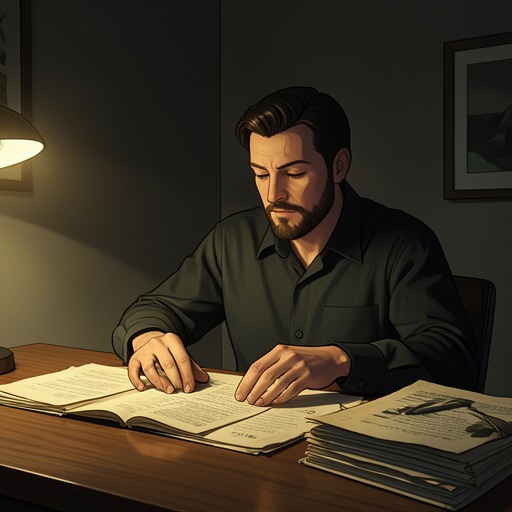
Mickey Barnes reads about the expedition while weighing the prospects of the colony on Niflheim. He recognizes a resemblance between the two situations: the earlier target was nearly too hot for life, while Niflheim is nearly too cold, and the colony’s planners could have learned more about its marginal biosphere with better atmospheric readings. At a distance of more than seven lights from Midgard, however, the mission had to proceed with the information available. The comparison turns Asher's World's history from a remote tragedy into a measure of the narrow margins on which a colony can depend: a few degrees, less oxygen, or a toxic atmosphere might have made Niflheim’s predicament still worse, while terraforming would take far too long to offer an easy remedy. The expedition’s record also unsettles Mickey personally, drawing him into an extended period of reflection before Nasha pulls him out of it.