Futuria
MomoFuturia is the kingdom Prince Girolamo creates and rules, a place defined by its position one day ahead of both the present and the past. In Guido’s embedded fairy tale, it is at once a realm with a palace, advisers, and a beloved prince, and the distant destination to which Girolamo returns after losing and recovering his identity. Its unusual time setting makes the kingdom more than a point on a map: it gives the story a future-facing home that its ruler can be forced to leave and ultimately regain.
Definition and Temporal Setting
Futuria is described as belonging neither to the present nor to the past. It is always one day ahead in the future, and this permanent temporal displacement is the reason for its name. The tale offers no account of how its inhabitants experience that difference or how the kingdom’s calendar works; what it establishes is the defining contrast between Futuria and Presentia, where Girolamo later lives under another name.
The kingdom is also said to be of Girolamo’s own creation. That description connects its existence directly to its ruler rather than presenting it as an inherited territory or an anonymous political setting. The account gives no further detail about how he made it, but it does establish a strong association between Futuria and the prince’s identity: while he knows who he is, he rules there; once that knowledge is taken from him, he leaves it behind.
The Court and the Prince’s Dispossession
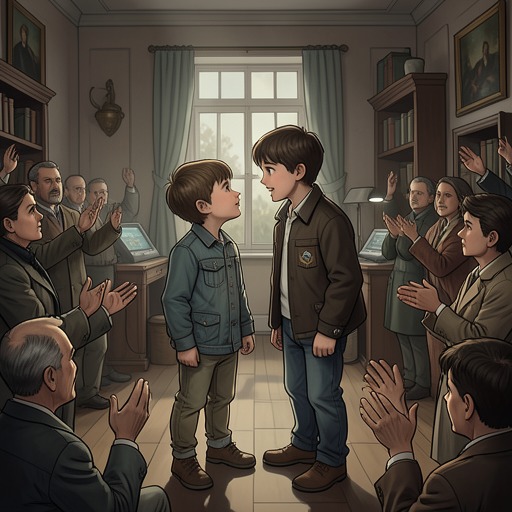
Futuria’s court appears in the story when Girolamo’s advisers tell him it is time to marry. He accepts the suggestion without objection, and the kingdom’s loveliest young ladies are brought to the palace so that he can choose a wife. Their arrival frames Futuria as a courtly realm with advisers and a royal household, while the marriage arrangement sets in motion the deception that will divide Girolamo from his kingdom.
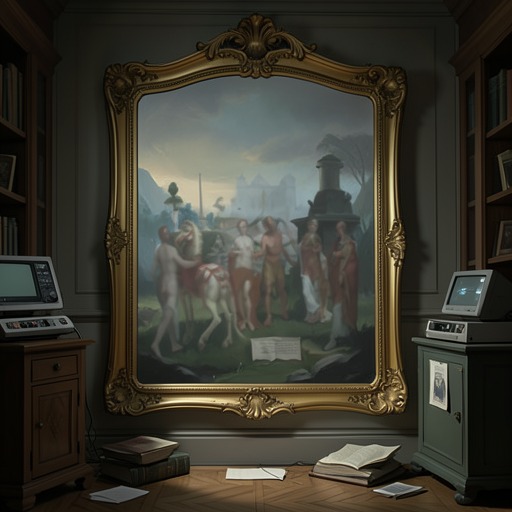
A wicked fairy has secretly entered the palace among the prospective brides. When Girolamo comes into the great, golden throne room, she casts a spell that makes him see no one but her; persuaded by the enchantment, he asks her to marry him. The episode places the kingdom’s danger inside its own seat of royal decision-making: the prince is not conquered in battle or driven out by a rival ruler, but deceived within the palace while making a choice about his future.
The fairy’s later punishment strips Girolamo of more than his title. After he breaks his promise to her, she ties a knot in his heart, and he forgets that he is the Prince of Futuria. He leaves the palace and wanders until he reaches Presentia, where he takes the name Guido and lives in poverty and obscurity. Futuria is not described as changing hands or collapsing; instead, the tale follows the separation of its ruler from the identity that had connected him to it.
Exile, Recognition, and Return
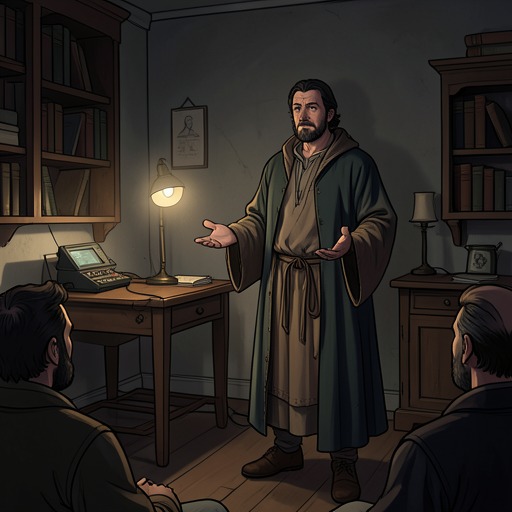
In Presentia, the former prince meets Momo, who also no longer appears as a princess. Neither recognizes the other at first. They become companions in misfortune, and the distance from Futuria is therefore also a distance from the identities and former lives both have lost. The account makes their reunion depend not on the visible signs of rank but on recovering what has been obscured: Momo recognizes her own reflection, then recognizes the poor man beside her as the prince she had sought.
Girolamo cannot recover his past through explanation alone. When Momo tells him their story, he says that the knot in his heart prevents him from remembering. She unties it, and he suddenly remembers who he is and where he comes from. Only then does the journey back to Futuria become possible: he takes Momo by the hand and leads her far away to the kingdom. The tale closes its movement between the two realms with a return, restoring the prince’s connection to the place from which his enchanted forgetfulness had displaced him.
Narrative Significance
Futuria’s temporal definition supplies the fairy tale with an imaginative counterpart to Presentia, but the plot does not explain the relationship between their times beyond establishing their contrast. The kingdom’s most consequential function is narrative and personal: it is the home that Girolamo loses when the fairy erases his self-knowledge, and the destination he can reach again only after Momo restores his memory. Its future position gives that return an added resonance without making it a promise about what will happen there; the account ends with the pair setting out for Futuria, not with a description of their life after arrival.
The kingdom is introduced through Guido’s story, which Momo hears as an account of a prince, a spell, and a lost identity. Within that tale, Futuria anchors the movement from royal belonging to exile and back toward home. Its distance from Presentia is both spatial—the pair must travel far—and bound to Girolamo’s lost knowledge of himself. The return thus resolves the separation the story has established while leaving the kingdom itself deliberately spare: what matters is not a portrait of its society, but what it means for the prince to remember where he comes from.