Blood ties
MovingBlood ties name a force that the novel treats as powerful but never simple. Biological kinship can mark the boundary between a child and a stepchild, yet it does not by itself make a family loving or safe. Across Edwina’s estrangement from Lucas, her grief for Charlie, and Lucas’s vigil beside Barbara, blood becomes less a promise of harmony than a pull that persists through conflict, absence, and guilt.
Kinship and the limits of belonging
Edwina understands her relationship with Lucas through what they lack: they share no DNA, and she thinks of him as Barbara’s boy rather than her own. For years she performs the duties of a stepmother, remembering his birthday, wrapping Christmas presents, making breakfast, and washing his clothes, but experiences herself as pretending to care. Her candour is harsh: in imagining a capsized boat, she wonders whether she would save Lucas last—or even hold him underwater. The novel sets this imagined rejection against the practical care she once provided, showing how family roles and emotional belonging can diverge.
Lucas’s attachment to Barbara has a different, visibly embodied basis. Edwina remembers mother and son as entwined, sharing pronounced widow’s peaks and a mutual loathing of her. His blood relationship with Barbara appears to secure a closeness Edwina cannot claim, while making her feel excluded from the household she has tried to build. Yet neither biological resemblance nor shared history guarantees an uncomplicated bond: Lucas’s childhood is shadowed by fear for his mother, and Edwina later recognizes that the untouched Christmas presents and his silences had another meaning.
Loss, memory, and the family left behind
For Edwina, blood ties are charged with the fear of losing a child. Looking at the beach photograph of Ollie with Rowena on his lap and Charlie reaching toward the sea, she remembers how afraid she was that Charlie would drown. She had sensed from the night he arrived unexpectedly that he was only visiting and could never be hers to keep. His later imprisonment becomes, in her mind, a first loss; when he emerges damaged, even Rowena has to get away from him. For years, Edwina’s grief has one striking limit: Charlie is the person she does not blame.
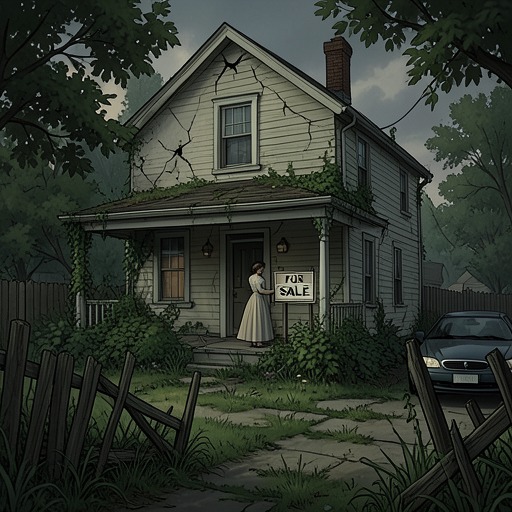
Family memory survives in objects as well as photographs. The battered jewellery box Edwina recovers holds not its missing jewels but a tiny wedding ring, hair, the children’s baby teeth, and the photograph of the family’s last day together. She remembers that the box is also the only thing she has left that belonged to her mother. These remnants make kinship tangible across generations, but they do not restore what has been lost. Instead, Edwina adds them to the things she intends to take to Australia, where Rowena has invited her to live near St Kilda beach. The proposed reunion gives the pull of family a future direction: remembered bonds may become a reason to travel toward the living.
Confession and the end of blame
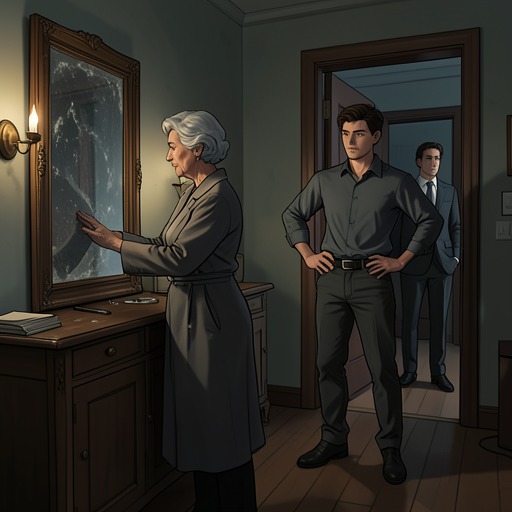
The idea of blood ties does not erase harm between relatives. When Lucas admits that he arranged the theft of Edwina’s jewellery box, he explains that he was in trouble at school and owed money to someone who would not forget the debt. He handed over the house keys and said when it would be safe to enter. The plan brought him money and, as he thought at the time, hurt no one; in retrospect, he recognizes that everyone was hurt. Edwina trembles and weeps, unable at first to speak. His confession makes family damage explicit rather than repairing it by sentiment alone.
The exchange also interrupts a long cycle of accusation. Edwina challenges Lucas to say how it was all her fault, but he does not want to blame anyone. He sees blame giving way to revenge and then guilt, and wants that pattern to stop. Edwina doubts she will see him again, yet decides he will receive his share of the house-sale money and Dickie’s desk. Her decision is not a declaration that their relationship has become intimate; it is a concrete act of fairness toward someone she has long regarded as outside her own bloodline.
The ties that endure
Lucas’s bedside vigil for Barbara offers a contrasting expression of kinship. He recognizes her as the only relative he has left and reflects that she may have loved him too much, as mothers sometimes do. He places an album on her blankets, scents her pillow with Diorissimo, and holds her hand. His imagined comfort is a remembered family scene at River Walk: Barbara on the patio, his father bowling, and Lucas as a boy home for the holidays, before everything goes wrong. Here blood is not an abstract inheritance but a relationship recalled through care, place, and a childhood moment of belonging.
Edwina’s final understanding is similarly physical: blood is strong, and it pulls like the tide. The image holds together the novel’s opposing truths. Blood has not prevented estrangement, death, or betrayal, and it cannot compel affection; nevertheless, the dead remain present in keepsakes, and living relatives continue to exert a claim on one another. The concept’s force lies in that persistence—not in the promise that family will be whole, but in the possibility that even after blame and distance, kinship can still draw someone toward a return.