Old Bailey courthouse
MovingThe Old Bailey courthouse is the setting for the decisive public reckoning in Charlie’s case: Lucas returns there as the star witness, then watches the trial’s long, drawn-out procedure give way to a sudden verdict. The courtroom turns legal testimony into a family rupture, and the verdict’s aftermath makes clear that justice, celebration and grief do not mean the same thing to those who leave it.
The Courthouse and Lucas’s Return
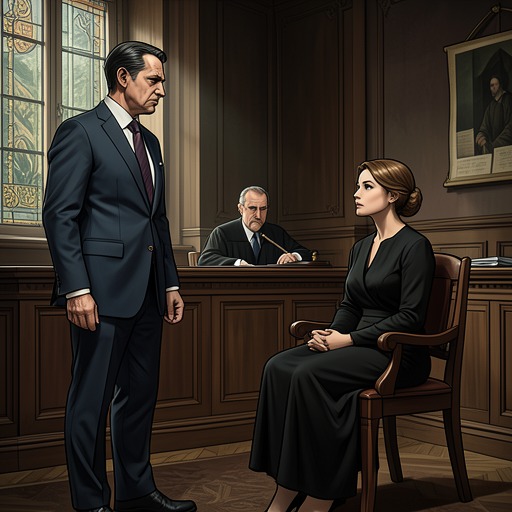
Lucas freezes when he finds himself back at the Old Bailey, only a month after the earlier court case. He wears the suit bought especially for the occasion, and his mother reminds him that all eyes will be on him as the star witness. Her glittering eyes convey venom and revenge, making his return to court feel less like a neutral legal duty than an encounter charged by family hostility.
The Trial and Verdict
The final day follows weeks of waiting and long, boring cross-examination. Outside, snow flurries on a Friday before Christmas; inside, the procedure abruptly accelerates, like an LP accidentally played at 45 rpm. A hurried verdict arrives before lunch. Lucas’s mother gives a tiny crow, and within seconds Charlie has disappeared from the courtroom, as if a trapdoor had opened beneath him.
The reactions around Lucas expose the verdict’s cost within the family. His father has his face in his hands, while his stepmother and stepsister stare wide-eyed in horror. The courthouse holds these responses together for an instant: his mother’s triumph and the others’ shock occupy the same space, but cannot be reconciled by the legal outcome.
Aftermath
Lucas’s mother takes him to lunch, declaring that justice has been done and promising somewhere divine. In a Knightsbridge restaurant, she orders champagne for the two of them and tender chunks of veal. Lucas chews but cannot swallow. The celebratory meal thus extends the courthouse’s division beyond its doors: what his mother treats as a victory is, for Lucas, physically impossible to digest.