Manchester
MovingManchester is the setting of Fern Woolbright’s first sustained independence: a place she resents for its weather and unfamiliarity, yet gradually values because it lets her live beyond the knowledge and expectations of home.
Setting and Fern’s First Impressions
Fern has been in Manchester for only a fortnight when its reality collides with the happiness she thinks she ought to feel. She has earned a place at drama school, the first part of her ambition, but her preferred destination was the Royal Academy of Dramatic Art, and its rejection still stings. Manchester feels like a poor substitute: wet, cold, and crowded with people whose appearance seems to belong to another world from the one she knows. After a humiliating encounter outside the art faculty building, she walks onto the main road furious and embarrassed, with the rain reinforcing her conviction that the city is miserable.
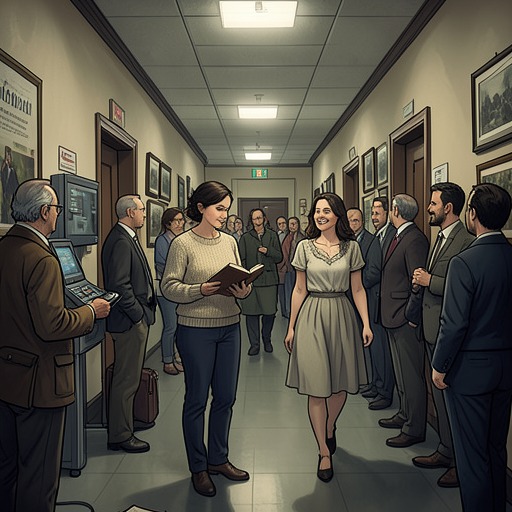
Her early experience of the school carries the same mixture of achievement and self-consciousness. Fern remembers how she attacked her audition speech from Macbeth, then blushes at having shouted the word nipple and lost the rhythm of the rest. She had sung well and used a few dance moves, but her comic character piece failed, and the Northern accent she attempted sounded ridiculous to her in Manchester. Among her fellow first-years, the only person she recognizes from the auditions is Jill Miller, whose earlier laughter Fern remembers. The city and school therefore begin as places where Fern’s self-invention feels exposed rather than assured.
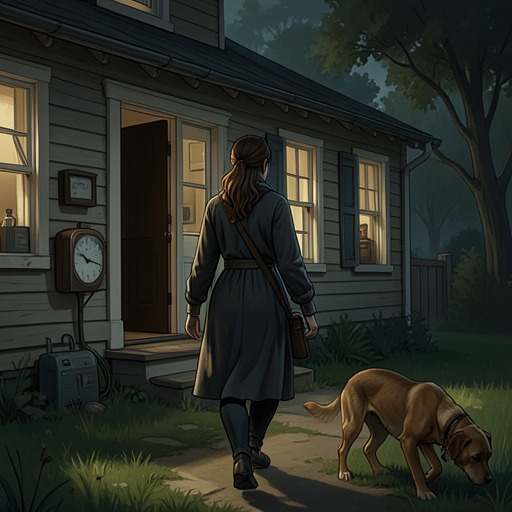
That first rejection of Manchester does not last unchanged. After a weekend in Godalming, the long train journey back and the icy rain make the north-west feel unexpectedly relieving. Fern has come to like the distance from home, despite the coin-operated launderette and the absence of a daily task of caring for something. She can smoke in bed and eat biscuits instead of a balanced meal; at drama school, people have recognized that she is posh without knowing anything else about her. In Manchester, being a stranger becomes a kind of liberty: the city she first experiences as alien also gives her room to act without her family’s familiar gaze.
The City as Refuge and Witness
The small act of kindness Fern finds on returning from Godalming belongs to her life in Manchester: a picture painted on torn brown cardboard and slipped under her door while she was away. It shows dogs in heaven, with wings and halos, in many shapes and sizes; none looks much like Smudge. Even so, the picture brings her to tears, though she experiences them as a single controlled tear sliding down her nose. In the city where she has been learning to live as a stranger, the image reaches a private grief she has not left behind.
Manchester also becomes the place where the news she hoped to avoid catches up with her. Jill Miller connects the death of Fern’s cousin at a party in Oxford with the party held for Charlie’s sister. Fern does not want to consider the coincidence or discuss it; she asks Jill not to tell anyone and longs for ordinary college life to continue. At lunchtime, the story breaks across television, radio, and the evening papers: a government minister’s daughter has been found dead. Fern locks herself in the wooden cubicle where she hid when she first arrived at drama school and howls.
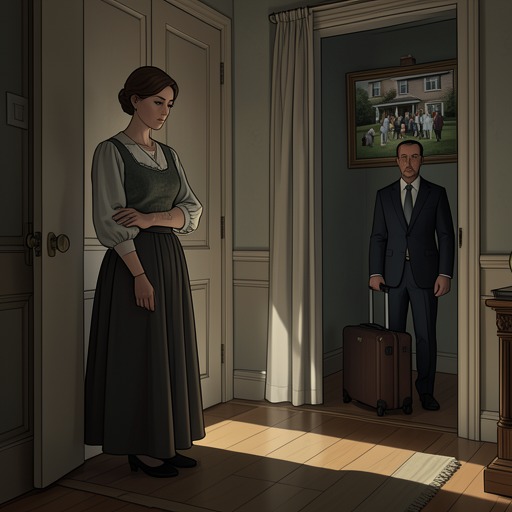
That evening, Jill helps Fern pack. Fern will take a train back to Godalming in the morning; Charlie has not contacted her. While packing and unpacking her striped mohair jumper, Fern speculates that the police may want to question him about stealing bikes, and Jill says nothing. Manchester, once the distant place in which Fern could be unknown and free, is now the setting for the collapse of that attempted normality and for her departure toward the crisis waiting at home.
Class and the View from the Bus
Manchester also sharpens Fern’s awareness of class through the ordinary details of how people look and where they belong. After leaving the art faculty building, she boards a bus and sits upstairs behind two women whose hair is set in rollers beneath cheap chiffon scarves. Their appearance prompts an immediate comparison with her mother, Rosemarie Woolbright, who has her hair done weekly at a salon in Godalming, or at Vidal Sassoon when visiting her sister in London. The passing scene makes Fern’s new surroundings legible through the habits she has brought from home: even as she begins to value being unknown, she still measures the city against the polished world she knows.
Narrative Significance
The wooden cubicle links Fern’s arrival in Manchester to the moment when the news of the death becomes impossible to keep at a distance. Its recurrence changes the meaning of hiding: what first offered shelter during her adjustment to drama school becomes the place where the public announcement overwhelms her. The contrast gives the city’s arc its turn. Manchester had made strangeness feel like freedom, but that freedom cannot insulate Fern from the past; the same place that let her be unknown now witnesses her grief and the end of her attempt to keep life ordinary.