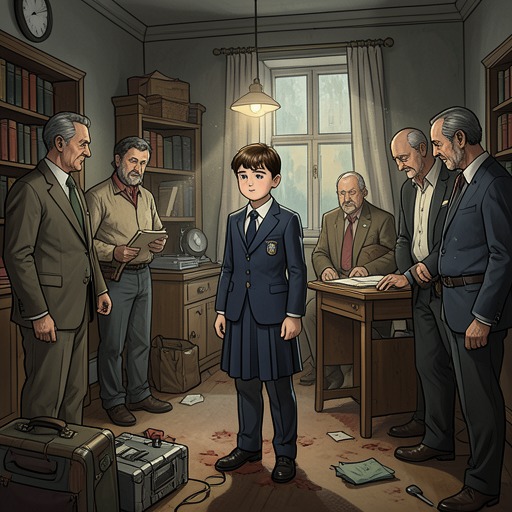
Robbins’s suicide
MovingMr Robbins’s suicide follows the exposure of abuse at Wyebourne and the school’s effort to contain the scandal. Found hanged in a wood near his mother’s house three weeks after Charlie left the school, he becomes a casualty of a crisis the institution had tried to hush up. The inquest concluded that his mental balance had been disturbed, a finding that provokes Edwina’s anger rather than settling the matter for her.
Scandal and Removal
After Charlie exposed the abuse, two other boys came forward, and the story broke open. Wyebourne put Mr Robbins on gardening leave and employed a new sports master described as heterosexual to the core, while a court case loomed: one of the other boys’ parents was determined to bring Mr Robbins down. The school’s immediate response combined a personnel change with an attempt to hush the scandal, even as legal consequences approached.
Charlie could no longer attend Wyebourne while the matter was pending, so he left immediately. He took a brand-new trunk full of barely used clothing with him; three weeks later, Mr Robbins was found hanged in a wood near his mother’s house. The sequence ties his death to the period of exposure and institutional upheaval without establishing a more specific cause.
Inquest and Edwina’s Response
The inquest concluded that Mr Robbins’s mental balance had been disturbed. Edwina objects to the attention given to his state of mind, asking what had become of her son’s. Her response shifts the focus from the inquest’s conclusion to the damage the scandal and its handling might have done to Charlie. Yet the narration notes that Charlie seemed to recover rather well, leaving Edwina’s indignation distinct from any claim that he remained visibly incapacitated.
Narrative Significance
Mr Robbins’s death comes after the school’s attempted concealment has failed and Charlie has been removed from the institution. The inquest offers a conclusion about Mr Robbins, but it does not answer Edwina’s wider accusation: the costs of the scandal cannot be measured by the fate of its central adult alone. Her reaction keeps the consequences for the boys, and the school’s responsibility toward them, in view.