Lucas Confesses to Edwina and Returns the Jewelry Box
MovingLucas Confesses to Edwina and Returns the Jewelry Box is the belated disclosure that Lucas arranged the theft of Edwina’s keepsakes. He brings the box back to her and admits that he handed over the keys to her house in exchange for money to settle a school debt. The confession cannot reverse his testimony or restore Charlie, but it replaces concealment with a concrete act of repair and brings the encounter between Lucas and Edwina to a spare, unresolved close.
The decision to return the keepsakes
The box is the only evidence that could connect Lucas to the robbery of the house. It had been ransacked, but the thieves left the objects that had no value to them: a wedding ring too small to be worth weighing, a lock of hair in a matchbox, a creased photograph of a family on a sun-bleached beach, and a Parma violets tin filled with baby teeth rather than sweets. These small, intimate contents reveal what the theft meant beyond the loss of saleable jewellery: the box held fragments of a family’s life that could not be replaced.
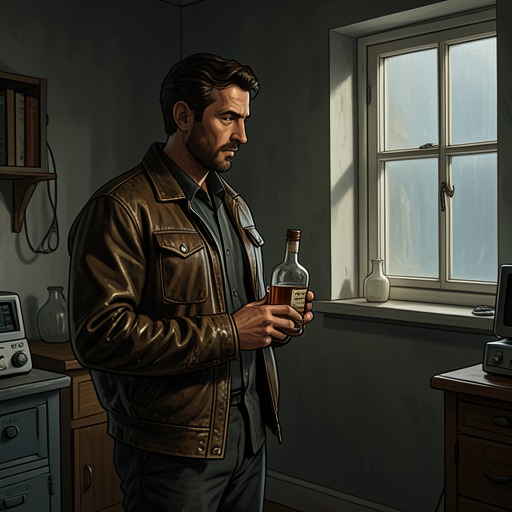
Before going to Edwina, Lucas wipes his eyes on a pillowcase. He knows that his decision comes too late to undo what he has done, but he cannot continue to live ashamed of some of his actions and wants, for once, to do something right. He puts the box back into the pillowcase because Edwina may want the contents returned. His purpose is not to claim that restitution will restore what was lost: he knows he cannot retract his evidence in court or give her back her son. Returning the keepsakes is the limited obligation he believes remains to him, and he hopes that doing it will let him move on.
The visit and recognition
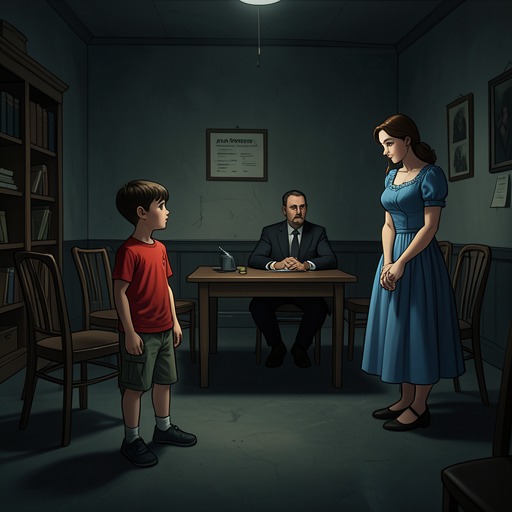
When Lucas arrives, Edwina does not recognise him. Fifteen years have passed since his father’s death, and Lucas is now substantially heavier. He introduces himself by asking, “I’m Lucas, please may I come in?” Edwina steps back, her hand at her throat. Lucas notices that she may be frightened of him, an implication of his size that embarrasses him, and walks in front of her while leaving her space. He says that he was passing and saw that the old house was for sale, offering an ordinary reason for a visit that carries a much more difficult purpose.
Lucas acknowledges the old antagonism between them, including that he disliked Alicia and Alicia disliked him, thinking him stuck up. He admits that he probably was. He connects his former assumptions to the schools he attended, which taught him to believe in things he no longer cares about. He then names what the family cannot change: the terrible things that happened, the court proceedings, and the deaths of Charlie and Elise. Against those irreversible losses, he can offer Edwina the returned box.
The box and the confession
Edwina recognises the pillowcase before she recognises the object inside it. She had bought the floral fabric decades earlier at a market stall, originally for the nanny’s room; it later became Lucas’s room and then a spare room with maps on the wall. Its return makes the box’s journey part of the family house’s history. The box itself has aged: its thin leather is worn, its colour has faded from bright red, and its golden clasp no longer shines.
At first Edwina fears that the box is too light because everything has gone. The ugly garnets and smoky pearls are missing, and its compartments are empty except for the bottom drawer. There she finds the keepsakes: her small wedding ring, Lucas’s hair, the children’s baby teeth, and the photograph of the family’s last day together. The distinction between the emptied compartments and the surviving drawer makes the return incomplete in material terms but deeply personal in meaning.
With his head in his hands, Lucas tells her that he arranged the theft. He was in trouble at school and owed money to someone who would not forget the debt. When that person offered a solution, Lucas accepted it: he handed over the house keys and told them when it would be safe to enter. He says that he got the money and no one was hurt, but recognises the larger consequence: in the end, they were all hurt. His explanation supplies the motive and method behind the robbery without presenting the original bargain as harmless.
Aftermath and significance
Edwina cannot speak. She trembles, presses her fingers hard against her mouth, and cries as the confession and the returned keepsakes meet in the same moment. Lucas stands to leave, believing he can go now and has other things to do. Edwina catches his hand with a fierce grip and thanks him. She does not apologise, and he does not look at her; she does not look at him either. Their business is done, but the encounter does not convert the return into a full reconciliation.
The scene’s change is deliberately bounded. Lucas acts on shame by confessing and returning what he can, yet the limits he names remain: he cannot change what happened in court or bring Charlie back. Edwina’s gratitude recognises the act without erasing those limits or requiring her to absolve him. The pillowcase and the nearly emptied box give that distinction physical form: what can be returned is returned, while the lost jewellery, the dead, and the past remain beyond repair.