Rowena’s eating disorder is discovered
MovingRowena’s eating disorder is discovered through Edwina’s retrospective account of how a mother’s growing unease became impossible to dismiss. The signs first emerge at the dining table: Rowena appears to eat, but carefully arranged scraps, concealed food and purging expose the gap between appearances and what her body is enduring. Edwina eventually involves the school and doctors; the intervention brings a rare moment of openness between mother and daughter, but not a complete recovery.
The Signs at the Table
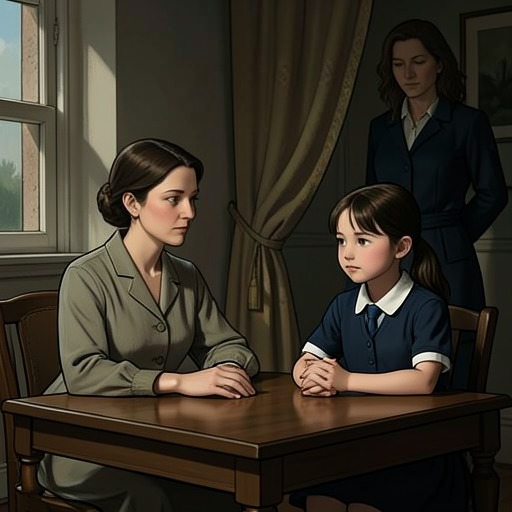
Edwina places her first suspicion when Rowena is about fifteen, sitting at the family table during her O-level year. Rowena smears food across her plate, cuts it into minuscule squares and chews repeatedly, while swallowing very little. The behavior is a performance of eating rather than an ordinary meal, and its setting matters: Edwina sees it in the dining room where the family’s formal habits make food and its presentation part of a shared ritual.
The pattern widens beyond that first observation. Rowena finds excuses not to join meals, claims to have eaten large portions of school dinners, and invents stories about toast binges after school. Edwina initially tries to fit these changes into less alarming explanations. Rowena is studying hard; perhaps she is not hungry, dislikes eating alone with two adults, or feels constrained by the formal dining room. Edwina even wonders whether eating more casually in the kitchen might help. These possibilities show her trying to accommodate her daughter, but they also postpone recognition of how little food Rowena is actually consuming.
Misreadings and Warning Signs
Dickie’s preference for proper dining-room meals sharpens the family tension around the problem. He enjoys an aperitif, a formally set table and Edwina dressed for dinner; an omelette served as a kitchen supper does not satisfy his idea of an evening meal. Against that expectation, Rowena’s avoidance can appear to be a disruption of household routine rather than evidence of serious distress. Dickie reassures Edwina that girls often go through unusual eating phases and calls dieting normal for women. He points to Barbara’s goddaughter, Elise Landreth, who had been sent home from boarding school after developing anorexia nervosa, but whom he believes is now fine.
Edwina’s own observations grow harder to reconcile with reassurance. Rowena’s uniform hangs loosely as she loses weight, and Edwina remembers a nagging fear. She also hears Rowena vomiting. Alicia finds napkins stuffed with putrefying food behind the radiators in Rowena’s bedroom, along with evidence of chocolate binges and empty laxative packets. These are not merely evasions at the dinner table: they reveal a concealed cycle of eating, hiding food and purging. The contrast between the carefully managed plate in public and the evidence hidden in the bedroom makes the disorder legible to the adults around her.
Intervention and Confession
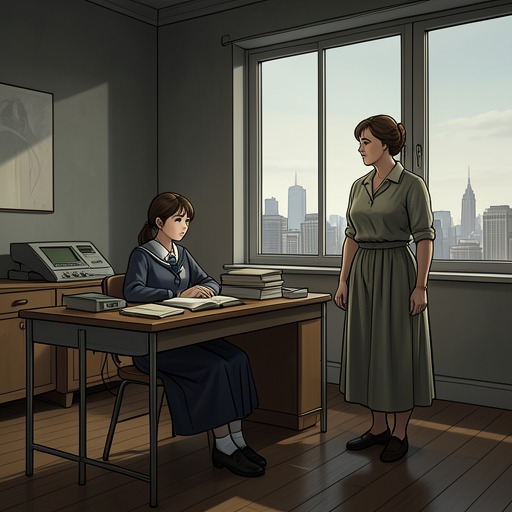
Alicia alerts Edwina to what she has found. Edwina then telephones Rowena’s school, and the call leads to distressing meetings with therapists and doctors. In those encounters, Rowena appears ashen-faced and caught out; the private behavior that had been disguised through excuses is now being examined by adults and professionals. The response is necessary, but the recollection does not present it as easy or uncomplicated.
At one point Rowena tells her mother that restricting food seemed to be the only thing she could control. Edwina holds her, and the two of them cry. The confession gives the symptoms an emotional meaning that the earlier household explanations could not reach: this is not simply a phase, a preference, or a refusal of Dickie’s meals. Edwina and the others congratulate themselves on having stopped the problem early, as if identifying it and obtaining help can secure a clear ending. The tenderness of the embrace is real, but so is the uncertainty in that premature confidence.
An Incomplete Recovery
Rowena never fully returns to eating without anxiety. She does not clean her plate or take seconds, avoids pudding unless she is drunk, and looks desperate with guilt when caught eating cheese. Food remains closely bound to stress: when upset, Rowena rejects it. The disorder’s discovery and the subsequent intervention therefore mark a turning point, not a cure.
Edwina’s recollection also sets Rowena’s response beside Lucas’s. When distressed, Lucas turns to the biscuit tin for comfort, while Rowena withdraws from food. The comparison underscores that the same broad need for comfort can take opposite bodily forms within the family. Looking back while preoccupied with the house and its history, Edwina recalls both the concrete evidence and the limits of what she and the family could do: they recognized the crisis, brought in help and shared a moment of truth, yet could not make eating uncomplicated for Rowena again.