Edwina opens Charlie’s trunk
MovingEdwina’s opening of Charlie’s leather trunk turns a long-guarded family object into a route back through memory—and into a discovery she had not expected. After years of leaving the trunk unopened, she works out its combination, pries it open, and finds Charlie’s art-school portfolio. Its first revealed drawing is a nude woman identified as Fern, a connection that gives the recovered object a new and unsettling significance.
The clue in the family dates
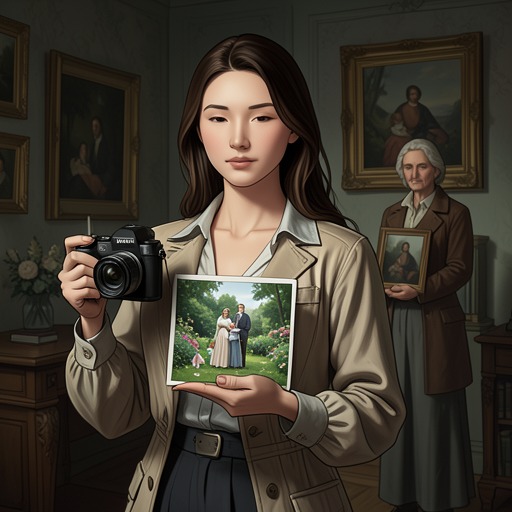
The discovery begins when Edwina pulls herself back from looking at a faded Polaroid of Rowena and Charlie. The photograph’s colours have weakened and its outlines blurred, but Edwina can still picture the freckles on their faces and the silver hoops of their christening rings. Charlie wears his cufflinks; Rowena wears her earrings. The image is not merely a keepsake: it prompts the sudden recognition that allows Edwina to approach the locked trunk differently.
The numbers 14.03.60 and 15.03.60 appear in the passage around this recollection. Edwina realizes that, besides his own birth date, the only other numbers Charlie would have committed to memory were those of his sister. The answer comes to her with the force of a solved crossword clue. Her recognition makes the combination more than a mechanical puzzle: it is a piece of family knowledge, recovered through the bond between the twins.
Getting the trunk open
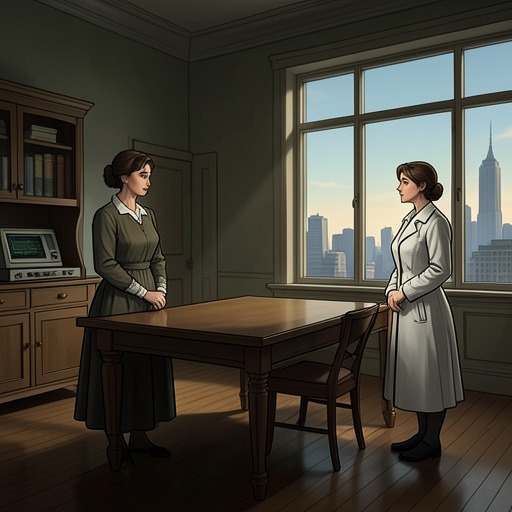
Edwina climbs to the top of the house, describing her decision as an adventure and an exploration of Charlie’s trunk. She knows its contents may include secrets she would rather not learn, but hopes they might also offer treasure or clues to how events came to their present state. The uncertainty is part of what draws her onward: opening the trunk promises knowledge, but cannot guarantee that knowledge will be welcome.
She turns an old laundry basket upside down and sits facing the battered leather case. Before trying the lock, she remembers the treasure-chest birthday cake Alicia made years earlier. No one had wanted to cut into it, though eventually they had to. The recollection gives the locked trunk a parallel role: like the cake, it holds something concealed that must at last be opened, even if the act carries a small reluctance.
The lock is rusty. Edwina takes a stick of lip salve from her cardigan pocket and rubs it into the mechanism to help the cogs turn. Her first attempt, 1-4-0-3, fails. She then tries 1-4-6-0; as she turns the final cog into place, the shackle springs free. The release is immediate, but it does not make the trunk easy to open. After years shut, its lid still resists her, so she works at the corners millimetre by millimetre, tugging until it finally gives way.
What Charlie left behind
Before lifting the lid, Edwina briefly thinks of Tutankhamun’s tomb and wonders whether disturbing the trunk might bring further bad luck. She dismisses the thought as an old-lady superstition and opens it wide. The contents are initially obscured by what looks like a thick layer of grey fur; she blows it away, fearing for a moment that everything inside may have turned to dust.
The first object she recognizes is Charlie’s art-school portfolio, an oversized vinyl zip envelope. Its zip moves around the case with peculiar ease. Edwina remembers that Charlie never let her see his work. He had been secretive about it, while she had been relieved to stay back, worried that she might think it dreadful. The portfolio therefore brings her close to a part of Charlie’s life that had remained private even while he was alive.
The drawing and its recognition
Inside the portfolio is a drawing in red chalk on grey paper. Edwina judges it to be more than thirty years old and reflects that the woman portrayed would now be in her fifties. The pose is a conventional life-drawing exercise; the model is naked and beautiful. Yet the force of the discovery lies not only in the image’s age or subject. Edwina recognizes something about the woman without at first knowing where she has seen her before.
The revelation is held at the edge of recognition: Edwina’s question about the sitter is followed by the identification FERN. Thus the trunk yields more than an artwork concealed among old possessions. It brings Charlie’s hidden artistic past into contact with a woman Edwina recognizes, turning the opening into a disclosure about the connections preserved in his work. The scene moves from a blurred family photograph, through a stubborn lock, to an image that makes the past newly legible without yet explaining all that recognition will mean.