Munich as a motif of memory and historical return
MunichMunich as a motif of memory and historical return connects Hugh Legat’s suppressed past with the political landscape he must enter again. The city is not merely the setting for a renewed meeting with Paul von Hartmann: it exerts a pull that Legat experiences as inevitability, and its transformed spaces make the distance between remembered friendship and the present regime impossible to preserve.
Return as inevitability
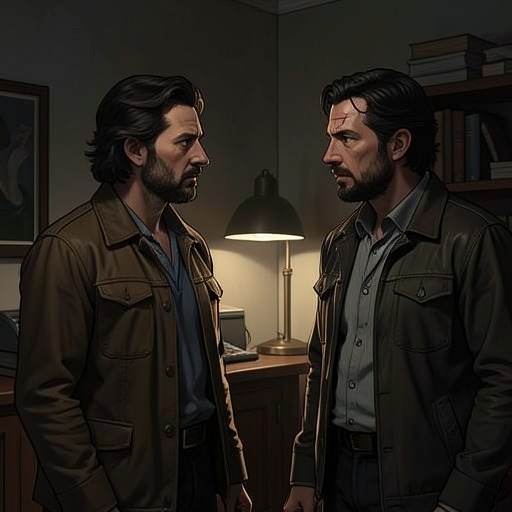
After being asked to act, Legat falls silent beneath the attention of the two men with him. His response is not simply a decision made in the moment. He senses that Munich has never finished with him, and that no matter how far he travels from the place and time associated with it, he will eventually be drawn back. The city is figured as a gravitational force: the past does not remain safely behind him but acquires a direction, bringing him toward another encounter.
That recognition changes the meaning of his assent. Legat agrees to do what is asked, but the scene frames his decision through a feeling of return rather than through a fresh beginning. His journey is already charged by the history that precedes it. Munich will be a destination in the practical sense, yet also the point where an unresolved personal and political past resumes its claim on him.
Oxford remembered on the way home
The return begins before Legat reaches Munich. Walking home from Number 10, he passes the Abbey, and memories he had consciously kept down for half a decade seem to follow him. They are memories of Oxford, not simply of Germany. The shift matters: Munich’s pull reaches into a friendship formed earlier, making the past broader than the political crisis that first binds the two men together.
Legat recalls Hartmann beside him on an evening walk along the Turl, speaking of night as the best time for friendship. In the lamplight, Hartmann’s profile, cigarette, and smile return with startling definition. Legat remembers the contrast between Hartmann’s apparent maturity in their Oxford student world and his adolescent, theatrical melancholy. He also remembers Hartmann climbing onto Magdalen Bridge and threatening to throw himself into the river because he believed their generation was mad. Legat had answered that the result would only be wet clothes and perhaps a chill. The remembered episode preserves both intimacy and comedy: even a dramatic declaration of despair had once been met by the practical ease of an old friend.
Hartmann’s reflections on the English also remain word-perfect in Legat’s mind. He had complained that the English lacked distance, both from one another and from experience, and treated that distance as the secret of English life. The remembered words make the friendship an exchange of perceptions as well as shared youthful scenes. At home, however, Legat finds the house empty, as he had left it. The contrast between the vivid company restored by memory and the silent present sharpens the sense that recollection can bring someone close without undoing separation.
A remembered landscape remade
When Hartmann walks through Munich, he has spent years avoiding this part of the city. The route from the station passes the Old Botanical Gardens, a girls’ school, and academic buildings before reaching Königsplatz. In memory, the open space retains a very different scale and texture: a checked blanket beneath the trees, Leyna in a white dress, a picnic, Hugh reading, and grass drying in the sun. The recollection gives the place an intimate, ordinary life, defined by shade, reading, and shared leisure.
The actual square abolishes that remembered image. Hartmann stops, sets down his suitcase, and confronts a vast parade ground where the park had been. Tens of thousands of granite slabs replace the grass; trees give way to metal flagpoles, with enormous swastikas hanging from two of them. The Temples of Honour contain bronze sarcophagi for those killed in the Beer Hall Putsch, while eternal flames and motionless Nazi SS guards turn the open space into a political spectacle. The Nazi Party administration buildings dominate the view beyond them. The force of the scene lies in the direct collision between two versions of one place: a picnic remembered in detail, and a monumental landscape that has made private memory seem almost impossible to inhabit. Hartmann’s brief exclamation that it is all gone gives that transformation its personal weight.
The past repeated under surveillance
The renewed meeting between Hartmann and Legat takes place in the same altered civic landscape. Legat follows Hartmann through the Führerbau’s subterranean service passage and emerges into a courtyard of black Mercedes. Hartmann does not simply lead him across Königsplatz; he keeps about a hundred yards ahead, guiding him past the Temples of Honour and another monumental building, then along a street of offices displaying swastikas. The route passes signs for the Office of the Deputy Führer and the Reich Central Office for the Implementation of the Four-Year Plan before reaching the Park-Café.
Inside, the crowded bar is filled largely with workers from nearby government offices, and brown Party uniforms are conspicuous. Hartmann sits with his back to the room but facing a mirror, positioning himself so that he can watch what is happening behind him. The old friend’s familiar grin returns when Legat takes the opposite seat, but Hartmann immediately asks whether he has been followed. Their reunion therefore repeats the intimacy of friendship under radically changed conditions: recognition remains, while vigilance has become necessary. Hartmann’s welcome to the new Germany makes that altered reality explicit without dispelling the warmth of their recognition.
Affection and unresolved absence
The return also reopens the question of Leyna. Legat has promised himself not to ask what happened to her, yet he asks anyway. Hartmann’s gaze shifts away and his mood changes before he says that they no longer speak. The moment interrupts the easy familiarity of the reunion: a name from the remembered Munich scene exposes a separation that neither the old friendship nor the city’s return can repair.
Even the smallest exchange carries the past forward. Legat has no German money for the beers, so Hartmann pays, calling it his round as they used to do. He then recalls the English pubs and asks after people from their former life, including Isaiah. The gesture joins present necessity to an old shared vocabulary, while the unanswered or unresolved questions preserve the distance between then and now. Across the novel’s returns to Munich, memory restores faces, words, and places with precision, but it cannot restore the world they belonged to. The city’s political transformation and the friends’ personal losses make return an encounter with what survives—and with what is irretrievably gone.