Gas masks and civilian war preparedness
MunichGas masks and civilian war preparedness give the approaching war a domestic, bodily scale in Hugh Legat’s story. A black rubber mask brought to an anniversary dinner, the children fitted for their own equipment, and trenches dug in Green Park make the crisis tangible before fighting begins. The masks are practical objects, but their recurring presence also exposes the distance between public efforts to sound composed and the private fear that war may soon reach civilian families.
Objects of Civilian Preparation
The first image is not a battlefield but a dining room. Through thick plate glass, workmen dig slit trenches in Green Park while guests and waiters move unusually quietly among the restaurant’s chairs. The scene places visible preparation for attack alongside the rituals of ordinary life: Legat has come to meet Pamela Legat for their anniversary, and she arrives carrying a small cardboard box as well as her handbag.
Inside is a gas mask: black rubber, with a metal snout and vacant glass eye-sockets. Legat recoils from it. Pamela explains that she has taken their children for a fitting and that she has been instructed to put their masks on before her own. Her wry question about maternal devotion cannot make the procedure seem ordinary; the mask’s grotesque, impersonal appearance makes the danger difficult to keep at a distance. Preparedness has entered the family not as an abstract government measure but as equipment that must fit a young child’s face.
The details of the meal sharpen that intrusion. Pamela orders Dover sole with green salad without consulting the menu, and Legat orders the same, but he cannot think about food. Their children, John, who is three, and Diana, who is two, have taken the fitting as a game rather than a frightening experience. Legat, by contrast, imagines them wearing the masks and remembers his everyday cautions about running too fast, keeping warm, and not sucking on toys or crayons. He pushes the box out of sight with his foot. The gesture hides the object from view, not from thought: the family’s ordinary care for children now has to coexist with preparation for a danger the adults cannot explain away.
The Crisis Enters the Household
The dinner conversation makes clear why the masks have appeared. Asked what will happen, Legat says that talks are still under way in Berlin and tries to sound optimistic. But the timetable he gives Pamela is stark: Adolf Hitler has said he will cross the Czech border on Saturday, and military experts estimate that German tanks and artillery will need three days to take position. On that calculation, mobilisation must begin the next day. The newspaper headline and the cardboard box belong to the same crisis: one gives its timetable, the other its possible effect on civilian life.
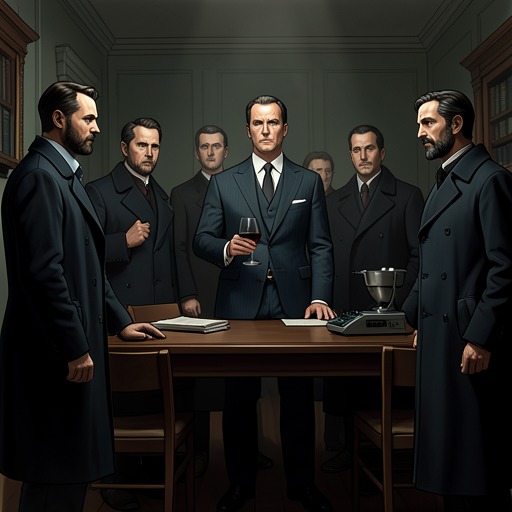
Legat tries to change the subject, but the threat returns in the government’s deliberations. Neville Chamberlain tells the Cabinet that Adolf Hitler has rejected even a short wait before invading the Sudetenland. The proposed orderly transfer of the territory, subject to a plebiscite, has given way to an ultimatum. If France acts under its treaty obligations to Czechoslovakia, Britain expects to support France; the diplomatic breakdown makes the prospect of war immediate rather than hypothetical.
The preparations described to the Cabinet are incomplete. Britain has only about a third of the guns believed necessary to defend London, most of them obsolete, and is also short of searchlights and ranging and communication equipment. Officials had counted on another year to prepare. The Joint Intelligence Committee forecasts 150,000 casualties in London by the end of the first week of bombing and 600,000 by the end of two months. Against those figures, a gas mask is both a piece of individual equipment and a small, visible measure of how unready the country remains. Legat records the discussion in bureaucratic language, but the image of his children in masks breaks through the composure of his notes.
Preparedness as a Political Choice
Civilian readiness sits beside a larger question of whether Britain should signal its willingness to resist. Chamberlain observes that partial mobilisation would mean Britain mobilising before Germany. His advisers argue that it could demonstrate that the country is not bluffing and might make Adolf Hitler reconsider. Chamberlain counters that a show of resolve could instead provoke him, since he believes Hitler cannot tolerate losing face. The issue is therefore not simply whether Britain is prepared, but whether making that preparation visible could deter an attack or hasten one.
The uncertainty gives the masks a double meaning. They express an effort to protect civilians, but they also testify to the limits of protection: the Cabinet is considering mobilisation while acknowledging shortages, obsolete guns, and catastrophic forecasts. The government’s practical preparations cannot settle the political choice, and the political debate cannot remove the need for families to prepare. At the anniversary table, the mask is moved underfoot; in the Cabinet Room, the same underlying danger is translated into figures, equipment shortages, and decisions about military readiness.
Public Language and Private Fear
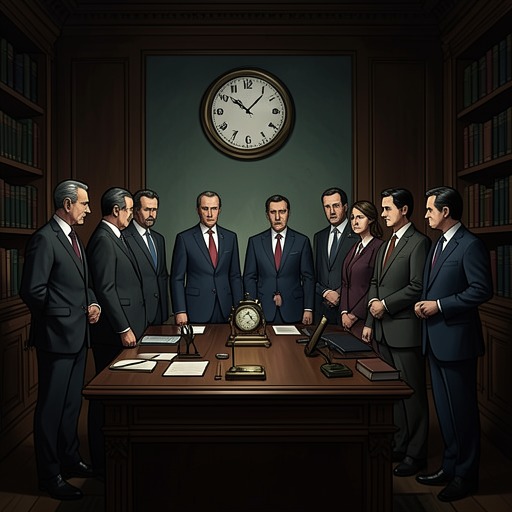
The image of masks reaches beyond Legat’s family when Chamberlain drafts a statement describing the absurdity of digging trenches and trying on gas masks because of a quarrel in a distant country. The phrase draws together the two preparations that have framed the crisis: trenches in the park and protective equipment for civilians. What sounds geographically remote in political language has already arrived in the city and the household.
Chamberlain also warns Legat that the country is not only militarily and psychologically unprepared: he fears for its spiritual health if its leaders do not do everything possible to avert another great conflict. The memory of the previous war is part of the pressure. He believes a new war would be infinitely worse and that the people would need great fortitude to survive it. His warning gives civilian preparation a moral dimension: masks and trenches may be necessary, but their presence is also evidence of what political leaders are trying, and may fail, to prevent.
The narrative repeatedly sets visible readiness against emotional denial. Pamela calls the children’s fitting a game; Legat attempts optimism and then pushes the box away; Chamberlain’s official language cannot keep the image of civilian danger at a safe distance. When news arrives that Benito Mussolini has asked Adolf Hitler to postpone mobilisation for twenty-four hours, the reprieve is explicitly temporary, and Hitler has agreed to it. It changes the clock, not the conditions that made the masks necessary. Civilian preparedness remains suspended between precaution and imminent war.