Navi and Dareh: Father and Son, King and Heir
NeverthelessNavi Spyridaki and Dareh’s relationship is shaped by a double bond: they are father and son, but they also stand on opposite sides of a public duty that demands action from both. The book reveals their closeness less through extended private conversation than through consequential moments. Dareh’s counsel helps Navi acknowledge an emotional responsibility he had resisted; later, as danger approaches Navon, the king watches his son leave to defend the kingdom and does not ask him to stay. Their affection is present, but it cannot erase the obligations attached to their positions.
Family and Political Roles
Dareh is Navi’s father and the king of Navon; Navi is his son and a prince. The story gives those identities practical force rather than treating them as titles alone. In the throne-room discussion about Shai and the deserters, Navi is asked what should be communicated to them. He says he must first persuade some people and that there will be a vote. Dareh then enters and immediately offers his own vote, asking Shai whether he will lead the men who are to fight alongside the royal forces. Shai confirms that he will.
That exchange places father and son within the same political crisis, though their responses are not identical. Navi describes persuasion and a vote as steps still to be taken; Dareh makes his support explicit and asks whether Shai will accept command. The scene does not frame the king’s intervention as a rebuke to Navi. Instead, it shows the two men participating in decisions about Navon’s defense, each acting from a position of authority. Their family connection exists within, and is tested by, the public work of governing.
Counsel and Navi’s Sense of Responsibility
A more intimate aspect of their relationship appears when Navi explains why he has changed his approach to Mabel Peloponnese. After she questions his honesty, Navi says, “My dad told me something.” When she asks what, he explains, “He said that not talking to you was bothering me as much as talking to you.” He connects that realization to their first meeting in the hall: at the time, he had not known Mabel would become his responsibility, and seeing Shai do what he believed he should have done made him recognize the omission.
Navi’s account presents Dareh’s influence as counsel that changes how his son understands his conduct. The point is not simply that Navi feels responsible for Mabel; he admits that avoiding her has also troubled him. His father’s words, as Navi describes them, help bring that conflict into view. The advice does not remove Navi’s uncertainty or settle the disagreement between him and Mabel. It does, however, prompt him to speak more openly about why he has reconsidered his silence and his obligations.
The exchange also distinguishes responsibility from uncomplicated authority. Mabel tells Navi that he is not responsible for her. He insists that he is, while limiting what he is willing to allow: he offers to restore her kitchen position but says she will not train with the soldiers or fight in a war. The scene concerns Navi and Mabel directly, yet Navi’s explanation roots his altered judgment in his father’s counsel. Dareh’s influence therefore reaches beyond a political decision; it enters the way Navi weighs personal attachment against what he believes he owes another person.
Duty at the Castle
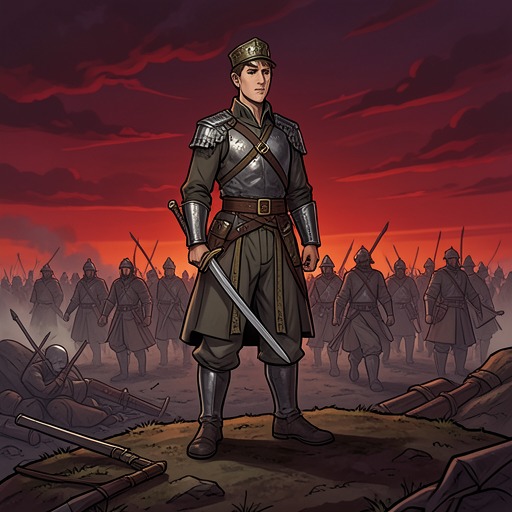
The clearest expression of Dareh’s paternal feeling comes when Tzara threatens Navon. Villagers are making their way toward shelter inside the castle, but Navi leaves the castle rather than entering it. Dareh meets him on the way. The king nods to his son, and his apprehension is visible; he wishes he could stop Navi, but does not ask him to turn back. The narration explains that Dareh would not ask this when defending the kingdom is what is expected of Navi.
This restraint gives their bond its sharpest tension. Dareh’s concern is not absent or concealed: he wants to prevent his son from placing himself in danger. Yet the king’s private wish cannot override the public expectation that Navi take up the sword. The passage does not present this as emotional indifference. Dareh’s silence instead marks the point where a father’s desire to protect his son meets a ruler’s recognition of what the prince must do.
A Bond Shown Through Choices
The two principal glimpses of their relationship work in different registers. In the conversation about Mabel, Dareh’s influence reaches Navi through advice and self-examination; in the crisis at the castle, the relationship is conveyed through a nod, visible apprehension, and the words the king does not say. Together, the moments show both communication and restraint: Dareh has spoken in a way Navi remembers, but when Navi goes to defend Navon, the king cannot make that remembered counsel a reason to keep him safe at home.
Their relationship is consequently neither separate from politics nor reducible to it. The decisions around Shai’s proposed leadership place them on the same side of Navon’s defense, while the threatened city makes the personal cost of that defense immediate. Dareh’s paternal concern remains clear even as he accepts the duty attached to Navi’s position. The book leaves their bond in that unresolved balance: a father would rather stop his son, a king does not, and Navi goes where the kingdom expects him to be.