Grammy
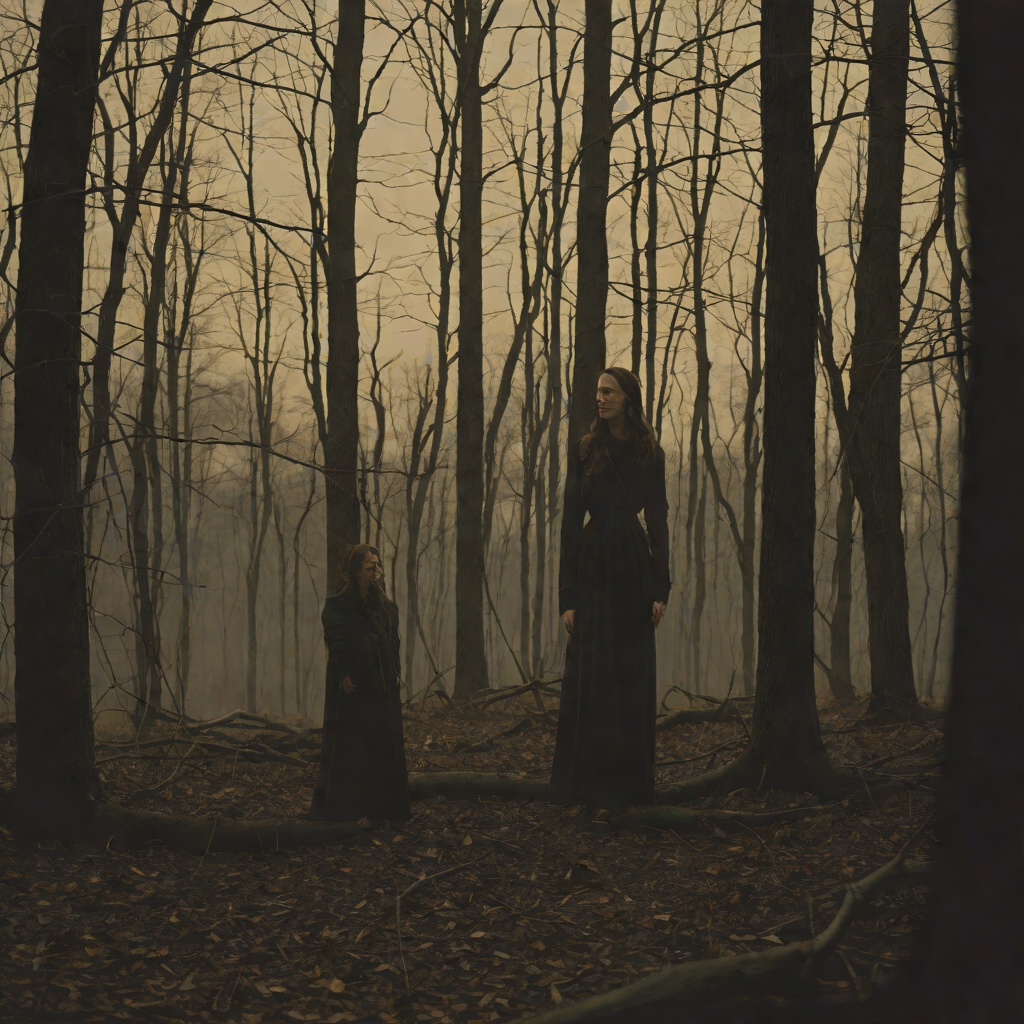
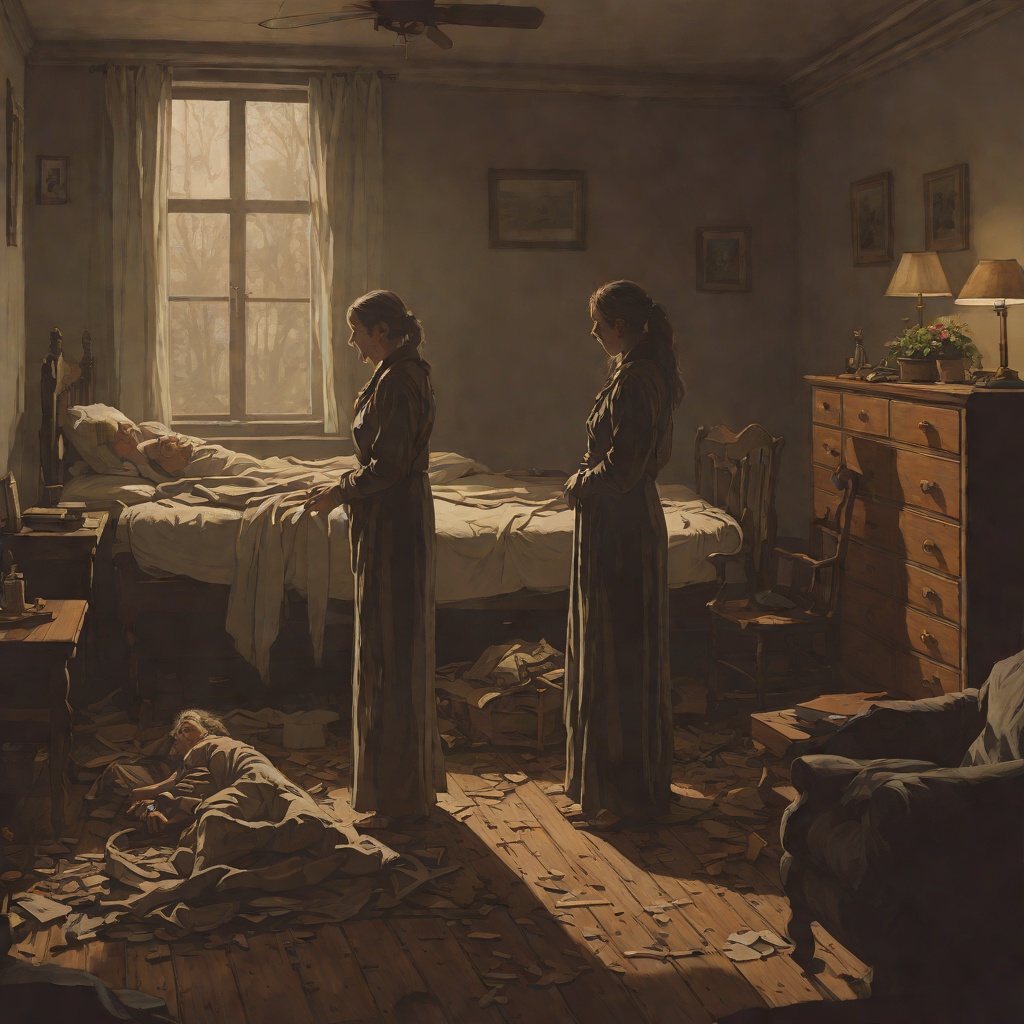
NightbitchGrammy is the near-blind, German-speaking grandmother of Nightbitch, a wrinkled old woman who lives in a little house on the family property and wears only plain dresses and plain shoes. She is the mother of Nightbitch's mother, and she barely speaks English, muttering instead in convoluted German. She sits silently in a straight-backed chair on her little porch, smiling as she basks in the sunlight, and her small shack smells of garlic and dirt and candle wax. In the novel's memory economy, she is the keeper of an older, earthier female tradition—one that runs through spells and herbs rather than through the holy, selfless domesticity that Nightbitch's mother practices. Her little book, whose worn cover features hex signs and unfamiliar symbols, with its text all in German, is the tangible archive of that tradition, and it is to this book that the young Nightbitch turns when she needs help that her parents cannot or will not give.
The Spell for the Kittens
The central scene of Grammy's life, as Nightbitch recalls it, is the spell she casts to protect a litter of stray kittens. The kittens had followed the girl on her long walk to the bus each morning, and she sobbed and threw rocks at them, scolded them, and told them to go back home, but they knew her fingers tasted like milk and wanted to lick them and be tucked away in her warm jacket. She begged her parents to take the animals inside so they would not follow her, wander far from home, and become lost for good once she boarded the bus; she imagined them crying all day in the rocky lane, hungry and cold, then wandering off into the woods to be eaten by a fox. Her parents, wide-eyed at her despair, claimed the kittens would be fine and pushed her out the door, telling her she would miss her bus. They could not be bothered to watch over the animals, for they were just animals, and the girl ran the half-mile to the bus stop crying, her legs hot, her lungs full of gravel, loving the kittens as if they were her own children. In this way she knew there was some horrible chasm between her and her parents that would never fully be spanned, and she felt very alone waiting for the bus, her face wet and shoes muddy, in the forever shade of the dark woods under a no-sun sky.
It is to Grammy that the girl goes for a solution. The old woman, smiling with her whole face lighting, bids the child enter her shack and pulls the little book from her nightstand, thumbing the soft pages. When the girl wonders how she could read the faded words, Grammy pulls a magnifying glass from the stand to examine the book more closely, studies it for a time looking for just the right page, and then takes it to the kitchen table, where she leaves it open to consult intermittently while pulling jars from her shelves and putting a heavy metal pot on the open fire. As the girl watches, she dumps into the pot dried herbs and fresh ones, along with an amount of carefully measured water drawn from the hand pump at the crude sink. She tells the girl to collect three dandelion heads from the lawn, which she does obediently, and as she comes back into the shadowy house, she sees her grandmother slipping the body of a small rodent into the brew. When all the ingredients have been collected and concocted, they drink chamomile tea until the pot reaches a boil, at which point Grammy takes it from the fire with a towel wrapped round its handle and carries it to the fence line at the edge of the pasture, where she dumps the boiling mixture under and along the fence while mumbling quietly in German. The next day, all the weeds are dead where they poured the concoction, the rodent body is gone, and the kittens are asleep in their nest as the girl leaves for school.
The Mother's Counterpoint
The memory of Grammy is framed against the figure of Nightbitch's mother, who is good and responsible and holy and always somewhere far away in her own head, or with a headache, or napping, or just asking to be left alone. The mother tells the girl to forget her grammy and her book, to be serious, to do something sensible. For years the girl thought her mother was pushing her out the door, away and away, go fast, and she read this as a sort of abandonment. But in the recovered memory, she sees it for what it was: her mother's best love. The novel then poses the questions that the memory unlocks—how many generations of women had delayed their greatness only to have time extinguish it completely, how many women had run out of time while the men didn't know what to do with theirs—and names the mean trick of calling such things holy or selfless, the evil of praising women for giving up each and every dream. Grammy's spell, in this light, is not merely a piece of folk magic but the counter-tradition to that holy self-erasure: a woman's knowledge that acts in the world, that protects the vulnerable, and that passes from grandmother to granddaughter through a book written in a language the girl cannot yet read.
The Great Forgetting and Return
Nightbitch notes that it had been so long since she remembered all this, so long since she'd even thought of it, for there had been a great forgetting when she left home—a purposeful forgetting, because to forget her childhood meant she had survived it. The return of the Grammy memory is therefore not a simple nostalgia but a deliberate excavation, a reversal of the survival mechanism that had buried the past. Grammy's reappearance in the narrative carries the weight of that recovered knowledge: she is the figure through whom the novel connects Nightbitch's own transformation into a dog-mother to a longer lineage of women's magic, and her spell for the kittens—protecting the small and helpless through a mixture of herbs, rodent, dandelion, and German muttering—prefigures the novel's central concern with what women do when the identities available to them fail. Grammy is the proof that the unbelievable is another way of knowing, and that the knowledge women carry is not lost but only forgotten, waiting to be remembered when it is needed again.