The Boy
NightbitchThe Boy is the toddler son of Nightbitch and The Husband, a child whose every cry, gesture, and need shapes the novel's central drama of maternal transformation. He is less a conventional character than a gravitational force: his sleeplessness, his unspoken language, and his unhesitating acceptance of his mother's animal nature drive the plot and illuminate the story's deepest themes. By the novel's end, The Boy stands beside Nightbitch onstage, holding the body of a freshly killed rabbit, a living emblem of the wild, unbroken lineage she has reclaimed.
Identity and Early Life
The Boy is introduced as a baby who "grew. It widened and lengthened. It grew more charming and less." He walks but does not talk until well past medically agreed-upon speech milestones, because he shares a near-psychic bond with his mother, who can intuit his needs from the position of his eyes or the tilt of his hands. In those early years, she is the only person in the world who can understand him, the sole speaker of their private, unspoken language. He cries when she tries to leave him with a family friend, with a babysitter, and even with his own father, so that a simple grocery trip becomes an expedition requiring a diaper bag packed with snacks, wipes, a bottle of water, a change of clothes, toys, and a book. His refusal to be separated from her cements her role as the primary, indeed the only, caretaker, and it is this total dependence that first exhausts her and later binds them together.
The Boy in the Parental Bed
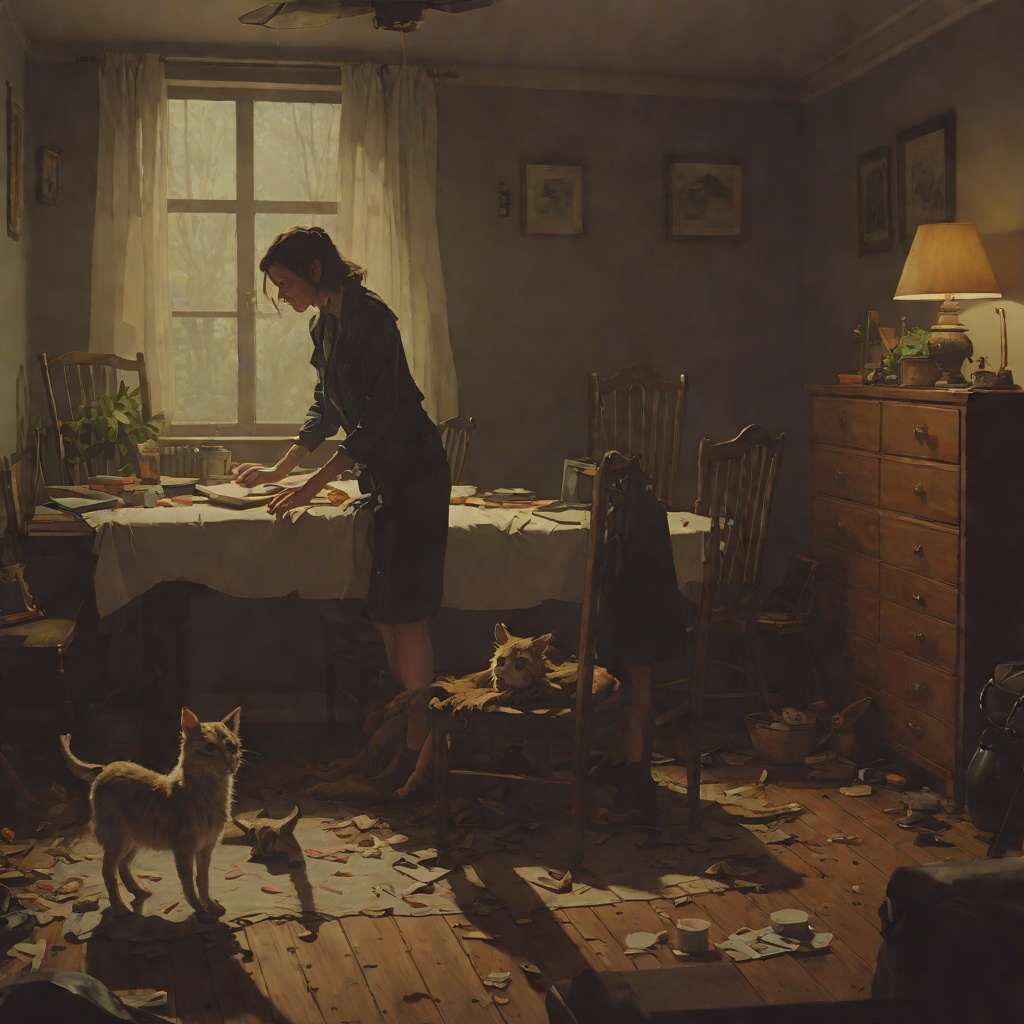
On a regular Friday, in the deepest hours of night, The Boy awakens in bed between his mother and father, for he will not sleep in his own bed. It is the third or fourth time that night he has stirred, and his mother has lost track. She waits for her husband to wake, which he never does, because that is not a thing he ever does. She lies as still as a corpse while the boy wails, her child's screams fanning a flame of rage that flickers in her chest. This scene establishes The Boy as the immediate trigger of Nightbitch's fury, the innocent agent of her sleeplessness and her mounting sense of entrapment. Yet even in her rage, she does not move to comfort him, waiting instead for a husband who will not stir—a moment that crystallizes her isolation and the unequal division of parental labor.
The Boy and the Dog
When The Husband returns from a week away for work, he finds The Boy—happy and clean, in only a diaper—sitting beside a dog stretched out on the clean rug. The dog is enormous, wolf-like, with a thick coat of silver-and-black fur, and it opens one eye to watch him. The Husband asks, "Baby, where's Mama?" and The Boy claps and laughs, crying "Dog!" joyfully, then wraps his doughy arms around the animal's neck and lays his tiny head on her chest. This is the moment The Boy recognizes his mother in her canine form without hesitation or fear, accepting her transformation as natural and even delightful. His uncomplicated love contrasts sharply with The Husband's bewilderment, marking The Boy as the one character who fully embraces Nightbitch's animal self from the start.
The Boy as Companion in Transformation
Nightbitch's growing identification with dogs reshapes her parenting. She and The Boy drink from a shiny stainless-steel dog bowl, sharing it with the cat because "they're good dogs." She barks from sheer happiness and The Boy barks too, then scratches her on the head. She reflects that she is becoming a better mother because she is becoming a better dog, and that dogs don't need to work or care about art. The Boy becomes her partner in this feral play, a fellow creature who delights in the same instincts she is rediscovering. His willingness to join her in doggy games—drinking from the bowl, barking, scratching—validates her choice to abandon human ambition and recede into the wildness of her deepest dreams. He is not a witness to her transformation but a participant in it.
The Boy in the Final Performance
In the climactic stage performance, Nightbitch appears onstage with The Boy, to whom she delivers the limp body of a bunny for him to sniff and then caress. As the curtains close, the few audience members who have not fled see a feral woman and her offspring with the still-warm body of a rabbit in his hands. They report that the duo emanated a beauty they had not seen before, despite protestations that exposing a child to such a thing was abuse. The Boy's presence transforms the performance from a spectacle of violence into a testament to maternal power and the unbroken lineage of togetherness. Nightbitch looks upon her perfect son, a person she made with her strongest magic, standing in a blinding spotlight as if he were not a miracle. The Boy is thus not merely her child but the living proof of her transformation, the one who completes her vision of a life lived through mystery and metaphor, without explanation.
The Boy and the Theme of Lineage
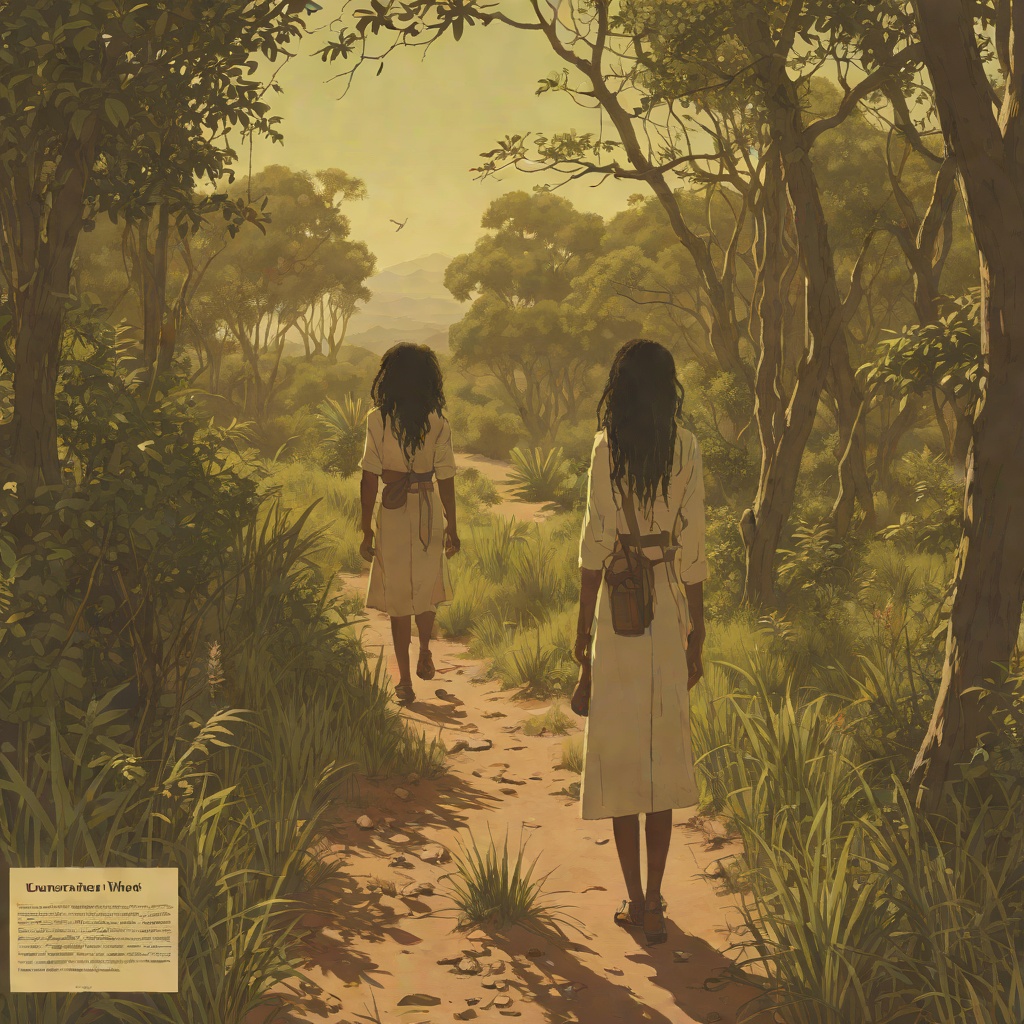
Nightbitch's reflections on her own mother and grandmother deepen the meaning of The Boy's role. She recalls her Appalachian upbringing, her grandmother's spell book, and her mother's distant, holy selflessness, and she reinterprets her mother's pushing as "her mother's best love." She thinks of how many generations of women had delayed their greatness only to have time extinguish it completely, and how evil it is to praise women for giving up each and every dream. The Boy stands at the end of this lineage, the recipient of a new kind of inheritance: not the suppression of female power but its full, feral expression. In the deepest moments, Nightbitch cannot tell herself apart from her son, who is so evidently a part of her that she feels a vertigo of sameness. She imagines one day caring for her aging parents in the guest room, bathing and changing them with gratitude and reverence, because they are parts of her. This must be what it means to be an animal, she thinks: to look at another and say, "I am so much that other thing that we are part of one another." The Boy embodies this animal truth, the warmth of the cave where creatures pile together to save their warmth, breathing and dreaming together through an unbroken lineage of togetherness. He is the future of that lineage, the one for whom Nightbitch reclaims her monstrous, beautiful power.