The Working Mother
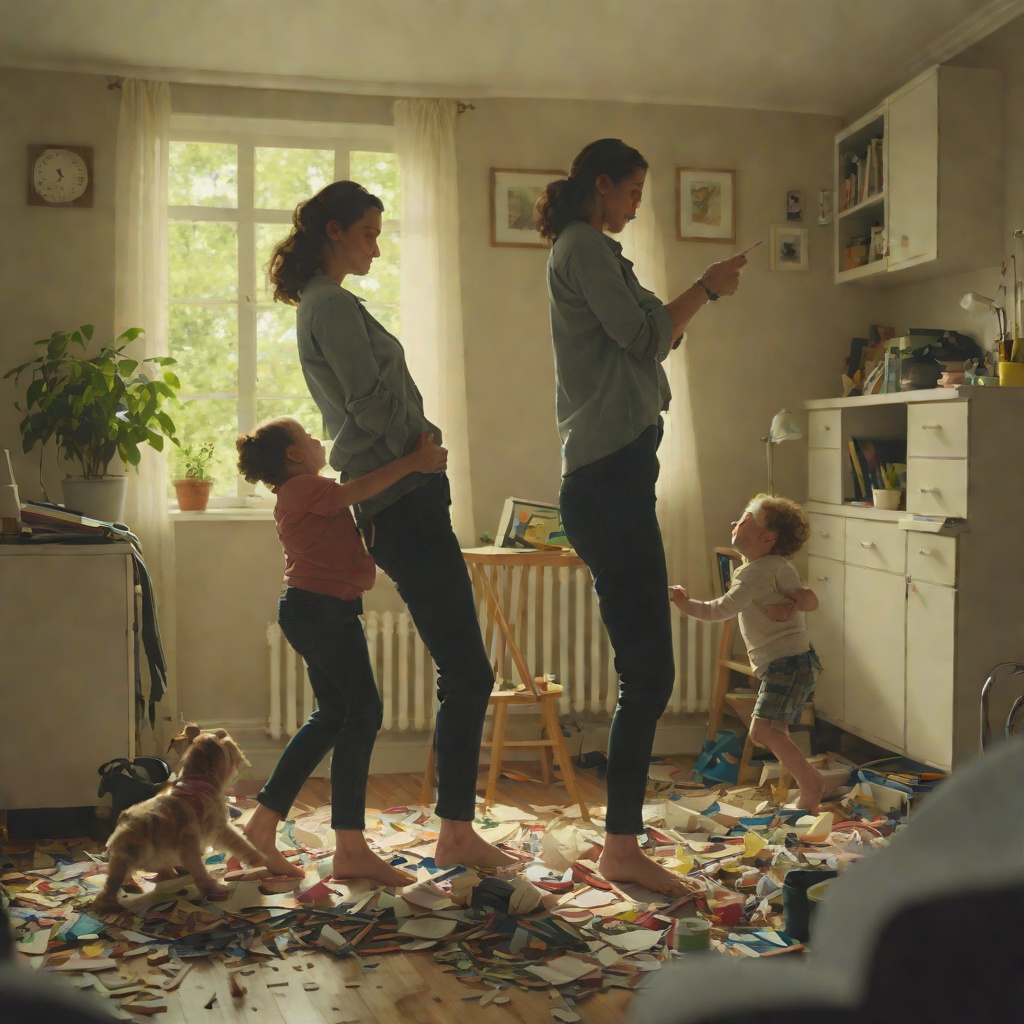
NightbitchThe Working Mother is a former graduate school peer of Nightbitch's who now teaches at the university they both attended. She is also an artist, and she has, in Nightbitch's eyes, "seamlessly transitioned into motherhood without so much as a mean-spirited hiccup." Nightbitch watches her from a distance, primarily on social media, where the Working Mother posts milestones like "First day of day care!" and "Helping Mommy with her installation," the baby strapped to her chest as she works with chicken wire in a gallery. This image of effortless integration becomes a painful benchmark for Nightbitch, who asks herself, "Why can't I do that? How can it be that easy?"
Identity and Introduction
The Working Mother first appears in Nightbitch's thoughts as the "kind working mother" who invites her to coffee. She is described as a working mother who is also an artist, having been in the same graduate program as Nightbitch. She now teaches at the university they both attended and makes art, all while managing motherhood with apparent ease. Nightbitch, grimly watching her on social media, sees her as the embodiment of the popular societal myth that a top-notch education and a career can free a woman from the drudgery of motherhood. The Working Mother's life seems to confirm that a woman can return to work after having a baby and sidestep the historical constraints of motherhood, a myth that Nightbitch has bought into and now finds shattered by her own experience.
Life and Plot Trajectory
The Working Mother's trajectory in the novel is marked by a series of encounters that highlight the contrast between her life and Nightbitch's. After Nightbitch quits her job, the Working Mother texts to suggest a lunch at the park, saying, "You bring your son and I'll come over on my break and we'll just chat and catch up." Nightbitch agrees, planning to show her friend how she is "really settling into her stay-at-home-momming," how she is happy and fulfilled, and how she doesn't even need art or a career. This meeting, however, never fully materializes in the narrative; instead, the Working Mother reappears at a dinner with old grad-school friends, where she immediately launches into a description of her latest artistic project. She has been "confronting and complicating the notion of appropriation, artistic ownership, and public persona by recontextualizing Instagram posts within works of art." Her method, as Nightbitch sees it, is simply to print out Instagram posts in large scale, and that is the art. Nightbitch has read about this project on her website and in the Times, where she saw that a recent piece sold for half a million dollars. The Working Mother's success is a stark contrast to Nightbitch's own stalled career and her descent into what she fears is a transformation into a dog.
Key Actions and Objectives
The Working Mother's key actions are largely performative and social. She initiates the coffee invitation, the lunch suggestion, and attends the dinner with grad-school friends. Her objective, implicitly, is to maintain a connection with Nightbitch, perhaps out of genuine friendship or perhaps to showcase her own success. At the dinner, she dominates the conversation with her artistic achievements, explaining her work before they even order. She also appears at the final backyard performance, where Jen, the event ambassador, takes special note of her arrival, knowing that Nightbitch would want her old grad-school friends to have the very best seats. The Working Mother's presence at these events serves as a constant reminder of the path Nightbitch did not take—or could not take—and the ease with which the Working Mother navigates the very challenges that are tearing Nightbitch apart.
Relationships and Conflict
The relationship between Nightbitch and the Working Mother is one of envy, resentment, and a desperate desire for validation. Nightbitch watches her on social media, grimly, and asks herself why she can't be like her. The Working Mother represents the "other" kind of working mother—the one who has it all without a hitch. Nightbitch's internal conflict is sharpened by this comparison: she feels that the Working Mother's life is a sham, a trick to get women to do everything, yet she also longs to be like her. The conflict is not overt; the two women are cordial, even friendly, but the tension is palpable in Nightbitch's mind. The Working Mother's effortless success makes Nightbitch's own struggles feel like personal failures, fueling her mother-rage and her sense that society, adulthood, marriage, and motherhood are "masterfully designed to put a woman in her place and keep her there."
Change and Ending
The Working Mother does not undergo a transformation in the novel; she remains a static symbol of the unattainable ideal. Her final appearance at the backyard performance, where she is given the best seats, underscores her role as an audience member to Nightbitch's metamorphosis. Nightbitch, by contrast, has embraced her identity as Nightbitch, complete with coarse black hair and a tail, and has rejected the very world the Working Mother inhabits. The Working Mother's presence at the performance is a final, ironic juxtaposition: she watches as Nightbitch performs her doggy self, a spectacle that the Working Mother, with her Instagram-art and her seamless life, could never understand. The Working Mother's ending is not her own but Nightbitch's—a rejection of the myth she embodies.
Narrative Role and Evaluation
The Working Mother serves as a foil to Nightbitch, highlighting the impossibility of the "have it all" ideal. She is a narrative device that externalizes Nightbitch's internal conflict between ambition and motherhood, careerism and instinct. Her presence in the story—through social media, coffee dates, dinners, and the final performance—anchors Nightbitch's critique of the system that pits women against each other and against themselves. The Working Mother is not a fully developed character in her own right but a symbol of the societal pressures that drive Nightbitch to her transformation. Her evaluation, from Nightbitch's perspective, is one of envy and contempt: she is the "working mother who had it all without a hitch," and her success is a constant, painful reminder of what Nightbitch has lost or rejected. In the end, the Working Mother represents the world Nightbitch must leave behind to become her true self.