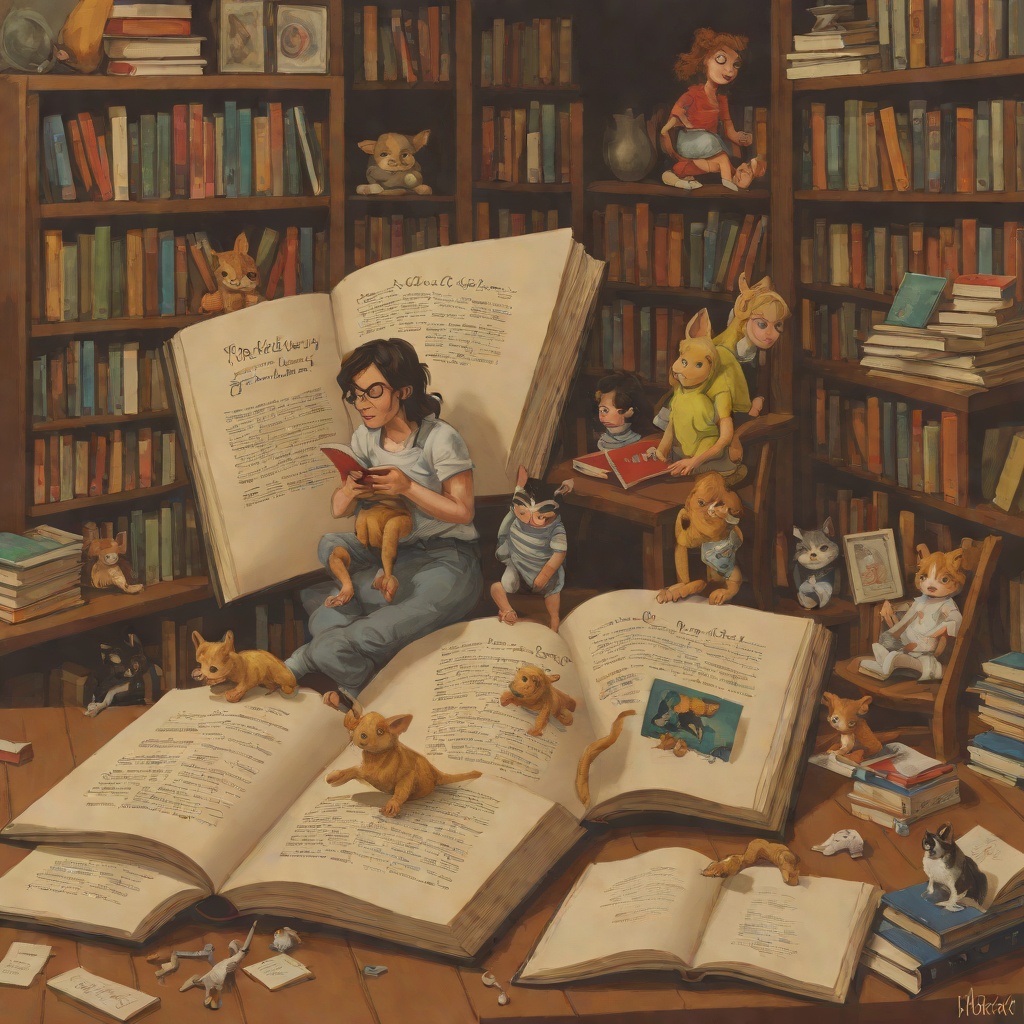
Playground Dog Game and Bird Kill
NightbitchThe Playground Dog Game and Bird Kill unfolds on a late and sunny summer afternoon, when Nightbitch, having pedaled her son to the playground beside the library in a blue bike trailer, finds herself inspired to engage in real, fullhearted play. This inspiration is itself a hard-won achievement, born from a line of thinking she finds incredibly reasonable, levelheaded, and healthy—the sort of thinking her husband would no doubt support unilaterally. It is a moment of full-armed embrace of the unknown, a deliberate choice to stop worrying and explaining and thinking, and simply to be. The burdens of adulthood and reality slide from her as easily as a silk robe, and she is resplendent in the afternoon light, her hair unspooling behind her as she dashes toward the small boy, who screams with delight.
The Feral Game and Its Spectators
The play quickly escalates beyond ordinary mother-son interaction. The boy cackles at her on the little metal bridge, his face squeezed between two of the uprights, and she lunges at him and barks brightly. He turns and runs, and the game spreads to the other children present. A dirty girl in a tutu giggles on the steps leading up to the structure, and another little boy, no more than eighteen months old, stares in openmouthed puzzlement. Nightbitch yips at each of them—causing the girl to scream and the toddler to begin to sob gently—and then takes off after her own boy, up the steps and up, up, up, to the little turret from which a curvy red slide descends precipitously to the ground. The scene becomes quite a spectacle: this vigorous mother and her barking, the children erupting in glee. The tutu girl brings her puzzled father a stick in her mouth, and a redheaded boy puts his muddy hands on his mother's clean white shirt and barks in her face, to her great dismay. As the sun sets, the crew works itself into a frenzy of which the awaiting parents who surround the playground have never quite seen the like: a pack of children, feral and barking, sniffing, chewing, chasing, and a mother orchestrating it all, with her long unkempt hair and puzzling face, which seems to grow more and more canine in the lengthening shadows.
The Transformation's Culmination
This scene represents the fullest expression yet of the transformation that began when Nightbitch first referred to herself by that name as a good-natured self-deprecating joke. In the days following that naming, she found a patch of coarse black hair sprouting from the base of her neck and was, like, What the fuck. Now, however, the canine nature is no longer a source of alarm but of liberation. The game is a direct contrast to the earlier moments of her transformation, when she lay in bed beside her wailing son, her child's screams fanning a flame of rage that flickered in her chest, and she gargled sounds she had only ever heard long before, during her girlhood, from her grandmother's husky as it begged at the door for dinner scraps. Now those same sounds—the grunts and squeals, the barks and yips—are deployed joyfully, deliberately, as a form of play and connection rather than an involuntary eruption of frustration. The scene also stands in stark opposition to her earlier domestic life, when she was angered by the doors of her mid-century bungalow, all too narrow or too short, with none of the corners at right angles, and she imagined punching holes in the plaster walls. Here, in the open air of the playground, her body is not a source of frustration but of power and delight.
The Bird Kill and Its Aftermath
As the other parents grow uneasy with the play, or their children tire as bedtime approaches, the crowd thins, then scatters, until it is just Nightbitch and her tired boy, curled together in the little playhouse nestled beneath one of the structure's platforms. She licks his head a bit, and he licks her arm and nuzzles her face. She is hot and dirty and sweaty as the boy closes his eyes. But before she tucks him, half asleep, into his bike trailer, swathed in blankets and buckled tight, she spies in her peripheral vision a little bird hopping close, closer, too close. With a flick of her wrist, she reaches out and grabs it in one deft movement, so smooth and liquid her son does not even stir as she brings the small, beating body to her chest and twists its head with a near-silent snap. The act is swift, almost casual, a natural extension of the animal self she has become. It is a moment of violence that echoes the earlier revelation that what she had needed all along—more than medical attention or psychotherapy, more than choosing happiness or adjusting her attitude—was to sink her sharp teeth into something living and bloody and feel its essence drain away until it was simply a rotting and unmoving thing. The bird kill is a smaller, quieter version of that need, a private act of predation performed even as she cradles her sleeping son, demonstrating that the maternal and the predatory are no longer separate selves but one integrated being.
The Mommy Schedule and the Return to Routine
The aftermath of the playground scene is a jarring return to the mundane rhythms of motherhood. The narrative immediately shifts to the mommy schedule, the mommy fast-track: Book Babies and the playground and, today, Tyke Hyke, with Play Space at the mall and Gymnastic Jam already scheduled for the coming week. Balloon Babies, a hot-air balloon experience that encourages overcoming phobias and a love of heights, is all the rage. This litany of scheduled activities stands in stark contrast to the feral, unstructured play of the afternoon, highlighting the tension between the domesticated, scheduled mother she is supposed to be and the wild, instinctual creature she is becoming. The scene thus encapsulates the central conflict of her existence: the pull between the socially constructed role of motherhood, with its endless activities and expectations, and the raw, animalistic self that she has discovered within herself. The bird kill, hidden from her son and from the other parents, is the secret that bridges these two worlds—the violence that the scheduled, civilized mother must conceal beneath her unkempt hair and puzzling face.