First Nightbitch Howl
NightbitchThe First Nightbitch Howl is the origin point of the novel's central transformation, the night when the unnamed mother's accumulated rage finally breaks through the carefully maintained surface of her domestic life. It is the moment she literally names herself, taking the gendered slur her husband offers as a casual observation and claiming it as an identity. The scene condenses months of suppressed fury, physical exhaustion, and the slow erosion of her former self into a single, violent eruption that changes the course of the entire narrative.
The Night of the Howl
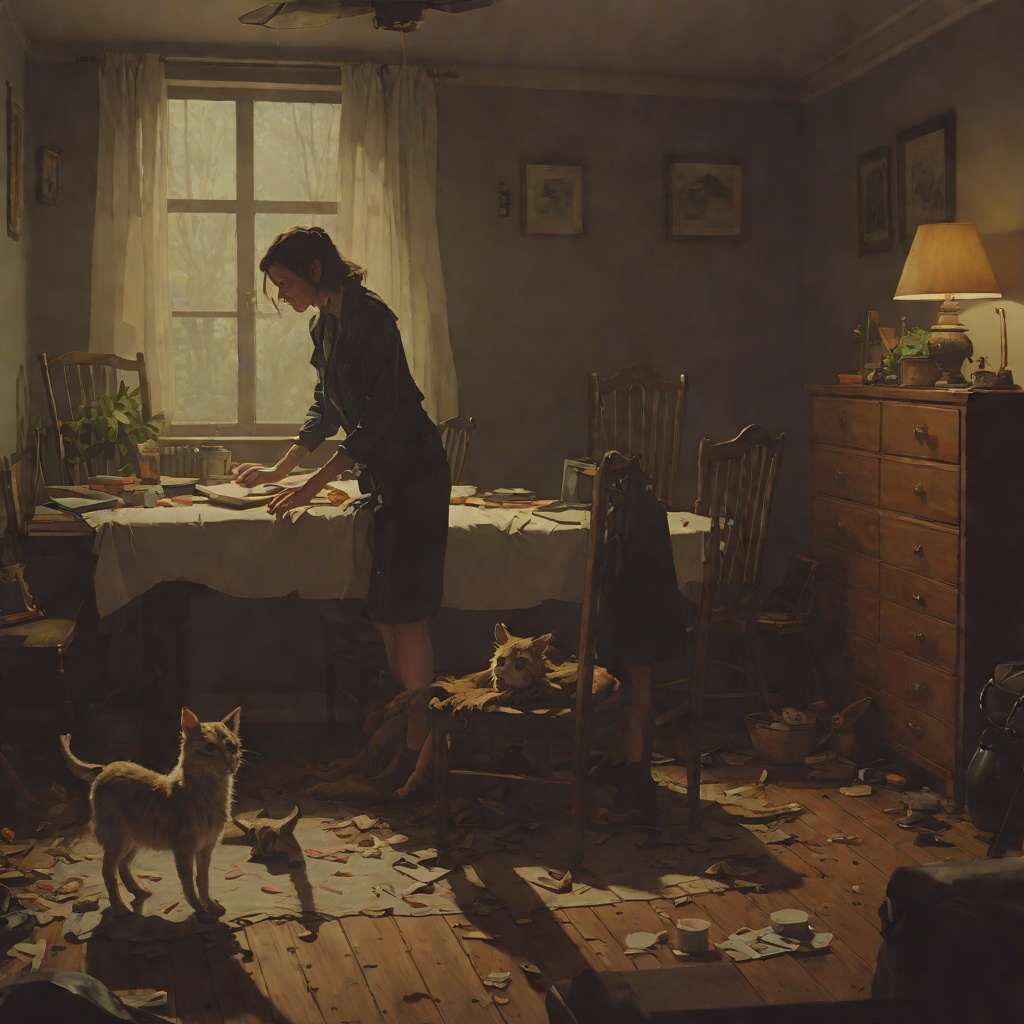
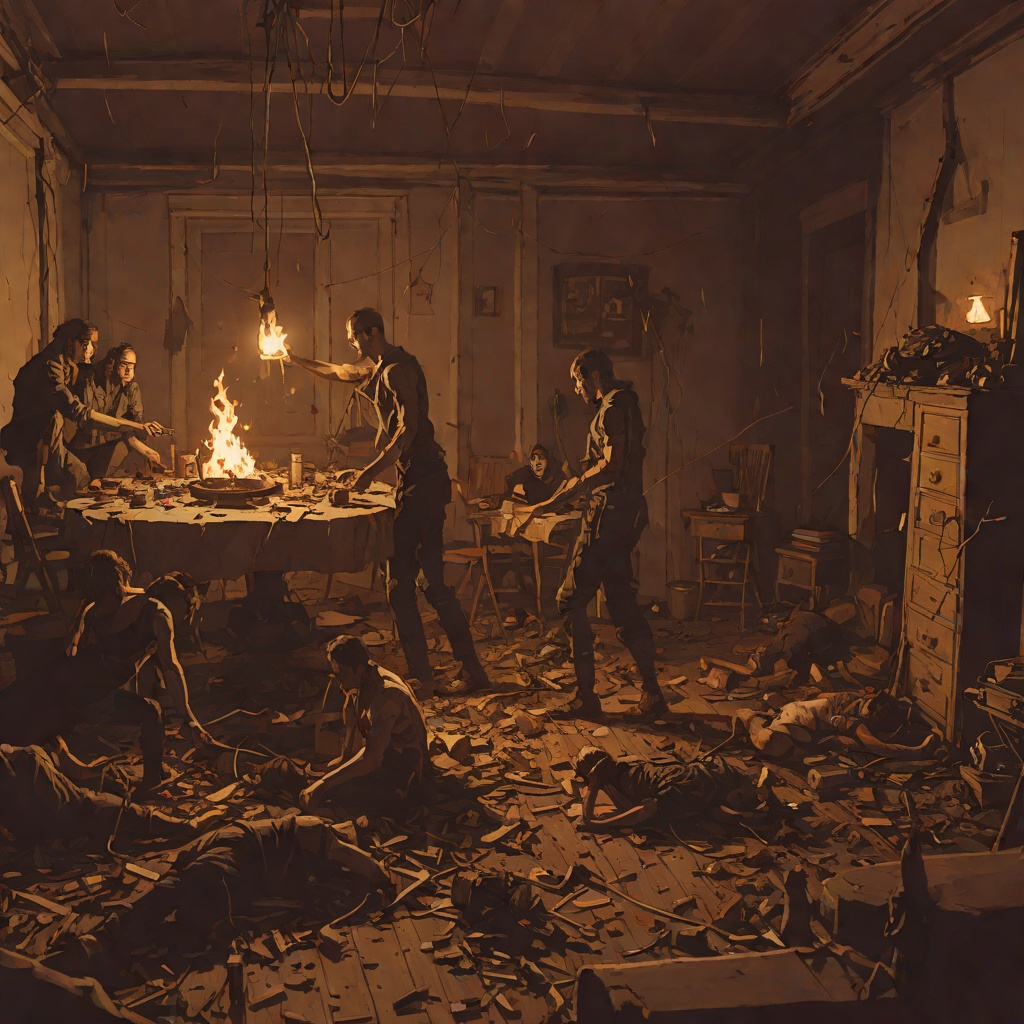
The event unfolds in the family bedroom, where the boy cries and cries while her husband does nothing and nothing. The mother's anger builds until the fire within her roars large, larger, blistering hot, threatening to consume her entirely. In that state she rises with a great howl, flings the sheets from her, and reaches for the bedside light, knocking the lamp to the floor where it shatters. She moans with rage and staggers around the bed, finds the other bedside lamp, and turns it on to find her husband sitting up in bed, holding the cowering boy, the binky now back in his mouth. Her appearance is transformed: her hair is long and unkempt, with small bits of leaves, a dust of cracker or bread, and unidentified white fluff suspended within it. She breathes heavily from her mouth, and smears of blood paint her path around the bed, tiny shards of lamp base embedded in the tender skin of her feet, though she does not notice or perhaps does not care. Her eyes narrow, she sniffs the air, then skulks back to her side of the bed, wraps herself in the blankets, and without helping, without offering a hand, without care, promptly plummets into a hard and drowning sleep.
The Naming
The morning after, she stands disheveled in the dirty kitchen drinking coffee while a load of bloodied sheets churns in the washer, her feet washed and bandaged. The boy plays with his train set in the living room, cooing and babbling and laughing, while her husband, such a chipper man, butters a piece of blackened toast. He pauses, thinking, then offers his observation: she was kind of a bitch last night. He chuckles to show it is not meant meanly, just as observation. Without pause, she replies, Night bitch, I am Nightbitch. They both laugh then, because what else are they supposed to do? Her anger, her bitterness, her coldness in that darkest part of the night surprised even her. She wants to think she had become another person altogether the night before, but she knows the horrible truth: that Nightbitch had always been there, not even that far below the surface.
The Origins of the Rage
The naming does not emerge from nowhere. Years up until that point she had been the very picture of a mother, self-sacrificing and domestic, un-gripey, un-grumpy, refreshed even after unrefreshing nights of nonsleep, nursing the baby and rocking the baby and shushing the baby while her kind husband snored and slept or, actually, most of the time, was not even there. When she had first referred to herself as Nightbitch, she meant it as a good-natured self-deprecating joke, because that is the sort of lady she was, a good sport, able to poke fun at herself. But in the days following this new naming, she found the patch of coarse black hair sprouting from the base of her neck and was, like, What the fuck. She told her husband when he arrived home after a week away for work that she thought she was turning into a dog. He laughed, and she did not. She had hoped he would tip his head to one side and ask for clarification, that he would take her concerns seriously, but as soon as she said the words, she saw this was impossible.
The Deeper Currents
The howl is also the eruption of a broader, systemic fury. She inflates with mother-rage and composes elaborate, emotional arguments against the system and capitalism and the patriarchy and then religion and gender roles and biology. Her sense that society, adulthood, marriage, motherhood, all these things, were somehow masterfully designed to put a woman in her place and keep her there had begun to weigh on her, taking on a new shape and an unwieldy heft after her son arrived, and even more after she quit her job, as her body struggled to regain its equilibrium. Once she was stripped of all she had been, of her career, her comely figure, her ambition, her familiar hormones, an anti-feminist conspiracy seemed not only plausible but nearly inevitable. She also reflects that it is not fair to call her a night bitch, since such a gendered slur does not account for the fact she had made a boy with her own body, nurtured his multiplying cells for months and months to her own detriment, to her own fatness, to the decline of her youthful sex appeal. There is no commensurate word to degrade men, she notes, and if she is Nightbitch, the boy is not a rotten little cock when he dumps an entire bin of freshly collected toys on the floor.
The Transformation Begins
The howl marks the beginning of her physical transformation. In the days and nights that follow, she finds herself drawn to the idea of being a dog, because she can bark and snarl and not have to justify it. She can run free if she wants, be a body and instinct and urge, be hunger and rage, thirst and fear, nothing more. She recalls the freedom she had when giving birth, when she had screamed and shat and sworn and would have killed had she needed to, while her husband nearly passed out from the noises coming from her mouth. She had followed her body, and what else was there to follow? If she could not be part of the world of ambition and money and careers, she wanted to leave it behind entirely and recede into the wildness of her deepest dreams, of her corporeal yearning. She could almost feel the hairs sprouting from each and every pore on her body. The howl is thus the first sound of a new self, one that will eventually lead her to sink her sharp teeth into something living and bloody, to discover that what she had needed all along, more than medical attention or psychotherapy, more than choosing happiness or adjusting her attitude, was one night of violence, one night to not care what anyone thought, to shit where she pleased, to not be needed by any living thing, and to be only a body in motion in the dark.
The Uninterrogated Mystery
The scene also introduces a peculiar narrative puzzle that recurs throughout the novel: the husband does not, in a real and searching way, attempt to get to the bottom of the presence of the dog he saw that evening he arrived home to an almost empty house. This detail remains largely uninterrogated, given that he is a man of science and reasonable explanations, and the mother feels no real need to account for the dog at all. The narrator suggests that perhaps even the husband, with his engineer's reasonableness, his common sense, his strong hold on reality, had also, in some small or large way, been bewitched. This refusal to question the impossible becomes a defining feature of the world the mother inhabits, where the unbelievable is accepted as another way of knowing, and where a woman's transformation into a dog is treated with the same casual indifference as a bad night's sleep.