The Backyard Performance for the Mothers
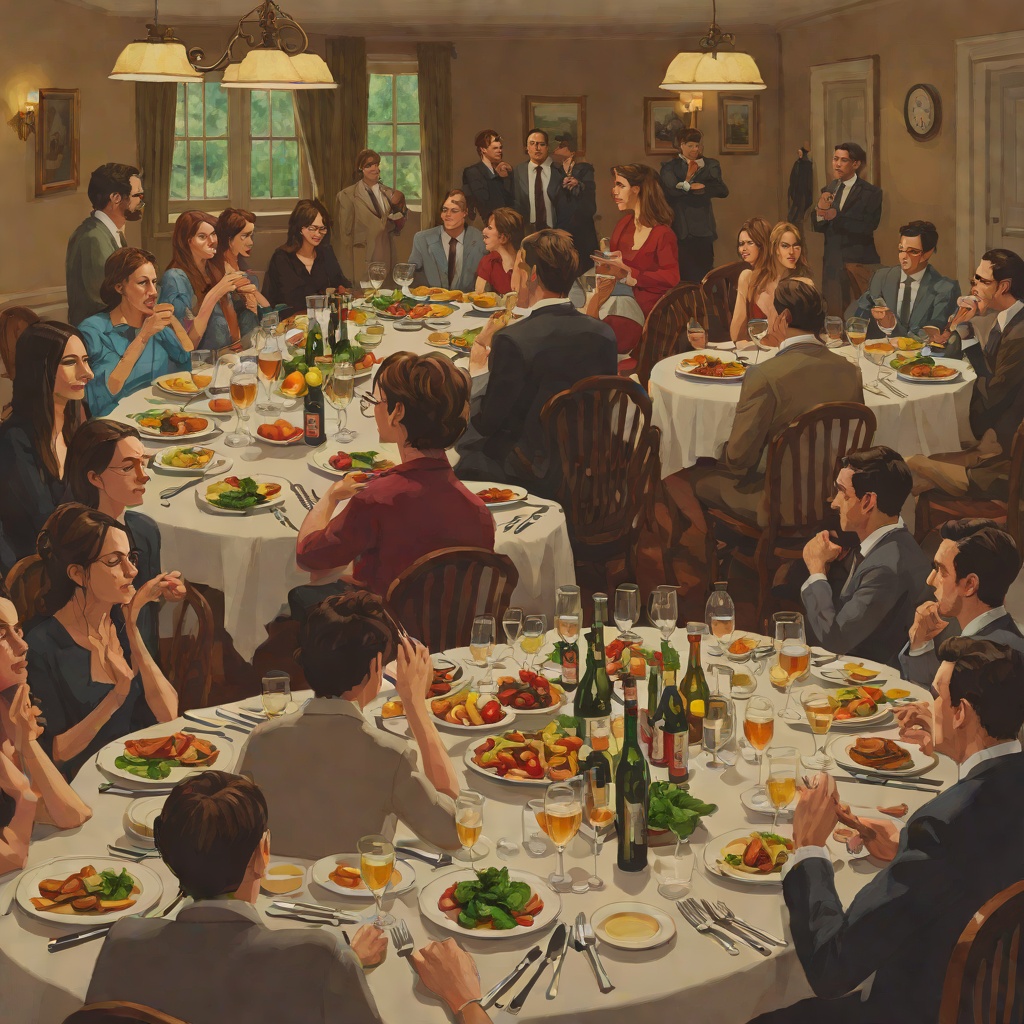
NightbitchThe Backyard Performance for the Mothers is the climactic public performance in which Nightbitch makes her animal transformation visible to an audience of mothers. Set in a cultivated backyard that initially resembles a social celebration and even a wedding, the event places a raw steak beneath a glass bell jar at the center of a small stage. When Nightbitch finally enters, she smashes the jar and eats the meat while the mothers watch, turning the suppressed violence and appetite of maternal life into a spectacle that is at once horrifying, liberating, and deliberately theatrical.
Causes and Background
The performance grows out of Nightbitch’s prolonged conviction that marriage, adulthood, motherhood, and society have been arranged to confine women. After the birth of The Boy and her withdrawal from her career, she experiences the loss of professional identity, bodily confidence, ambition, and hormonal stability as an anti-feminist trap rather than a private misfortune. Her anger is therefore not a sudden theatrical effect; it is the accumulated pressure behind the performance’s animal body.
That pressure is intensified by the demand that maternal distress be managed as an individual failure. The Husband advises Nightbitch to organize her week, draw up a schedule, treat motherhood like a job, and accept the proposition that happiness is a choice. The language sounds practical, but it converts structural exhaustion into a problem of personal discipline. The later performance answers that prescription with an embodied refusal: instead of choosing a polished happiness, Nightbitch stages the appetite, fury, and strangeness that the social order requires her to suppress.
The event also stands against the commercial language offered by Jen. Jen’s card presents her as an Herbal Ambassador under the slogan Live the Life You Deserve, while her recruitment message promises that busy mothers can fit sales into the spaces between naps, meals, errands, and child care. At Jen’s gathering, emotional dissatisfaction is redirected into products, residual income, testimonials, charts, and a financial web in which the mothers must project success and evangelize herbs to strangers. The backyard performance uses the same communal setting but rejects its managed optimism. Its central claim is not that a mother can purchase a better life, but that the life being sold to her has concealed a much more violent reality.
Setting and Staging
The mothers sit in three rows of white folding chairs, with a central aisle leading toward a small wooden stage. The arrangement is almost matrimonial: chairs, food, and a platform combine into a parody of ceremony. Yet the stage is not prepared for a wedding. At its center lies a thick red steak, raw and covered by a glass bell jar. The object is both offering and prop, an exposed piece of meat placed where a ceremonial centerpiece might otherwise stand.
The backyard first encourages the mothers to read the evening as hospitality. Music comes through the open French doors, while the patio table offers chilled rosé and Pinot Grigio, nuts, chocolate, vegetables, sparkling water, warm baked goods, and an inexhaustible-looking bowl of blueberries. The abundance is carefully balanced against the mothers’ efforts to lose post-baby weight, slim their thighs, and quiet their anxieties about their bodies. Their tentative indulgence, expressed through the possibility of taking just one forbidden treat, prepares the contrast between socially regulated appetite and Nightbitch’s unapologetic hunger.
The performance is also framed by disappearance and delay. The mothers look for Jen to explain what is about to happen, but Jen has vanished into the dusk. They complain that the performance has not begun, wonder who the performer is, and admit that they cannot place her. Their irritation is softened by wine and music before the scene abruptly changes register. A familiar song drifting through the French doors produces relaxation and collective singing; the mothers laugh, topple from their chairs, promise one another rides home, and complain about the nights when their husbands go out without considering the women left with the children. The conviviality becomes a temporary suspension of ordinary obligations, but the stage has already placed a different kind of obligation before them: to witness what their social language cannot contain.
Course of the Performance
The mothers begin by watching and whispering around the covered steak. Their uncertainty makes the performance’s first act one of forced attention. They do not know whether the object is food, sculpture, joke, or threat, and the absence of an explanatory host leaves them without the interpretive safety that usually accompanies a public event. The raw meat remains still while the audience drinks, laughs, theorizes, and waits.
Nightbitch then slinks onto the wooden stage in canine form. A spotlight from an upstairs window has been shining on the platform since the mothers arrived, giving her entrance the precision of a prepared theatrical reveal. The lighting makes the backyard into a stage and the animal into both performer and evidence. She snarls and snaps, pushes the bell jar aside, smashes it, and devours the steak beneath it.
Her eating is not a quick gesture. It takes considerable time, and the mothers remain seated, patiently transfixed as they watch. The prolonged action makes hunger impossible to dismiss as symbolism alone. Nightbitch’s transformed body is not merely representing maternal rage; it acts through smell, appetite, teeth, blood, and the slow consumption of meat. The steak, previously isolated under glass, becomes the material through which she claims the stage and compels the audience to remain with an appetite they have been trained to disguise.
When she finishes, Nightbitch turns toward the mothers with blood smeared across her face, cheeks, and chin. Her eyes carry an unreadable intensity that the scene associates with madness, power, ecstatic knowledge, and feral femininity at once. The performance refuses to settle on one explanation. It is a breakdown and a revelation, an artistic act and an animal attack, a spectacle for the mothers and a confrontation with the identity they have been trying to manage.
Audience Reaction and Aftermath
One mother screams and breaks the spell; another yelps immediately afterward. The collective balance of the scene collapses. Nightbitch lunges from the stage into the group of drunk and naked mothers, and they flee across the backyard toward the dark cars lining the street. Their nakedness, initially part of the evening’s release from social restraint, now exposes their vulnerability. The temporary community cannot absorb the transformed body once it stops functioning as a metaphor and begins to move toward them.
Most of the audience escapes in confusion, leaving behind practical fragments of panic. One mother cries out about her clothes, while another laments her keys. These details reduce the sublime spectacle to the logistics of flight, but they also show how quickly ordinary property and social decorum return as urgent concerns. The mothers had wanted a night free from the demands associated with husbands, children, weight, work, and domestic repetition; confronted with Nightbitch, they recover the language of possessions and escape routes.
Only The Working Mother and The Videographer remain seated. Their response differs sharply from the others’: they are speechless, awestruck, and crying softly while holding one another’s soft hands. They read the event as sheer, magnificent artistic drama, preserving an aesthetic interpretation even after the performance has become physically threatening. Their reaction gives the scene a second audience within the audience. The fleeing mothers experience the performance as danger, while The Working Mother and The Videographer recognize the force of an artwork that has exposed what the gathering’s therapeutic and commercial rituals conceal.
Narrative and Thematic Significance
The performance reverses the promises surrounding respectable motherhood. Jen’s gathering offers supportive marketing strategies, restorative products, and the prospect of living the life one deserves; Nightbitch answers with a life that cannot be made presentable. The steak beneath glass resembles a protected commodity or museum object until Nightbitch breaks the enclosure. In that gesture, the glass becomes the transparent boundary separating acceptable maternal feeling from forbidden appetite, and its destruction makes the boundary audible and irreversible.
The scene’s carnivalesque energy comes from its temporary inversion of social roles. Mothers who have been expected to be controlled, attractive, productive, and self-sacrificing become drunk, naked, singing, laughing, and finally terrified spectators of a woman who embodies the animality they are told to overcome. Nightbitch’s body is open to the world rather than neatly contained by feminine decorum: it smells, snarls, bleeds, eats, and occupies the stage. Yet the inversion does not produce a stable new order. The mothers run, the social gathering disintegrates, and the performance ends in an unresolved mixture of liberation, terror, and recognition.
The event also gathers the book’s recurring contrasts into one image. Nightbitch has already experienced an intensified canine sense of smell in the grocery store, where cheeses, bakery yeast, the damp dirt and aged urine of The Boy’s diaper, seafood, coffee grounds, and other ordinary substances become newly vivid. She has also understood her rage as both physiological and political, refusing to treat bodily change as proof that her thought is irrational. At the backyard performance, those sensory and ideological developments become public action. The animal is no longer a private suspicion or a patch of coarse hair hidden at the base of her neck; it is a visible force before other mothers, and the steak is no longer an imagined object of appetite but a meal consumed in front of witnesses.
The Backyard Performance for the Mothers therefore functions as both spectacle and verdict. It does not resolve Nightbitch’s conflict with motherhood, marriage, or the systems that have narrowed her life, nor does it offer the mothers a program for escape. Instead, it makes their suppressed knowledge impossible to keep abstract. The women have complained that their husbands can leave the house without a second thought, that their own nights are consumed by children, and that their bodies and ambitions are constantly monitored. Nightbitch’s entrance gives those complaints a form beyond self-help, commerce, or polite solidarity. The mothers may flee the stage, but the performance has made visible the appetite and rage that their ordinary language repeatedly tries to convert into happiness, productivity, or sales.