Dead Animal Offering
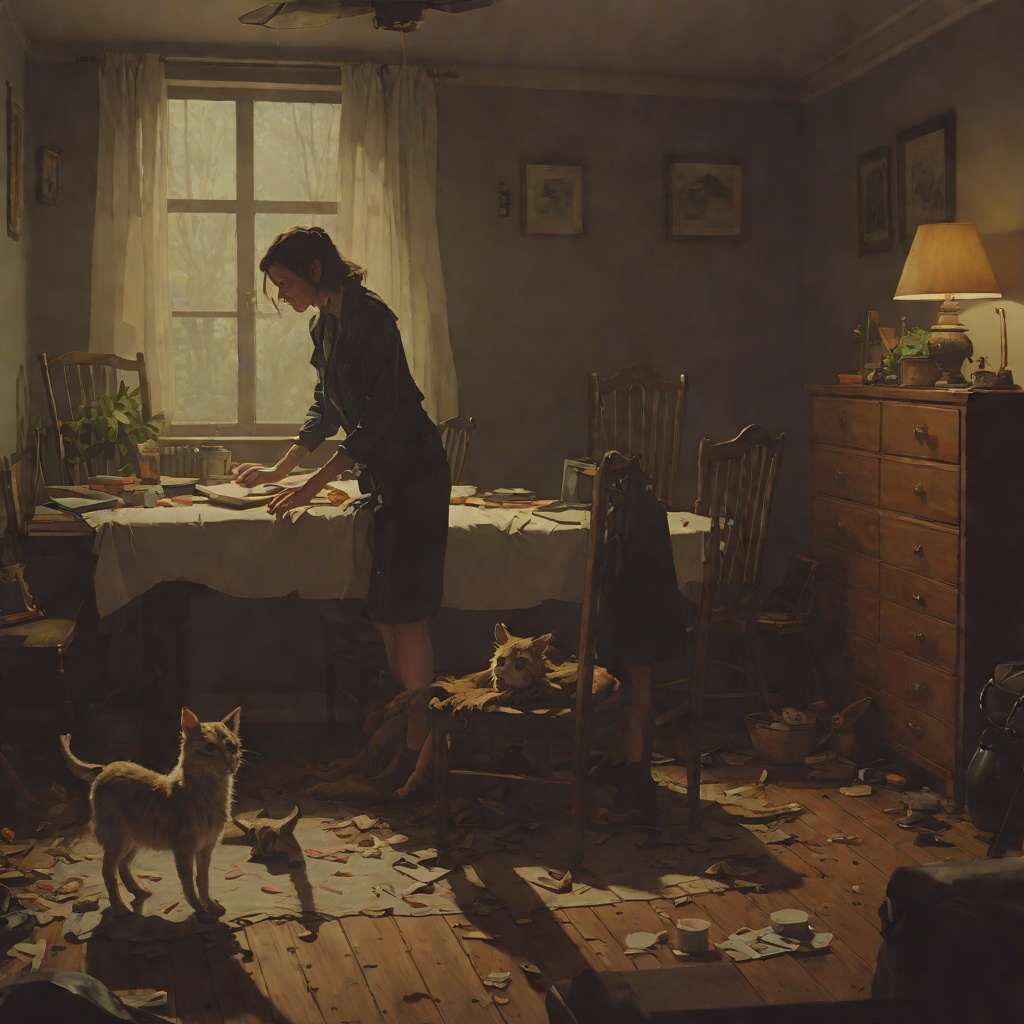
NightbitchThe Dead Animal Offering is a pivotal event in Nightbitch in which the protagonist's young son leads her to a pile of dead animals—mice, squirrels, rabbits, and a raccoon—left on the porch of their home. The mother interprets this gruesome collection as an offering, a sign, and a welcome, marking a turning point in her transformation into a dog and her acceptance of her animal nature. This event crystallizes the novel's central themes of motherhood, rage, and the rejection of societal expectations, as the protagonist begins to embrace her identity as a creature of instinct and violence.
The Discovery of the Offering
The event unfolds when the boy, with his fat little finger extended and eyes wide, leads his mother to the porch. There, she finds a literal pile of dead animals: mice, squirrels, rabbits, and even one flaccid raccoon. The boy watches her intently, waiting to see how she will react. The mother gasps at the sight. The narrative immediately frames this not as a random act of violence but as an intentional communication: "An offering. A sign. A welcome." The pile is not merely a collection of carcasses but a message delivered to the mother, a recognition of her emerging canine identity.
Context of Transformation
The offering arrives at a moment when the mother's transformation is already well underway. She had earlier discovered a patch of coarse black hair sprouting from the base of her neck, a physical manifestation of her change that she had initially dismissed as a joke. Her senses have become heightened, as evidenced by her ability to smell the aged urine in her son's diaper and the distinct odors of the grocery store, which she now perceives as a locus of oppression. She has begun to feel that society, adulthood, marriage, and motherhood are designed to put a woman in her place, and her rage has been building into expansive conspiracy theories against capitalism, the patriarchy, and gender roles. The offering, therefore, is not an isolated incident but a culmination of her growing alienation from human society and her increasing identification with the animal world.
The Mother's Interpretation
The mother's reaction to the pile is one of recognition rather than horror. She does not recoil from the dead animals but instead sees them as a sign that her transformation is being acknowledged. This acceptance is a stark contrast to her earlier attempts to rationalize her condition, such as attributing her heightened sense of smell to premenstrual sensitivity. The offering validates her new reality, suggesting that her animal nature is not a pathology to be cured but a state to be embraced. The narrative reinforces this by noting that what she needed all along was not medical attention or psychotherapy, nor choosing happiness or adjusting her attitude, but to sink her sharp teeth into something living and bloody and feel its essence drain away. The offering, with its promise of violence and death, points directly to this need.
Thematic Significance
The Dead Animal Offering is a key moment in the novel's exploration of motherhood and female rage. The mother's transformation into a dog is not a descent into madness but a liberation from the constraints of civilized society. She has come to see that her anger is not a by-product of physiological processes alone but a justified response to a world that demands she be less of an animal in order to be happy. The offering, delivered by her son, suggests that this animal nature is not something to be hidden but something to be shared and celebrated. It is a welcome into a community of instinct and urge, where she can be a body and instinct and urge, nothing more. The event thus marks the beginning of her acceptance of her monstrous self, a self that she will later embrace fully, even as she considers the possibility of rejecting all established society for something remote and magical, a community suited particularly and only to the community's needs.
Connection to the Animal Self
The offering also connects to the mother's deeper understanding of what it means to be an animal. She reflects that to be an animal is to look at another and say, "I am so much that other thing that we are part of one another." This sense of interconnectedness, of being part of an unbroken lineage of togetherness, is echoed in the offering, which is a gift from the animal world to her. The dead animals are not just prey but kin, and their presence on her porch is a sign that she belongs to their world. This is a far cry from her earlier life, where she was stripped of all she had been—her career, her comely figure, her ambition—and felt trapped by an anti-feminist conspiracy. The offering, in contrast, offers a way out, a path back to a pure, throbbing state of being.
A Turning Point
The Dead Animal Offering is a turning point in the narrative, marking the moment when the mother stops questioning her transformation and begins to embrace it. It is a sign that her animal nature is not a curse but a gift, and that her rage is not a sickness but a source of power. The event sets the stage for her subsequent actions, including her first night hunt and her eventual acceptance of her identity as Nightbitch. It is a moment of profound recognition, both for the mother and for the reader, as the novel's central metaphor of the dog-woman is made explicit and visceral.