The Night of the Dogs
NightbitchThe Night of the Dogs marks Nightbitch’s first full passage from imagining herself as canine to inhabiting animal instinct as a bodily reality. Drawn outside by a pack that gathers beneath the full moon, she is overwhelmed, stripped, and left naked on the driveway; when the dogs’ attack stops, she responds not as a frightened human defending herself but as a creature seeking flesh. The episode turns an apparently private crisis into a metamorphic threshold: her rage, hunger, sensory changes, and refusal of imposed maternal identities become a new form of agency.
Causes and Background
The event follows Nightbitch’s growing awareness that her body is changing. Her earlier use of the name Nightbitch had been a self-deprecating joke, but the coarse black hair appearing at the base of her neck makes the joke suddenly literal. When she tells The Husband that she thinks she is turning into a dog, he laughs, and his laughter confirms that he cannot receive her fear as a serious claim. The transformation therefore begins within a failed domestic exchange: Nightbitch’s changing body is visible to herself, while The Husband treats it as absurd.
Her bodily unease is inseparable from the pressures surrounding motherhood. She has become consumed by mother-rage, directing elaborate arguments against systems, capitalism, patriarchy, religion, gender roles, and biology. Working, pumping, hurrying, and failing to hold The Boy have made the entire arrangement feel fraudulent, while the loss of her career, figure, ambition, and familiar hormonal balance gives the supposed conspiracy against women a nearly inevitable shape. The Night of the Dogs externalizes that pressure. What has previously appeared as anger, paranoia, or an impossible thought becomes a force capable of reorganizing her body and conduct.
The episode also follows a change in perception. In the grocery store, Nightbitch discovers an extraordinary canine sense of smell: cheese yields hay, smoke, honey, fungal musk, and a sweet-rotten tang; the bakery, coffee, milk, vinegar, seafood, damp earth, and The Boy’s diaper each acquire intensified, distinct odors. She feels alive in a new way, even as the heightened senses frighten her because they suggest that the change is not psychological alone. The pack arrives after this sensory awakening, as though the world she has begun to perceive differently is answering her.
The Pack’s Arrival and Assault
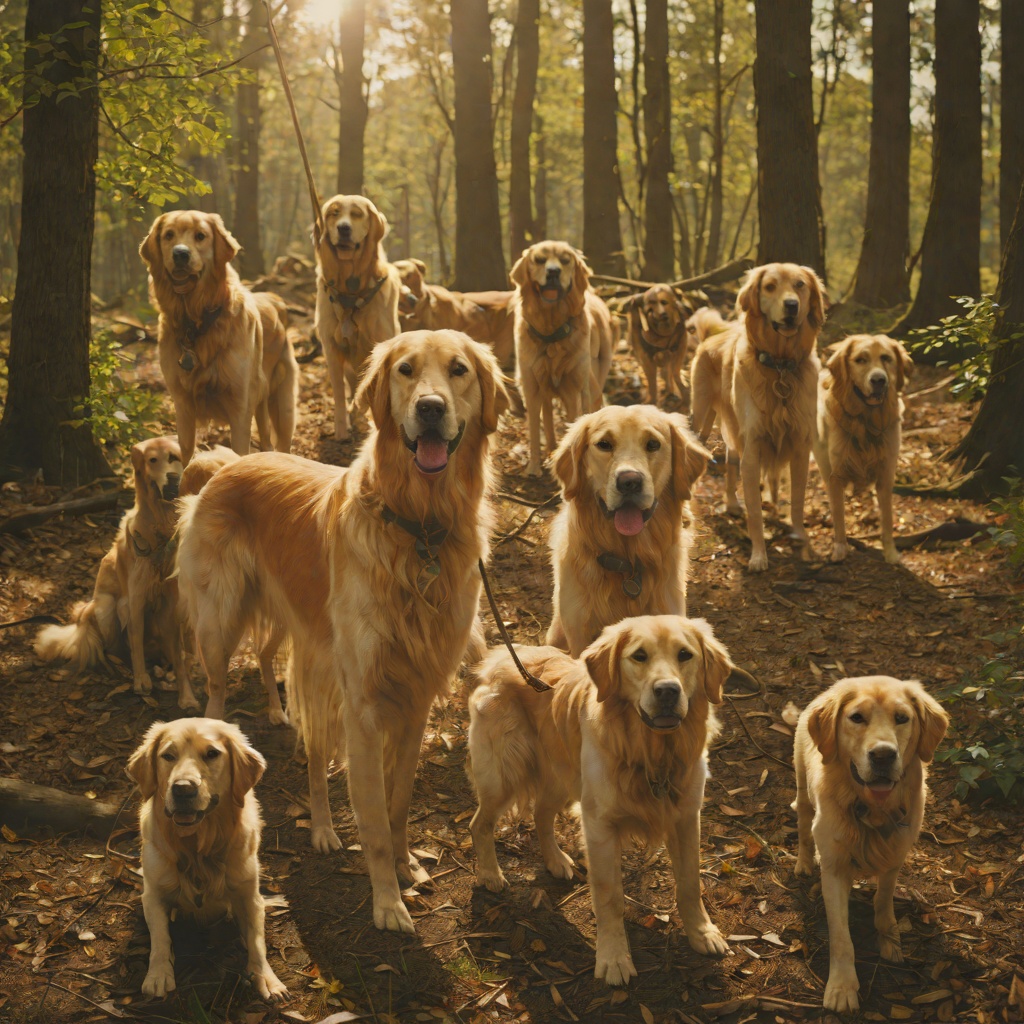
Awake at night beside The Boy, Nightbitch hears something outside and takes up a baseball bat after rejecting a butcher knife. She is exhausted and enraged, prepared to beat or kill anything she finds. At the high window, under the light of the full moon, she sees a crowd of dogs: perhaps fifteen or twenty at first, then scores more behind them. The gathering is not a single threatening animal but a collective presence, with the strawberries-and-soap scent of The Golden Retriever, the pudgy basset hound, and an energized collie among the first animals she recognizes.
She opens the side door and stands behind the screen, but the boundary between house and night does not protect her. The collie seizes one leg; a shepherd with mismatched eyes attacks the other; a muscular black Lab rises and bites the hem of her shirt, tearing holes in the fabric. Nightbitch flails and kicks as the dogs multiply around her. They knock her sideways, drive her forward onto her hands and knees, and rip apart her clothing, including the thin fabric of her underwear. The violence is intimate without being conventionally sexual: the pack removes the signs of her socially legible human body and leaves her exposed to the pavement, the night, and the animals.
The assault ends as abruptly as it began. No dog has actually placed a paw on her when she finds herself naked on the ground, panting in a fetal position. The quiet that follows is filled by the gentle breathing of dogs and the smell of their exertion. The pack remains around her, pacing, whining, pawing the earth, watching her from the side, and raising the fur along its spine. The scene shifts the value at stake from Nightbitch’s ordinary human safety to a more unstable question of belonging: she has survived the dogs, but survival now requires her to answer them on their terms.
First Full Transformation
Nightbitch raises her head and meets the pack with her own animal response. She curls her fingers against the driveway, bares her teeth, and feels the hair on her head growing into a mane. The muscles in her haunches roll, and the recognition that comes to her is not an explanation but a bodily fact: she is an animal. The transformation is presented through movement, hair, muscle, teeth, and altered perception rather than through a complete anatomical description. Its uncertainty is part of its force; the narrative does not pause to make the metamorphosis orderly or scientifically legible.
She no longer wants to think. She wants to act and survive. Nightbitch snarls and lunges blindly into the surrounding bodies, her teeth searching for flesh. Her experience narrows to hair, blood, bone, instinct, anger, body weight, earth, wet night air, bats at the edge of perception, and the shifting paws, legs, and heads of the pack. Closing her eyes, she becomes movement and darkness, entering what the episode presents as the animal’s first dream. The transformation is thus not merely a visual alteration; it is a change in the structure of attention, in which language and self-explanation give way to sensation and impulse.
This first transformation also recasts the violence. At the beginning, Nightbitch arms herself as a human being defending the household. By the end, she has crossed into the pack’s logic, seeking to bite rather than merely escape. The event’s frightening power comes from the collapse of the distinction between victim and predator. She is attacked, but the attack releases a capacity she has been approaching through rage, hunger, and sensory change.
Consequences and Aftermath
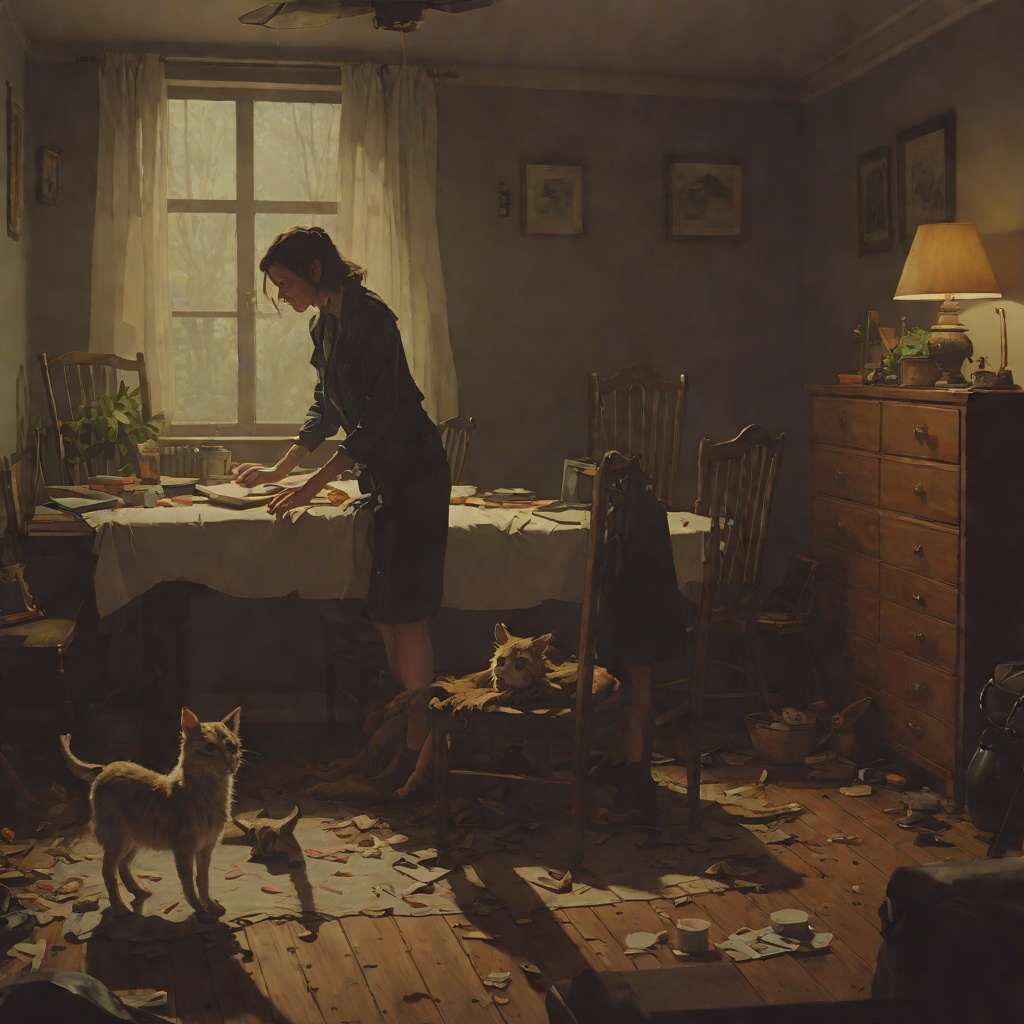
The following morning, Nightbitch wakes in bed with her shirt and underwear on and her sweats on the floor, unable to establish what happened through ordinary evidence. Yet the experience has consequences that are immediate and continuing. She becomes increasingly willing to understand herself through canine behavior, and the pleasure of that identification is tied directly to relief from human demands. Dogs do not need to work, care about art, or justify barking and snarling; they can be body, instinct, urge, hunger, rage, thirst, and fear without defending those conditions before a social tribunal.
That freedom is connected to childbirth, which Nightbitch remembers as a time when she screamed, defecated, swore, and followed her body without deliberation. The Husband had nearly passed out from the sounds she made, dismissing them as noises, while the doula recognized the bodily position that helped turn The Boy. For Nightbitch, the memory establishes a continuity between birth and metamorphosis: both are states in which instinct can overrule ambition, decorum, and explanation. If she cannot belong to the world of careers and money, she begins to imagine abandoning it entirely and becoming an animal caring for its young.
The pack encounter also prepares her for the later discovery that violence can feel necessary rather than pathological. After killing a small animal, carrying it home in her mouth, and burying it as a treasure, she realizes that what she had needed was not simply medical attention, psychotherapy, a better attitude, or a decision to choose happiness. She had needed to sink her teeth into something living and bloody and feel its essence drain away. In this logic, one night of violence permits her to stop caring what anyone thinks, to exist without being needed, and to become only a body moving in the dark.
Thematic Significance
The Night of the Dogs is a metamorphosis plot that refuses the usual promise that transformation will lead to mastery or reintegration. Nightbitch does not receive a clean explanation for her condition, nor does she return to ordinary human identity with a new moral lesson. Instead, the episode makes animality a counterworld to the institutions that have disciplined her: society, adulthood, marriage, motherhood, professional ambition, and the demand that a modern woman become less animal in order to be happy.
The dogs therefore function as more than symbols of threat. Their collective arrival offers Nightbitch an alternative social form, one organized by bodies, scent, movement, and shared presence rather than by productivity or respectability. Her later fascination with the WereMothers intensifies this possibility: she imagines a remote community of women who live together, help one another, remain in a constant state of babies, and meet their own needs outside established society. The appeal lies not in becoming less maternal but in separating care from isolation, sacrifice, and compulsory self-erasure.
The episode’s deepest redefinition is relational. Nightbitch later understands animal existence as recognizing another creature as so much a part of oneself that the two become one creature, sharing warmth, breath, dreams, and an unbroken lineage of mutual survival. The Night of the Dogs provides the violent beginning of that insight. The pack strips away the human surface that has made Nightbitch feel trapped, then forces her to discover a form of kinship grounded in shared embodiment. Its consequence is not that she ceases to be a mother, but that motherhood, rage, desire, and animal life can no longer be kept in separate categories.