Burying the Cat
NightbitchBurying the Cat is the aftermath of The Cat’s death and one of the most revealing moments in Nightbitch’s changing relationship with The Boy. Faced with the dead animal, Nightbitch refuses to turn the body into food and instead teaches her son to bury The Cat as a friend. What begins as an attempt at proper mourning becomes a muddy, bodily, almost playful communion with the earth, making the burial both a funeral and a disclosure of the animal instincts Nightbitch can no longer keep separate from her motherhood.
Causes and Immediate Stakes
The burial follows Nightbitch’s killing of The Cat, an act that has horrified her because it brings her animal transformation into the domestic sphere. She is frightened not only by the death itself but by the possibility that her appetite and rage might extend toward The Boy. The danger is therefore ethical and intimate: the dead cat is evidence of what Nightbitch has done, while her son’s presence forces her to decide what kind of meaning the act will have.
When The Boy asks whether they should eat the dead animal, Nightbitch answers decisively that The Cat is not for eating. She touches the top of his head and instructs him to bury her in the backyard, say goodbye, and recognize that they loved her and that she was their friend. Her response establishes a boundary between predatory animality and familial care, even as the scene continues to unsettle that boundary. The burial is not an erasure of violence; it is Nightbitch’s effort to place violence inside a ritual of attachment.
The Burial in the Backyard
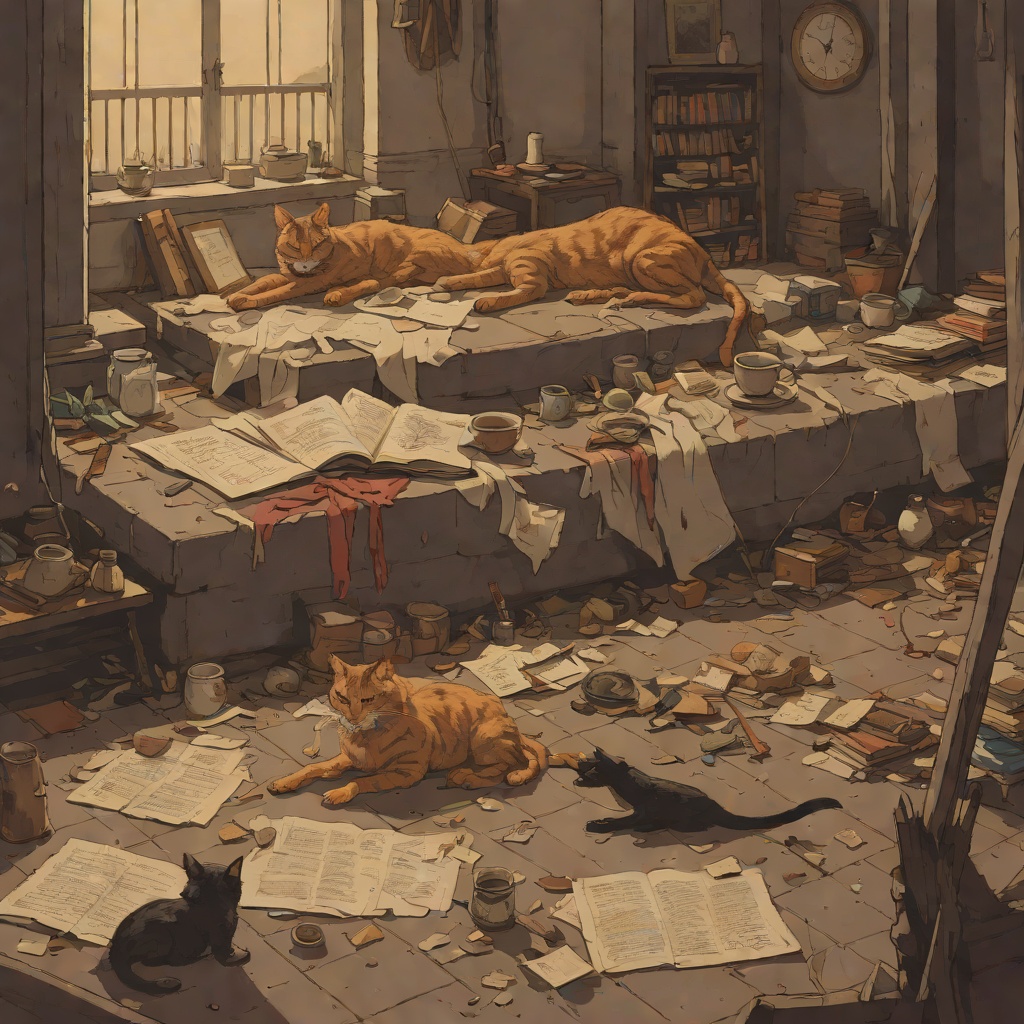
Nightbitch and The Boy spend the afternoon digging in the backyard, first with shovels and then with their hands. They spray dirt behind them as they tunnel downward, and the work becomes a delight rather than a solemn obligation. The physical details make the grave a place of sensation: they encounter the smell of loam, the wriggle of worms, and thick tree roots that invite them to sink their teeth into the soil and pull.
The shared digging joins mother and son in an activity that is at once practical, emotional, and feral. Their faces become muddy and their fingers tender, but the discomfort does not cancel the pleasure of the labor. Instead, the effort makes the burial feel earned. The backyard becomes less a neutral domestic setting than a living material world in which grief is handled through muscles, dirt, smell, and contact.
Once the hole is deep enough, they wrap The Cat in an old baby blanket and lower her into the ground. The blanket carries the domestic history of caregiving into the grave, linking the dead animal to the world of infancy and maternal labor. The Boy watches solemnly as Nightbitch asks that they say nice things to send The Cat off. She praises The Cat’s beauty and once-sweet bell-like meow, thanks her for being their kitty, and invites a verbal farewell rather than leaving the death unexplained.
The Boy’s contribution is brief but concrete: he calls The Cat soft and then climbs into the hole to place the last unopened can of cat food beside her. The gesture is both childlike and ceremonial. It gives The Cat an offering, preserves the language of feeding, and shows The Boy participating in the burial on his own terms. The grave thus becomes a shared construction, made from maternal instruction, childhood imagination, and an object associated with The Cat’s ordinary care.
Fear, Guilt, and Maternal Responsibility
The burial does not resolve Nightbitch’s fear. After The Cat is covered, she becomes intensely frightened and recognizes that the possibility of biting The Boy has passed through her mind. The thought is not presented as a settled intention, but its appearance terrifies her because it threatens the distinction she most needs to preserve: The Boy is the child she would never harm, while The Cat has become the victim of her uncontrolled animal force.
That fear drives a renewed attempt at self-correction. Nightbitch decides that she must change, get herself together, set goals, achieve outcomes, and become sensible, echoing the discipline once demanded by Nightbitch's Mother. The burial therefore produces a reversal in her interpretation of her transformation. Earlier, animality offered release from work, ambition, social judgment, and the demand to justify every feeling. Here, the same animality becomes a source of possible danger, compelling her to retreat toward control and responsibility.
Yet the scene also complicates the idea that Nightbitch is simply damaged or morally defective. Her broader mother-rage comes from the conviction that working, pumping, hurrying, and refusing to hold her baby are symptoms of a system organized by capitalism, patriarchy, gender roles, biology, and religion. Her anger is not merely private irritability; it is an embodied response to the multiplication of work and to the loss of career, figure, ambition, and former identity after The Boy’s arrival. The Cat’s burial places that structural anger beside an immediate personal consequence, showing how a justified sense of oppression can coexist with frightening acts and genuine tenderness.
Animality, Care, and Transformation
The burial’s muddy pleasure belongs to the same bodily logic that has shaped Nightbitch’s transformation. She has learned to value the possibility of being a body governed by hunger, rage, thirst, fear, and instinct rather than by professional ambition or social performance. Becoming a dog seems to offer a life in which barking and snarling require no explanation, and in which running free is imaginable. The burial allows that animal body to enter domestic care without being fully domesticated.
This is why the grave is not only a symbol of remorse. Digging into earth with The Boy gives Nightbitch an experience of physical togetherness that resembles the animal world she finds liberating. The Cat is treated as a friend rather than as property, while the human mourners themselves behave like creatures following smell, touch, roots, and soil. The action unsettles the hierarchy in which human reason governs and animals merely serve as objects of affection or utility. At the same time, Nightbitch remains responsible for the killing, so the scene does not offer a simple pastoral reconciliation.
The burial also recalls Nightbitch’s earlier realization that one violent night had given her what medical attention, psychotherapy, positive thinking, or attitude adjustment had not: contact with something living and bloody, followed by the sensation of its essence draining away. That earlier relief is now shadowed by the dead body in the backyard. The burial converts private predation into a communal rite, but it cannot make the violence disappear. It gives Nightbitch and The Boy a way to live beside its evidence.
Narrative and Thematic Significance
As an action, Burying the Cat turns a death into a concentrated test of Nightbitch’s competing identities. She is a mother teaching a child how to say goodbye, an artist and former worker whose body has resisted the identities available to her, and an animal who knows the pleasure of digging, teeth, roots, and earth. Each identity is active in the same afternoon rather than appearing as a separate stage of her life.
The scene also reveals why Nightbitch’s transformation cannot be reduced to escapism. She wants to become a monster because established society has made ordinary womanhood feel like a trap, but the burial shows that monstrosity can contain a form of care. Her animal self does not abolish attachment; it changes the medium through which attachment is expressed. Mud, labor, burial, food, and touch replace polished language and socially approved composure.
Near the end of the narrative, Nightbitch comes to understand animality as a radical form of kinship. Looking at another creature can mean recognizing that the two are part of one another: shared skin, shared warmth, shared breath, and an unbroken lineage of mutual survival. Burying The Cat anticipates and embodies that understanding. The grave separates the living from the dead, but the ritual also binds Nightbitch, The Boy, and The Cat into a single domestic ecology in which love is not clean, abstract, or safely human. It is enacted through the body, and it remains inseparable from death, appetite, fear, and the work of keeping one another alive.