Jacob's Island
Jacob's Island is the most degraded and isolated slum in Dickens's London, a tidal backwater in the Borough of Southwark where the murderer Bill Sikes meets his end. Surrounded by the filthy ditch called Folly Ditch and accessible only through a labyrinth of rotting tenements and crumbling warehouses, the island functions as the novel's ultimate spatial symbol of criminality, decay, and inescapable justice.
Location and Physical Description
Jacob's Island lies beyond Dockhead in the Borough of Southwark, surrounded by a muddy ditch six to eight feet deep and fifteen to twenty feet wide when the tide is in, once called Mill Pond but known in the days of this story as Folly Ditch. It is a creek or inlet from the Thames, always filled at high water by opening the sluices at the Lead Mills. At such times, inhabitants of the houses on either side lower buckets, pails, and domestic utensils of all kinds from their back doors and windows to haul up water. The houses themselves present a spectacle of extreme dilapidation: crazy wooden galleries common to the backs of half a dozen houses, with holes from which to look upon the slime beneath; windows broken and patched, with poles thrust out on which to dry linen that is never there; rooms so small, so filthy, so confined that the air seems too tainted even for the dirt and squalor they shelter; wooden chambers thrusting themselves out above the mud and threatening to fall into it—as some have done. Dirt-besmeared walls and decaying foundations, every repulsive lineament of poverty, every loathsome indication of filth, rot, and garbage, ornament the banks of Folly Ditch. The warehouses are roofless and empty; the walls are crumbling down; the windows are windows no more; the doors are falling into the streets; the chimneys are blackened but yield no smoke. Thirty or forty years before the time of the story, before losses and chancery suits came upon it, it was a thriving place; but now it is a desolate island indeed. The houses have no owners; they are broken open and entered upon by those who have the courage, and there they live and die. Only those with powerful motives for a secret residence, or reduced to a destitute condition, seek a refuge in Jacob's Island.
Narrative Significance and Sikes's Death
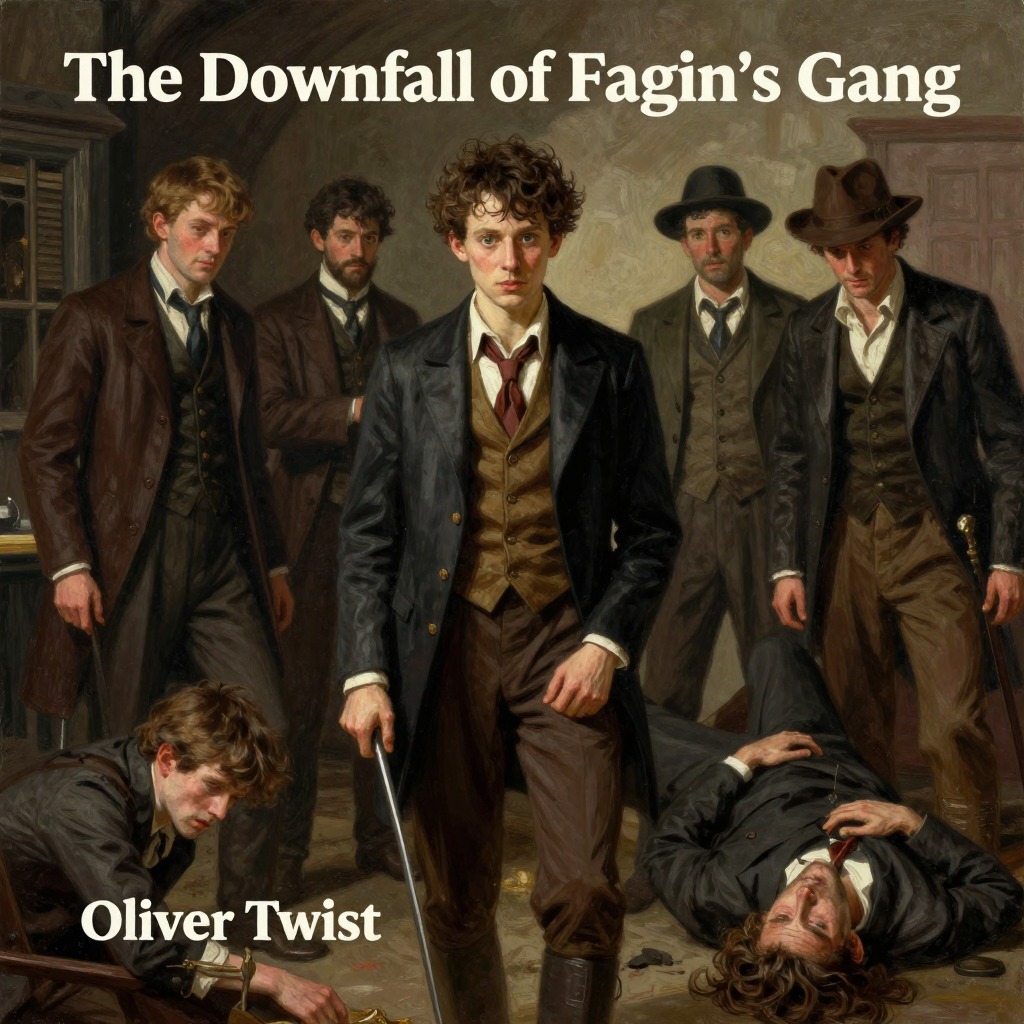
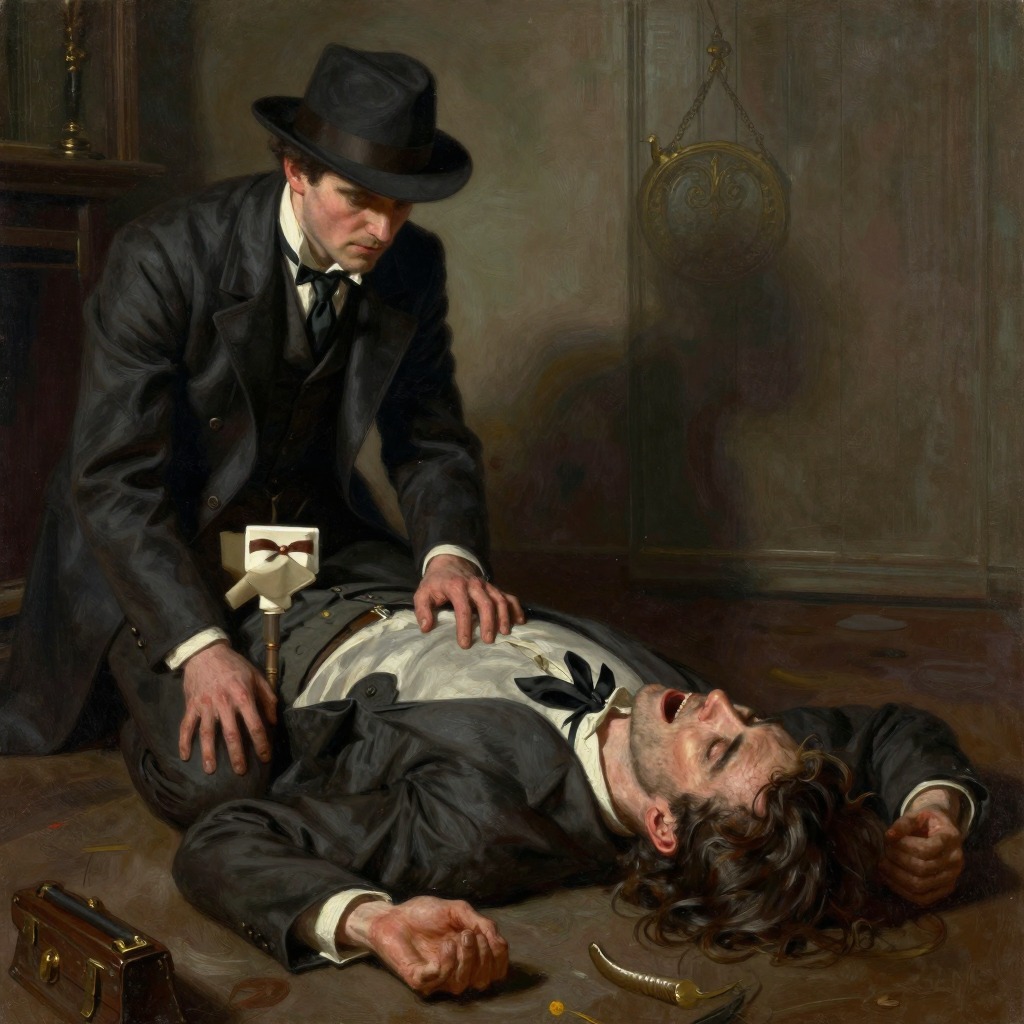
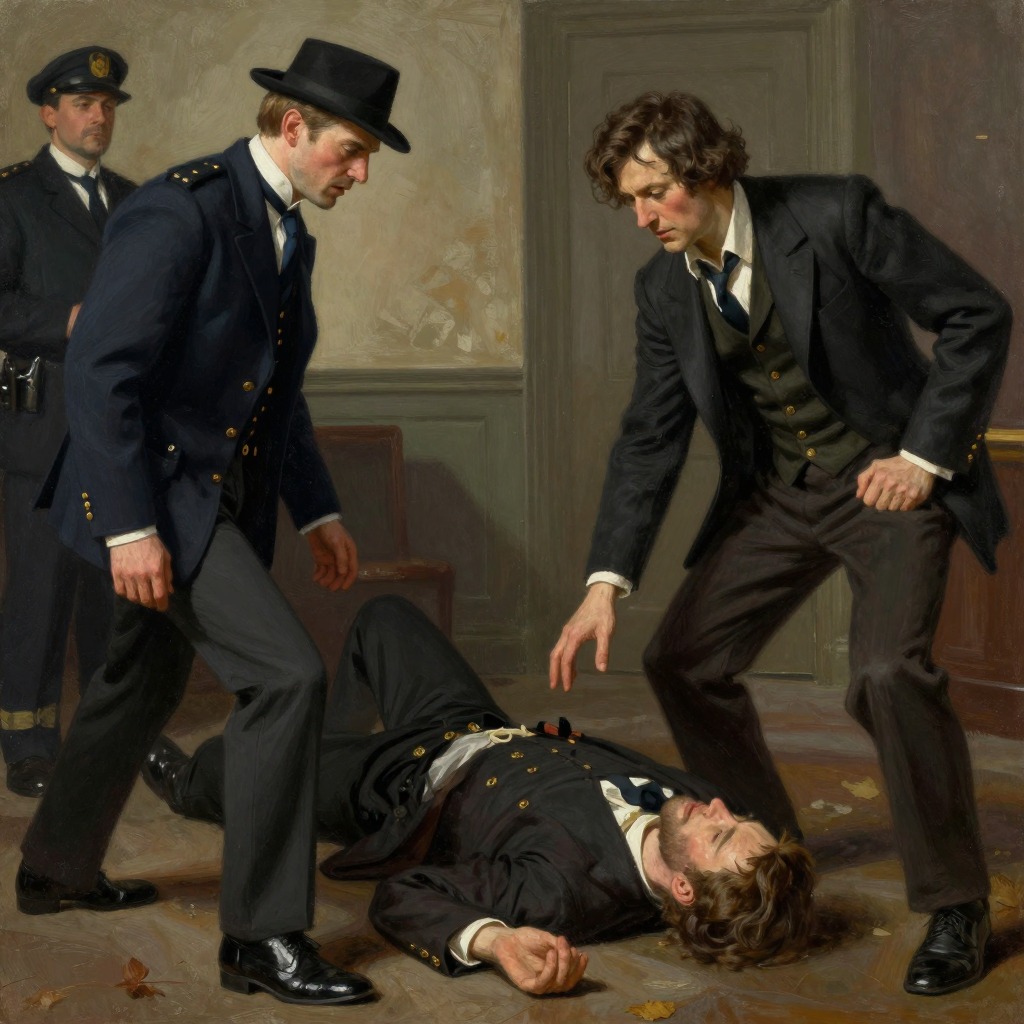
Jacob's Island is the setting for the novel's climactic scene of pursuit and violent death. After murdering Nancy, Sikes flees London but is driven back by terror and the impossibility of escape. He takes refuge in an upper room of a detached house of fair size, ruinous in other respects but strongly defended at door and window, whose back commands Folly Ditch. There he is joined by Toby Crackit, Mr. Chitling, and a returned transport named Kags. The house is surrounded by an immense, furious mob. Sikes, seeing no other way out, attempts to lower himself from the roof into the ditch—but the tide is out, and Folly Ditch is a bed of mud. He fastens a rope around a chimney stack and makes a running noose. At the instant he brings the loop over his head, he sees a vision of Nancy's eyes, staggers, loses his balance, and tumbles over the parapet. The noose runs up with his weight, tight as a bowstring, and he falls for five-and-thirty feet. There he hangs lifeless against the wall, the open knife clenched in his stiffening hand. His dog Bull's-eye, which had followed him, runs backwards and forwards on the parapet with a dismal howl, then jumps for the dead man's shoulders, misses his aim, falls into the ditch, and dashes out his brains against a stone.
Thematic Significance
Jacob's Island represents the absolute nadir of London's geography of poverty and crime, a place so far removed from the respectable world that it exists almost outside the law. Its physical isolation—surrounded by a ditch that can only be crossed by wooden bridges, accessible only through a maze of narrow, muddy streets—mirrors the moral and social isolation of the criminals who hide there. The island's decay, its roofless warehouses and crumbling walls, embody the ruin that crime brings upon its practitioners. The fact that Sikes, the most brutal of the gang, meets his end here—not by the hand of justice but by his own panicked misstep, with the noose he intended for escape becoming his death—gives the location a grim poetic justice. The water of Folly Ditch, which might have offered escape, is withdrawn at the critical moment, leaving only mud. The island, once a thriving commercial place, now serves only as a refuge for the desperate and a stage for violent death.