Antoine Richis
PerfumeAntoine Richis, the second consul of Grasse and the wealthiest citizen of the region, is the father of Laure Richis and the novel's most formidable antagonist—a man whose analytical intelligence brings him closer to the truth about Grenouille than any other character, yet whose love for his daughter and his own dynastic ambitions ultimately make him the instrument of the murderer's triumph.
Identity and Position
Antoine Richis holds the title of second consul in Grasse and lives in a grand residence at the entrance to the Rue Droite. He is far and away the wealthiest citizen anywhere around, possessing latifundia not only in the area of Grasse, where he plants oranges, oil, wheat and hemp, but also near Vence and towards Antibes, where he leases out his farms. He owns houses in Aix and houses in the country, owns shares in ships that trade with India, has a permanent office in Genoa, and is the largest wholesaler for scents, spices, oils and leathers in France. A widower not yet forty years old and of undiminished vigour, he intends to put off a second marriage until he has first found a husband for his daughter—and not the first comer, but a man of rank. He has already concluded a contract with the Baron de Bouyon concerning the future marriage of their children. Once Laure is married off, he plans to court the highly esteemed houses of Drée, Maubert or Fontmichel, not out of vanity but because he wants to found a dynasty and put his own posterity on a track leading directly to the highest social and political influence. For that he needs at least two sons, one to take over his business, the other to pursue a law career leading to the parliament in Aix and advancement to the nobility.
Love and Fear for Laure
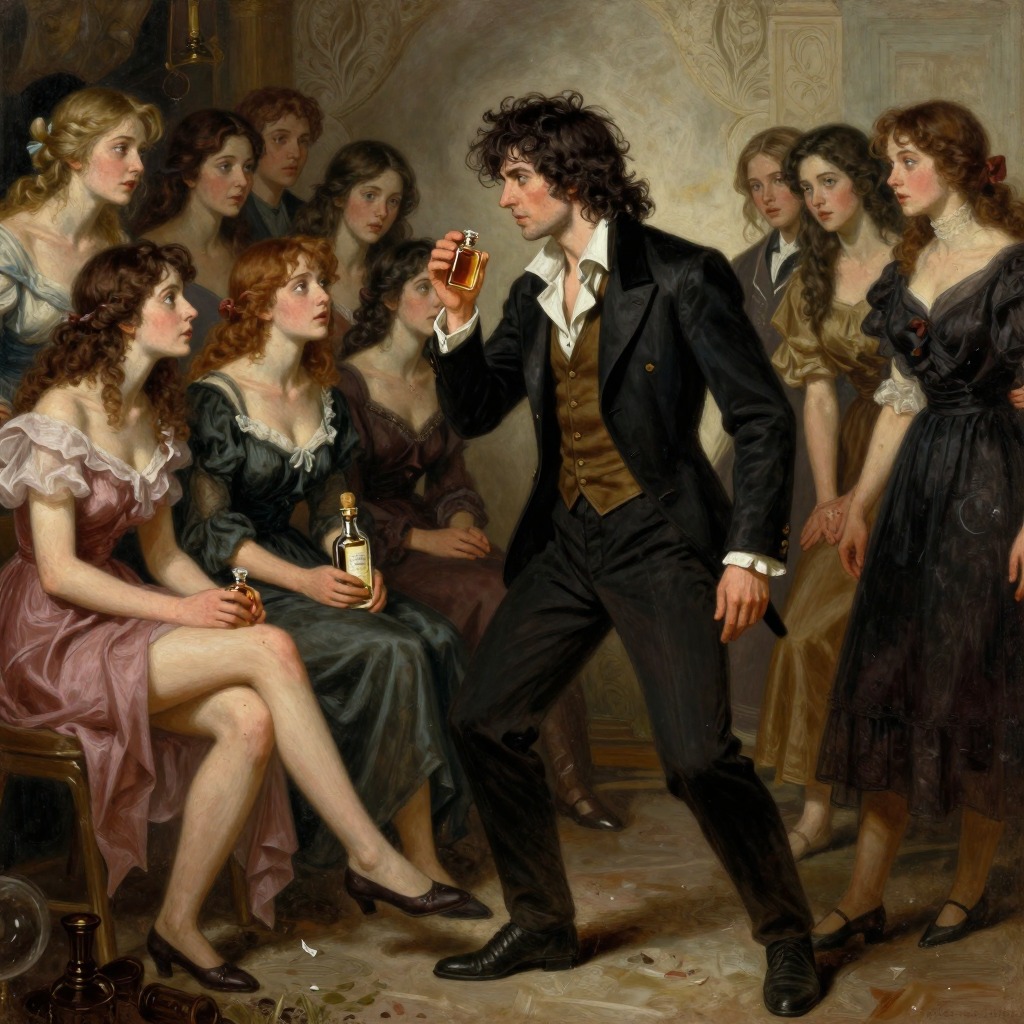
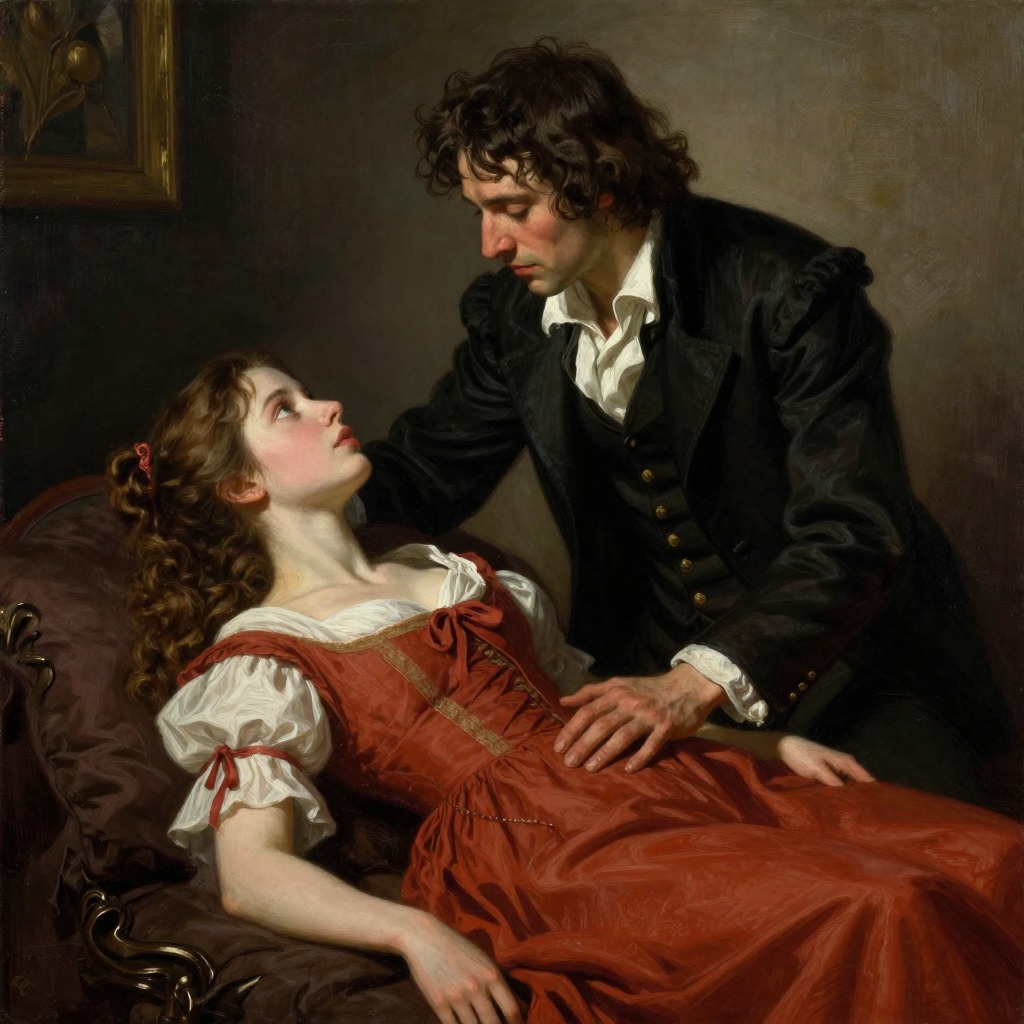
The most precious thing that Richis possesses is his daughter. She is his only child, just turned sixteen, with auburn hair and green eyes, and a face so charming that visitors of all ages and both sexes stand stock-still at the sight of her. Even Richis catches himself looking at her for indefinite periods of time, a quarter of an hour or a half-hour, forgetting the rest of the world, even his business. Of an evening, when he brings her to her bed or of a morning when he goes in to waken her and she still lies sleeping, he feels an awful cramping in his stomach and his throat seems too tight; he curses himself for being this woman's father and not some stranger who could lie down next to her without scruple and full of desire. He breaks out in a sweat, his arms and legs tremble while he chokes down this dreadful lust and bends down to wake her with a chaste fatherly kiss. During the year of the murders, these fatal temptations had not yet come over him; the magic his daughter worked on him then still seemed a childish magic, and he was not seriously afraid that Laure would be one of the murderer's victims. He augmented the watch of his home, had new grilles placed at the windows of the top floor, and directed Laure's maid to share her bedchamber with her, but he was loath to send her away as his peers had done. He found such behaviour despicable and unworthy of a member of the town council and second consul, who should be a model of composure, courage and resolution. He was one of the few people in the town immune to the fever of fear.
The Deduction
After the murders cease and others celebrate, fear creeps into Richis's heart like a foul poison. One day in March he watches Laure walk out into the garden in a blue dress, her red hair blazing in the sunlight; she disappears behind a hedge, and it takes about two heartbeats longer than he expected before she emerges again—and he is frightened to death, for during those two heartbeats he thinks he has lost her forever. That same night he awakes out of a terrifying dream about Laure and bursts into her room convinced she is dead, only to find her unharmed. He finally admits to himself that it is naked fear that has seized him, and in admitting it he grows calmer and his thoughts clearer. He has not believed in the efficacy of the bishop's anathema, nor that the murderer is now prowling about Grenoble, nor that he ever left town. He has seen several of the murdered girls and been fascinated by them; the murderer has opened his eyes. The murderer possesses exquisite taste and a system; the very choice of victims betrays intentions almost economical in their planning. Richis imagines all the victims not as single individuals but as parts of some higher principle, their characteristics merged into a unifying whole that would be the picture of absolute beauty. He concludes that the murderer is a collector of beauty working on a picture of perfection, and that he cannot waive claim to the most precious component on earth: the beauty of Laure. She is the keystone to his building. Richis perceives the essence of the matter: the murderer's systematic method and his idealistic motive. The longer he thinks about it, the greater his admiration for the murderer—an admiration that reflects back upon him as would a polished mirror, for after all it is he, Richis, who has picked up his opponent's trail with his own refined and analytical powers of reasoning. If he, Richis, had been the murderer, he would not have been able to proceed in any other fashion. Because he can put himself inside the mind of the would-be murderer of his daughter, he has made himself vastly superior to the murderer.
The Plan and Its Failure
Relieved, almost elated, Richis springs from his bed and orders his household to prepare for a journey to Grenoble in the company of his daughter. The departure is a diversionary tactic: a mile and a half north-west of Grasse, near the village of Saint-Vallier, he orders a halt, hands his valet letters of attorney and transmittal, and orders him to bring the mule train and grooms to Grenoble by himself. He turns off with Laure and her maid towards Cabris, then rides straight across the Tanneron mountains towards the south, planning to ferry across to the Îles de Lérins and lodge his daughter in the well-fortified Monastery of Saint-Honorat. He intends to return to the mainland, circumvent Grasse via Antibes and Cagnes, and arrive in Vence to prepare the marriage contract with Baron de Bouyon. His only conditions are that the marriage take place within ten days and be consummated on the wedding day, and that the couple thereafter take up residence in Vence. A married woman, deflowered and if possible already pregnant, would no longer fit into the murderer's exclusive gallery. But the plan is not yet carried out. The three riders are still passing through the inhospitable Tanneron mountains, and by evening they reach La Napoule. Richis sends the women to their room, goes out to the stalls to check on a journeyman tanner from Nice who is spending the night there, finds him so totally insignificant that he is immediately convinced there is no danger to fear from this almost touchingly harmless creature, and leaves very quietly so as not to disturb his sleep. He takes his evening meal with his daughter, plays a few games of l'hombre, brings her to her room, locks the door from the outside, and goes to bed himself, falling instantly into deep, peaceful, refreshing sleep for the first time in a good while. The next morning he finds Laure lying on her bed, naked and dead and shorn clean and sparkling white—exactly as in his nightmare.
Adoption and Reversal
At the execution, Richis leaps up out of the first row of the notables' grandstand and flutters across the parade grounds like a raven or an avenging angel. Grenouille, expecting the thrust of a dagger or sword, spreads his arms wide to receive him. But Richis throws his arms around him, clutching him very tight, his cheek wet with tears glued to Grenouille's, and whimpers: "Forgive me, my son, my dear son, forgive me!" Later, when Grenouille regains consciousness in Laure's bed, Richis is sitting on a footstool beside him, holding his hand and stroking it. He tells Grenouille that the magistrate has overturned his verdict, all the witnesses have recanted, and he is free. He asks Grenouille to stay with him, saying he has lost a daughter but wants to gain a son. He finds Grenouille beautiful like Laure, sees her hair, her mouth, her hand in him, and when he looks into Grenouille's eyes it is as if she were looking at him. He asks if Grenouille's parents are still alive; Grenouille shakes his head, and Richis's face turns beet red for joy. He clasps Grenouille's hands and asks him to be his son. Grenouille nods, and joy erupts from Richis's every pore like scarlet sweat. He bends down and kisses Grenouille on the mouth, then says, "You have made me very, very happy."