Jean-Baptiste Grenouille
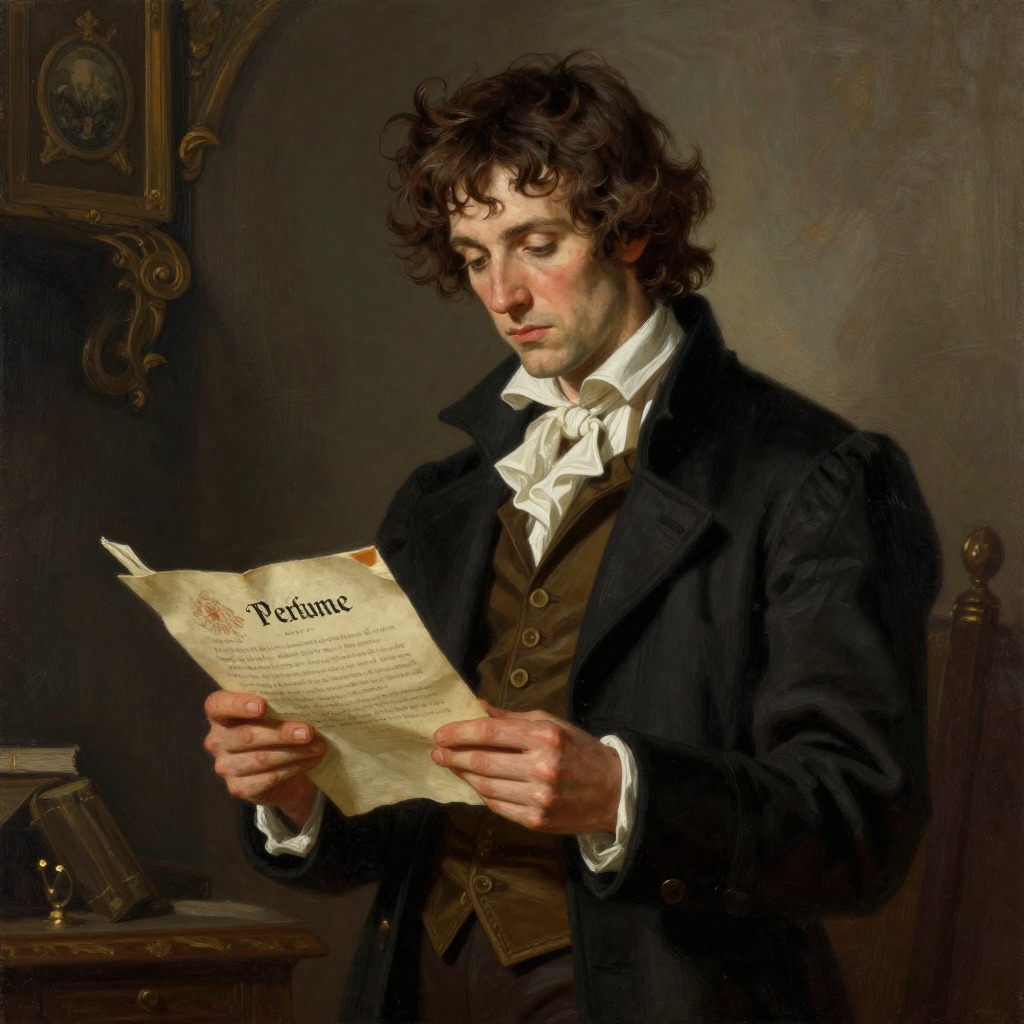
PerfumeJean-Baptiste Grenouille is one of the most gifted and abominable personages of an era that knew no lack of such figures. His story, set in eighteenth-century France, is a chronicle of a man whose sole ambition was restricted to the fleeting realm of scent. Born on the most putrid spot in the whole kingdom, the Cimetière des Innocents in Paris, on 17 July 1738, he entered the world with a bloodcurdling scream that brought his mother to the gallows for infanticide. From the start, he was an abomination, a creature who decided in favor of life out of sheer spite and malice, like a tick that stubbornly waits for blood. His life is a dark inversion of the hero's journey, a descent into the heart of olfactory obsession that ends in a cannibalistic feast of love.
Identity and Background
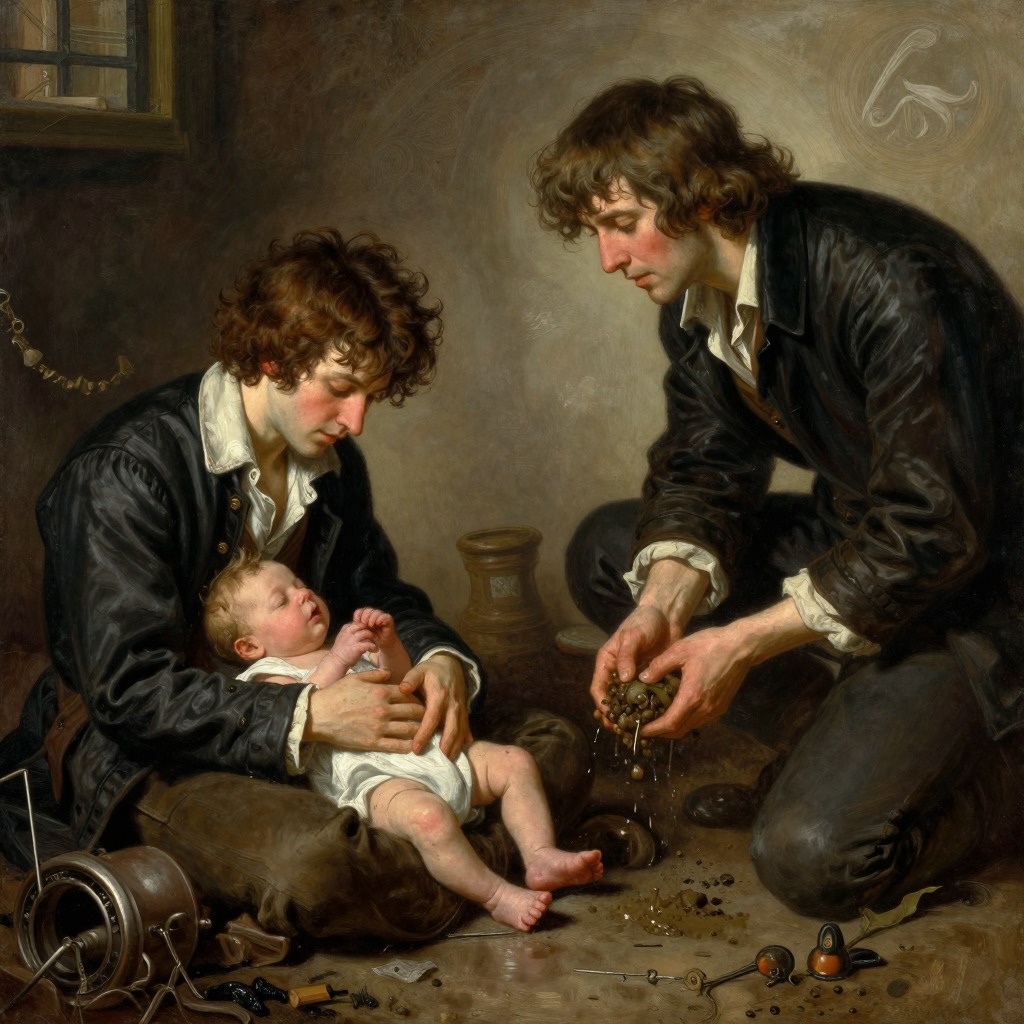
Grenouille was born without any personal scent, a fact that repelled his wet nurse, Jeanne Bussie, who declared him possessed by the devil because he did not smell like a human child should. Father Terrier, a monk at the Cloister of Saint-Merri, found the child's odorlessness deeply unsettling, feeling as if the infant were smelling him, scrutinizing him with its nostrils. He quickly passed the child on to Madame Gaillard, a woman who had lost all sense of smell and all human passion after a blow to the head. In her establishment, Grenouille thrived like a tough bacterium, surviving measles, dysentery, cholera, a fall into a well, and a scalding. He was as content as a tick sitting quietly on a tree, requiring nothing for his soul. He learned to speak not through normal acquisition but by vomiting up words like "wood" when an olfactory experience overwhelmed him. Abstract concepts like justice, conscience, and God remained a mystery to him. At eight, Madame Gaillard, unnerved by his apparent ability to see through walls and find hidden money, sold him to the tanner Grimal.
Life and Plot Trajectory
Under Grimal, Grenouille lived an existence more animal than human, scraping meat from rotting hides and hauling water from the river. He contracted anthrax but survived, becoming immune and thus more valuable. At thirteen, he was given a small measure of freedom, and he began to hunt the city of Paris for new scents. On 1 September 1753, during the fireworks at the Pont-Royal, he caught the premonition of a scent so exquisite that it ached his heart. He followed it to the Rue des Marais, where he found a red-haired girl cleaning yellow plums. He strangled her, not out of cruelty, but to possess her scent, which he recognized as the key to ordering all odours. This murder was the start of his true life; he felt as if he had been born a second time, knowing he must become the greatest perfumer of all time. He then sought out the perfumer Giuseppe Baldini, and by replicating Pélissier's perfume "Amor and Psyche" from memory, he secured a position. He learned the craft of distillation and the techniques of enfleurage, but his experiments to create entirely new scents failed, leading to a near-fatal illness. Baldini told him of the superior techniques used in Grasse, and after three years of service, Grenouille set out for the south.
Key Actions and Objectives
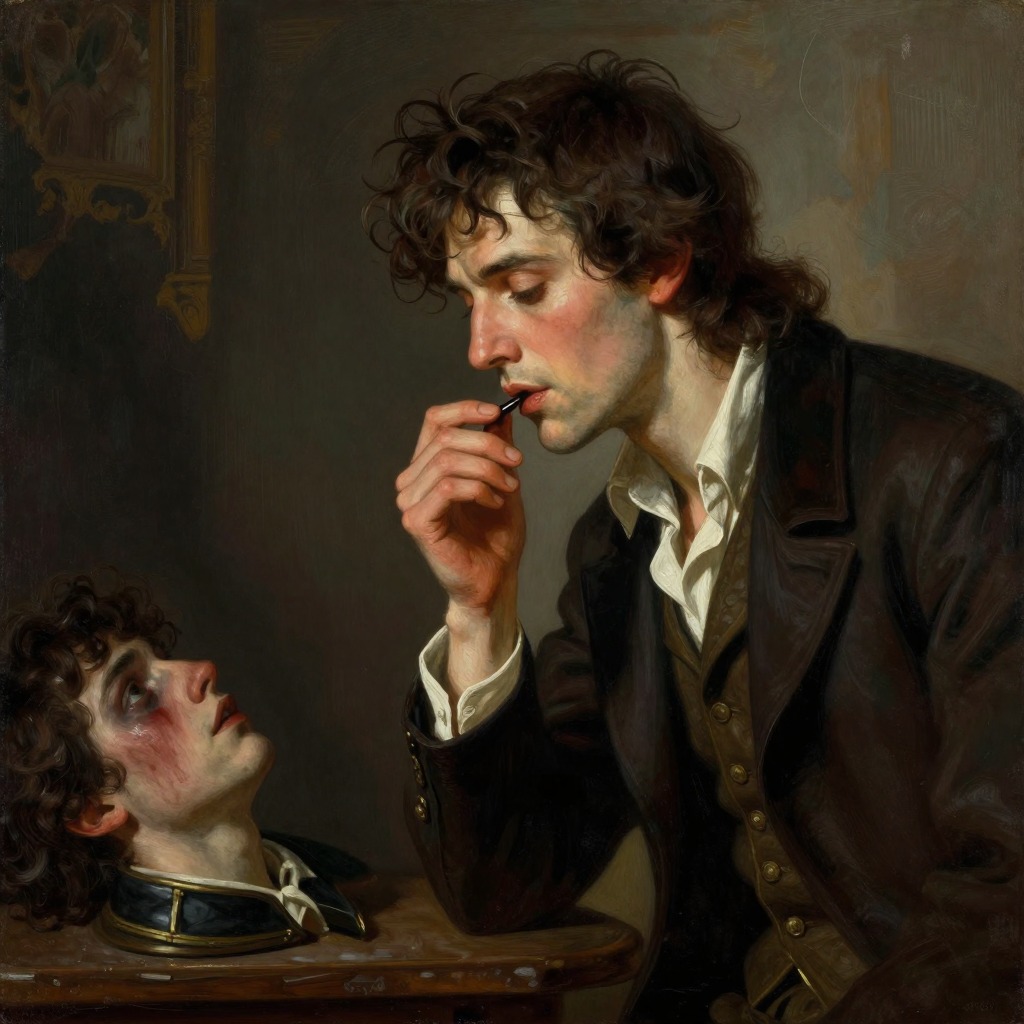
Grenouille's journey to Grasse became a flight from humanity. He avoided cities and villages, finally retreating to the Plomb du Cantal, a six-thousand-foot volcano in the Massif Central, where he lived in a cave for seven years. There, he created an inner empire of scents, a purple castle where he could relive and rearrange his olfactory memories. But a nightmare in which he was suffocated by his own odorless fog drove him back into the world. He emerged looking like a wild beast, but was taken in by the Marquis de la Taillade-Espinasse, who used him as proof of his "Fluidum Letale" theory. In Montpellier, Grenouille created a perfume that imitated human odor, using cat shit, cheese, rotten egg, and other vile ingredients. This allowed him to pass as a normal human being for the first time. He then traveled to Grasse, where he found a new red-haired girl, Laure Richis, whose scent was even more perfect than the first. He resolved to possess it, not by destroying it, but by making it the soul of a perfume that would command the love of all mankind. Over the next year, he murdered twenty-four other beautiful young women, using cold-oil enfleurage to capture their scents, which he stored in tiny flacons.
Relationships and Conflict
Grenouille's relationships are defined by his lack of human connection. His mother was executed for his birth. His wet nurse feared him. Madame Gaillard was indifferent. Grimal saw him only as a useful animal. Baldini exploited his genius while feeling a sanctimonious loathing for him. The Marquis de la Taillade-Espinasse saw him as a scientific specimen. His only true relationship was with the scent of the red-haired girls, whom he loved not as people but as sources of olfactory perfection. His primary conflict was with Antoine Richis, the father of his final victim, who correctly deduced that the murderer was a collector of beauty and that his daughter was the keystone. Richis tried to save Laure by fleeing to La Napoule, but Grenouille tracked her by her scent, killed her, and captured her aura.
Change and Ending
Grenouille was arrested and sentenced to be broken on the wheel. On the day of his execution, he appeared before ten thousand people wearing his ultimate perfume, the scent of twenty-five maidens. The effect was instantaneous and overwhelming. The crowd, from the bishop to the executioner, was filled with love for him. The execution degenerated into a massive orgy. Antoine Richis, instead of killing him, fell to his knees and begged forgiveness, adopting him as his son. But Grenouille was terrified. He realized that he could not enjoy his triumph because he hated the people who loved him. He had never found gratification in love, only in hatred. He fled Grasse and returned to Paris, to the Cimetière des Innocents, where he had been born. There, he poured the remaining perfume over himself. A group of thieves, murderers, and whores were drawn to him, and in a frenzy of love, they tore him apart and devoured him. For the first time, they had done something out of love. Jean-Baptiste Grenouille had disappeared utterly from the earth.
Narrative Role and Evaluation
Grenouille is a figure of pure, monstrous genius, a dark mirror of the Romantic artist whose creative power is inseparable from destruction. His lack of a personal odor symbolizes his lack of a soul or a self, making him a void that he desperately tries to fill with the stolen essences of others. He is both a victim and a perpetrator, an abomination who is also a tragic figure. His story is a profound meditation on the nature of love, hate, and the human need for connection, showing that the power to command love is worthless if one cannot love in return. His final act, allowing himself to be consumed, is a grotesque parody of the Eucharist, a communion of hate that the cannibals mistake for love. He is, in the end, a Promethean figure who stole the divine spark of scent but found it brought him only a suffocating emptiness.