Chénier
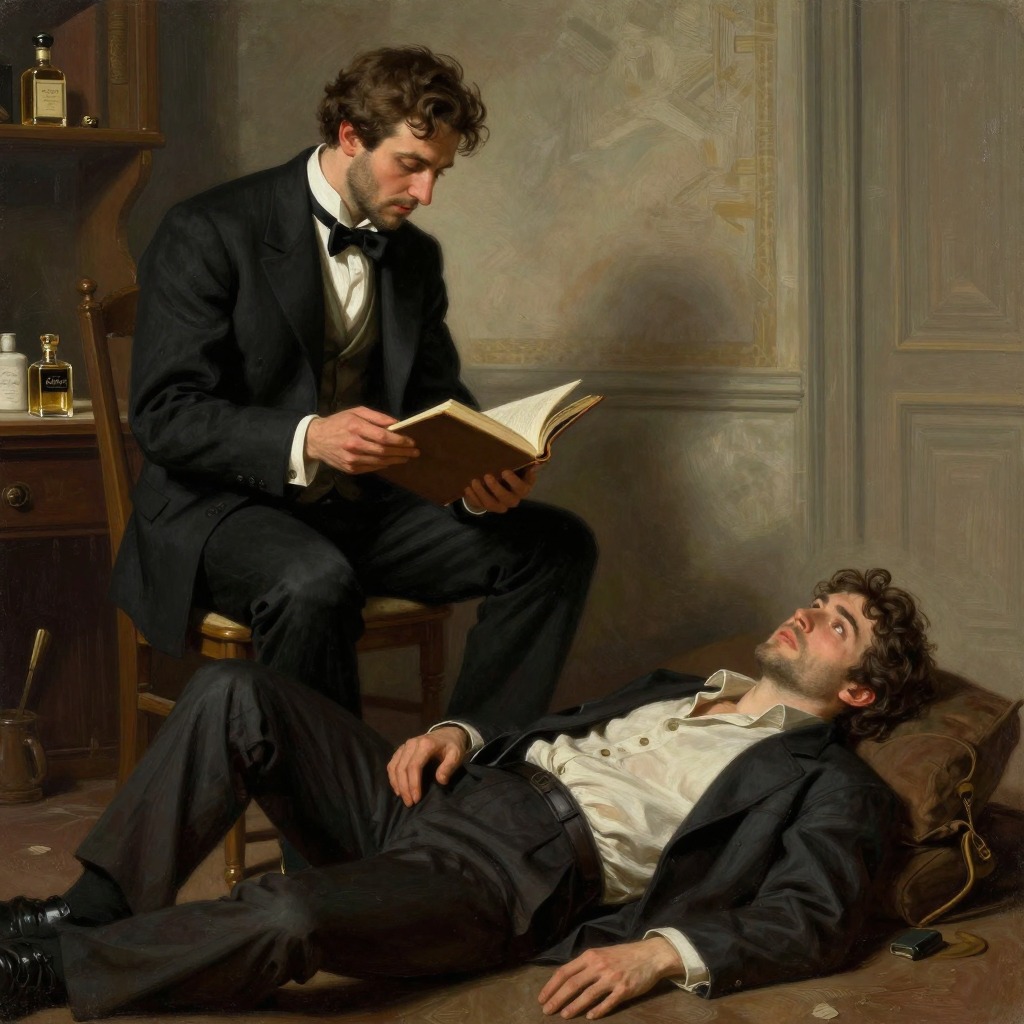
PerfumeChénier is the assistant and sole journeyman of Giuseppe Baldini, the master perfumer whose shop occupies the finest address on the Pont au Change in Paris. He is somewhat younger than Baldini but already an old man himself, and he has served the house for thirty long years, hoping to be named heir in Baldini's will. His position is that of a faithful subordinate who performs the daily work of the shop while his master retreats to a study to stage the rituals of creative inspiration. Chénier knows the shop's inventory intimately, from the essences absolues and floral oils to the scented gloves, pastilles, and musk-sprinkled wallpaper that fill every floor of the building. He also knows the exact procedure of Baldini's charade: the old man will take off his frangipani-drenched coat, sit at his desk, wait for inspiration that never comes, mix ingredients haphazardly, fail, curse, pour the mixture into the river, and eventually send Chénier to buy a competitor's perfume to pass off as his own. Chénier has seen this circus so many times that he can predict it to the minute, and he wishes only that it were already over.
Role in the Shop and Relationship with Baldini
Chénier's daily life is one of patient endurance. When Baldini cries out from behind the counter, "Chénier! Put on your wig!" the assistant emerges from among the kegs of olive oil and dangling Bayonne hams, pulls his wig from his coat pocket, and shoves it on his head. He knows that Baldini is about to retreat to his study to "create a new perfume" for Count Verhamont, and he knows equally well that the result will be a catastrophe. When Baldini announces that he is thinking of creating something that will cause a veritable furore, Chénier replies, "I am sure it will, Monsieur Baldini," with the hollow assurance of a man who has heard the same boast a hundred times before. He takes his place behind the counter, positioning himself exactly as his master had stood, and stares fixedly at the door, waiting for the inevitable collapse. His private thoughts are rueful: "What a shame about old Baldini; a shame about his beautiful shop, because he's sure to ruin it; and a shame about me, because by the time he has ruined it, I'll be too old to take it over." He has sacrificed thirty years in hopes of being named heir, for Baldini has neither children nor relatives, and the prospect of that inheritance is the only thread that keeps him bound to the fading business.
The Transformation of the Business
When Grenouille enters Baldini's life and begins producing the revolutionary perfumes that make the House of Baldini the most famous in Europe, Chénier is swept up in the transformation without ever understanding its true cause. The Persian chimes never stop ringing, the silver herons never stop spewing violet-scented toilet water, and Chénier's eyes grow glassy from the moneys paid and his back aches from all the deep bows he must make to persons of high, indeed highest, rank. He is subjected to the onslaught of customers while Baldini shuts himself up in the laboratory with the new apprentice, justifying the arrangement with a fantastic theory he calls "division of labour and increased productivity." Chénier accepts the successes as natural phenomena and does not seek out their cause. He would not have believed, had he been told, that the awkward gnome housed like a dog in the laboratory might be implicated in the fabulous blossoming of their business. He is simply too busy to think: by evening he is so exhausted he can hardly empty out the cashbox and siphon off his cut.
The Collapse and Aftermath
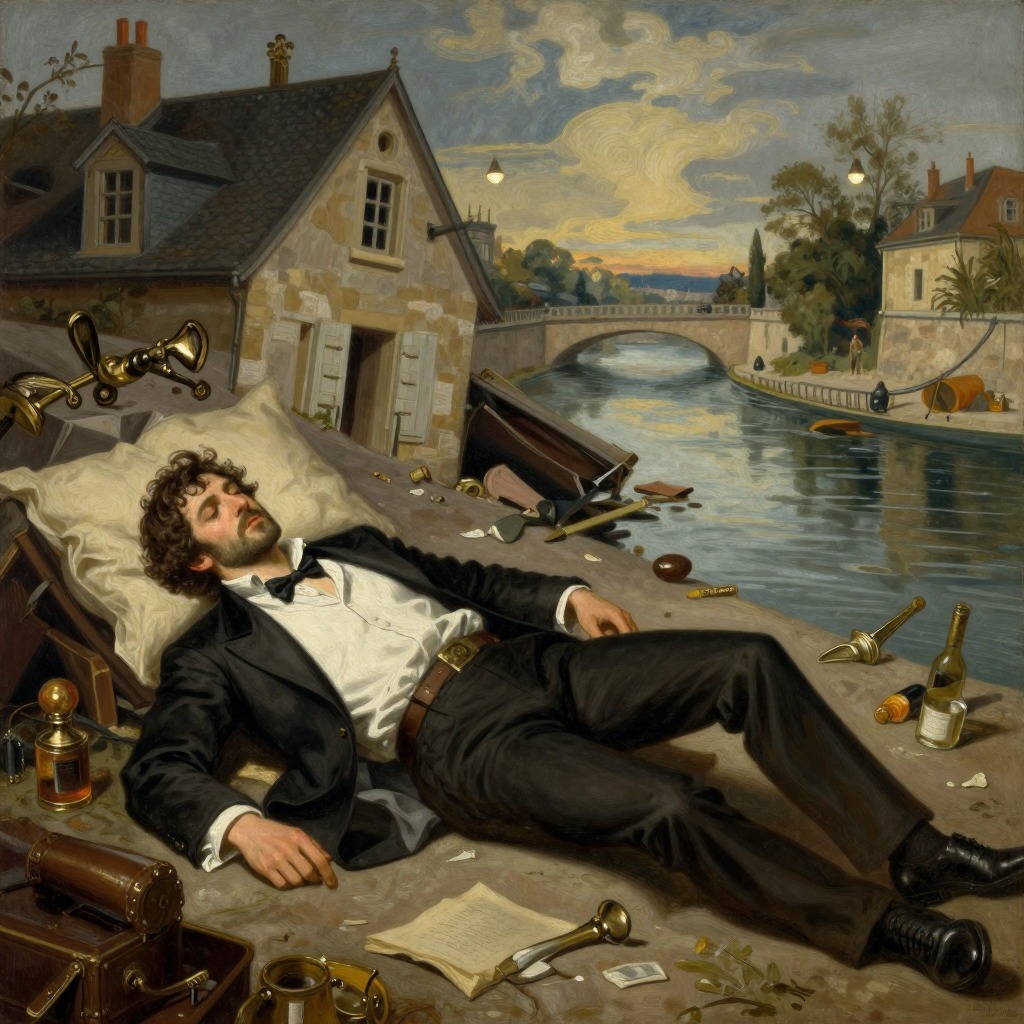
On the night that the west side of the Pont au Change collapses between the third and fourth piers, hurling Baldini and his wife into the river, Chénier first returns home in the small hours slightly drunk. He finds no home left. The entire inheritance is gone at one blow: house, business, raw materials, laboratory, Baldini himself, and even the will that might have offered him a chance of becoming owner of the factory. He suffers a nervous breakdown. Nothing is found, not the bodies, not the safe, not the little book with its six hundred formulas. Only one thing remains of Giuseppe Baldini, Europe's greatest perfumer: a very motley odour of musk, cinnamon, vinegar, lavender, and a thousand other things that for several weeks floats high above the Seine from Paris to Le Havre. Chénier, who had pinned his entire future on the old man's death, is left with nothing but the memory of thirty years of service and the bitter knowledge that the miracle that saved the business was never his to claim.