Giuseppe Baldini
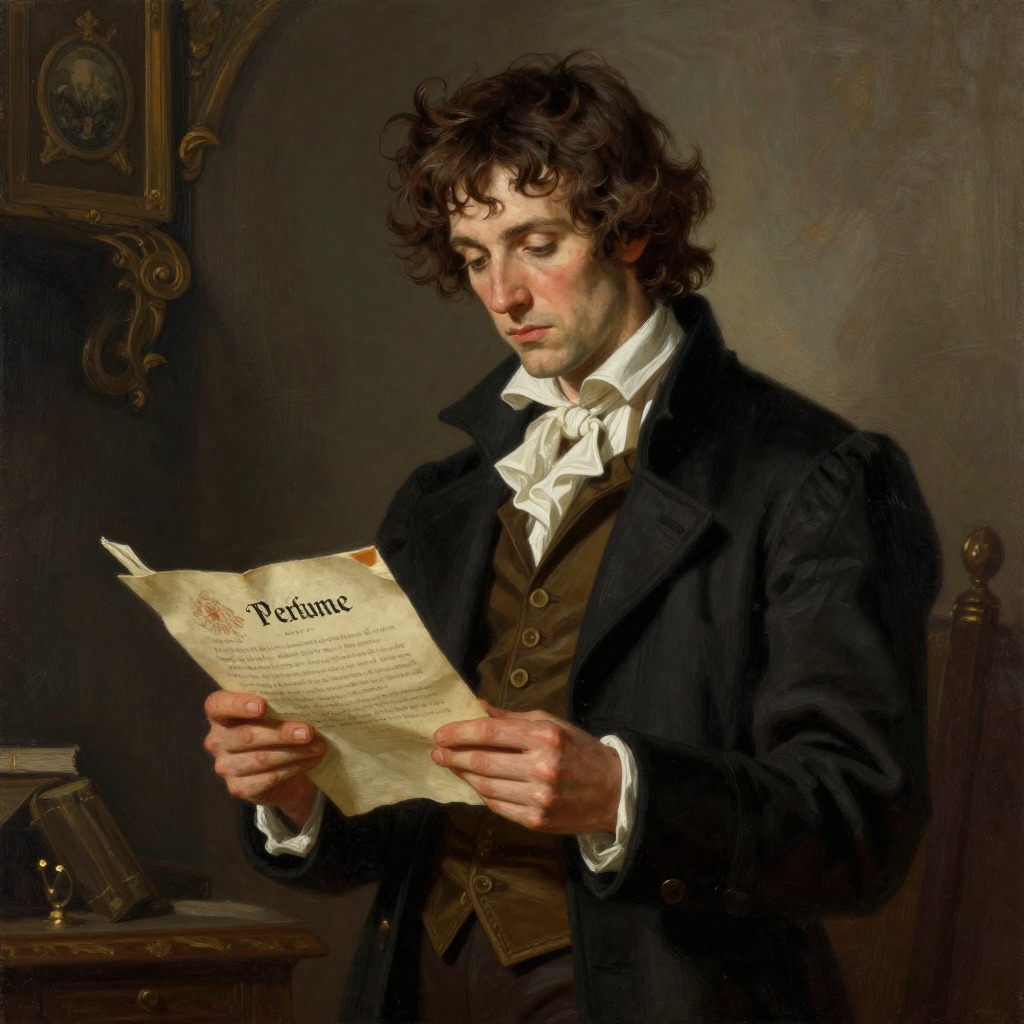
PerfumeGiuseppe Baldini, the master perfumer and glover whose shop stood on the Pont au Change in Paris, represents the old order of the craft—a man who has never truly invented a perfume in his life, who inherits his formulas and stages a theatrical pretense of creative genius, and who is ultimately saved and then destroyed by his encounter with Jean-Baptiste Grenouille.
Identity and Background
Baldini's establishment was one of the finest business addresses in Paris, located on the Pont au Change, a bridge so crammed with four-storey buildings that one could not glimpse the river when crossing it. Above his display window hung a sumptuous green-lacquered baldachin and a golden coat of arms: a golden flacon from which grew a bouquet of golden flowers. A red carpet embroidered with the same coat of arms lay before the door, and when a customer entered, Persian chimes rang and two silver herons spewed violet-scented toilet water from their beaks into a gold-plated vessel. Behind the counter of light boxwood stood Baldini himself, old and stiff as a pillar, in a silver-powdered wig and a blue coat adorned with gold frogs, enveloped in a cloud of frangipani with which he sprayed himself every morning. His stock was vast, ranging from floral oils, tinctures, extracts, balms, and resins through pomades, pastes, powders, soaps, creams, sachets, bandolines, brilliantines, moustache waxes, wart removers, and beauty spots, to bath oils, lotions, smelling salts, toilet vinegars, and countless genuine perfumes. He also sold incense pastilles, candles, cords, spices from anise seeds to cinnamon bark, syrups, cordials, fruit brandies, wines from Cyprus, Malaga, and Corinth, honeys, coffees, teas, candied and dried fruits, figs, bonbons, chocolates, chestnuts, pickled capers, cucumbers, onions, marinated tuna, perfumed sealing waxes, stationery, lover's ink scented with attar of roses, writing kits of Spanish leather, penholders of white sandalwood, caskets and chests of cedar-wood, pot-pourris, bowls of flower petals, brass incense holders, crystal flacons with stoppers of cut amber, scented gloves, handkerchiefs, sewing cushions filled with mace, and musk-sprinkled wallpaper that could fill a room with scent for more than a century. The chaos of odours in the House of Baldini was so overwhelming that first-time customers were often dazed or fainted.
Crisis and the Arrival of Grenouille
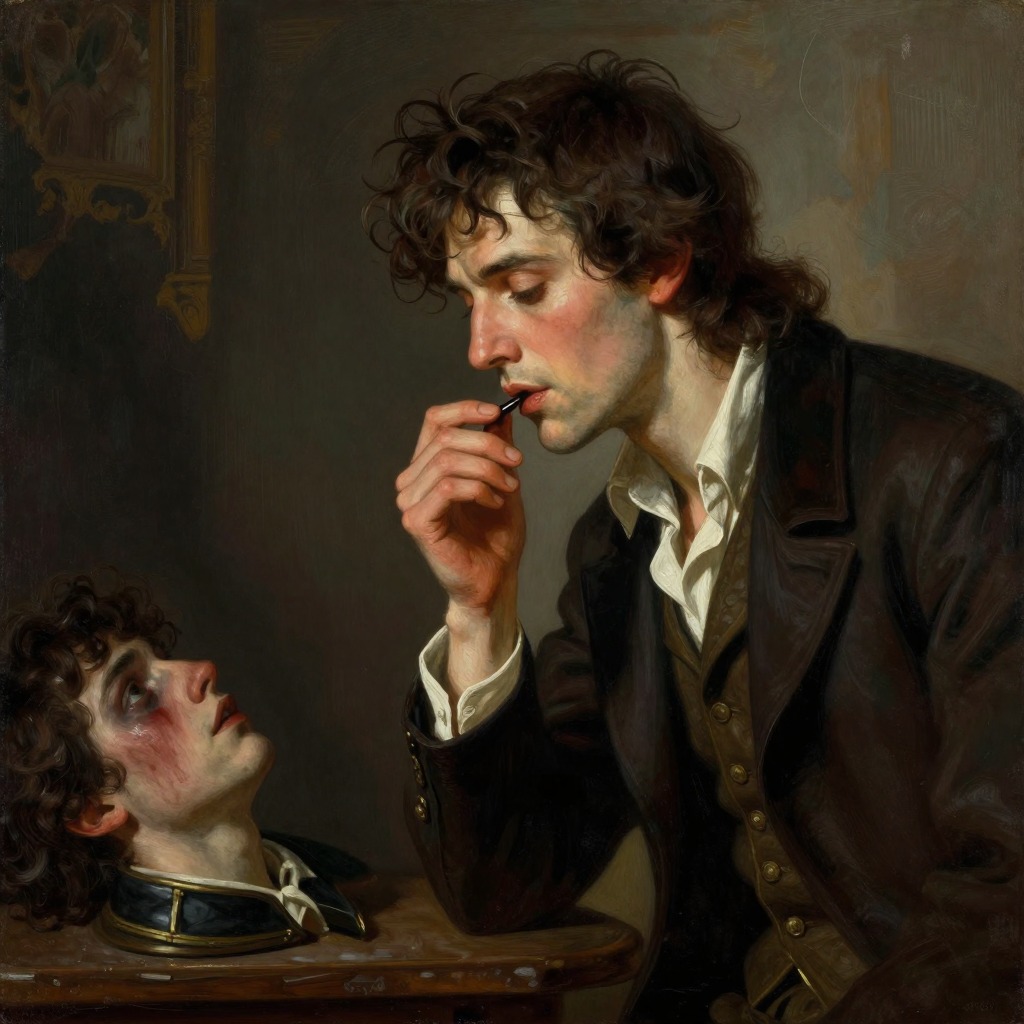
Despite his apparent grandeur, Baldini was in decline. He had never invented a perfume; he inherited "Rose of the South" from his father and bought the formula for "Baldini's Gallant Bouquet" from a travelling Genoese spice salesman. The rest of his perfumes were old familiar blends. He staged the whole hocus-pocus of a study, experiments, inspiration, and secrecy only because that was part of the professional image of a perfumer. His business was failing, and he was reduced to making house calls, valise in hand, to retain customers. His rival, the upstart vinegar-maker turned perfumer Pélissier, launched a new scent every season that the whole world went crazy over, and Baldini could not keep up. When Count Verhamont ordered a Spanish hide scented with something new, Baldini secretly bought a bottle of Pélissier's "Amor and Psyche" and attempted to copy it. He spent two hours trying to analyse the perfume by dipping a handkerchief, passing it under his nose, and jotting down ingredients, but he could not dissect the scent. His nose swelled shut in allergic reaction, and he gave up in despair, deciding to sell his business and retire to Messina. That evening, Grenouille arrived delivering goatskins from the tanner Grimal. Grenouille immediately identified the ingredients of "Amor and Psyche"—bergamot, rosemary, attar of roses, orange blossom, lime, clove, musk, jasmine, alcohol, and storax—and offered to mix it. Baldini, skeptical but curious, allowed him to try. Grenouille poured alcohol directly into the mixing bottle without measuring, then splashed in essences apparently at random, shaking the bottle vigorously. The result was a perfect copy of "Amor and Psyche." Then Grenouille mixed a second version, which he called "Nuit Napolitaine," and it was so sublime that Baldini wept with pleasure, seeing himself as a young man walking through the evening gardens of Naples, lying in the arms of a woman with dark curly hair. He immediately bought Grenouille from Grimal for twenty livres, knowing he had made the best deal of his life.
Rise to European Renown
With Grenouille as his secret apprentice, Baldini's business soared. The Persian chimes never stopped ringing, and the herons never stopped spewing. The very first evening, Grenouille prepared a large demijohn of "Nuit Napolitaine," of which over eighty flacons were sold the next day. The fame of the scent spread like wildfire. Chénier, Baldini's assistant, was overwhelmed by customers of high rank, including the footman of Count d'Argenson, the most powerful man in Paris. Baldini shut himself up in his laboratory with Grenouille, claiming a theory of "division of labour and increased productivity." He emerged almost daily with new scents—not just perfumes, but creams, powders, soaps, hair tonics, toilet waters, oils, and even scented hair ribbons. Everything was a success. Baldini built a factory in the Faubourg Saint-Antoine, succeeded in his scheme for exclusive perfumes at court, and received a royal patent. His fine fragrances were sold as far off as St Petersburg, Palermo, Copenhagen, Constantinople, London, Parma, Warsaw, and the Schloss of the Graf von und zu Lippe-Detmold. By the age of seventy, he was indisputably Europe's greatest perfumer and one of the richest citizens of Paris. He acquired the adjoining building on the Pont au Change, using it solely as a residence, since the old building was stuffed full to the attic with scents and spices.
Relationship with Grenouille and Final Years
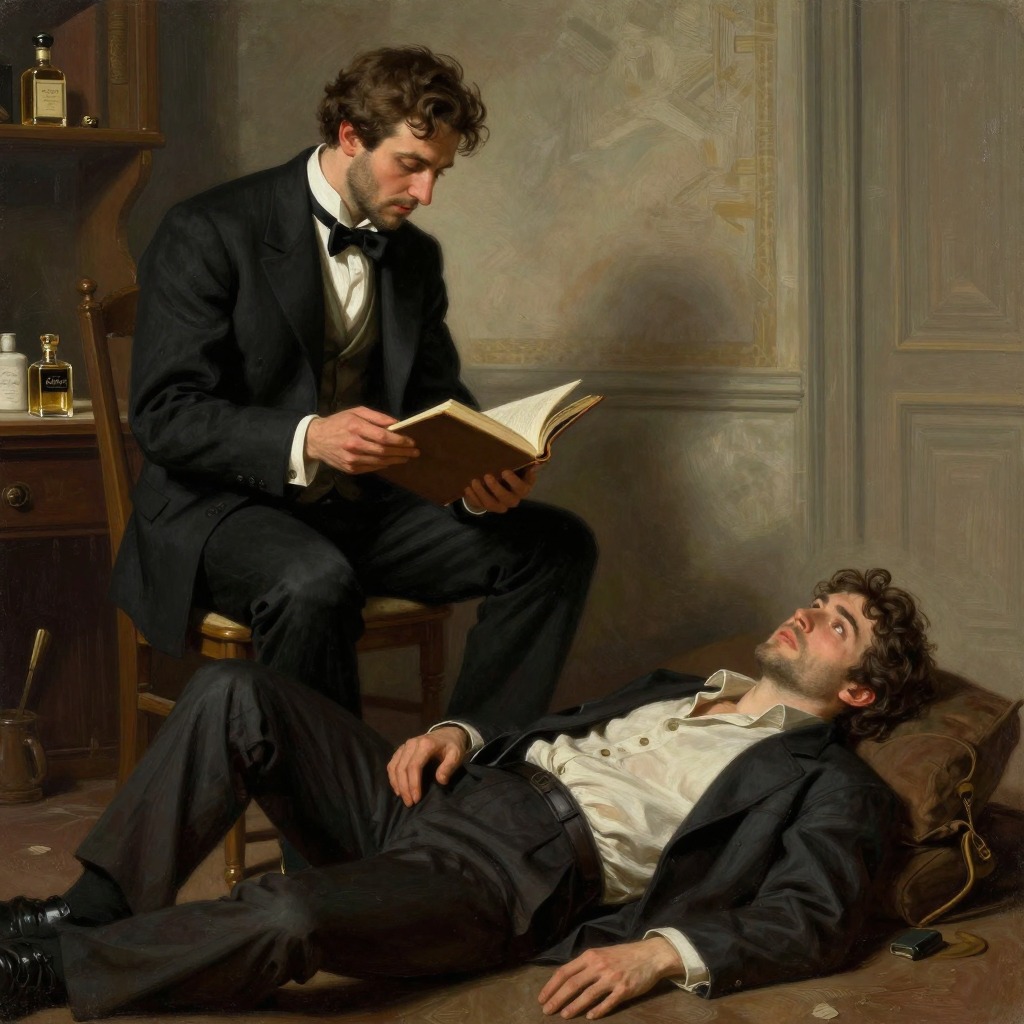
Baldini never shook hands with Grenouille, always avoiding touching him out of a kind of sanctimonious loathing. He felt much like a man of spotless character who does some forbidden deed for the first time, using underhand tricks. He was haunted by the notion that he would have to pay for getting involved with Grenouille. In early 1756, he released Grenouille on three conditions: he must not produce any of Baldini's perfumes or sell their formulas, he must leave Paris and never return as long as Baldini lived, and he must keep these conditions secret. Grenouille swore and left. Baldini felt extraordinarily relieved. He had a little book of six hundred formulas recorded from Grenouille's work, which he kept beside his heart. That same afternoon, a rumour surfaced that the English had declared war on France, and Baldini postponed his planned pilgrimage to Notre-Dame to cancel a shipment to London. That night, he had a brilliant idea: to launch a perfume called "Prestige du Québec" to compensate for the loss of English business. He fell asleep with the little book of formulas under his pillow and awoke no more. The west side of the Pont au Change collapsed between the third and fourth piers, hurling two buildings into the river. Baldini and his wife Teresa were killed. The safe, the little book, and all the formulas were lost. Only a motley odour of musk, cinnamon, vinegar, lavender, and a thousand other things floated above the Seine from Paris to Le Havre for several weeks.