Ash and LaMotte’s buried correspondence
PossessionAsh and LaMotte’s buried correspondence is the private exchange that Ellen Ash chose to preserve in the grave of Randolph Henry Ash rather than burn or leave exposed to public scrutiny. Its burial makes the letters at once a remnant of an intimate relationship, a deliberately withheld archive, and a material object over which later scholars and heirs contend. The letters survive because Ellen’s decision is neither simple concealment nor complete destruction: she lays them to rest with her husband, intending the earth to keep what she cannot bring herself to destroy or publish.
The decision to preserve and conceal
Ellen’s account begins among Ash’s possessions after his death. She writes at his desk in the early hours, surrounded by objects that seem to retain his presence: an unfinished letter, a microscope, slides, a marked book, and uncut pages. The letters between Ash and LaMotte belong to this charged household landscape, where mourning makes the distinction between a person and the things left behind difficult to sustain. Ellen describes herself as unable to burn the letters, yet unwilling to expose them; she decides to lay them beside Ash and let the earth take them.
Her choice follows a practice of selective destruction. Ash had urged her to burn what others should not see, and Ellen recalls his contempt for biographical rummaging through the private papers of the dead. She shares the Victorian scruple that publishing intimate correspondence may be a form of treachery, likening it to disclosing the private conversation of friends. She has already made a fire and burned some papers, and intends to burn more. The hidden letters are the exception: they are too dear to burn, but, in her judgment, too private to release to readers.
Burial with Randolph Henry Ash
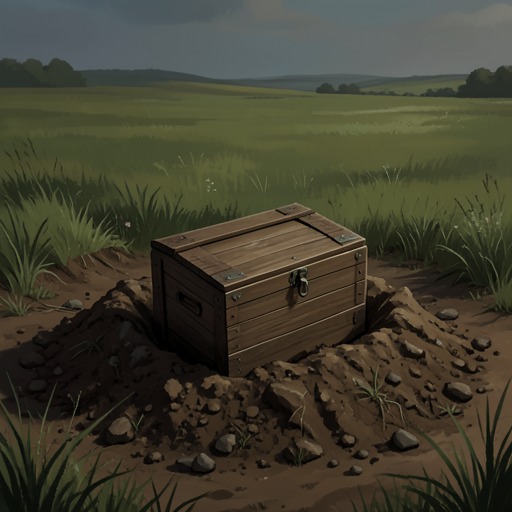
At Ash’s funeral, Ellen puts a box containing their letters and other mementoes onto his coffin before the grave is filled. The burial takes place at St Thomas’s Church at Hodershall, rather than Westminster Abbey, in accordance with Ellen’s wish that Ash rest in the quiet country churchyard where she hopes to be buried too. On a wet November day, the coffin, white wreaths, box, and flowers disappear beneath the local chalk, flint, and clay. The letters are not merely hidden in a private room: their concealment is enacted publicly as part of the funeral, then sealed beneath the churchyard earth.
The box becomes part of a layered memorial. Ellen later commissions a black headstone carved with an ash tree whose crown and roots spread across the stone, echoing a design Ash sometimes drew beside his signature. The epitaph joins his poetry to the Renaissance tradition of Raphael and Cardinal Bembo, while its closing hope for reunion after “one short sleep past” gives the grave both a literary and marital meaning. The letters remain unmentioned on the headstone, but their placement inside the grave makes the burial itself a private counterpart to the public memorial.
Custody, silence, and the limits of the record
Ellen’s concealment complicates later efforts to describe Ash’s wishes. She attributes to him a desire to keep private papers from biographical scavengers, but the narrative notes that he left no testamentary instructions to this effect. Her actions after his death are also described as inconsistent: she burns some material, preserves other papers, and buries the correspondence. The archive that reaches later readers is therefore shaped not only by what Ash and LaMotte wrote, but by Ellen’s decisions under the pressure of immediate bereavement.
The grave does not contain the only trace of this hidden history. In a letter to Ellen, LaMotte says that Ash’s letters have not reached her because they have been taken; she reports a struggle with the postman over the mail. This interruption gives the correspondence a history of vulnerable circulation even before Ellen’s burial of it. Later, an anonymous sheet addressed to the person who kept the writer’s evidence objects that keeping it was wrong and insists that the writer’s words had been true and urgent. The fragment does not by itself settle what was retained or by whom, but it shows how the novel’s archive appears in partial, disputed pieces rather than as a complete record.
The letters also stand against other, more fragile forms of preservation. Christabel’s papers passed through her sister Sophia to May Bailey, with Sophia emphasizing Christabel’s wish that her work be handed down through the female line. The surviving archive is limited: it includes manuscripts, changing versions of Melusina, scattered lyrics, and a three-year diary by Blanche Glover, while other material has not come to light. Maud Bailey notes that Ellen may have burned letters and that some are buried with her. Against this wider pattern of loss, the grave is both a container of surviving evidence and a barrier that prevents it from entering scholarly custody.
Discovery and contested ownership
The burial’s concealment does not last indefinitely. Beatrice Nest warns Maud that Mortimer Cropper intends to disturb the Ashes’ grave with Hildebrand Ash, seeking the box despite the requirement for a Faculty from the Bishop to disturb an interment. Beatrice reports Cropper’s argument that Hildebrand has a moral right to the box and that Cropper’s own service to Ash gives him a claim. His plan treats the grave as a source of evidence to be recovered, while Ellen’s act had made it a place of privacy and repose.
When the container is eventually opened, it yields more than the correspondence. Inside Ash’s cloudy but intact glass specimen container are a hair bracelet with a silver clasp shaped as two joining hands, a finely plaited pale lock of hair, a thick bundle of ribbon-tied letters, and a sealed envelope addressed to Ash under cover. Cropper identifies the bundle as the love letters, while the unopened envelope raises a distinct question: whether it belongs to its sender because it was never received, or to Ash because it lies unopened in his grave. The recovered objects turn an abstract dispute over access into a physical encounter with the remains of intimacy, and leave questions of custody unsettled even as the letters themselves return to view.
Narrative and thematic significance
The correspondence’s burial makes the novel’s central archival problem tangible. A private relationship survives not through an authorized publication or a complete family record, but through papers hidden from readers by a widow who both protects and restricts them. The distinction between preservation and access is therefore inseparable from the people who control the documents: Ellen can save the letters from fire while denying them to future readers, and Cropper can seek their contents while claiming a right that the church’s rules do not grant him.
The letters also expose the limits of treating a surviving archive as a transparent account of the past. Some papers have been burned, some remain buried, and other documents appear as fragments whose authorship or context is uncertain. What survives can alter understanding, but the losses cannot be reconstructed with certainty. The hidden box embodies that tension: its contents are material and specific, yet its long concealment leaves the record dependent on grief, inheritance, institutional ambition, and the uncertain boundaries between private memory and public knowledge.