Christabel LaMotte’s chosen artistic seclusion
PossessionChristabel LaMotte’s chosen artistic seclusion is an act of independence organized around a shared home, creative work, and a deliberate refusal of conventional female hopes. In the cottage the two women name Bethany, domestic labor and art become parts of one self-directed life; the sealed pact that protects that life also marks the boundary LaMotte fears Ash’s love may cross. Her solitude is not mere withdrawal: she describes it as the core of her identity, the condition without which she would be nothing.
Bethany and the shared project
LaMotte gives the cottage its name in reference to the biblical Bethany, where Christ called his dead friend back to life. She reclaims that place for women by contrasting the household she and her companion create with the familiar division between Martha, burdened with serving, and Mary, who sits at Christ’s feet to hear his word. Their Bethany is neither a place where one woman serves nor one where another is served. Instead, the work of the household is to be carried out in a spirit of love, with everyday action itself treated as meaningful.
The project grows from the women’s encounter at one of Ruskin’s lectures on the dignity of handicraft and individual work. They want to live a life of the mind and make good things, but their plan is also material and economic: they pool their small resources and imagine supporting themselves through drawing lessons, the sale of wonder tales, and even poems. Their independence therefore rests not on an escape from work but on choosing its form and sharing its demands.
Art, labor, and refusal of convention
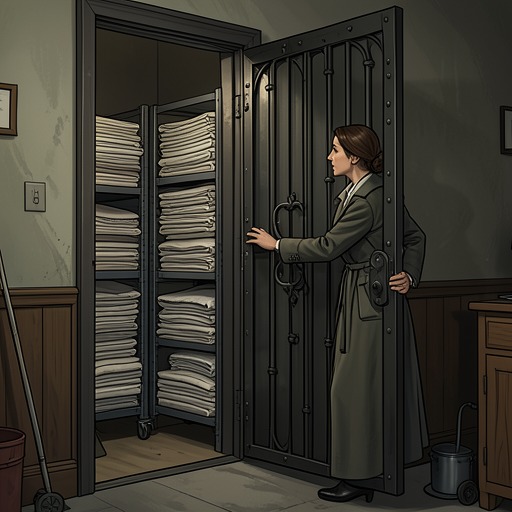
Within Bethany, making ranges from exquisite curtains and mystical paintings to biscuits decorated with sugar roses and the epic of Melusina. The breadth of this work refuses a hierarchy that would separate serious art from domestic craft. Daily labor can be sacred, LaMotte suggests, when it is undertaken freely and shared rather than imposed by a master. The house joins intellectual ambition to ordinary tasks, making artistic autonomy a practice sustained through the details of living.
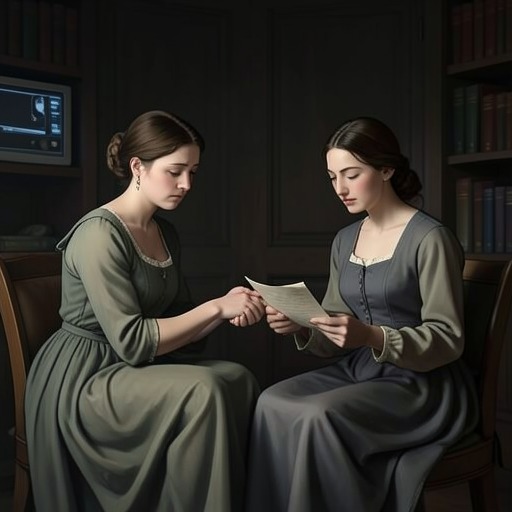
The women leave behind both cramped daughterly devotion to a worldly mother and the genteel servitude of governessing; LaMotte recalls that they fled those conditions gladly and met opposition firmly. Their choice also involves renouncing the outside world and the usual hopes—and fears—assigned to women. She calls the arrangement a sealed pact and insists that it is a chosen life in which she has been wonderfully happy, not alone in her happiness. The pact is a positive commitment to companionship and creation, not simply a defensive retreat.
The shuttered window and the threat of Ash
LaMotte figures her choice through the Lady of Shalott, but revises the familiar image. She imagines herself with a narrower wisdom, choosing neither a gulp of outside air nor the fatal river journey. Instead, she watches the bright colors of her web, works her industrious shuttle, and closes both shutters and peephole. The image makes seclusion an attentive, productive discipline: the protected room is where her work can continue, while looking outward threatens to draw her into a story whose consequences she cannot control.
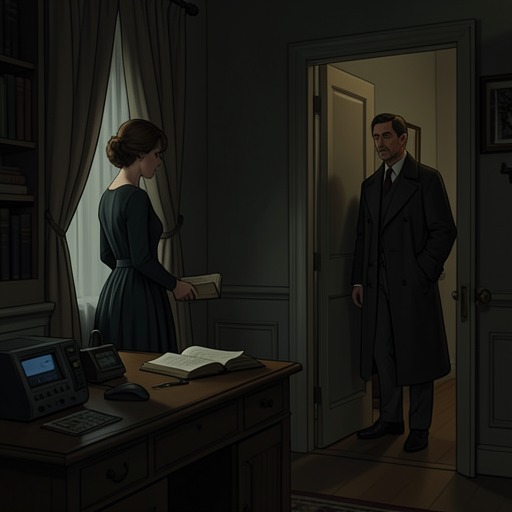
Ash’s respect for freedom does not, in her view, dissolve the danger. LaMotte tells him that he may argue rationally that he poses no threat, but she knows in her intrinsic self that the threat is there. They have left much unsaid beyond the one matter he has starkly defined. Even before she spells out the consequences, her imagery turns desire into the prospect of consuming fire: she fears being burned up, imagines herself reduced to blown straw and scattered white powder, and distinguishes that destruction from the contained warmth of her beloved hearth and its miniature gardens of delight.
Solitude as the condition of selfhood
LaMotte finally sets aside honour and morality as questions that cannot reach the central issue. The core, she says, is her threatened solitude: Ash threatens the condition without which she is nothing. She anticipates his attempt to limit the danger through careful boundaries, imagining a fire grate with bars and formal edges. But she answers that his glowing salamander is a firedrake and that confinement will not prevent conflagration. The contrast exposes the difference between Ash’s rationally bounded conception of desire and LaMotte’s certainty that its force could overwhelm the life she has chosen.
Her artistic seclusion thus carries a double meaning. Bethany gives LaMotte and her companion the practical and imaginative space to make a life on their own terms, transforming handicraft and domestic work into a shared artistic vocation. Yet its shutters and sealed pact also register how vulnerable that autonomy feels when intimacy approaches. LaMotte’s defense of solitude is not a denial that love exists; it is her insistence that desire cannot be permitted to consume the self and the creative life she has painstakingly built.