September 1986
Roland Finds the Hidden Papers
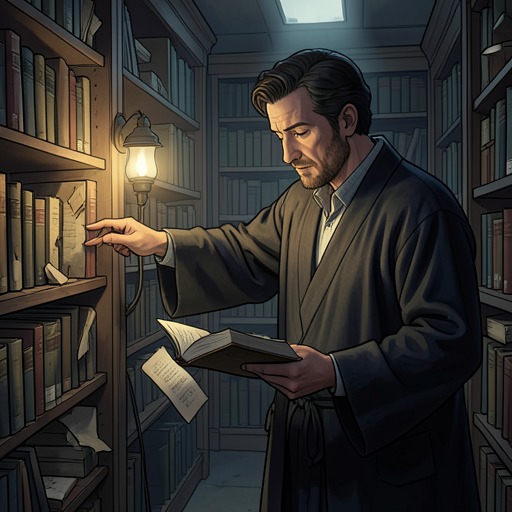
In the [London Library](entity:organization-recall-organization-london-library-8cbb1fec4f95), [Roland Michell](entity:character-recall-character-roland-michell-85d6fbb78f36) opens [Randolph Henry Ash](entity:character-recall-character-randolph-henry-ash-b8dea8abc894)’s copy of Vico and discovers a cache of manuscript notes tucked between its pages. Among them are two unfinished drafts addressed to an unidentified woman. Their urgent, unusually intimate language unsettles Roland’s settled picture of Ash as a courteous poet whose private life was calm and conventional.
Unable to return the drafts to the book, Roland slips them into his own copy of Ash and secretly makes photocopies. The theft turns a scholarly find into a private quest: he wants to know who received the letters and what happened after their beginnings.
The day after the discovery
Roland Traces the Breakfast Party
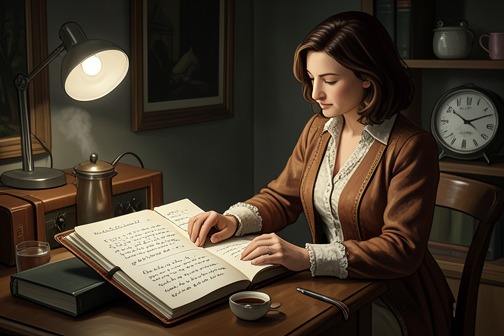
Roland searches [Crabb Robinson](entity:character-recall-character-crabb-robinson-e72384a97332)’s diary and finds the breakfast party at which Ash met Miss LaMotte. [Blanche Glover](entity:character-recall-character-blanche-glover-6287dc8c708a)’s journal confirms that [Christabel LaMotte](entity:character-recall-character-christabel-lamotte-29c9053649a6) was present, admired Ash’s poetry, and spoke with him while Blanche remained largely silent. The match gives the anonymous drafts a likely recipient and brings Christabel into the investigation.
Roland asks [James Blackadder](entity:character-recall-character-james-blackadder-2f039e08e9a7) about the LaMottes and learns that Christabel wrote religious verse, fairy tales, and the long poem [Melusina](entity:character-recall-character-melusina-d531286e01dd). Blackadder’s dismissive account of feminist scholarship does not stop Roland; [Fergus Wolff](entity:character-recall-character-fergus-wolff-20564b878d77) identifies [Maud Bailey](entity:character-recall-character-maud-bailey-db754e4e8d6a) as the leading LaMotte scholar and directs him to her archive in [Lincoln](entity:location-recall-location-lincoln-904ece0fa37f).
Early in Roland’s investigation
Val Rebukes Roland’s Obsession
Roland tells [Val](entity:character-recall-character-val-2a50d0fefaee) about the Vico discovery, hoping its scholarly importance will improve his prospects. Val answers with the disorderly realities she encounters in temporary office jobs: exploitation, illness, sudden death, and information that never coheres into a reassuring account of the world. His reconstruction of a dead poet’s life seems remote from their insecure home and his dependence on her earnings.
Their exchange exposes the strain in a relationship that has lasted since university. Val is angry at Roland’s absorption in Ash and at his failure to imagine a different life for them; Roland is ashamed of his dependence but cannot explain why the letters feel urgently personal.
A few days after the discovery
Maud Examines the Evidence
Roland travels to [Lincoln](entity:location-recall-location-lincoln-904ece0fa37f) and meets [Maud Bailey](entity:character-recall-character-maud-bailey-db754e4e8d6a), who is wary of his interest in Ash and skeptical that Christabel could have admired him. In the Women’s Archive, however, [Blanche Glover](entity:character-recall-character-blanche-glover-6287dc8c708a)’s journal records the breakfast party and later hints at a mysterious correspondent: letters Christabel hides, a prowler around their [Richmond](entity:location-recall-location-richmond-68f62839f944) home, and a new intimacy that seems to unsettle Blanche.
Roland shows Maud photocopies of his drafts and admits that he stole the originals. Maud recognizes that the dates and references could transform both poets’ reputations, but the drafts are beginnings without endings. She invites him to stay and continue searching the archive, and the two agree that they must discover what followed.
The next day in Lincolnshire
The Letters Surface at Seal Court
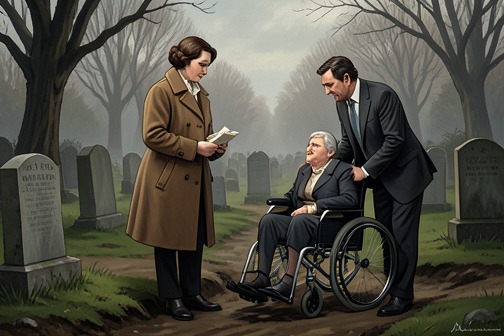
Maud and Roland visit Christabel’s grave and meet [Joan Bailey](entity:character-recall-character-joan-bailey-4f7ecd17c879) and [Sir George Bailey](entity:character-recall-character-sir-george-bailey-2ae5d4cbfcaa) after Roland helps Joan’s wheelchair escape a dangerous rut. At [Seal Court](entity:location-recall-location-seal-court-7aa374ff1adc), [Sir George](entity:character-recall-character-sir-george-dae07e9ad166) grudgingly shows them Christabel’s neglected room. Maud recalls a poem about a doll guarding a secret and searches beneath the doll’s bed, finding a carefully wrapped collection of correspondence.
The bundles contain letters exchanged by Ash and Christabel, including the answer to Ash’s first invitation and a later letter in which Christabel asks for her letters back. The discovery proves that their relationship continued far beyond the two drafts Roland found. Sir George keeps the papers, but allows Maud and Roland to read a small sample and promises to consider granting access.
During the first weeks after the letters are found
Cropper Begins His Pursuit
[Mortimer Cropper](entity:character-recall-character-mortimer-cropper-4c6005f30f11) secretly photographs letters belonging to a Lancashire family, including an unusual note Ash wrote to a child about trees. His collecting career is built on acquiring the physical traces of Ash’s life, and his carefully controlled archive in [Harmony City](entity:location-recall-location-harmony-city-797320b3c3fa) has become an extension of his identity.
Cropper’s chapters reveal the possessive logic behind his scholarship: he believes he should control Ash’s manuscripts because he can preserve and catalogue them better than their owners. His competition with Blackadder becomes more consequential when he learns that an important new correspondence may exist.
Several days after the Seal Court visit
Beatrice Finds Ellen’s Response to Melusina
Roland persuades [Beatrice Nest](entity:character-recall-character-beatrice-nest-0efc30574997) to check [Ellen Ash’s journal](entity:object-recall-object-ellen-ash-s-journal-5b4e74a52888) for references to Christabel. Beatrice finds that Ellen read [Melusina](entity:character-recall-character-melusina-d531286e01dd) in [1872](entity:time-recall-time-1872-d21addd90547) and admired its force, strangeness, and portrayal of the serpent-bodied heroine. Ellen’s enthusiasm complicates assumptions that she was merely a dutiful wife whose imagination had been absorbed by her husband.
The journal also records Ellen’s own late questioning of the life she did not pursue as a writer. For Maud, this is evidence that the supposedly dull archive contains hidden desires and omissions; for Roland, it suggests the correspondence may alter the history of both poets and their marriage.
The winter reading sessions at Seal Court
Maud and Roland Read the Correspondence
After [Joan Bailey](entity:character-recall-character-joan-bailey-4f7ecd17c879) authorizes access, Maud and Roland return to [Seal Court](entity:location-recall-location-seal-court-7aa374ff1adc) and divide the letters between them. Roland discovers that Ash’s correspondence with Christabel is unlike his formal surviving letters: it is intellectually restless, intimate, and written for a reader whose judgment he values. Ash discusses religion, poetic truth, authorship, and his fear that poetry may be a form of imaginative deception.
Christabel answers with arguments of her own, defending her ambition to write an epic and insisting that women are more than the roles assigned to them. Their letters show a dialogue between two writers rather than a male poet speaking to an imagined woman. The discovery draws Maud and Roland into a shared interpretive project, but their different methods and guarded temperaments also create friction.
1858, after the initial exchange of letters
The Correspondence Turns into Love
In the recovered letters, Ash and Christabel move from literary discussion toward increasingly personal intimacy. Ash describes how she has become the reader to whom he can write his truest thoughts; Christabel explains her chosen life with Blanche and her fear that a man’s attention could threaten her autonomy and work.
Their exchange becomes a struggle between desire and self-preservation. Christabel asks whether they should stop writing, then admits that the correspondence has become an addiction and that she fears what it may do to her carefully protected solitude. Ash urges her not to let convention dictate the end of their friendship, while recognizing that he cannot promise not to love her.
Spring 1859
Ash and Christabel Meet in the Park
After Blanche intercepts and destroys letters, Christabel and Ash arrange to meet in [Richmond Park](entity:location-recall-location-richmond-park-d1f39c9b9047). Their first walk is awkward and charged; on a later meeting they embrace, and Ash recognizes that his attachment is no longer merely intellectual. He writes that he loves Christabel and asks for a brief space in which they can be together.
Christabel struggles with the consequences of leaving the safety of [Bethany](entity:location-recall-location-bethany-40860229828c) and with the possibility that desire will consume her independence. Their secret meetings continue, and she eventually invites Ash to visit her home. There she makes him confront the fact that he has a wife, Ellen, even as he insists that his love for Christabel need not destroy his marriage.
June 1859
Christabel and Ash Begin Their Affair
Ash and Christabel travel north together, presenting themselves as husband and wife. In Scarborough, they negotiate the terms of their brief time: Christabel refuses to pretend that it will not end, while Ash is eager to know her as a real person rather than as the woman his imagination has constructed.
They become lovers, and Christabel experiences desire intensely but also with fear and grief at its limits. Their days are filled with walking, collecting, and talking about nature, language, and the stories that shape their lives. Ash’s letters to Ellen continue from the journey, giving the trip an outward appearance of solitary research while concealing Christabel’s presence.
June 1859
Ash and Christabel Explore Yorkshire
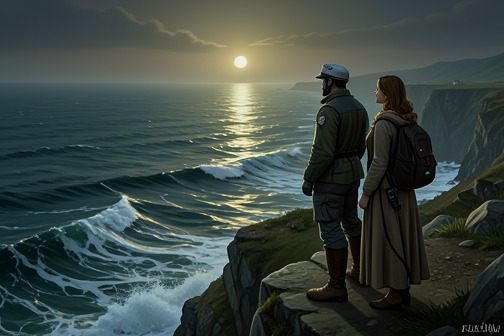
The lovers visit the coast and moors of [Yorkshire](entity:location-recall-location-yorkshire-1adea3c35af7), where Ash studies sea life and Christabel gathers local words, landscapes, and stories for [Melusina](entity:character-recall-character-melusina-d531286e01dd). They go to [Filey Brigg](entity:location-recall-location-e130c188e9aa), [Whitby](entity:location-recall-location-17061098b495), and the [Boggle Hole](entity:location-recall-location-boggle-hole-d71a58ef9713), and their surroundings become woven into the poem’s imagery of water, stone, bodies, and transformation.
In the present, Roland and Maud retrace these places and recognize connections between the poets’ work. Their shared discoveries persuade them that Christabel accompanied Ash on the expedition, though no surviving record proves it. The trip also gives them a temporary escape from their ordinary lives and helps them speak more openly about desire, exhaustion, and the wish for an empty, undemanding bed.
June 1859
Blanche Warns Ellen
[Blanche Glover](entity:character-recall-character-blanche-glover-6287dc8c708a), troubled by Christabel’s correspondence and the changing intimacy between the women, visits [Ellen Ash](entity:character-recall-character-ellen-ash-270787939f49) and presents evidence of Ash’s relationship with Christabel. Ellen does not expose the secret publicly, but the encounter disrupts her ability to understand her marriage as untouched by other claims.
In the present, Maud finds Blanche’s urgent letters and realizes that Blanche may have known about the [Yorkshire](entity:location-recall-location-yorkshire-1adea3c35af7) journey or the affair. Her suicide note later confirms that Blanche felt their experiment in independent life had failed, but it does not explain precisely what she told Ellen or how she understood Christabel’s choices.
June 26, 1860
Blanche Glover Dies by Suicide
[Blanche Glover](entity:character-recall-character-blanche-glover-6287dc8c708a) drowns herself in the Thames with stones sewn into her clothes. Her note cites poverty, pride, and the collapse of her and Christabel’s plan for women to live independently and creatively. She leaves her work and possessions largely to Christabel, including a friendship brooch she had received from her.
The death sharpens the mystery of Christabel’s whereabouts: she had been absent, and her explanation that she was away from home remains vague. For Maud and Roland, Blanche’s death reframes the earlier journal entries about a prowler and a damaged household, but it does not establish whether the affair, the lost child, or some other crisis drove Blanche to despair.
Autumn 1859
Christabel Takes Refuge at Kernemet
In [Sabine de Kercoz’s journal](entity:object-recall-object-sabine-de-kercoz-s-jou-cd4fd5c77e1c), Christabel arrives at [Kernemet](entity:location-recall-location-kernemet-86862e112c55) during a violent storm with [Dog Tray](entity:character-recall-character-dog-tray-3d6cdfaafe90) and asks for sanctuary. She is ill, withdrawn, and increasingly close to Sabine’s father, [Raoul de Kercoz](entity:character-recall-character-raoul-de-kercoz-2fe41928e070). Sabine first resents the attention Christabel receives, then becomes her confidante and learns how seriously Christabel takes poetry and the difficulty of being a woman writer.
Christabel reads and critiques Sabine’s tale of the drowned city, taking her work seriously and describing the craft required to renew old stories. Their relationship gives Sabine an artistic education, while the journal’s shifting observations reveal Sabine’s jealousy, affection, and uncertainty about what Christabel is hiding.
November 1859
Sabine’s Jealousy Gives Way to Alarm
During the storytelling season in Brittany, Sabine watched Christabel grow closer to Raoul, worrying that the older woman would take her place in her father's heart. Christabel's discussions about mythology, female power, and spiritualism made Sabine more angry, although she also realized her resentment was not
Late April to May 8, 1860
Christabel Disappears and Returns
Christabel disappeared shortly before giving birth. Raoul, Sabine, and the family members searched everywhere, exploring roads, fields, coasts, and small chapels, worried she had been injured or had given birth alone. They did not find her at Saint Anne's Monastery, and the family
After Christabel’s disappearance in 1860
Ash Searches for Christabel
Ash went to Brittany to find Christabel, but she refused to return to him and would not explain her choice. The letters he left behind recorded his scientific expedition and his return to Allen. The absence of direct evidence made it difficult to reconstruct their separation. Decades later, people found an undel
Around 1861
Ash Confronts the Séance
At the seance hosted by Hira Lis, Ash interrupted the performance, exposed the medium's tricks, and questioned what had happened to a child. Christabel was also present, within the circle of spiritualists. A voice said, "There is no child." This encounter made both Ash and Christ
After the séance and before Blanche’s death
The Lovers’ Letters Are Destroyed
In the letters found by Roland and Mod, Christabel explained that Blanch intercepted Ash's letters and burned his manuscript, including the first version of "Swaamerdam." Christabel was furious with this betrayal, but the incident also led her to reconnect with Ash after attempting to cut off communication
During the scholars’ investigation
Cropper Announces the Letters
After learning that a batch of important letters had been discovered, Cropper publicly announced the discovery in a speech on biography and archival preservation. He advocated for scholars from all over the world to be able to access these letters, while promoting the Sterne Collection as an ideal place to preserve the letters
During the investigation’s later stages
Val Leaves Roland
As Roland's attention shifted from [Val](entity:character-recall-character-val-2a50d0fefaee) and their shared life to Mod and those secret letters, Val and Roland's relationship deteriorated. Eventually, she left the apartment they shared in [Putney](entity:location-recall-location-999d82be7c62), began dating the solicitor Julian Macintyre, and found joy and freedom in work, horse racing, and
After Cropper’s arrival at Seal Court
Maud and Roland Flee to Brittany
Sir Bell learned from Cropper that these letters might be of great value and accused Maud of concealing their worth. Academic rivals were closing in, and Leonora also asked her to explain. Maud and Roland did not reveal all the details they had discovered, but secretly went to Brittany
During the Brittany stay
Sabine’s Journal Reveals the Child
Mod and Roland read the private diary of Sabine de Kercloz, which recorded the events of Christabel's arrival, concealing her pregnancy, disappearance, and return after childbirth. The diary confirmed that Christabel had a child, but did not specify whether the infant survived, where it went
While the researchers are in Brittany
Cropper Targets the Grave
Cropper convinced [Hildebrand Ash](entity:character-recall-character-hildebrand-ash-635947e5fc4d) that they should retrieve the box to be buried with [Randolph Henry Ash](entity:character-recall-character-randolph-henry-ash-b8dea8abc894). They planned to dig up the grave at night without permission, believing that the box might contain Christabel, the child, and the final evidence of their relationship. Beatrice Nestor accidentally over
After Maud and Roland return from Brittany
Maud’s Will Establishes Her Claim
Youan and Toby Bin found a document in the Belley family's files: Christabel dictated a will before her death, leaving her writings and copyrights to Maya Tomasin Belley. Mod is a descendant of Maya. This document may allow her to make a legal claim to Christabel's manuscript and
At the Mortlake conference
Ellen’s Journal Reveals the Buried Box
At the home of Beatrice Nestor, a small group of researchers and allies compared the information they each had on the Kropper plan. Beatrice shared relevant passages from [Ellen Ash](entity:character-recall-character-ellen-ash-270787939f49)'s diary: the night before Ash's funeral, Allen placed a box containing their letters and other memorabilia into his coffin
November 1889
The Ashes’ Correspondence Is Buried
After Randolph Ash died, Ellen sat alone in his study and decided what should be kept. She burned some documents according to his wishes, but could not destroy the letters between the two of them, nor the other traces left from his relationship with Christabel. She put their correspondence, a hair bracelet
Before Ash’s death in November 1889
Ash Confesses to Ellen
Allen recalled the moment when Ash told her that she had fallen in love with another woman, and that she had once been with Christabel in [Yorkshire](entity:location-recall-location-yorkshire-1adea3c35af7). Allen had already learned about this relationship from Blanch; she returned the first copy of "[Swammerdam](entity:character-recall-character-swammerdam-9f34b7872b0d)" that Christabel had sent to Ash without continuing
A stormy night near the end of the novel
Cropper Excises the Grave
Cropper and Hildebrand began digging into the graves of the Ash couple, cutting through turf and tree roots, trying to find the buried box. Cropper's desire for the box became physical, almost ecstatic; the cemetery was battered by fierce wind and rain, yet he paid no heed to
Immediately after the grave excavation
Christabel’s Letter Reveals Maia
The group opens the specimen case and finds the buried love letters, a hair bracelet, Christabel’s hair, a photograph, and a sealed letter addressed to Ash. Cropper opens the letter before the others can stop him, and Maud reads it aloud. Christabel reveals that she bore Ash’s daughter, arranged for her sister [Sophie](entity:character-recall-character-sophie-32e718e90b39) to raise the child, and kept the truth from Ash because she feared he would claim the girl.
The letter also explains Christabel’s long silence and her later regret. She had loved Ash’s mind and his poetry as well as his body, but believed that her daughter’s safety and her own autonomy required secrecy. The photograph identifies the grown daughter as Maia, whose descendants include Maud.
The morning after the storm
Maud and Roland Declare Their Love
After the revelation, Maud and Roland speak openly about the attraction they had held at a distance. Roland admits that he loves her but has accepted job offers in [Hong Kong](entity:location-recall-location-48649d37d412), [Barcelona](entity:location-recall-location-fcf889cebf1e), and [Amsterdam](entity:location-recall-location-ff526395fd98); Maud admits that she fears intimacy because others have treated her as an object to possess.
They choose to be together rather than let fear and professional circumstances decide for them. Their first night of full intimacy is described as a slow crossing of the boundaries Maud had defended, not as a triumph of possession but as a trust carefully negotiated. Roland’s future remains unsettled, but the novel ends their central relationship in mutual recognition.
May 1868
Ash Meets Maia in the Meadow
Years after the affair, Ash encounters a young girl swinging on a gate in a flower-filled meadow. She gives her name as [Maia Thomasine Bailey](entity:character-recall-character-maia-thomasine-bail-746830658f01), though she prefers to be called [May](entity:time-recall-time-3da74175549d), and speaks cheerfully of her parents and brothers. Ash recognizes her resemblance to Christabel and himself but does not tell her who he is.
He makes her a flower crown in exchange for a lock of her hair, which he plaits and keeps inside his watch. He sends a message to Christabel, but May forgets it after roughhousing with her brothers. The meeting offers Ash a brief connection to his daughter while preserving the distance that Christabel’s secrecy created.