Cats
PossessionThe cats around Roland Michell’s flat are a feral colony, first described as a disruptive presence in a decaying house and later encountered by Roland as hungry, vivid creatures in its garden. Their movement from menace to companionship marks a change in his relation to the place: as he prepares to leave, feeding them and letting them outside helps turn a night of isolation into the beginning of his own poetry.
A Colony at the House
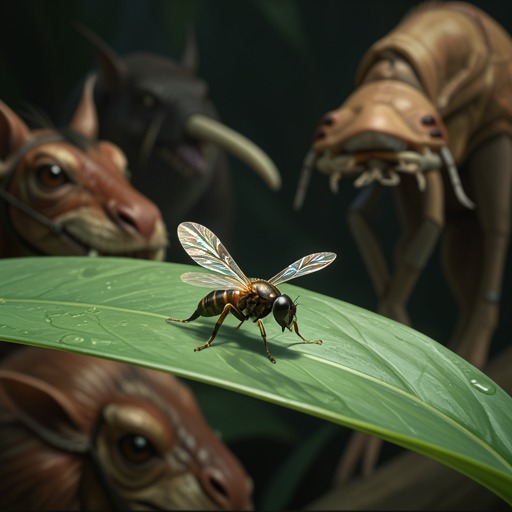
The cats enter Roland’s awareness through warnings about the house rather than through a close encounter. An elderly neighbor tells him to watch out for them and recounts that when someone came to take the house’s previous occupant away, the cats rushed out hissing and spitting. They had become a nuisance in the area, getting into bins and making a mess; the neighbor had called the RSPCA to have them put down, though no one seemed to know whether any remained shut inside. The description makes them seem almost countless, like insects shaken from a blanket.
That image returns as sound before Roland sees the colony. Alone in his flat, he hears scraping at the matting outside his door, broken by intermittent cries. Fear gives way to recognition: the cats are scratching to get in. Their noise spreads from the entrance to the garden, where one full-throated howl is answered by others. Their presence is at once physical and unsettling, a sound coming from the neglected margins of the house that Roland has inhabited without understanding what lives around him.
Feeding the Cats
Hunger prompts Roland to look for food, and he finds tins of pilchards and sardines left from the frugal life he shared with Val. He opens one, puts the fish in a saucer, sets it inside the entrance, and opens the door. The cats wait and sniff the oil before rushing past him to eat. More tins follow, and more saucers: feet hurry down the area steps, teeth tear at the fish, and purring bodies coil around his ankles. In the light of the hall, he counts fifteen, with eyes in shades of green, tawny, yellow, and amber.
The scene reverses the neighbor’s account of a dangerous nuisance. Roland does not drive the cats away or repeat the call to have them destroyed; he feeds them and watches them gather. Their hunger is not resolved by a sentimental transformation into pets: they remain a many-bodied, restless colony, competing for food and moving on their own terms. But his response shifts the encounter from fear and disgust to a practical act of care.
The Garden and the Decision to Leave
With the cats following, Roland goes through the basement and opens the bolts on the garden door, which he has previously been unable to use. The lock is stiff with rust, and heaps of papers have to be moved away from it; Val had warned that the papers were a fire hazard. Outside, the damp October garden is narrower than Roland had imagined from within, but its earth and growing things retain their mystery. He sees espaliered peaches against the red-brick wall that once bounded General Fairfax’s Putney estate, and recalls that Andrew Marvell, Fairfax’s secretary, wrote poems in Fairfax’s gardens.
The cats move with him along the path and through the shadows. Looking back at the gaunt house, Roland sees their bodies alternately glossy in the light and velvet-dark beneath the trees, their eyes briefly catching the illumination. The sight accompanies a decision that has become certain: he is going away. He thinks of the dank smell and the dripping cave of the place he has lived, yet now feels friendly toward the cats. Their future remains a practical problem for the next day, when he will have to arrange for their survival; the night itself gives him space to be alone, something he has missed and needs intensely.
From Observation to Poems
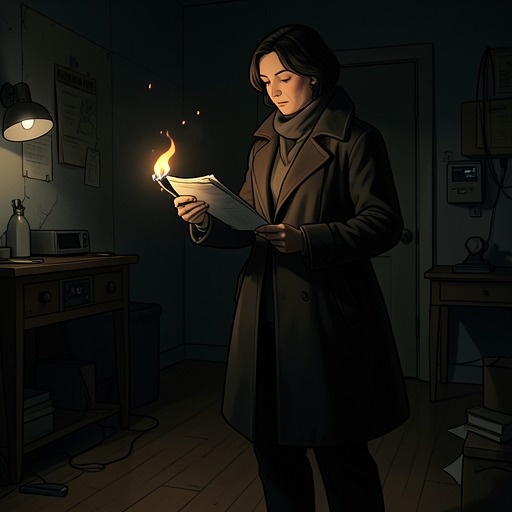
The garden encounter coincides with a change in Roland’s relation to language and to Randolph Henry Ash. The pursuit of Ash’s letters has brought Roland closer to Ash’s life while distancing him from the poet himself. Roland had once been a reader rather than a hunter, and had felt superior to Mortimer Cropper and, in some sense, related to Ash through the act of reading. He now recognizes that Ash wrote the letters for Christabel LaMotte, not for Roland or for anyone else. The discovery has therefore also been a loss. Back in the flat, Roland takes out the draft letters from their safe place, inside a file marked Notes on Aeneid VI, and reads them again.
Against the cats’ cries and the newly opened garden, words begin to form in Roland’s mind. He imagines poems titled “The Death Mask,” “The Fairfax Wall,” and “A Number of Cats,” then adds “Cats’ Cradle,” as he realizes that he can write about shapes as they come into being. The poems are not simply careful observations, incantations, or reflections on life and death, though they contain elements of all three. Roland hears or almost sees patterns made by a voice he has not known as his own. An hour earlier there had been no poems; now, as if arriving with the rain, they are real. The cats thus belong not only to the scene of Roland’s departure but to the moment when a reader’s attentiveness becomes creative speech: among the subjects of his new poems, they register the unexpected arrival of a voice of his own.