Mayflies
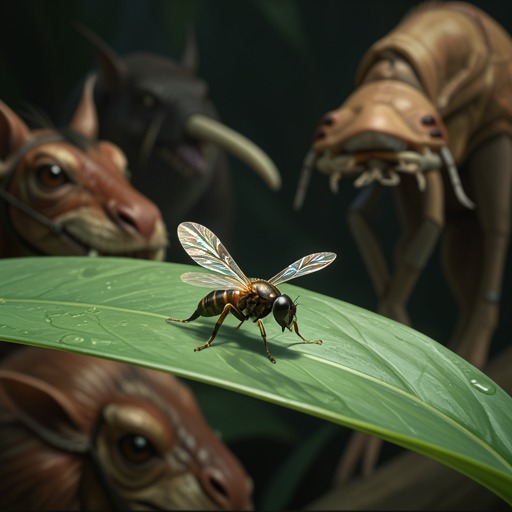
PossessionMayflies, also called Ephemera, are the brief-lived insects through which Randolph Henry Ash explores the intricacy of living forms and the limits of human understanding. In his scientific work he anatomizes their eyes; in his poetry he dwells on creatures that live for a single day without knowing night. Their short span makes them both objects of close observation and a measure of the distance between human inquiry and the mysteries it seeks to comprehend.
Scientific Observation
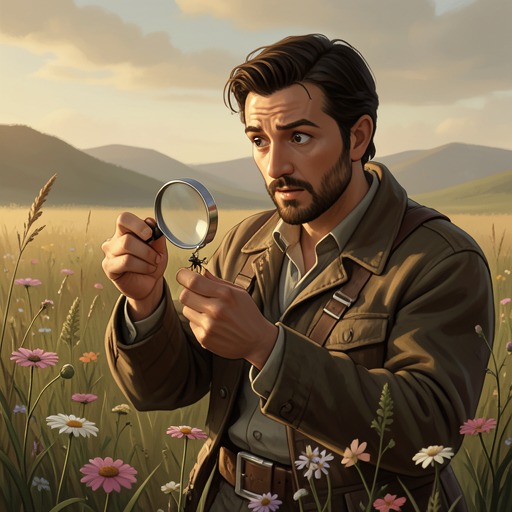
Ash’s work on mayflies belongs to a wider practice of natural-history investigation. He describes himself as able to anatomize a mayfly’s eye and arrange the cornea of a gnat so that he could peer through it at New Church Tower. This exacting attention to small structures reflects the confidence of the investigator who hopes that careful dissection can disclose how life is organized.
That confidence is not unlimited. Ash’s account of studying Ephemera says that the forms of these dancing specks of life occupied years of his attention, while their lives last only one day and never include the night. The contrast between his prolonged study and their compressed existence turns scientific observation toward a question about perception: what can an observer know of a life whose whole duration is so unlike his own?
Life, Death, and the Limits of Knowledge
The mayfly’s brevity also unsettles the idea that dissection can produce complete understanding. Ash’s poem records that his mind died into weeping as he dissected the Ephemera, and then asks whether the Infinite’s questioning can be endured when it comes from the smallest forms as well as the greatest. The poem breaks off at that point, leaving the inquiry unresolved rather than converting it into a settled conclusion.
This uncertainty connects the mayflies to Ash’s broader reflections on science and belief. He acknowledges both the evidence for gradual change in living things and the difficulty of abandoning the possibility of design; his attention to delicate organisms intensifies, rather than settles, that conflict. In a separate discussion of spiritual claims, he likewise distinguishes patient study of living organisms and the minds of the dead from attempts to obtain easy certainty through séances. The mayfly thus belongs to a way of knowing that depends on sustained attention while accepting that its findings may remain partial.
Reproduction and Continuity
Ash’s interest in short-lived forms extends to questions of how life continues. He studies reproduction and experiments with hydras and plumed worms that can bud new heads or segments, and with polyps whose fragments can develop into new creatures. These investigations fascinate him because they suggest continuity and interdependence among living forms, potentially challenging the assumption that individual death marks an absolute end.
Mayflies do not themselves demonstrate the regenerative processes Ash observes in hydras and polyps. Their significance lies in the contrast: the mayfly’s life is sharply bounded, while other organisms appear capable of producing further life from their own substance. Together, these forms give his natural history a question larger than classification—whether the persistence and transformation of life can answer, or at least reframe, the fear of death.
Narrative and Thematic Significance
The mayfly’s brief life joins two scales of attention in Ash’s writing: the minute structure visible to the anatomist and the vast questions about time, faith, and mortality that structure cannot resolve. Its one-day span makes duration tangible, while the many years Ash gives to studying it expose the unequal tempos of organism and observer.
The image also resists a simple opposition between scientific observation and wonder. Ash’s close study makes the creature more particular, not less mysterious; even as he examines its form, the poem leaves him facing a question about the Infinite. Mayflies therefore serve as a compact figure for the novel’s larger tension between empirical inquiry and what remains beyond its reach.