Roland Michell—Maud Bailey
PossessionRoland Michell and Maud Bailey’s relationship begins as a scholarly collaboration and grows into a mutual intimacy that neither can reduce to an easy account of desire. Their work on Randolph Henry Ash and Christabel LaMotte gives them a shared object of attention; their conversations gradually turn that attention toward their own exhaustion, self-understanding, and hopes. The relationship’s significance lies partly in this movement between archive and present: as they try to imagine the intensity of Ash and LaMotte’s love, they discover a private affinity of their own, while remaining alert to the dangers of turning people and feelings into objects of study.
Collaboration and Intellectual Recognition
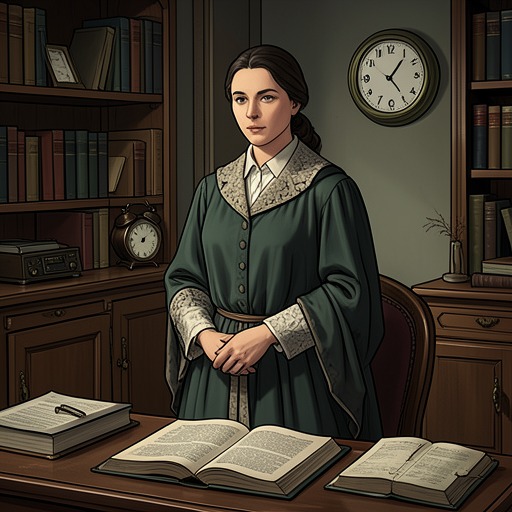
The two are brought together by the investigation of Ash and LaMotte, and their work makes literary interpretation a shared activity rather than a solitary pursuit. Maud has been reading Ash’s Ask to Embla and finds that the poems address Embla, whom she associates with Christabel, rather than speaking only to the poet himself. She values the poems as an exchange between two people. The reading opens a conversation about the distance between the nineteenth-century lovers’ experience and that of contemporary scholars.
Maud reflects that her generation knows desire through analysis and questions whether such knowledge allows it to imagine what love meant to Ash and LaMotte, who believed their feelings and actions mattered. Roland agrees that the habit of looking closely at desire may itself alter desire. Their discussion does not simply contrast modern skepticism with Victorian romantic belief: it shows two researchers testing the limits of their own interpretive habits. Their academic partnership becomes personal through a shared uncertainty about whether analysis can recover an experience without diminishing it.
The old correspondence and poetry give this recognition its particular form. Their project asks them to attend to words addressed from one person to another, while their own conversations increasingly disclose what each wants and fears. The research therefore links them, but also offers a measure of distance: they can approach intimacy by first speaking about Ash and LaMotte, and then discover that the questions raised by the archive have become questions about themselves.
Shared Exhaustion and the Empty Bed
A decisive moment of mutual recognition comes when Roland describes what he wants from his life: not another demand, but “an empty clean bed” in a clean, empty room where nothing is asked of him. He connects the image partly to his personal circumstances and partly to a broader condition. Maud answers that the same image recurs when she is alone: a white, empty bed in an empty room, and the wish to desire nothing. Their agreement is striking because it is not the result of one persuading the other. Each has arrived independently at the same figure of withdrawal and rest.
The exchange gives their relationship a language that is both intimate and guarded. They recognize one another in the wish to be free of demands, yet the shared image does not amount to a declaration of conventional romantic desire. Instead, it marks a common fatigue with the pressures that organize their lives and with the scrutiny through which contemporary people understand themselves. Their brief agreement makes a private connection out of what might otherwise remain an isolated feeling.
They register the oddness of having come together for their research and discovered this affinity. The conversation is followed by companionable silence on their walk back. That quiet matters: the bond is established not only in what they explain to each other, but also in their ability to remain together without requiring more explanation. Their closeness grows through recognition and shared attention, rather than through a confident claim to know each other completely.
Intimacy, Risk, and the Journey to Brittany
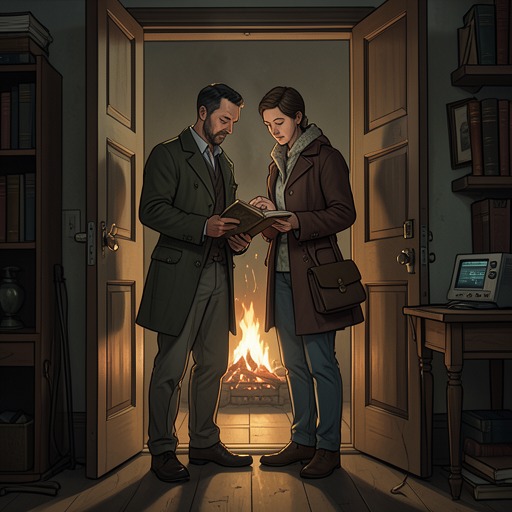
The relationship becomes more overtly intimate as the investigation carries them beyond the ordinary bounds of academic cooperation. At a later point, Roland and Maud are together in London, and an episode of strong emotion brings them into each other’s arms. Their response to what follows is not uncomplicated triumph. They understand that their decision is entangled with the research and that scholarly obsession, including their own, can become dangerous. The language of madness and wrongdoing accompanies their excitement, underlining the uneasy overlap between personal desire and the pursuit of the past.
They set out on the Prince of Brittany at night, bound for the next stage of the investigation. In their cabin they sit side by side on the lower bunk and share whisky and water from toothmugs. The modest circumstances of the scene contrast with the scale of their feelings: they have watched the lights of Portsmouth recede, and they are both overwhelmed by excitement. At the same time, they have not been touching on deck, despite their earlier embrace in London. Their intimacy is real, but its terms remain cautious and unresolved.
Maud acknowledges that she has lied to Leonora Stern and taken Ariane Le Minier’s address without permission. She places this conduct alongside the scholarly excesses of Mortimer Cropper and James Blackadder, recognizing that their own inquiry has crossed into obsession. Her admission makes the journey a shared ethical and emotional risk, not merely a romantic escape. The bond between Maud and Roland takes shape amid secrecy, divided loyalties, and the awareness that their investigation can draw them beyond the limits they would ordinarily set.
Separation, Disclosure, and a Possible Future
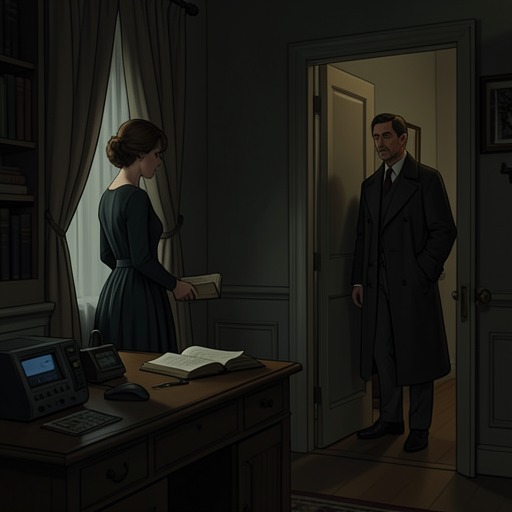
Their relationship is tested by interruption and uncertainty. When Roland reaches Maud by telephone, he announces that there have been disasters and that he is calling from a call-box. Maud is speaking with Leonora and moves the conversation to the bedroom because the call is private. The exchange shows how their connection has become something they must protect from other people’s presence, while also leaving its immediate circumstances unsettled. Neither the research nor their personal lives provide a stable space in which the relationship can proceed without complication.
The novel later gives Roland a possible professional future through James Blackadder, who offers him a full-time research fellowship on Ash. Blackadder praises Roland’s work, including a piece called “Line by Line,” and explains that the funding comes from a Scottish philanthropic trust whose lawyer is devoted to Ash. Roland does not immediately accept: he is unsure whether he wants to remain in academic life. Blackadder gives him a week to consider the offer and invites him to discuss its advantages and disadvantages. This opportunity speaks to Roland’s precarious professional position and leaves open what kind of life he will choose after the investigation.
The offer is not a definitive resolution of the relationship, and Roland’s uncertainty is not presented as settled. It does, however, place his future within reach of a new choice rather than simply continuing the insecurity that has accompanied him. Across their story, Maud and Roland’s connection moves from joint interpretation to mutual recognition, then through intimacy, secrecy, and uncertainty. Their shared work both enables closeness and complicates it: they must reckon with the difference between understanding another person and possessing the story of that person, whether the story belongs to a nineteenth-century poet or to the collaborator beside them.