Lankā
RamayanaLankā is Rávaṇ’s royal city across the sea: a place of conspicuous wealth and formidable defenses that becomes the setting for Sítá’s confinement and for the poem’s approaching conflict. The narrative gives it a double character. It is a splendid royal residence, with a queenly bower within the king’s home, yet its walls and ramparts also make it a stronghold whose distance and defenses must be overcome. The bridge built toward it turns that separation into a traversable route, while the episode titled The Burning of Lankā makes the city itself part of the struggle’s consequences.
Setting and Approach
The poem first situates Lankā in relation to the sea. Rávaṇ carries Sítá over the sounding waters, where monstrous creatures roam, and brings her down in the city. The crossing makes the city feel remote from the lands of the earlier journey: arrival there is not a simple change of residence but passage across a formidable natural threshold. The sea is part of Lankā’s setting, separating it from the route taken by those who will seek to reach it.
Lankā is also placed on Mount Trikūṭa. The city is described as crowning the mountain’s summit, a position that raises it above the surrounding land and gives its royal presence a striking physical focus. This elevated location belongs to the poem’s image of a place both splendid and difficult to approach. Lankā is not merely a name at the end of a journey; it is a destination given a distinct setting, defined by the sea below and the mountain above.
The construction of a great bridge establishes another measure of that distance. The poem describes the bridge as a hundred leagues in length, a scale that emphasizes the undertaking required to approach Lankā across the water. In the geography of the narrative, the bridge marks a change: what had been separated by sea becomes connected by a constructed passage. The city remains the destination, but the route toward it is transformed by labor on a scale commensurate with its remoteness.
City and Fortifications
Lankā’s description combines exceptional dimensions with concentrated defenses. The city is said to extend a hundred leagues in length and twenty in breadth. Those measures give it a vast, almost landscape-like scale; it occupies not just a royal enclosure but an expanse that the poem presents as formidable in its own right. The city’s position on Mount Trikūṭa and its breadth together make its setting feel both elevated and extensive.
Its defenses are rendered through gold and mass. The poem describes a lofty wall built of blocks of gold and broad, high golden ramparts of massive strength, designed to defy an attacking foe. Gold signals wealth and magnificence, but here it also belongs to the city’s defensive image: the gleaming surface is not fragile ornament. Lankā’s splendor is joined to its capacity to resist. The city’s architecture therefore presents royal power as something both displayed and guarded.
These details make the built environment significant to the story’s action. Sea, mountain, walls, and ramparts form successive features of a place that cannot be approached as an ordinary settlement. The poem’s geography gives Lankā grandeur, but it also gives that grandeur a strategic dimension: the city is a royal center protected by its position and its fortifications.
Rávaṇ’s Royal Residence and Sítá’s Confinement
Lankā is identified with Rávaṇ’s rule through the description of it as his town and royal home. After bringing Sítá to the city, he places her in a queenly bower within his residence. The movement from the sea crossing to the chamber brings the narrative from a vast external setting into a private, controlled space. The city’s scale may be immense, but the account of Sítá’s arrival narrows attention to the room in which Rávaṇ confines her.
That contrast gives Lankā more than a decorative role. Its royal household is the immediate setting for Sítá’s captivity, making the city’s splendor inseparable from the power Rávaṇ exercises within it. The poem describes the residence as a place of royal luxury, yet for Sítá the bower is also the place to which she has been brought against her will. Lankā’s wealth and domestic spaces thus carry different meanings depending on who occupies them: they signify royal possession for Rávaṇ and confinement for Sítá.
From Stronghold to Site of Conflict
The bridge and the fortifications place Lankā at the center of a spatial contest. Its isolation is established by the sea crossing; its defensive character is conveyed by high ramparts and massive walls; and the hundred-league bridge provides a way across the separation. The poem makes the approach itself consequential, setting the scale of the passage against the city’s scale and defenses. Lankā is at once the object of a journey and a stronghold whose grandeur makes that journey difficult.
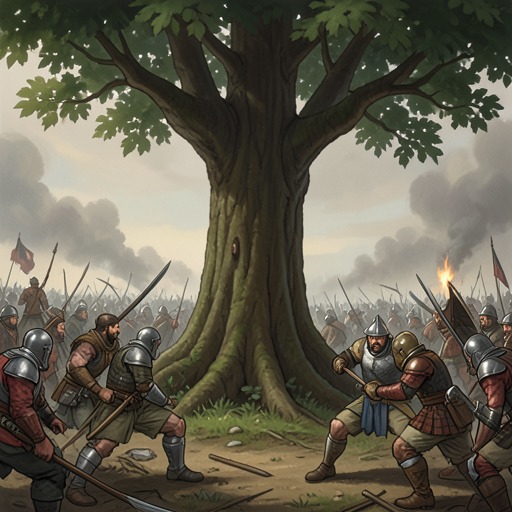
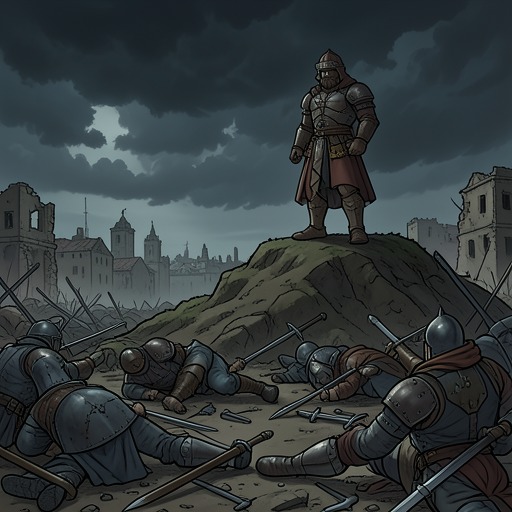
The poem also explicitly marks an episode as The Burning of Lankā. That title establishes the city as the scene of destructive action, in sharp contrast with its earlier presentation as a golden, fortified royal center. The available description does not detail the extent of the burning, but the juxtaposition is clear: a city represented through wealth, height, and resistance is also subject to devastation. Lankā’s narrative significance lies in that transformation, from distant royal refuge and place of confinement into a destination reached through a monumental crossing and a setting of conflict.