Chitrakúṭa Mountain
RamayanaChitrakúṭa Mountain is a forest refuge in the journey of Ráma, Sítá, and Lakshmaṇ: a place where their wandering gives way to a settled life, but not a permanent home. Ráma reaches it as Bharadvája directed, makes a cottage with Lakshmaṇ’s help, and eventually leaves when the retreat risks attracting repeated visits.
Setting and Arrival
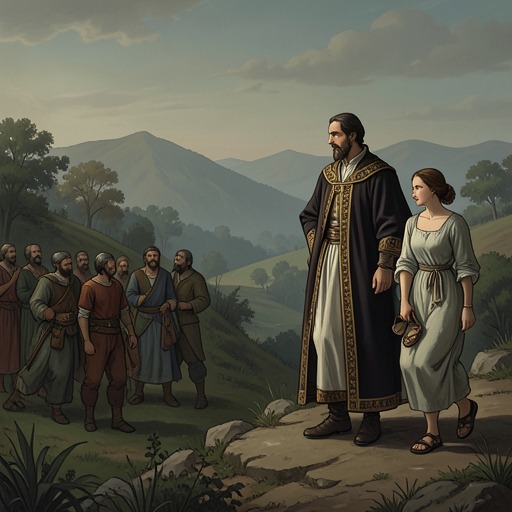
Ráma and his companions travel from forest to forest, crossing streams beneath constant shade. Following Bharadvája’s direction, they come to Chitrakúṭa Mountain. The account identifies it as a hill reached along this forest route, making it a destination within their passage through the wilderness rather than a city or royal settlement.
The Forest Retreat
At Chitrakúṭa, Ráma and Lakshmaṇ build a small cottage. The construction marks a change in the rhythm of their journey: instead of continuing immediately onward, Ráma spends his days there with Sítá. The mountain thus becomes the setting for a temporary domestic life shared by the three exiles.
Departure and Narrative Significance
The retreat’s calm proves vulnerable to attention from outside. To prevent people from repeating their visit, Ráma leaves Chitrakúṭa and travels farther onward. The departure makes the mountain a provisional refuge: a place of shelter and companionship, but one that cannot remain secluded once others begin seeking it out.