Aurelio's Confession to Rodrigo
SatanAurelio’s confession to Rodrigo Lerbier turns a long-unsolved theft into a story of coercion, spiritual captivity, escape, and religious upheaval. In admitting that he stole the cameo, Aurelio explains how a supposed mission to neutralize evil led him away from Santería and into a darker cult; in recounting his flight, he also prompts Rodrigo to question the faith and public role that have defined his life. The disclosure is therefore both a reckoning with the cameo’s disappearance and the beginning of Rodrigo’s own crisis of conscience.
The Return of a Missing Disciple
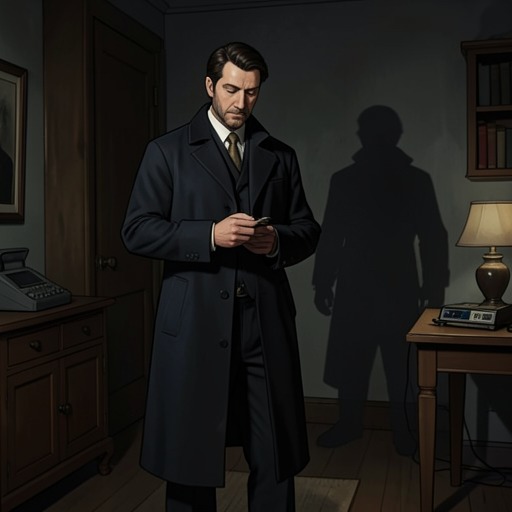
Rodrigo first encounters Aurelio again after an absence of eleven years. One September evening, a ragged, dazed stranger appears at his Havana door. In the dimness Rodrigo struggles to recognize him; Aurelio has not given his name, and his condition is so alarming that Rodrigo initially recoils and hesitates to let him into his home and workshop. The visitor finally identifies himself. Recognition carries Rodrigo back to March 2003, when the cameo vanished from the modest Yoruba temple where he had placed it.
The theft had been difficult to explain. Rodrigo had brought the jewel from the capital before dawn, deposited it at the temple, and then gone to sleep at his mother’s home. He later reasoned that someone who had followed him could have entered during the remaining darkness. He also wondered whether the loss might have been a release: he had come to regard the stone as diabolical and wanted to be rid of it. Yet he could not dismiss the question of who had taken it, or why. Aurelio’s return supplies the answer, but not a simple one.
Aurelio’s reappearance matters especially because Rodrigo had known him as a young Santería adherent and aspiring babalao. Rodrigo had tried to trace him after the disappearance, questioning people in their religious community and making inquiries about his family. Aurelio had worked at a Varadero hotel and had previously lived with his parents on Cayo Largo, near Isla de la Juventud, where he was born. Rodrigo even traveled to Cayo Largo under another pretext to search for information, but found none. The visitor at his door is thus not only a former student returned: he is the person Rodrigo had increasingly suspected of stealing the jewel, and the first person able to explain what happened.
The Cameo and the Lodge
Aurelio admits that he took the cameo on behalf of a newly founded Masonic lodge in Cuba. Its founders, who appeared to have protection within the Castro regime, pressed him to join, at first with promises and then with increasingly threatening insistence. They dangled practical advantages, including the possibility of leaving Cuba and traveling to the United States or elsewhere. They also assured him that he could remain a Yoruba officiant while becoming a Freemason, claiming that other members—including high-ranking figures—held both identities.
The lodge’s connection to the Gran Loggia cubana en exil in Miami helped make that invitation seem like a route beyond the island. But Aurelio was required to prove himself by stealing the cameo and bringing it to the lodge’s masters. They described the jewel as enchanted by malevolent forces, claiming that its influence might harm society and the world unless the lodge’s collective spiritual power neutralized or redirected it. The language of rescue and public duty made the theft sound like a protective assignment. It also made the jewel’s curse an instrument of recruitment: Aurelio was told that he was being entrusted with a mission essential to humanity.
Through a more or less clandestine Masonic channel, Aurelio crossed into the United States. There, he says, he was gradually drawn into a group whose rituals were strange and increasingly disturbing. He describes the process as a kind of brainwashing and recounts moving from Santería into Palo Mayombe, a practice involving invocations of the dead and forces of nature. He says he became a sorcerer, sought human blood for rituals, and gained status as people came to respect and fear him. Satan, in his account, became more than a master: he occupied the place of the father Aurelio had never had. Even when doubt returned at night, Aurelio felt oppressed and helpless, unable to cry out or resist.
Recognition and Escape
The turning point comes when Aurelio overhears a conversation between a leader of the Satanic sect and a high-ranking Freemason. The conversation does not give him new information; by then, he says, he already knows and accepts the group’s beliefs. What changes is his understanding. For the first time, he seems fully to hear what he has been participating in. He spontaneously invokes the help of Jésus-Christ, and describes that moment as the beginning of an inward revolution: he must escape, whatever the cost.
Aurelio then devotes his energy and ingenuity to getting away from Satan and his followers. One night, using a series of ruses, he gets out of the sect’s facilities near Miami and flees. He would rather throw himself into the ocean than return. For days and nights he walks away from the major roads until he reaches Key West, where he finds an abandoned boat. Recreational boaters discover him adrift and tow the boat to the boundary between the United States and Cuba. Exhausted but alive, he reaches a deserted shore near Varadero. The route back is precarious and contingent: escape comes not through the lodge that promised him passage abroad, but through solitude, an improvised crossing, and the intervention of strangers.
When Rodrigo recounts this history to Loïc and Laurence, Aurelio’s testimony is not presented as an abstract argument about religion. Its force lies in the contrast between the man who once accepted the cult’s premises and the man who now returns in a nearly unrecognizable state, having fled them. Rodrigo says that Aurelio’s experience and suffering made him reconsider what he himself had long practiced. The account reaches its listeners through Rodrigo’s narration, so the confession also reveals the effect Aurelio’s story has had on the person repeating it.
Rodrigo’s Crisis of Faith
Rodrigo says that he has met with Aurelio often since his return and that their conversations have gradually unsettled him. He has held important positions in Santería for many years and is known, followed, and listened to. In Cuba, he explains, a babalao is an institution, surrounded by both respect and fear; in the population’s imagination, that standing may even exceed the Catholic priest’s. Leaving the practice would therefore mean more than changing private beliefs. It would threaten a recognized social identity and the place from which Rodrigo has been accustomed to speak.
Yet Aurelio’s account makes Rodrigo reinterpret his own religious work. He concludes that what he had taken for Yoruba oracles was, in fact, the voice of Satan, and that he had unknowingly become a servant of the devil. This is Rodrigo’s confession about himself, not simply his judgment of Aurelio’s past. The former disciple functions as a revelation precisely because he has passed through the same spiritual world and then suffered a rupture with it. Rodrigo attributes his change not to a direct command from Aurelio but to the witness of Aurelio’s ordeal and the joy and love of Christ he believes the escape has restored.
Rodrigo appears close to tears as he acknowledges the dilemma: how can he abandon Santería without becoming an outcast in his own country? As he continues, he reaches what he presents as the only available alternative for his spiritual and social salvation: becoming a Catholic priest or a monk. He repeats that conclusion as though trying to fix it in his own mind. The narrative does not establish that he has completed such a transition; the confession leaves him at the point of decision. Aurelio has explained the cameo’s disappearance, but his return has also made Rodrigo’s own position untenable to him, transforming the recovered truth about an old theft into a possible break with the life he has built.