Lord Kiyama
ShōgunLord Kiyama is one of the most powerful Christian daimyos in the Empire, and his shifting political position makes him a consequential but largely offstage presence in the contest between Toranaga and Ishido. He is first counted among Toranaga’s allies, then associated with a defection to Ishido, and later treated by Toranaga as both an implacable enemy and a possible target for political division. The uncertainty is not incidental: in a struggle where allegiance can change the balance of power, Kiyama’s unconfirmed intentions become a force in their own right.
Identity and Political Position
Kiyama’s standing is established through the weight other characters assign him. Father Alvito describes him and Onoshi as among the greatest Christian daimyos, while Hiro-matsu’s intelligence identifies them as key allies who may defect to Ishido. Kiyama is therefore not a minor adherent whose choice can be absorbed into a larger faction; his support is part of the political balance that both sides are trying to assess and influence.
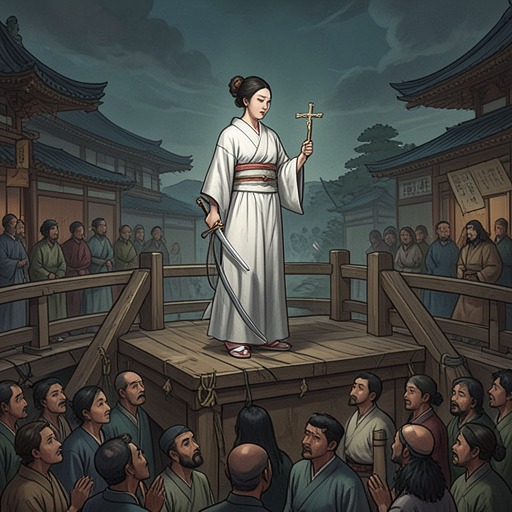
His religious identity complicates rather than settles his politics. Father Alvito observes that Toranaga is a Zen Buddhist who is openly sympathetic to Christianity, while Ishido is a Zen Buddhist and fanatically anti-Christian. Yet many Christian daimyos support Ishido because they fear Toranaga’s rise: they suspect that, if he gains power, he will enforce the Taikō’s Expulsion Edicts and suppress the faith. Alvito cannot say which side the Christian daimyos will ultimately support. Kiyama’s affiliation thus places him inside a powerful religious constituency, but does not make his political choice predictable.
Shifts in Allegiance and Council Maneuvering
When Hiro-matsu returns to Toranaga, he reports dangerous enemy buildups to the north and east and says that Kiyama and Onoshi are going to defect to Ishido. This intelligence makes Toranaga’s position more precarious: the men he had counted among his principal allies may be joining his opponent. Later, Ishido presents a demand bearing the signatures of Lord Sugiyama, Onoshi, and Kiyama: Mariko must return to Osaka immediately, and the signatories will wait there until she comes back. The demand demonstrates their collective political alignment at that moment, though the evidence does not explain Kiyama’s individual reasoning or establish what he personally did beyond joining the decision.
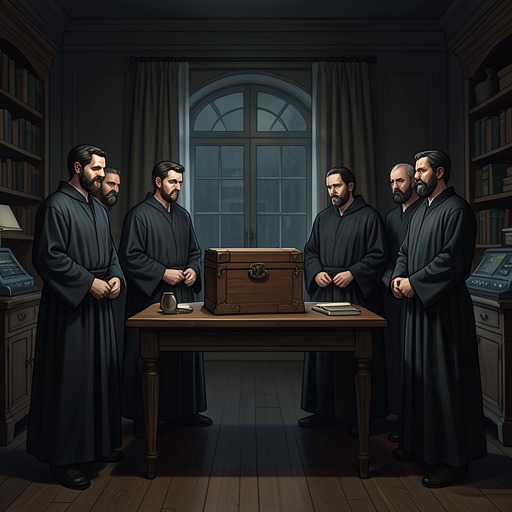
The defection matters because Toranaga had managed the Council of Regents so that votes remained divided two to three. He had never won a four-to-one vote against Ishido, but Ishido had likewise never secured one against him. Toranaga recognizes that a four-to-one division would mean isolation and disaster, and is startled that Kiyama and Onoshi have joined the opposing side. Ishido, meanwhile, treats their support as part of a decisive move against those he accuses of plotting to usurp the Taikō’s power and kill the Heir. Kiyama’s name consequently marks a change in the Council’s balance, even where his own voice and motives remain unseen.
Illness and Political Delay
During another confrontation, Ishido tells Toranaga that the final formal meeting of the Regents has been postponed. He says Kiyama is sick and that Sugiyama, Onoshi, and Ishido have agreed to the delay. Toranaga proposes holding the meeting without Kiyama, but Ishido answers that the Regents have agreed not to do so. When Toranaga offers to send his personal physician, Ishido says Kiyama’s own physician has forbidden visitors because the disease might be contagious; Ishido admits he does not know what the disease is.
The scene leaves the illness unexplained. It establishes that Kiyama’s absence is being used to prevent the meeting from proceeding, but does not show whether he is genuinely incapacitated or whether the postponement conceals another political purpose. His physical condition therefore has an immediate institutional consequence: while he is absent, the Council cannot convene on the terms Toranaga proposes, and Ishido retains control over the timing.
A Possible Target and Bargaining Piece
Later, Toranaga’s assessment of Kiyama remains wary and conditional. When asked which Christians are enemies, he names Kiyama and Onoshi, along with any samurai who turns against him. Asked whether the two lords will oppose him, his counselor answers that both have been hostile and friendly in the past, but that their siding with Ishido would be very bad. Toranaga agrees with the danger. The exchange distinguishes past fluctuation from present risk: Kiyama’s record does not make his future allegiance certain, but the consequences of his joining Ishido are clear.
Toranaga receives information that Onoshi made a secret treaty with Ishido against an unnamed fellow Christian daimyo. In exchange for support, Ishido allegedly promised that after Toranaga’s death this fellow Christian would be accused of treason and forced into the Void, while Onoshi’s son would inherit his lands. Toranaga considers whether the intended victim is Kiyama or Harima, then decides that, for his own purposes, it must be Kiyama. The information does not confirm that Kiyama was the unnamed target; Toranaga’s choice is a strategic interpretation, not a disclosed fact.
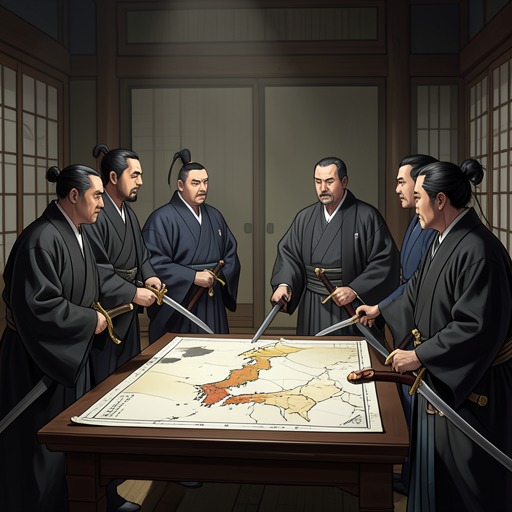
That interpretation shapes Toranaga’s offer to Zataki. He proposes that Zataki receive the domains of Kiyama and Onoshi, presenting the Christian lords as traitors plotting with foreign priests and armed foreigners against non-Christian daimyos. He offers other Kyushu Christians’ lands as well if they side with Ishido in the final battle. These accusations and promised transfers belong to Toranaga’s proposed bargain; they do not independently establish Kiyama’s participation in the alleged treaty or invasion. Kiyama’s territory becomes leverage in a negotiation designed to win an alliance and secure passage through the Shinano Mountains.
Strategic Significance
When Toranaga later considers the coming war, he calls Kiyama and Onoshi implacably against him and asks how their side might be divided. He expects all the Christians except his own Christian ally to oppose him, while acknowledging that he needs time: each day of delay, he argues, weakens Ishido. His plan depends on holding against attacks from several directions and waiting until the moment is right to launch Crimson Sky. Kiyama is part of the strength Toranaga must contain, but also one of the figures whose loyalties and rivalries might be manipulated before that final move.
The narrative gives Kiyama no direct speech or fully rendered personal scene in this evidence. Instead, he is defined by signatures, reports, Council procedure, the unexplained illness, and intelligence passed between political actors. This distance reinforces his function in the larger struggle: he is both a person with consequential power and an uncertain point on the map of competing allegiances. The danger he represents is never reduced to a settled verdict about his character; it remains a question of which side he will strengthen, and what Toranaga can make of that uncertainty.