Mura-san
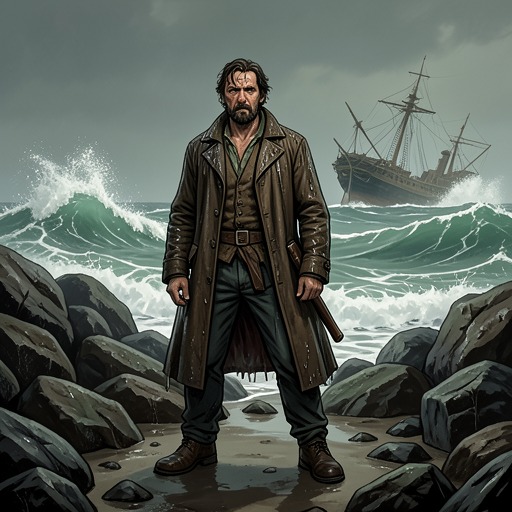
ShōgunMura-san, the headman of Anjiro, becomes John Blackthorne’s first host in the village: after Blackthorne is brought ashore unconscious, Mura takes him into his own house and assumes responsibility for his care. The episode gives Mura a glimpse of lasting renown, but his later challenge to a crushing tax increase reveals how little power a village headman has against the demands of his lord.
Identity and Responsibilities
In the first year after the Taikō’s death, Mura is temporarily responsible for the strange foreign sailors who have come from the eastern sea. He identifies himself to Blackthorne as the master of the house and gives his name. His position as headman carries practical duties as well as local standing: Blackthorne is the foreigners’ leader, and Mura decides that he deserves special consideration.
Mura’s authority is nevertheless subordinate to Lord Yabu’s. When Kasigi Omi announces that the villagers’ tax is to rise by half again for the season, Mura challenges the order by pointing out that they have already paid for this year and the next. The villagers’ questions make the consequences concrete: with the tax increased, they ask how they are supposed to fish, bale the harvest, and carry on their work. Omi dismisses these activities, along with paying tax, as a peasant’s privileges; Mura’s protest exposes the gap between that dismissive formulation and the villagers’ material predicament.
Taking Blackthorne into His Care
Mura had tried to question Blackthorne aboard the ship. When the captain lost consciousness, Mura brought him home rather than leaving him to be treated as an ordinary captive, reasoning that the leader should receive special consideration. His family and household undressed Blackthorne and examined him with curiosity; Mura’s mother, Saiko, made a teasing remark about his body, and Mura’s brief reply set the household, friends, servants, and doctor laughing.
Mura later helps carry the still-dazed Blackthorne through the house and along a roofed walk to the bathhouse, with the women following. The care is shadowed by danger: Mura believes Blackthorne is not protected by the law, since he is neither Portuguese nor Christian, and sees it as his duty to send him to his fate clean. Yet the bath becomes, in Mura’s memory, one of the great experiences of his life. His hospitality thus unfolds under the expectation that his guest may soon die, making the bath both an act of care and an intimate encounter with a world Mura has never known.
Anjiro’s Remembered Host
Mura imagines retelling the bath story to friends over barrels of hot sake, to fellow elders, fishermen, villagers, and eventually to his children. He expects them not to believe him at first, just as their own children will hear the tale in turn. In this imagined chain of retellings, his name will live on in Anjiro because fortune made him headman at the moment Blackthorne arrived. The contrast is telling: Mura’s local legacy rests on an extraordinary encounter, while his ordinary work as headman remains constrained by the taxes imposed on the village.