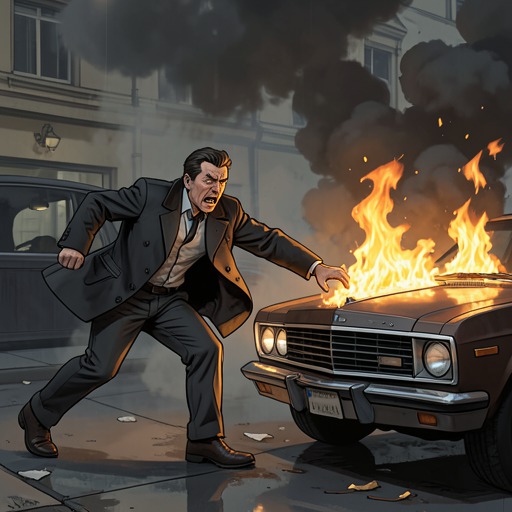
Alice Extinguishes the Banfield Fire
ShrineAlice Pagett’s extinguishing of the Banfield fire is presented as an unexplained event that turns a fatal road accident into evidence for her alleged miraculous powers. The fire threatened the village and the fuel beneath a garage’s pumps; after Alice appeared, witnesses said the flames went out, but neither eyewitness accounts nor the official examination established precisely how it happened.
Causes and Background
The fire began when a car carrying Leonard Pagett collided with a bus and a petrol tanker at Banfield Garage and Petrol Station. The tanker had been refilling the tanks beneath the garage’s pumps, and escaping petrol fed the blaze. The danger therefore extended beyond the vehicles: if the fuel below the pumps ignited, the fire could spread further through the village.
Leonard was killed before Alice arrived. That order is central to the event’s meaning: she did not prevent the collision or save her father, but appeared amid the consequences of the accident. The contrast between his death and the subsequent extinguishing of the fire gives the episode both a devastating personal loss and the appearance of a public rescue.
What Happens
As smoke shifted across the scene, the flames diminished into smaller patches. Alice, a small blond girl in a yellow dress, walked through the wreckage and held out her hands. The remaining flames died as she approached. The scene connects her arrival with the fire’s disappearance, while stopping short of explaining what caused it.
The subsequent LBC broadcast described eyewitnesses as saying Alice had put out a fire fuelled by petrol escaping from the damaged tanker. It also stressed that the tanker’s proximity to the underground fuel tanks made the fire a threat to a large part of Banfield. In this account, the danger is not limited to the vehicles already burning: the possibility of the fuel below the pumps catching fire establishes how much worse the incident might have become.
Conflicting Accounts and Investigation
The reports did not agree on exactly what witnesses had seen. Some said Alice appeared to walk through the flames; others said the flames died as she approached. A few placed her arrival only when the fire was nearly extinguished. The disagreement leaves the central fact—the fire subsided around the time of her appearance—more stable than any single account of how she acted or what she encountered.
Accident and fire-prevention officers found no logical explanation for the fire’s course. Their examination noted that there had been little rain, and that no further explosion after the tanker’s initial impact could account for the flames going out. They also found partly burned timber that should have been completely charred had the fire proceeded naturally, as well as petrol still unburned on the ground. By the fire brigade’s arrival, only small, scattered fires remained.
Consequences and Significance
The incident renewed public interest in Alice and drew people from across the country to St. Joseph’s Church in Banfield, including sick visitors and those who were infirm themselves. The fire thus became more than a local emergency: reports of its unexplained extinction helped draw attention to Alice and fed the growing claims surrounding her supposed powers.
A Church representative interviewed about the reports said they were confusing and that the representative could not verify what had happened personally. The representative nevertheless acknowledged Alice’s extraordinary effect, while withholding any conclusion about the miracles attributed to her. The event’s significance rests in that unresolved gap between observable aftermath and disputed cause: the fire was largely out, the investigators could not account for its course, and the witnesses’ differing recollections left Alice’s role open to interpretation.