Church Purchase of the Field Where the Miracle Occurred
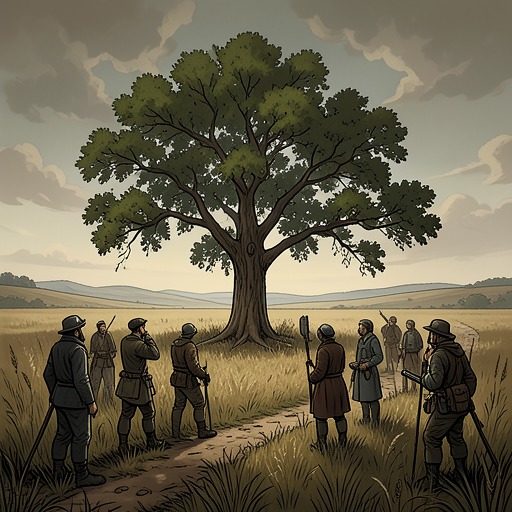
ShrineThe Church Purchase of the Field Where the Miracle Occurred was an attempt to secure the adjoining field where Alice Pagett had reportedly seen a vision and where the cures associated with the Banfield Miracle were said to have taken place. As the site drew growing crowds, the proposed acquisition promised both space for visitors and a way for the Church to manage a phenomenon whose religious meaning remained unconfirmed.
Background and Motives
The field became important after Alice Pagett recovered her hearing and speech and five other cures were associated with the same location. Together, the six reported recoveries attracted public attention beyond Banfield. Bishop Caines warned that people would come in large numbers out of curiosity as well as belief, whether or not St. Joseph’s Church was formally declared a shrine. In his view, the Church needed to control the situation from the beginning.
The acquisition also took shape amid hopes that the events might revive the village. George Southworth believed that something divine had occurred, while also presenting the renewed attention as an opportunity for Banfield to escape decline. Rodney Tucker was more openly interested in the financial prospects. Their different motives made the field more than a parcel of land: it was becoming the contested ground where religious claims, local hopes, and practical interests met.
Agreement and Intended Use
Bishop Caines had already sought authorization to buy the field, and Gerry Fenn reported that the farmer who owned it was willing to sell after a difficult period. The stated practical purpose was to accommodate the visitors expected to overwhelm the church grounds. Because the field was where Alice’s vision had reportedly occurred, bringing it into the Church’s ownership would also connect the place of the claimed apparition more directly to St. Joseph’s.
At a press conference, Bishop Caines said an agreement for the Church to purchase the land had been reached and that the documents were expected to be signed within a day or two. He described the field as so close to St. Joseph’s that it could be considered part of Church property. The announcement thus made clear that an arrangement was in place, while leaving the formal signing still to come.
Pilgrimage Ground and Public Scrutiny
The crowds gave the proposed purchase an immediate practical context. On the Sunday when Alice was expected to see the Lady again, traffic increased and people crowded the pathway to the church. Gerry Fenn, arriving with Sue and Ben, saw pilgrims, believers, and curious visitors gathering, including families accompanying people with serious illnesses or disabilities. The mixture of hope, religious expectation, and curiosity showed why the existing church grounds seemed inadequate to those organizing for larger numbers.
By the open-air Mass, the field had been furnished for a congregation on a much larger scale. A newly constructed entrance admitted people to rows of benches and a central altar area; seats were reserved for Church and other dignitaries, while stewards and ushers managed the gathering. Thousands arrived, including sick people and relatives who hoped for a cure or wished to be near Alice. Later, during the candlelight procession, the field was widely called the Field of the Holy Virgin, and thousands from Banfield and farther away joined the march. These developments show the site’s growing use as a pilgrimage setting, though the evidence does not establish that every facility was built as a direct result of the purchase.
Ownership and the Limits of Recognition
The land agreement did not amount to an official declaration that the cures were miracles. Bishop Caines said the six cases would be examined by a specially formed medical bureau, with its findings passed to the International Medical Committee. The bureau was to consult the patients’ doctors and hospitals, conduct examinations, and keep case dossiers; its task was to determine whether the cures were medically inexplicable, not whether divine intervention had caused them. The bishop and his advisers retained responsibility for judging their spiritual significance.
That distinction gives the purchase its wider significance. The Church moved to secure and organize the place while its own investigation remained open, turning the field into an increasingly managed public site without resolving the central question of what had happened there. The acquisition could accommodate the crowds and strengthen institutional control, but ownership alone could neither verify the cures nor establish the field’s status as a holy shrine.