Before the journey, in Shasta’s childhood
Life in the Fisherman’s House
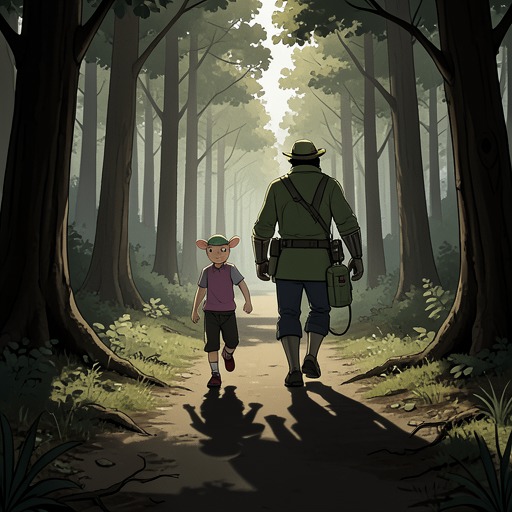
[Shasta](entity:character-recall-character-shasta-28eb02b36c0b) grows up in a poor coastal cottage in southern [Calormen](entity:location-recall-location-calormen-91204da28e47), believing the fisherman [Arsheesh](entity:character-recall-character-arsheesh-ea6e29ae821b) is his father. His days are filled with labor, and he is scolded or beaten when Arsheesh is displeased. The life leaves him curious about the unknown country to the north and painfully unsure why he cannot love the man he calls Father.
The narrowness of his life establishes what escape will mean: not merely flight from hardship, but the chance to discover his origin and belong somewhere else.
One evening, shortly before Shasta’s escape
The Tarkaan’s Offer
A wealthy rider, the Tarkaan Anradin, arrives and asks to buy [Shasta](entity:character-recall-character-shasta-28eb02b36c0b). [Arsheesh](entity:character-recall-character-arsheesh-ea6e29ae821b) pretends that the boy is his beloved son while haggling over a price; the Tarkaan sees through the story, noting that Shasta’s fair appearance marks him as northern rather than Calormene.
Listening outside, Shasta learns that he was found as an infant in a boat beside a dead, starving man. The revelation loosens his imagined bond to Arsheesh and makes the prospect of leaving seem less like betrayal and more like a chance to find out who he is.
That evening, after the Tarkaan arrives
Bree Reveals His Voice
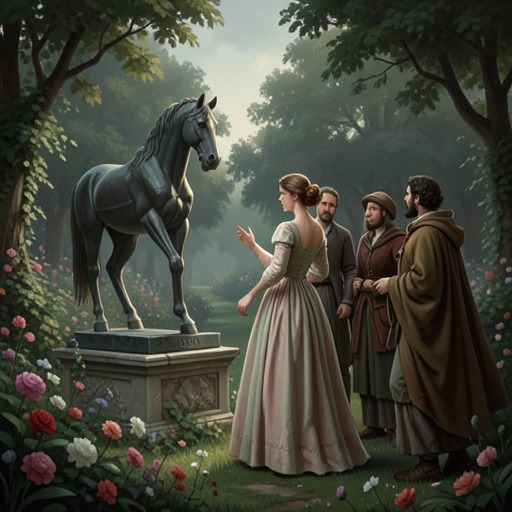
Outside the cottage, [Shasta](entity:character-recall-character-shasta-28eb02b36c0b) speaks to the Tarkaan’s horse and wishes aloud that it could tell him whether its master is cruel. The horse answers: [Bree](entity:character-recall-character-bree-760a2b952baf) is a talking Narnian, stolen as a foal and kept enslaved in [Calormen](entity:location-recall-location-calormen-91204da28e47). He warns Shasta that Anradin is dangerous and that becoming the Tarkaan’s human slave would be worse than escaping.
Bree proposes that they flee together. Shasta has never ridden properly, but Bree agrees to teach him as they travel north toward [Narnia](entity:location-recall-location-narnia-396f2630d802), turning the boy’s long-held longing into a concrete plan.
That night
The Night Escape
While [Arsheesh](entity:character-recall-character-arsheesh-ea6e29ae821b) sleeps, [Shasta](entity:character-recall-character-shasta-28eb02b36c0b) retrieves [Bree](entity:character-recall-character-bree-760a2b952baf)’s saddle and bridle and prepares the horse without waking the household. He says goodbye to the donkey, then climbs awkwardly onto Bree, who gives him urgent instructions about balance and warns him not to grab the reins or mane.
Bree disguises their trail by leaving hoofprints that point south, then crosses a stream and heads north. Shasta passes the ridge that has always marked the limit of his known world; ahead lies open, dark grassland and the first real freedom he has experienced.
The first day after their escape
A New Country and a Hard Lesson
[Shasta](entity:character-recall-character-shasta-28eb02b36c0b) wakes sore from a night of falls, but the open coast and clean air feel unlike anything he has known. He and [Bree](entity:character-recall-character-bree-760a2b952baf) share food taken from the saddlebag; Shasta wonders whether spending the stolen money is wrong, and Bree argues that captives in enemy country must use what they need to survive.
Bree teaches Shasta to ride over the following days, patiently correcting him even as he mocks the boy’s poor seat. Their conversation reveals Bree’s pride in his military past and his dream of returning to [Narnia](entity:location-recall-location-narnia-396f2630d802) as a free horse, while Shasta’s confidence gradually grows with his skill.
During the weeks of travel north
Bree’s Dream of Narnia
The pair travel along the coast for weeks, avoiding towns when possible and buying food in villages. [Bree](entity:character-recall-character-bree-760a2b952baf) recalls battles he fought as a slave and insists that the wars of [Narnia](entity:location-recall-location-narnia-396f2630d802), where he would fight freely among his own people, would be worth remembering.
Their shared destination gives the journey its refrain, but Bree’s stories also reveal how thoroughly his sense of himself has been shaped by life among humans. He longs for home while imagining that his former achievements will make him exceptional there.
Several weeks into the journey
The Night Chase
On a moonlit plain, [Bree](entity:character-recall-character-bree-760a2b952baf) hears the approach of another fine horse and suspects a Tarkaan is following them. The riders try to slip toward the shore under a cloud, but a lion’s roar erupts ahead. Bree turns inland and gallops; the pursuing horse joins them as roars sound on both sides.
The two horses race together through a sea inlet, and the second horse speaks. Bree recognizes [Hwin](entity:character-recall-character-hwin-4019a374de76) as another talking Narnian. Her young rider, [Aravis](entity:character-recall-character-aravis-23955d9aa533), is a Calormene noblewoman disguised in her brother’s armor, fleeing north with Hwin.
That night, after the crossing
Aravis’s Flight
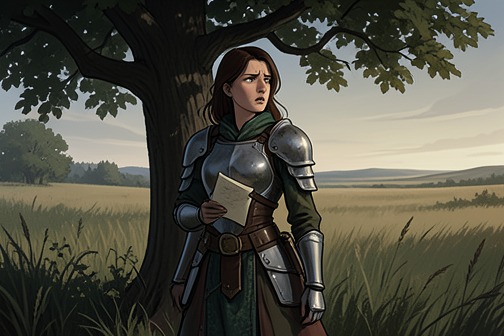
[Aravis](entity:character-recall-character-aravis-23955d9aa533) explains that her stepmother persuaded her father, [Kidrash Tarkaan](entity:character-recall-character-kidrash-tarkaan-f512e3114aec), to promise her in marriage to [Ahoshta Tarkaan](entity:character-recall-character-ahoshta-tarkaan-9559e9fbb4a7), an elderly and repellent courtier. Rather than accept the forced match, she had prepared an escape, hoping to reach [Narnia](entity:location-recall-location-narnia-396f2630d802), where she believes a girl is not compelled to marry against her will.
She tells how [Hwin](entity:character-recall-character-hwin-4019a374de76) first spoke to her when Aravis was about to kill herself rather than submit to the marriage. Aravis then feigned agreement, drugged a maid, put on her brother’s armor, and rode away. At [Azim Balda](entity:location-recall-location-azim-balda-dcee02be5f5e) she sent her father a forged letter claiming that Ahoshta had already married her, buying herself time to escape.
After Aravis tells her story
A Difficult Fellowship
[Shasta](entity:character-recall-character-shasta-28eb02b36c0b) objects to [Aravis](entity:character-recall-character-aravis-23955d9aa533)’s indifference toward the maid who may be punished for the drugged sleep. Aravis refuses to claim that she acted to please him, and the two begin their journey together with their differences still plain. [Bree](entity:character-recall-character-bree-760a2b952baf) and Aravis share memories of Calormene people and places, leaving Shasta feeling excluded.
As they near [Tashbaan](entity:location-recall-location-tashbaan-9b0379872518), the travelers agree to meet beyond the city at the [Tombs of the Ancient Kings](entity:location-recall-location-tombs-of-the-ancient-57a72886f438) if they become separated. Their immediate problem is how to cross the crowded city without exposing Aravis or revealing that Bree and [Hwin](entity:character-recall-character-hwin-4019a374de76) can speak.
On the approach to Tashbaan
The Disguise Plan
The travelers consider avoiding [Tashbaan](entity:location-recall-location-tashbaan-9b0379872518) by swimming the river or crossing upstream, but both routes seem too dangerous. [Hwin](entity:character-recall-character-hwin-4019a374de76) proposes that the humans dress as poor workers and that the horses pose as dirty pack animals, carrying their fine equipment in bundles.
Though [Bree](entity:character-recall-character-bree-760a2b952baf) objects to entering [Narnia](entity:location-recall-location-narnia-396f2630d802) in such a shabby state, the group adopts Hwin’s practical plan. They gather sacks, rope, and ragged clothes, dirty the horses, and shorten their tails. From the ridge above the city, [Shasta](entity:character-recall-character-shasta-28eb02b36c0b) sees Tashbaan spread across its river island, an overwhelming spectacle that makes him both awed and apprehensive.
Early morning, as the city gates open
Entering Tashbaan
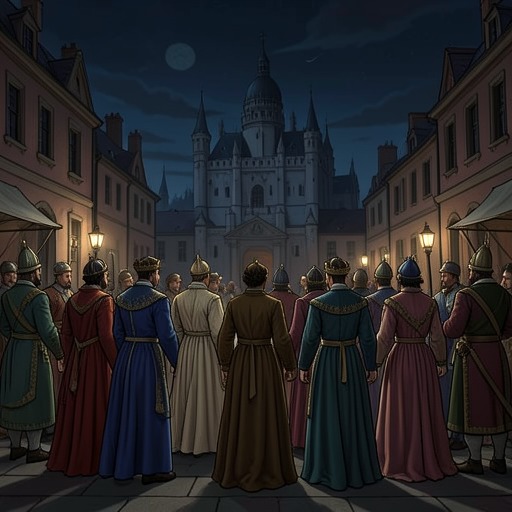
The four enter [Tashbaan](entity:location-recall-location-tashbaan-9b0379872518) with peasants and market traffic. A soldier mistakes [Shasta](entity:character-recall-character-shasta-28eb02b36c0b) for a servant and strikes him when he answers back, confirming how vulnerable the disguise leaves him. Inside, they pass through crowded, foul-smelling lower streets and climb into the wealthier parts of the city.
[Aravis](entity:character-recall-character-aravis-23955d9aa533) is pained to enter as a beggar rather than as a noblewoman, while the others concentrate on getting through unnoticed. Their progress slows whenever the crowd makes way for a person of higher rank, reflecting the city’s harsh rule that the less important must yield to the more important.
That morning, high in Tashbaan
Shasta Mistaken for Corin
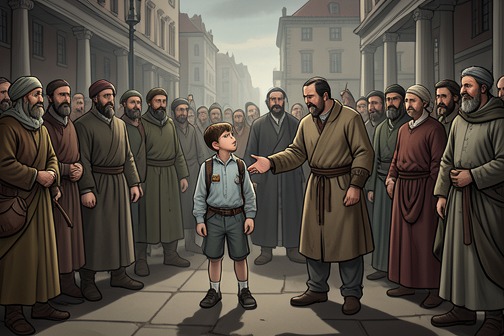
A Narnian party approaches, led by [King Edmund](entity:character-recall-character-king-edmund-2399a8bcaedc) and accompanied by [Queen Susan](entity:character-recall-character-queen-susan-839afc8ab076), [Tumnus](entity:character-recall-character-tumnus-1fe2fde3e992), and other courtiers. [Shasta](entity:character-recall-character-shasta-28eb02b36c0b) is swept into the front of the crowd and separated from [Bree](entity:character-recall-character-bree-760a2b952baf) and the others. A Narnian lord recognizes him as the missing [Prince Corin](entity:character-recall-character-prince-corin-d8261a634fda) and, believing him to be a runaway, takes him firmly in hand.
Shasta cannot safely explain the mistake without exposing his companions and their escape. He is carried to the Narnians’ lodging, where Queen Susan greets him as [Corin](entity:character-recall-character-corin-69285028f596) and treats his silence as confusion. The accidental likeness that began as a danger now pulls Shasta into the center of a political crisis he does not understand.
During the Narnians’ stay in Tashbaan
Susan Rejects Rabadash
At the Narnians’ lodging, [Shasta](entity:character-recall-character-shasta-28eb02b36c0b) overhears [King Edmund](entity:character-recall-character-king-edmund-2399a8bcaedc) and [Queen Susan](entity:character-recall-character-queen-susan-839afc8ab076) discussing her proposed marriage to Prince [Rabadash](entity:character-recall-character-rabadash-2fa27dee0d50). Susan refuses him: although he had behaved courteously during his visit to [Narnia](entity:location-recall-location-narnia-396f2630d802), in his own city he has shown himself proud, cruel, and tyrannical.
Edmund warns that the Tisroc may keep them from leaving once Susan rejects Rabadash. The party’s visit has shifted from courtship to danger, and Shasta’s accidental presence means he is listening to plans intended only for trusted allies.
The same day, after Susan rejects Rabadash
The Narnian Escape Plan
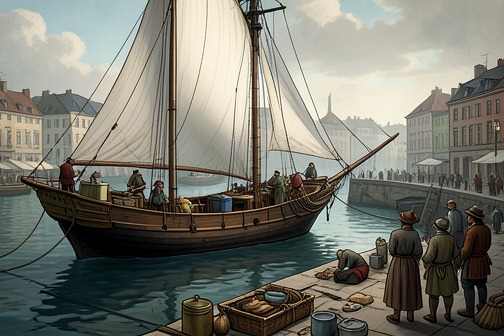
Edmund fears the Narnians may be held in [Tashbaan](entity:location-recall-location-tashbaan-9b0379872518) and that Susan could be forced into marriage or slavery. [Sallowpad](entity:character-recall-character-sallowpad-15bc5447f433) describes a secret western route across the desert, beginning at the [Tombs of the Ancient Kings](entity:location-recall-location-tombs-of-the-ancient-57a72886f438) and leading through a hidden valley toward a river in [Archenland](entity:location-recall-location-archenland-33432cf8967b), but Edmund stresses that their immediate need is to escape the city.
[Tumnus](entity:character-recall-character-tumnus-1fe2fde3e992) proposes inviting [Rabadash](entity:character-recall-character-rabadash-2fa27dee0d50) to a banquet aboard their ship, the [Splendor Hyaline](entity:object-recall-object-splendor-hyaline-ceb3f6d3e7d1), to create a plausible reason for taking supplies aboard. The group will appear to prepare for the feast by day, then quietly board the ship at night and sail north. [Shasta](entity:character-recall-character-shasta-28eb02b36c0b) hears the secret and fears that the Narnians will kill him if they discover he is not [Corin](entity:character-recall-character-corin-69285028f596).
Later that day
Corin Returns
Left alone after a fine meal, [Shasta](entity:character-recall-character-shasta-28eb02b36c0b) falls asleep in the Narnians’ lodging. [Prince Corin](entity:character-recall-character-prince-corin-d8261a634fda) climbs in through a window, battered after a street fight and an escape from the city watch. The two boys are astonished by their resemblance, and Shasta realizes that the real prince has returned.
[Corin](entity:character-recall-character-corin-69285028f596) shows Shasta how to leave by the window, roof, and wall. Shasta escapes before the Narnians can discover the substitution, while Corin accepts that he must explain the confusion himself. The boys part as new friends, with Corin asking Shasta to seek him out in [Archenland](entity:location-recall-location-archenland-33432cf8967b).
That evening
Alone at the Tombs
[Shasta](entity:character-recall-character-shasta-28eb02b36c0b) makes his way out through the northern gate and reaches the edge of the desert. He finds the [Tombs of the Ancient Kings](entity:location-recall-location-tombs-of-the-ancient-57a72886f438) but no sign of [Bree](entity:character-recall-character-bree-760a2b952baf), [Aravis](entity:character-recall-character-aravis-23955d9aa533), or [Hwin](entity:character-recall-character-hwin-4019a374de76). As the city gates close for the night, he realizes that he must wait alone and begins to fear the dark tombs and the stories of ghouls.
A solemn cat appears, touches his leg, and leads him through the tombs to the desert side. Shasta sleeps with the cat at his back, comforted by its warmth even as he wonders where his companions have gone.
That night, at the Tombs
The Cat and the Jackals
[Shasta](entity:character-recall-character-shasta-28eb02b36c0b) wakes to harsh cries from the desert and fears that wild animals are approaching. A huge lion bounds into view, roars toward the unseen creatures, and drives them away. When it lies down near him, Shasta recognizes the solemn cat that had led him to shelter.
The cat’s protection gives Shasta a safer night, though he does not yet understand who or what has watched over him. At dawn it has vanished. Shasta marks the direction of [Mount Pire](entity:location-recall-location-mount-pire-a14bbe2c6380) in the sand, then finds food and water near the river before returning anxiously to wait for the others.
The day after Shasta reaches the Tombs
Aravis Finds Shelter
After [Shasta](entity:character-recall-character-shasta-28eb02b36c0b) is taken by the Narnians, [Aravis](entity:character-recall-character-aravis-23955d9aa533) holds the horses and tries to continue through the city. She recognizes her friend [Lasaraleen](entity:character-recall-character-lasaraleen-034ae8061436) in a passing litter; Lasaraleen loudly calls her name, exposing the disguise, so Aravis leaps into the litter and persuades her friend to hide her.
Lasaraleen provides a bath, fine clothes, and shelter in her house. She is more interested in clothes and gossip than in Aravis’s escape, but eventually agrees to help. Aravis learns that her father is already in [Tashbaan](entity:location-recall-location-tashbaan-9b0379872518) searching for her, making a return home more dangerous than ever.
The night after Aravis reaches Lasaraleen’s house
The Palace Council
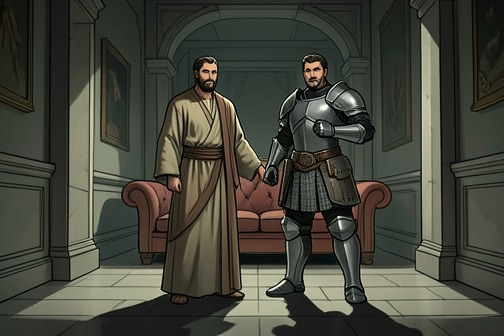
[Aravis](entity:character-recall-character-aravis-23955d9aa533) and [Lasaraleen](entity:character-recall-character-lasaraleen-034ae8061436) try to reach the Tisroc’s water gate, but, lost in the palace corridors, they hide behind a sofa when the Tisroc arrives with [Rabadash](entity:character-recall-character-rabadash-2fa27dee0d50) and [Ahoshta Tarkaan](entity:character-recall-character-ahoshta-tarkaan-9559e9fbb4a7). Aravis overhears Rabadash demand an invasion of [Narnia](entity:location-recall-location-narnia-396f2630d802) so he can seize Susan, while the Tisroc refuses open war but listens to a scheme that could give [Calormen](entity:location-recall-location-calormen-91204da28e47) a foothold in [Archenland](entity:location-recall-location-archenland-33432cf8967b).
Rabadash proposes taking two hundred horsemen across the desert to capture [Anvard](entity:location-recall-location-anvard-a5ff9b759081) by surprise, then riding onward toward Narnia. [The Tisroc](entity:character-recall-character-the-tisroc-dffc42b1b3cd) agrees to let him go while publicly denying responsibility if the venture fails. Aravis now knows the danger is not only her own forced marriage: a surprise attack threatens Archenland and Narnia.
Late that night
Aravis Escapes Tashbaan
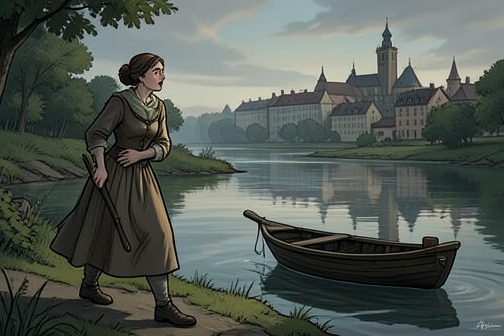
After the Tisroc and his companions leave, [Lasaraleen](entity:character-recall-character-lasaraleen-034ae8061436) is too frightened to continue. [Aravis](entity:character-recall-character-aravis-23955d9aa533) forces her to lead the way to the water gate, insisting that she would rather face death than return to Ahoshta. At the river, the two friends part affectionately, and Aravis crosses alone in a small boat.
She reaches the Tombs, where [Bree](entity:character-recall-character-bree-760a2b952baf) and [Hwin](entity:character-recall-character-hwin-4019a374de76) are waiting under a groom’s care. The groom departs, and Aravis is relieved to find her horses. When [Shasta](entity:character-recall-character-shasta-28eb02b36c0b) emerges from hiding, she tells the others of [Rabadash](entity:character-recall-character-rabadash-2fa27dee0d50)’s invasion plan; the travelers must now race not only for their own safety but to warn [Archenland](entity:location-recall-location-archenland-33432cf8967b).
That night and the following day
Crossing the Great Desert
The four leave the Tombs and ride northwest toward [Mount Pire](entity:location-recall-location-mount-pire-a14bbe2c6380), following the direction [Shasta](entity:character-recall-character-shasta-28eb02b36c0b) marked. They travel through the cool moonlit hours, then endure the desert’s merciless glare and heat. Shasta’s bare feet burn when he tries to walk, so [Bree](entity:character-recall-character-bree-760a2b952baf) tells him to remain mounted.
After hours of thirst and exhaustion, they find the hidden valley described by [Sallowpad](entity:character-recall-character-sallowpad-15bc5447f433). A trickle becomes a stream and then a river, and the travelers finally drink and bathe beneath the moon. Too tired to stay alert, they fall asleep despite [Hwin](entity:character-recall-character-hwin-4019a374de76)’s warning that they must keep ahead of [Rabadash](entity:character-recall-character-rabadash-2fa27dee0d50).
The morning after the desert crossing
Bree’s False Confidence
[Aravis](entity:character-recall-character-aravis-23955d9aa533) wakes first and blames herself for letting the party sleep through the cool morning. [Bree](entity:character-recall-character-bree-760a2b952baf) insists on eating and resting before continuing, confident that they are already far ahead. [Hwin](entity:character-recall-character-hwin-4019a374de76) quietly argues that a horse can push on when the journey demands it, but Bree dismisses her experience.
Their delay shows the difference between being driven by a master and choosing to discipline oneself freely. Bree’s years as a slave have left him accustomed to external command; without it, his pride disguises reluctance as practical judgment. Hwin, though tired and less strong, sets the pace when they finally resume the journey.
Later that day
Into Archenland
After following the valley for several hours, the travelers reach a broad, fast river and find a ford. [Bree](entity:character-recall-character-bree-760a2b952baf) recognizes the river as the Winding Arrow and proudly declares that they have entered [Archenland](entity:location-recall-location-archenland-33432cf8967b). Across it, greener hills rise toward the Northern Mountains and the pass into [Narnia](entity:location-recall-location-narnia-396f2630d802).
The relief is short-lived. Looking back, the travelers see a moving dust cloud and glints of armor: [Rabadash](entity:character-recall-character-rabadash-2fa27dee0d50)’s force has crossed the desert and is approaching. They turn toward [Anvard](entity:location-recall-location-anvard-a5ff9b759081), knowing that reaching the castle before the attackers is essential.
During the race toward Anvard
The Lion’s Pursuit
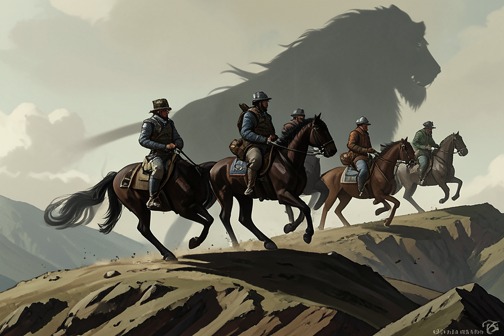
The travelers gallop over ridge after ridge, trying to reach [Anvard](entity:location-recall-location-anvard-a5ff9b759081) before [Rabadash](entity:character-recall-character-rabadash-2fa27dee0d50)’s horsemen. Then the familiar roar sounds behind them. A lion is closing in, and [Bree](entity:character-recall-character-bree-760a2b952baf), who has been holding back out of fear, suddenly runs faster; he pulls ahead of the exhausted [Hwin](entity:character-recall-character-hwin-4019a374de76).
The pursuer catches Hwin and claws [Aravis](entity:character-recall-character-aravis-23955d9aa533) across the back. [Shasta](entity:character-recall-character-shasta-28eb02b36c0b) leaps from Bree’s saddle and runs back toward them, though he is unarmed and terrified. His charge startles the lion, which turns and flees. The group reaches a walled enclosure where a robed old man, the [Hermit of the Southern March](entity:character-recall-character-hermit-of-the-south-078f70d42138), helps Aravis and directs Shasta onward to warn [King Lune](entity:character-recall-character-king-lune-287d0f91ff23).
After the lion attack
The Hermit’s Care
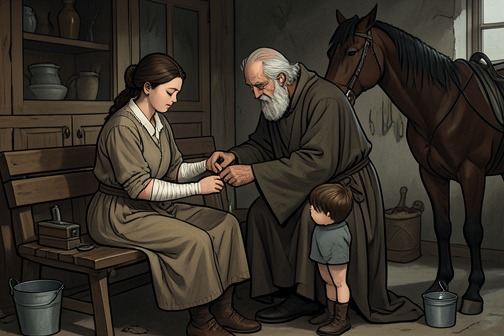
The Hermit tends [Aravis](entity:character-recall-character-aravis-23955d9aa533)’s wounds and tells [Shasta](entity:character-recall-character-shasta-28eb02b36c0b) that [Rabadash](entity:character-recall-character-rabadash-2fa27dee0d50) is already seeking a ford, so Shasta must run without resting to warn [King Lune](entity:character-recall-character-king-lune-287d0f91ff23). Though Shasta is exhausted and resentful at being sent on alone, he obeys. The Hermit then removes the saddles and bridles, rubs down [Bree](entity:character-recall-character-bree-760a2b952baf) and [Hwin](entity:character-recall-character-hwin-4019a374de76), and offers them water, grass, and mash.
Aravis learns that the lion’s claws caused only shallow wounds and that she is likely to recover. The Hermit cannot explain the lion’s purpose or predict the future, but he reassures her that the attack has not killed her. His calm care contrasts with the danger outside the enclosure and gives the wounded travelers a place to recover.
The morning after Shasta leaves
Bree’s Shame
When [Aravis](entity:character-recall-character-aravis-23955d9aa533) is well enough to rise, she finds [Bree](entity:character-recall-character-bree-760a2b952baf) withdrawn and convinced that he will never be fit to return to [Narnia](entity:location-recall-location-narnia-396f2630d802). He believes he abandoned Aravis and [Hwin](entity:character-recall-character-hwin-4019a374de76) to the lion, while [Shasta](entity:character-recall-character-shasta-28eb02b36c0b), a child with no training or weapons, turned back to help them.
Aravis admits that she too had underestimated Shasta and had treated him with contempt. The Hermit tells Bree that he has lost only his self-conceit, not his worth, and urges him to stop measuring himself against the ordinary horses among whom he was enslaved. Bree’s humiliation becomes the beginning of a more modest understanding of himself.
That same day, before the attack on Anvard
Shasta Warns King Lune
[Shasta](entity:character-recall-character-shasta-28eb02b36c0b) runs through the hills until he encounters [King Lune](entity:character-recall-character-king-lune-287d0f91ff23) and a hunting party. Lune initially mistakes him for [Prince Corin](entity:character-recall-character-prince-corin-d8261a634fda), but Shasta explains that he is not the prince and urgently reports that [Rabadash](entity:character-recall-character-rabadash-2fa27dee0d50) and two hundred horsemen are coming to attack [Anvard](entity:location-recall-location-anvard-a5ff9b759081).
The king believes Shasta’s account and orders a spare horse for him. Shasta has become a capable rider through [Bree](entity:character-recall-character-bree-760a2b952baf)’s training, and he joins the party at a fast pace. His warning gives King Lune a chance to reach the castle and prepare its defense, though fog and the mountain roads soon separate Shasta from the others.
That night, on the road to Anvard
Rabadash’s Orders
In thick fog, [Shasta](entity:character-recall-character-shasta-28eb02b36c0b) falls behind [King Lune](entity:character-recall-character-king-lune-287d0f91ff23)’s party and reaches a fork in the road. Hearing horsemen approach, he leaves the route to [Anvard](entity:location-recall-location-anvard-a5ff9b759081) and hides on the other road. The riders prove to be [Rabadash](entity:character-recall-character-rabadash-2fa27dee0d50)’s force, which passes without finding him.
Shasta hears Rabadash order his men to take Anvard swiftly and kill its defenders, while promising them plunder. He also hears Rabadash distinguish [Archenland](entity:location-recall-location-archenland-33432cf8967b) from [Narnia](entity:location-recall-location-narnia-396f2630d802): once the force reaches Narnia, he intends to limit bloodshed until his political plan is secured. The speech confirms the attackers’ brutality and the scale of the danger Shasta has tried to forestall.
Late that night, in the mountain pass
The Voice in the Dark
Alone in the darkness, [Shasta](entity:character-recall-character-shasta-28eb02b36c0b) continues along an unfamiliar road and begins to believe that he is the most unfortunate boy alive. A huge, unseen presence walks beside him, breathing heavily. Shasta fears it may be a giant or a ghost, but its deep voice invites him to tell his sorrows.
Shasta recounts the hardships of his life and the dangers of the journey. The voice challenges his belief that he has been unlucky and reveals that the lions he encountered were all one lion. The encounter turns his apparent misfortunes into a pattern of intervention whose meaning he has not yet understood.
Dawn, after Shasta’s night journey
Aslan Reveals His Guidance
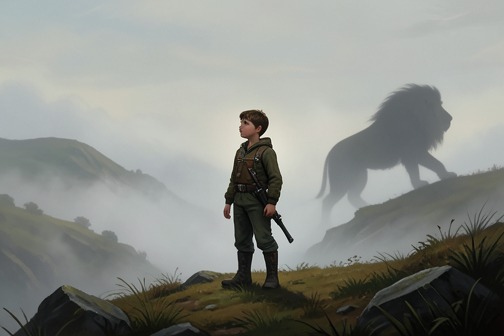
As the mist brightens, [Shasta](entity:character-recall-character-shasta-28eb02b36c0b) sees that the presence beside him is [Aslan](entity:character-recall-character-aslan-f00e3dfd5571), the great Lion. Aslan tells him that he was the lion who forced Shasta and [Aravis](entity:character-recall-character-aravis-23955d9aa533) together, the cat who comforted him at the tombs, the lion who drove away the jackals, and the lion whose terror drove the horses onward when they needed strength to reach [King Lune](entity:character-recall-character-king-lune-287d0f91ff23).
Aslan also reveals that he pushed the boat carrying the infant Shasta ashore where [Arsheesh](entity:character-recall-character-arsheesh-ea6e29ae821b) found him. When Shasta asks why Aslan wounded Aravis, Aslan says that he is telling Shasta’s story, not hers. The Lion touches Shasta, then vanishes with the mist, leaving the boy alone on a grassy hillside in [Narnia](entity:location-recall-location-narnia-396f2630d802).
Early morning after the night in the pass
Shasta Reaches Narnia
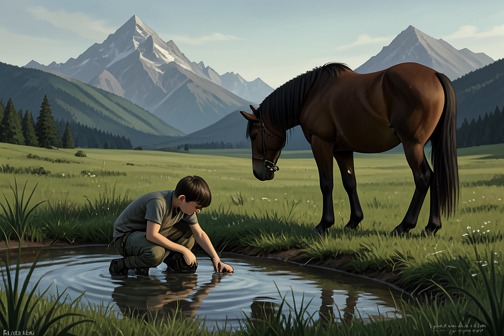
[Shasta](entity:character-recall-character-shasta-28eb02b36c0b) finds water in the deep print of [Aslan](entity:character-recall-character-aslan-f00e3dfd5571)’s paw and drinks. From the hillside he recognizes the mountains that separate [Archenland](entity:location-recall-location-archenland-33432cf8967b) from [Narnia](entity:location-recall-location-narnia-396f2630d802) and realizes that he has crossed the pass during the night. The horse he rode is an ordinary, unhelpful mount, but Shasta releases it to graze and makes his way downhill.
In the woods he meets Narnian creatures and tries to tell them that [Anvard](entity:location-recall-location-anvard-a5ff9b759081) is under attack. The woodland company is safe enough to chatter and delay action until a Red Dwarf, [Duffle](entity:character-recall-character-duffle-2f6518e53c3e), insists that the news be sent to [Cair Paravel](entity:location-recall-location-cair-paravel-048f6e9db882) at once. A stag races off with the message, while Duffle takes the famished Shasta home for breakfast.
The next morning
The Narnian Relief March
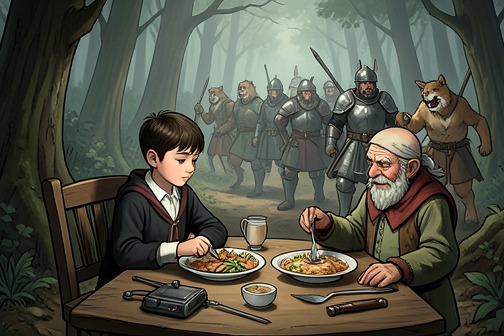
[Duffle](entity:character-recall-character-duffle-2f6518e53c3e) and his brothers feed [Shasta](entity:character-recall-character-shasta-28eb02b36c0b), who sleeps through much of the day after his exhausting journey. The following morning, [King Edmund](entity:character-recall-character-king-edmund-2399a8bcaedc)’s force arrives from the east, with Queen Lucy, [Prince Corin](entity:character-recall-character-prince-corin-d8261a634fda), lords, talking animals, giants, and other Narnian allies. The stag has carried the warning to the queen, and she has organized help for [Anvard](entity:location-recall-location-anvard-a5ff9b759081).
[Corin](entity:character-recall-character-corin-69285028f596) recognizes Shasta as the boy who was mistaken for him in [Tashbaan](entity:location-recall-location-tashbaan-9b0379872518). Shasta assures King Edmund that he never meant to betray the Narnians, and Edmund accepts his explanation. The two boys quickly reconnect, but Corin’s restless eagerness for battle creates a new problem: he has been ordered to stay out of the fighting.
The march toward Anvard
Corin Joins the Fight
[Corin](entity:character-recall-character-corin-69285028f596) argues with the Dwarf Thornbut, who has strict orders to keep the prince from the battle. Their scuffle ends when Thornbut badly sprains his ankle. Corin persuades [Shasta](entity:character-recall-character-shasta-28eb02b36c0b) to take the injured Dwarf’s spare pony and armor so the boys can slip into the rear of the marching column and fight.
Shasta accepts despite his fear and limited knowledge of battle. Corin helps him handle the reins, while the army moves through the mountain pass toward [Anvard](entity:location-recall-location-anvard-a5ff9b759081). Shasta understands that his first fight will be unlike the riding lessons that brought him this far.
That afternoon, as Rabadash attacks the castle
The Battle at Anvard
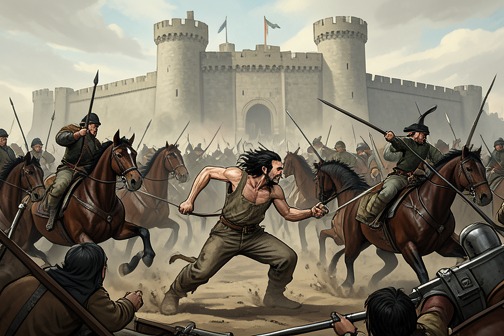
The Narnian and [Archenland](entity:location-recall-location-archenland-33432cf8967b) forces arrive while [Rabadash](entity:character-recall-character-rabadash-2fa27dee0d50)’s men batter [Anvard](entity:location-recall-location-anvard-a5ff9b759081)’s gate. The attackers remount to meet the relief army, and the two forces clash below the castle. [Shasta](entity:character-recall-character-shasta-28eb02b36c0b) is frightened, loses his sword, tangles his reins, and falls from his horse; [Corin](entity:character-recall-character-corin-69285028f596) fights fiercely in the battle.
From the [Hermit’s pool](entity:object-recall-object-hermit-s-pool-53633f55c44f), [Aravis](entity:character-recall-character-aravis-23955d9aa533), [Bree](entity:character-recall-character-bree-760a2b952baf), and [Hwin](entity:character-recall-character-hwin-4019a374de76) watch the fight as the Hermit describes it. Narnian cats attack the Calormene horses, the [Giants](entity:creature-recall-creature-giants-10cff8ec70ae) press the right flank, and [King Lune](entity:character-recall-character-king-lune-287d0f91ff23)’s defenders sortie from the castle. The Calormene line collapses; [King Edmund](entity:character-recall-character-king-edmund-2399a8bcaedc) and Rabadash fight near the gate, and Rabadash’s forces are defeated.
Immediately after the battle
Rabadash Is Captured
When [Shasta](entity:character-recall-character-shasta-28eb02b36c0b) gets to his feet, the battle is over and the defenders are celebrating. [Rabadash](entity:character-recall-character-rabadash-2fa27dee0d50) has been caught by a tear in his armor, which snagged on a hook in the castle wall as he jumped down to confront [King Edmund](entity:character-recall-character-king-edmund-2399a8bcaedc). Suspended awkwardly above the ground, he becomes an object of laughter rather than a feared conqueror.
[King Lune](entity:character-recall-character-king-lune-287d0f91ff23) refuses Rabadash’s demand for a royal duel, saying that an unannounced assault in peacetime has made him a traitor rather than a knight. Rabadash is bound and taken inside. [Corin](entity:character-recall-character-corin-69285028f596) then brings Shasta to the king, who embraces the boy and presents him beside Corin, making the onlookers’ recognition of their likeness part of a larger revelation.
After the victory at Anvard
The Lost Prince Revealed
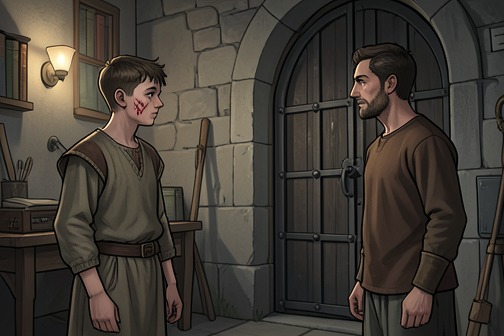
[King Lune](entity:character-recall-character-king-lune-287d0f91ff23) recognizes [Shasta](entity:character-recall-character-shasta-28eb02b36c0b) as the missing son he lost years earlier. Shasta’s resemblance to [Corin](entity:character-recall-character-corin-69285028f596) is explained: the boys are twins, separated in infancy when the former chancellor [Lord Bar](entity:character-recall-character-lord-bar-0efb4e5d80f7) kidnapped [Cor](entity:character-recall-character-cor-465704ece33b) and carried him away by sea. Bar had been sending secret information to the Tisroc and feared a prophecy that the child would save [Archenland](entity:location-recall-location-archenland-33432cf8967b).
After Bar’s ship was pursued and captured, a knight escaped with the infant in a small boat. The boat was the one [Aslan](entity:character-recall-character-aslan-f00e3dfd5571) pushed to the shore where [Arsheesh](entity:character-recall-character-arsheesh-ea6e29ae821b) found the child. Shasta’s origins and his role in the crisis now join: he was the lost prince whose warning gave his kingdom a chance to survive the danger foretold for him.
The day after the battle
The Hermit’s Confirmation
At the Hermit’s Enclosure, the Hermit tells [Aravis](entity:character-recall-character-aravis-23955d9aa533) and the horses that [Shasta](entity:character-recall-character-shasta-28eb02b36c0b) survived and was welcomed by [King Lune](entity:character-recall-character-king-lune-287d0f91ff23). Once the fighting ends, the magical pool no longer provides a useful view, but the news is enough to reassure them. [Hwin](entity:character-recall-character-hwin-4019a374de76) is eager to go to [Narnia](entity:location-recall-location-narnia-396f2630d802), while Aravis wants first to see Shasta and apologize.
[Bree](entity:character-recall-character-bree-760a2b952baf) hesitates, fretting over his shortened tail and whether he will make a good impression among free Narnian horses. His anxiety reveals that homecoming is no simple return: he has built an inflated identity from his time among Calormene horses and fears discovering that he is ordinary.
That morning, at the Hermit’s Enclosure
Aslan Confronts Bree and Aravis
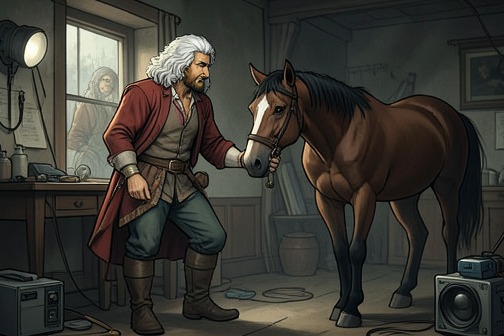
As [Bree](entity:character-recall-character-bree-760a2b952baf) questions whether [Aslan](entity:character-recall-character-aslan-f00e3dfd5571) is truly a lion, he insists that the stories must be figurative. [Aravis](entity:character-recall-character-aravis-23955d9aa533) and [Hwin](entity:character-recall-character-hwin-4019a374de76) see Aslan approach from behind him, but Bree does not notice until the Lion’s whiskers touch his ear. He bolts in terror, then Aslan calls him back and tells him to touch and smell a real Beast.
Aslan welcomes Hwin and reassures Bree that recognizing his own foolishness is a beginning, not a disgrace. He also tells Aravis that he was the lion who wounded her. The scratches on her back matched the punishment inflicted on her stepmother’s slave after Aravis drugged the girl; Aravis needed to feel something of the suffering her action had caused. When she asks whether the slave will suffer further, Aslan repeats that he tells each person their own story, not another’s.
Later that day
Cor Visits the Hermitage
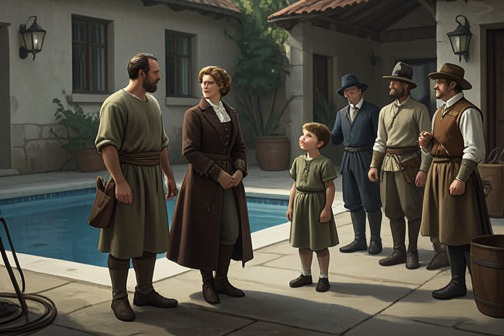
Prince [Cor](entity:character-recall-character-cor-465704ece33b) arrives at the Hermit’s enclosure with attendants and is immediately recognized by [Aravis](entity:character-recall-character-aravis-23955d9aa533) as [Shasta](entity:character-recall-character-shasta-28eb02b36c0b). He explains that [King Lune](entity:character-recall-character-king-lune-287d0f91ff23) is his father and that his true name is Cor; he and [Corin](entity:character-recall-character-corin-69285028f596) were twins, with Cor the elder by twenty minutes and therefore heir to the throne.
Cor recounts how a Centaur prophesied that he would one day save [Archenland](entity:location-recall-location-archenland-33432cf8967b) from its greatest danger. [Lord Bar](entity:character-recall-character-lord-bar-0efb4e5d80f7) kidnapped him because of that prophecy, but the attack by [Rabadash](entity:character-recall-character-rabadash-2fa27dee0d50) was the danger he helped avert by carrying the warning to King Lune. Aravis apologizes for having treated him as beneath her, and Cor admits that his supposed battle wound is only a scraped hand.
After Cor’s visit
A New Home for Aravis
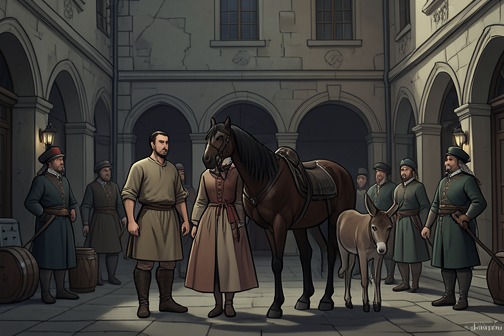
[Cor](entity:character-recall-character-cor-465704ece33b) invites [Aravis](entity:character-recall-character-aravis-23955d9aa533) to live at [Anvard](entity:location-recall-location-anvard-a5ff9b759081), where [King Lune](entity:character-recall-character-king-lune-287d0f91ff23) welcomes her as a valued guest. Aravis accepts, and she and Cor begin to look past the hardships of their flight toward a shared future. Cor is still uneasy about becoming king, while Aravis is willing to join a household and country unlike the life she had known in [Calormen](entity:location-recall-location-calormen-91204da28e47).
[Bree](entity:character-recall-character-bree-760a2b952baf) and [Hwin](entity:character-recall-character-hwin-4019a374de76) agree to travel with them to Anvard before continuing into [Narnia](entity:location-recall-location-narnia-396f2630d802). Cor explains that talking horses are not ordinarily ridden in Narnia except when necessity calls for it, another custom Bree must learn. His return home is therefore not a triumphant arrival but the start of a humbler education.
After the travelers reach Anvard
Rabadash’s Fate Is Decided
At a gathering in [Anvard](entity:location-recall-location-anvard-a5ff9b759081), the rulers consider what to do with [Rabadash](entity:character-recall-character-rabadash-2fa27dee0d50). Some argue that his attack deserves death, while [King Lune](entity:character-recall-character-king-lune-287d0f91ff23) resists killing a prisoner in cold blood. Queen Lucy recommends freeing him on a promise of better conduct; Edmund supports mercy but warns that a renewed attack would leave no doubt about the answer.
Rabadash is brought before them in chains, but he rejects their conditions, insults his captors, and threatens a vast war. His refusal makes clear that military defeat has not humbled him and brings the crisis to its final reckoning.
During the judgment at Anvard
Rabadash Becomes a Donkey
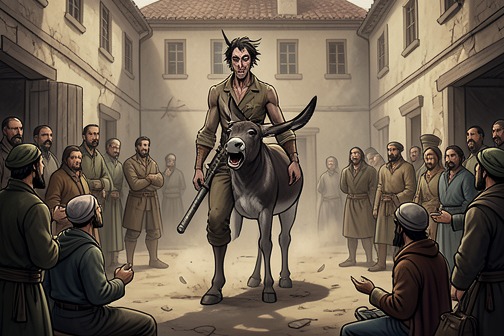
As [Rabadash](entity:character-recall-character-rabadash-2fa27dee0d50) threatens to drag [Queen Susan](entity:character-recall-character-queen-susan-839afc8ab076) back to [Tashbaan](entity:location-recall-location-tashbaan-9b0379872518), [Aslan](entity:character-recall-character-aslan-f00e3dfd5571) appears and warns him to abandon his pride and accept mercy. Rabadash instead curses Aslan and invokes Tash. At Aslan’s pronouncement that the hour has struck, Rabadash’s body changes until he is a donkey, and his human speech gives way to a bray.
Aslan declares that the transformation can be undone only at the temple of Tash during the [Great Autumn Feast](entity:time-recall-time-7eec2ae3f0c7). If Rabadash ever travels more than ten miles from the temple after returning to human form, he will become a donkey again permanently. [King Lune](entity:character-recall-character-king-lune-287d0f91ff23) offers him passage home and kind treatment, but Rabadash rejects the consolation with a kick and a bray.
Later, at the Great Autumn Feast and during Rabadash’s reign
The Peaceful Tisroc
[Rabadash](entity:character-recall-character-rabadash-2fa27dee0d50) is sent by ship to [Tashbaan](entity:location-recall-location-tashbaan-9b0379872518) and restored to human form at the temple during the [Great Autumn Feast](entity:time-recall-time-7eec2ae3f0c7), in front of thousands of witnesses. The transformation cannot be concealed, and people remember that he had been a donkey.
When Rabadash later becomes Tisroc, he proves unusually peaceable, largely because he cannot risk traveling beyond the temple’s limit and does not want his nobles to win military fame at his expense. The smaller countries around [Calormen](entity:location-recall-location-calormen-91204da28e47) benefit despite the selfish reason for his restraint. Behind his back, he becomes known as [Rabadash the Ridiculous](entity:expression-recall-expression-the-ridiculous-c4c31081f679).
That evening, after Rabadash’s judgment
The Feast at Anvard
The survivors celebrate their victory with a feast on the lawn at [Anvard](entity:location-recall-location-anvard-a5ff9b759081). [Aravis](entity:character-recall-character-aravis-23955d9aa533) and [Cor](entity:character-recall-character-cor-465704ece33b) discover northern songs and tales unlike the formal Calormene poetry they know, while [Bree](entity:character-recall-character-bree-760a2b952baf) tells a story of battle and Lucy retells how she, Edmund, Susan, and Peter first entered [Narnia](entity:location-recall-location-narnia-396f2630d802) through the wardrobe.
For the travelers, the feast marks the beginning of a life in which stories, customs, and belonging will have to be learned anew. [Shasta](entity:character-recall-character-shasta-28eb02b36c0b)’s journey from a fisherman’s hut to the company of kings has become part of the shared history celebrated around the table.
Late that night
The Heir and the Spare
[King Lune](entity:character-recall-character-king-lune-287d0f91ff23) tells [Cor](entity:character-recall-character-cor-465704ece33b) that he is the heir to [Archenland](entity:location-recall-location-archenland-33432cf8967b) because he was born twenty minutes before [Corin](entity:character-recall-character-corin-69285028f596). Cor is distressed that his arrival may have displaced his brother, but Corin is delighted to remain a prince rather than become king. The law, Lune explains, binds the king as well as his subjects and cannot be set aside at personal whim.
Lune describes kingship as a burden of service: the king must lead desperate attacks, be last in retreat, and share hardship while maintaining his people’s morale. Corin and Cor return to their familiar quarrels, but their affection survives the change in their places within the royal family.
Years after the main events
A Shared Life Ahead
[Cor and Aravis](entity:relation-recall-relation-3b39e670904b) continue to quarrel and make peace as they grow older, eventually marrying because their long familiarity has made that pattern part of their bond. They become a good king and queen of [Archenland](entity:location-recall-location-archenland-33432cf8967b), and their son Ram the Great inherits their story.
[Bree](entity:character-recall-character-bree-760a2b952baf) and [Hwin](entity:character-recall-character-hwin-4019a374de76) live happily in [Narnia](entity:location-recall-location-narnia-396f2630d802), each marrying another horse, and often cross the pass to visit their friends at [Anvard](entity:location-recall-location-anvard-a5ff9b759081). Bree’s return is no longer a matter of proving himself exceptional: he has learned to live among his own people without the old vanity that once made him fear home.