Several years before the novel’s present
The ANArKH Inscription
While exploring [Notre-Dame Cathedral](entity:location-recall-location-b031e1db316b), the narrator finds the word “[ANArKH](entity:expression-recall-expression-anarkh-d2a9308f711b)” carved into a shadowed tower. Its fatal meaning seems to condense an unknown sufferer’s whole destiny into a single mark.
Before January 6, 1482
Paris in 1482
The novel frames medieval [Paris](entity:location-recall-location-paris-c02b439ce220) as a city written in stone: its churches, palaces, bridges, and crowded districts preserve the accumulated labor and beliefs of generations. The account of the city also warns that time and human intervention are steadily erasing that record.
The fifteenth century and the centuries that follow
The Book and the Cathedral
The narrator develops the idea that architecture once served as humanity’s great public book, carrying ideas in stone. The rise of the printing press, he argues, transfers that expressive power to paper and begins architecture’s decline as society’s dominant art.
January 6, 1482
The Feast of Fools Begins
On [Epiphany](entity:time-recall-time-epiphany-08e2fbe4fe43), [Paris](entity:location-recall-location-paris-c02b439ce220) crowds into the [Palais de Justice](entity:location-recall-location-ea405b1a8a3f) for a mystery play and the election of a Pope of Fools. The Flemish embassy is expected, but the people’s excitement soon turns to impatience as the promised spectacle fails to begin on time.
Midday, January 6, 1482
Gringoire’s Mystery Play
[Pierre Gringoire](entity:character-recall-character-pierre-gringoire-5d2334c28d35)’s allegorical play begins before its important guests arrive. The audience is distracted by the crowd, the beggar [Clopin Trouillefou](entity:character-recall-character-clopin-trouillefou-178b4eb4d7fb), and the arrival of [Charles de Bourbon](entity:character-recall-character-charles-de-bourbon-e9e698619086) and the Flemish envoys.
Later on January 6, 1482
Coppenole Changes the Show
[Jacques Coppenole](entity:character-recall-character-jacques-coppenole-88290af76539) proposes choosing the Pope of Fools by a contest of grotesque faces. The crowd abandons [Gringoire](entity:character-recall-character-gringoire-f27827ff8328)’s play, revealing how quickly popular attention shifts from authored art to live spectacle.
January 6, 1482
Quasimodo Elected Pope
The crowd chooses [Quasimodo](entity:character-recall-character-quasimodo-fc220be47d97), Notre-Dame’s deformed, one-eyed, hunchbacked bellringer, as its Pope of Fools. He accepts the mock crown with a rare, proud joy, while the people’s laughter mixes with fear of his strength.
Evening, January 6, 1482
Esmeralda Dances
At the bonfire on [Place de Grève](entity:location-recall-location-0318dd186902), [Esmeralda](entity:character-recall-character-esmeralda-32d382dfd1fd) dances and performs tricks with her goat, Djali. [Pierre Gringoire](entity:character-recall-character-pierre-gringoire-5d2334c28d35) watches, captivated, while [Claude Frollo](entity:character-recall-character-claude-frollo-bfb7b7969cad), standing among the spectators, condemns the performance as sacrilege.
Night, January 6, 1482
The Pope’s Procession
[Quasimodo](entity:character-recall-character-quasimodo-fc220be47d97)’s procession reaches [Place de Grève](entity:location-recall-location-0318dd186902), where [Claude Frollo](entity:character-recall-character-claude-frollo-bfb7b7969cad) tears away the mock insignia and orders him to follow. Quasimodo immediately submits to the archdeacon, showing the force of gratitude and obedience that binds them.
Night, January 6, 1482
Gringoire Enters the Court
Following [Esmeralda](entity:character-recall-character-esmeralda-32d382dfd1fd) through the dark streets, [Gringoire](entity:character-recall-character-gringoire-f27827ff8328) witnesses [Quasimodo](entity:character-recall-character-quasimodo-fc220be47d97) and a companion try to carry her off. Captain [Phoebus de Châteaupers](entity:character-recall-character-phoebus-de-ch-teaup-806e93a6da2d) arrives with guards, rescues her, and leaves Quasimodo to be arrested.
Late night, January 6, 1482
Gringoire’s Night in the Court
Cold, hungry, and lost, [Gringoire](entity:character-recall-character-gringoire-f27827ff8328) blunders into the [Court of Miracles](entity:organization-recall-organization-court-of-miracle-4017ded0056e), where the beggars’ disguises and ranks become apparent. [Clopin Trouillefou](entity:character-recall-character-clopin-trouillefou-178b4eb4d7fb) sentences him to be hanged unless a woman agrees to marry him.
Late night, January 6, 1482
The Broken Crock Marriage
[Esmeralda](entity:character-recall-character-esmeralda-32d382dfd1fd) agrees to marry [Gringoire](entity:character-recall-character-gringoire-f27827ff8328) for four years, saving him from the gallows without promising him love. The ritual marriage gives him shelter and a place among the vagabonds, while she remains resolved to preserve her chastity.
The night of January 6, 1482
The Limits of Their Marriage
Alone with [Esmeralda](entity:character-recall-character-esmeralda-32d382dfd1fd), [Gringoire](entity:character-recall-character-gringoire-f27827ff8328) tries to claim the intimacy he assumes marriage permits; she draws a dagger and makes clear that she will not accept him as her lover. She explains that her amulet must remain effective if she is ever to find her family.
Quasimodo’s infancy, about 1462
Frollo Adopts Quasimodo
Sixteen years before the main story, a deformed foundling is exposed at Notre-Dame. [Claude Frollo](entity:character-recall-character-claude-frollo-bfb7b7969cad) takes the child in, names him [Quasimodo](entity:character-recall-character-quasimodo-fc220be47d97), and raises him alongside his own younger brother.
During Claude Frollo’s youth
Frollo Takes Responsibility for Jehan
After the plague kills his parents, Claude assumes responsibility for the infant [Jehan](entity:character-recall-character-jehan-f03e9a3a30cd) and devotes himself to his upbringing. His tender sense of family duty becomes a formative attachment, though Jehan later grows into a reckless and unruly student.
From Quasimodo’s childhood to about 1482
The Bellringer’s World
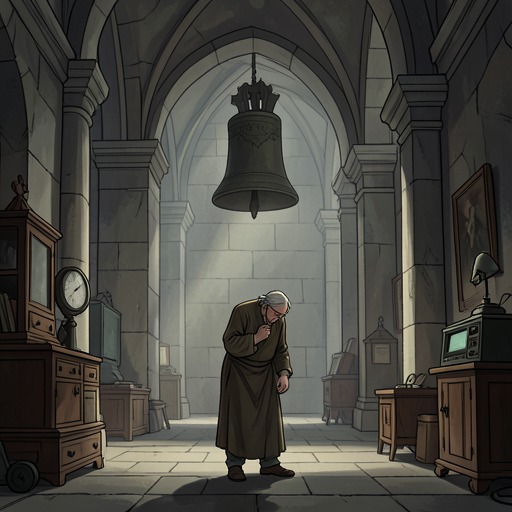
[Quasimodo](entity:character-recall-character-quasimodo-fc220be47d97) grows up inside Notre-Dame, which becomes his home, country, and entire world. He loves its bells, especially [Marie Bell](entity:object-recall-object-ed605e98d2e7), even though ringing them eventually destroys his hearing and deepens his isolation from other people.
Before the events of 1482
Frollo’s Forbidden Studies
Having mastered theology and other accepted learning, [Claude Frollo](entity:character-recall-character-claude-frollo-bfb7b7969cad) turns to alchemy and occult texts. His scholarly ambition, austere priesthood, and growing emotional desolation coexist uneasily beneath his formidable public reputation.
Before January 6, 1482
The Bishop’s Printed Book
[Claude Frollo](entity:character-recall-character-claude-frollo-bfb7b7969cad) studies Notre-Dame’s carved portals as if they were a secret text, while the newly printed book on his table suggests another kind of knowledge. The narrator’s architectural reflections place this conflict within a larger change in how society preserves and communicates thought.
January 7, 1482
Quasimodo’s Trial
At the [Châtelet Court](entity:organization-recall-organization-ch-telet-court-b0832b8da9d9), the deaf [Quasimodo](entity:character-recall-character-quasimodo-fc220be47d97) cannot hear the deaf judge’s questions, and the hearing becomes an absurd exchange in which neither understands the other. The court sentences him to flogging and public exposure in the pillory.
January 7, 1482
Quasimodo in the Pillory
[Quasimodo](entity:character-recall-character-quasimodo-fc220be47d97) is whipped and displayed on the pillory at [Place de Grève](entity:location-recall-location-0318dd186902) while the crowd jeers and throws objects at him. When he begs for water, the people mock his thirst rather than relieve it.
January 7, 1482
Esmeralda Gives Water
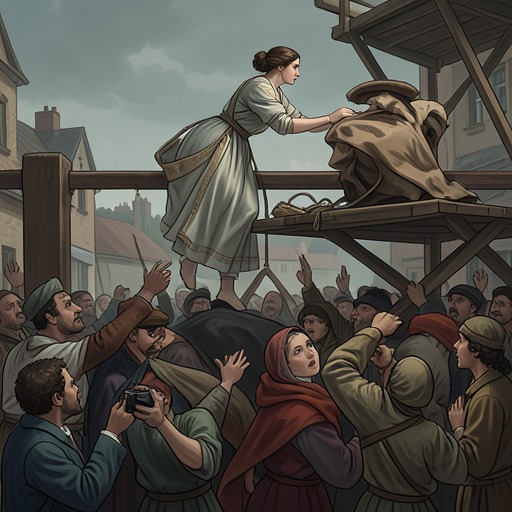
[Esmeralda](entity:character-recall-character-esmeralda-32d382dfd1fd) climbs the pillory and offers [Quasimodo](entity:character-recall-character-quasimodo-fc220be47d97) water. Her mercy breaks through his despair: he sheds a tear, and the crowd briefly answers her compassion with applause.
January 7, 1482
Mahiette’s Story
On the way to the Rat-Hole, [Mahiette](entity:character-recall-character-mahiette-b3473812a070) tells how [Paquette la Chantefleurie](entity:character-recall-character-paquette-la-chantef-ae21fb162b41) lost her baby during a visit to the gypsies and was left with a deformed child in its place. The story reveals how rumor and anti-Romani prejudice have shaped the recluse’s hatred of [Esmeralda](entity:character-recall-character-esmeralda-32d382dfd1fd)’s people.
January 7, 1482
Mahiette Recognizes the Recluse
At the Rat-Hole, [Mahiette](entity:character-recall-character-mahiette-b3473812a070) recognizes the silent recluse as Paquette. The mother remains absorbed in the tiny pink shoe left from her lost child, and the recognition confirms that her grief has endured unchanged for fifteen years.
After January 7, 1482
Frollo’s Jealousy
Frollo watches [Esmeralda](entity:character-recall-character-esmeralda-32d382dfd1fd) dance and grows distressed at the sight of [Phoebus](entity:character-recall-character-phoebus-22863e89e111) nearby. He questions [Gringoire](entity:character-recall-character-gringoire-f27827ff8328) about [Esmeralda’s chastity](entity:state-recall-state-esmeralda-s-chastity-493b8d0062c9) and her amulet, trying to learn whether another man has claimed her.
After January 7, 1482
Jehan Seeks Money
[Jehan](entity:character-recall-character-jehan-f03e9a3a30cd) visits his brother in search of money, pretending at first that he needs it for charity. Claude refuses his false appeal until Jehan admits that he wants to spend the money on drink and a woman.
A morning in late March 1482
The Word on the Wall
[Jehan](entity:character-recall-character-jehan-f03e9a3a30cd) discovers Claude’s private cell and sees him carve the Greek word [ANArKH](entity:expression-recall-expression-anarkh-d2a9308f711b) into the wall. Claude’s attempt to understand fate through forbidden learning is exposed to the younger brother, who interprets the inscription as “fate.”
March 1482
Djali Spells Phoebus
At the Gondelaurier home, [Esmeralda](entity:character-recall-character-esmeralda-32d382dfd1fd) performs with Djali before [Fleur-de-Lys](entity:character-recall-character-fleur-de-lys-8131fffa2020) and her companions. Djali arranges movable letters to spell [Phoebus](entity:character-recall-character-phoebus-22863e89e111)’s name, exposing Esmeralda’s attachment and provoking Fleur-de-Lys’s jealousy.
March 29, 1482
Frollo Shadows Phoebus
Frollo follows [Phoebus](entity:character-recall-character-phoebus-22863e89e111) after overhearing that he has arranged a meeting with [Esmeralda](entity:character-recall-character-esmeralda-32d382dfd1fd). The priest pays for the room and demands to watch, transforming his jealousy into a plan to witness the encounter.
Night of March 29
The Meeting at La Falourdel’s
[Esmeralda](entity:character-recall-character-esmeralda-32d382dfd1fd) meets [Phoebus](entity:character-recall-character-phoebus-22863e89e111) in the upper room at [La Falourdel](entity:character-recall-character-la-falourdel-31be7e6579db)’s house and tells him that she loves him. Phoebus responds with flirtation but rejects marriage and presses his advantage, while Frollo watches from a concealed nook.
Night of March 29
Frollo Stabs Phoebus
When [Phoebus](entity:character-recall-character-phoebus-22863e89e111) moves to embrace [Esmeralda](entity:character-recall-character-esmeralda-32d382dfd1fd), Frollo bursts in and stabs him. Esmeralda faints; Frollo escapes through a window, leaving her to be suspected of attacking the captain.
After the stabbing on March 29
The Crown Becomes a Dry Leaf
[La Falourdel](entity:character-recall-character-la-falourdel-31be7e6579db) reports that the stranger’s payment has turned into a dead leaf. The uncanny detail is treated as evidence of sorcery, while [Esmeralda](entity:character-recall-character-esmeralda-32d382dfd1fd)’s true attacker remains concealed.
About a month after March 29
Esmeralda and Djali on Trial
[Esmeralda](entity:character-recall-character-esmeralda-32d382dfd1fd) and Djali are tried for sorcery and [Phoebus](entity:character-recall-character-phoebus-22863e89e111)’s supposed murder. The court treats the goat’s trained tricks as proof of demonic power, and Esmeralda is too stunned to defend herself effectively.
During Esmeralda’s trial
Torture Forces a Confession
Under torture, [Esmeralda](entity:character-recall-character-esmeralda-32d382dfd1fd) confesses to the charges, including witchcraft and the attack on [Phoebus](entity:character-recall-character-phoebus-22863e89e111). Her confession is extracted by pain, yet the court treats it as proof and sentences her to death.
After Esmeralda’s condemnation
Frollo’s Confession in Prison
In the [Tournelle Prison](entity:location-recall-location-e4854e661157), Frollo confesses that his obsession began when he first saw [Esmeralda](entity:character-recall-character-esmeralda-32d382dfd1fd) dancing. He admits that he denounced her and helped bring about her conviction, then begs her to flee with him.
In the prison after Frollo’s confession
Esmeralda Rejects Frollo
[Esmeralda](entity:character-recall-character-esmeralda-32d382dfd1fd) refuses Frollo and asks what has become of [Phoebus](entity:character-recall-character-phoebus-22863e89e111). Frollo falsely tells her that the captain is dead; when she continues to reject him, he leaves her condemned and alone.
After March 29, before Esmeralda’s execution
Phoebus Survives
[Phoebus](entity:character-recall-character-phoebus-22863e89e111) recovers from his wound and leaves his physician without involving himself in [Esmeralda](entity:character-recall-character-esmeralda-32d382dfd1fd)’s case. He hopes to avoid scandal, while the court proceeds as if he were dead.
The morning of Esmeralda’s scheduled execution
The Rat-Hole’s Prisoner
Paquette, still consumed by grief over her missing daughter, learns that a gypsy is to be executed. She welcomes the prospect of revenge, unaware that the condemned young woman is the child she lost.
A May morning, before the execution
Esmeralda’s Public Penance
[Esmeralda](entity:character-recall-character-esmeralda-32d382dfd1fd) is brought in a cart to the [Parvis of Notre-Dame](entity:location-recall-location-1063638b6652) for public penance, with the rope around her neck and Djali beside her. She sees [Phoebus](entity:character-recall-character-phoebus-22863e89e111) on [Fleur-de-Lys](entity:character-recall-character-fleur-de-lys-8131fffa2020)’s balcony and cries out to him, but he denies knowing her.
During Esmeralda’s public penance
Quasimodo Claims Sanctuary
As executioners prepare to take [Esmeralda](entity:character-recall-character-esmeralda-32d382dfd1fd) away, [Quasimodo](entity:character-recall-character-quasimodo-fc220be47d97) descends by rope, knocks them aside, and carries her into Notre-Dame. His cry of “[Sanctuary!](entity:expression-recall-expression-sanctuary-f79628f61726)” turns the cathedral into her refuge and momentarily defeats the court’s authority.
The weeks after Esmeralda’s rescue
Life in Sanctuary
[Quasimodo](entity:character-recall-character-quasimodo-fc220be47d97) gives [Esmeralda](entity:character-recall-character-esmeralda-32d382dfd1fd) his bed and food, watches over her, and avoids frightening her as much as he can. She remains wary of his appearance, but gradually finds some peace within the church.
The first days of sanctuary
Quasimodo Offers His Whistle
[Quasimodo](entity:character-recall-character-quasimodo-fc220be47d97) explains that he is deaf and tells [Esmeralda](entity:character-recall-character-esmeralda-32d382dfd1fd) to use a small whistle if she needs him. He recognizes her pity without mistaking it for love and offers help while accepting her fear of him.
During Esmeralda’s sanctuary
The Cracked Vase
[Quasimodo](entity:character-recall-character-quasimodo-fc220be47d97) secretly leaves flowers for [Esmeralda](entity:character-recall-character-esmeralda-32d382dfd1fd) in two containers: the flowers in the cracked glass vase wither, while those in the plain earthenware pot stay fresh. Esmeralda wears the faded bouquet, a quiet sign of her continuing preference for [Phoebus](entity:character-recall-character-phoebus-22863e89e111) over her devoted protector.
During Esmeralda’s sanctuary
Quasimodo Fails to Bring Phoebus
[Esmeralda](entity:character-recall-character-esmeralda-32d382dfd1fd) spots [Phoebus](entity:character-recall-character-phoebus-22863e89e111) and begs [Quasimodo](entity:character-recall-character-quasimodo-fc220be47d97) to bring him to her. Quasimodo finds the captain, but Phoebus refuses to follow and kicks the bellringer away; Quasimodo returns alone and conceals the rejection from her.
During Esmeralda’s sanctuary, at night
Frollo Assaults Esmeralda
Frollo enters [Esmeralda](entity:character-recall-character-esmeralda-32d382dfd1fd)’s cell and tries to force himself on her. She blows [Quasimodo](entity:character-recall-character-quasimodo-fc220be47d97)’s whistle; Quasimodo intervenes, recognizes the archdeacon, and nevertheless places himself between Frollo and the young woman.
Immediately after the assault
Quasimodo Spares Frollo
In the darkness, [Quasimodo](entity:character-recall-character-quasimodo-fc220be47d97) nearly kills the intruder but stops when he realizes it is Frollo. [Esmeralda](entity:character-recall-character-esmeralda-32d382dfd1fd) takes the knife and tells the priest that [Phoebus](entity:character-recall-character-phoebus-22863e89e111) is alive, driving him away with the truth he cannot bear.
Several weeks after Esmeralda’s rescue
A Decree Ends Sanctuary
Parliament orders [Esmeralda](entity:character-recall-character-esmeralda-32d382dfd1fd) returned to the authorities, ending the protection she had found inside Notre-Dame. Frollo learns that she will soon be seized and tells [Gringoire](entity:character-recall-character-gringoire-f27827ff8328) that her life is in danger.
Three days before the decree is to be enforced
Gringoire Plans a Rescue
Frollo urges [Gringoire](entity:character-recall-character-gringoire-f27827ff8328) to exchange clothes with [Esmeralda](entity:character-recall-character-esmeralda-32d382dfd1fd) and take her place, but Gringoire refuses to accept certain death. Instead, he proposes that the outcasts rescue her in a direct assault.
The night before the attack
Jehan Turns Vagabond
[Jehan](entity:character-recall-character-jehan-f03e9a3a30cd) asks Claude for money and threatens to join the vagabonds when refused. Claude finally throws him a purse, but the gift cannot repair the estrangement between the brothers.
Night of the attack on Notre-Dame
The Outcasts Arm
In the [Court of Miracles](entity:organization-recall-organization-court-of-miracle-4017ded0056e), [Clopin Trouillefou](entity:character-recall-character-clopin-trouillefou-178b4eb4d7fb), the Duke of Egypt, and [Jehan](entity:character-recall-character-jehan-f03e9a3a30cd) prepare an armed force to rescue [Esmeralda](entity:character-recall-character-esmeralda-32d382dfd1fd). [Gringoire](entity:character-recall-character-gringoire-f27827ff8328) is troubled by the danger but has already set the plan in motion.
After midnight on the night of the attack
The Assault Begins
The outcasts march through [Paris](entity:location-recall-location-paris-c02b439ce220) to Notre-Dame, where Clopin demands [Esmeralda](entity:character-recall-character-esmeralda-32d382dfd1fd)’s release and threatens to sack the church. [Quasimodo](entity:character-recall-character-quasimodo-fc220be47d97) cannot hear the demand and believes that the crowd has come to harm her.
During the attack
Quasimodo Defends the Cathedral
[Quasimodo](entity:character-recall-character-quasimodo-fc220be47d97) drops a beam and stones from the towers, then pours melted lead through the gutters to repel the attackers. His desperate defense turns Notre-Dame’s architecture into a weapon and keeps the outcasts from reaching [Esmeralda](entity:character-recall-character-esmeralda-32d382dfd1fd).
During the attack
Jehan Falls from the Gallery
[Jehan](entity:character-recall-character-jehan-f03e9a3a30cd) climbs toward the gallery but is confronted by [Quasimodo](entity:character-recall-character-quasimodo-fc220be47d97), who throws him to his death. The outcasts’ grief and rage intensify their assault, even as the losses mount.
During the night assault
Louis XI Orders a Counterattack
At the [Bastille](entity:location-recall-location-0fae066b0cd4), [Louis XI](entity:character-recall-character-louis-xi-28cd96aba9b3) initially welcomes news of a rising against the bailiff, seeing a chance to weaken rival feudal authorities. When he learns that the attack is against Notre-Dame and challenges royal protection, he orders [Tristan l’Hermite](entity:character-recall-character-f86fb368609e) to crush the crowd and seize the sorceress.
Before dawn, during the attack
The Royal Troops Rout the Outcasts
[Phoebus](entity:character-recall-character-phoebus-22863e89e111) leads the royal troops to the Parvis, where they defeat the outcasts in a violent battle. [Quasimodo](entity:character-recall-character-quasimodo-fc220be47d97) sees the attackers flee and rushes back to [Esmeralda](entity:character-recall-character-esmeralda-32d382dfd1fd)’s cell, believing she is safe.
During the dispersal of the siege
Esmeralda Leaves by Boat
[Gringoire](entity:character-recall-character-gringoire-f27827ff8328) and a silent companion find [Esmeralda](entity:character-recall-character-esmeralda-32d382dfd1fd) and take her from Notre-Dame by boat. Gringoire escapes with Djali, while the unknown companion rows the young woman away from the church.
Just before dawn
Frollo Takes Esmeralda
The silent boatman reveals himself as [Claude Frollo](entity:character-recall-character-claude-frollo-bfb7b7969cad) and leads [Esmeralda](entity:character-recall-character-esmeralda-32d382dfd1fd) toward [Place de Grève](entity:location-recall-location-0318dd186902). He offers her a choice between himself and the gallows, but she rejects him and clings to the place of execution.
At dawn, near the gallows
Gudule’s Prisoner
Frollo leaves [Esmeralda](entity:character-recall-character-esmeralda-32d382dfd1fd) at the Rat-Hole, where [Gudule](entity:character-recall-character-gudule-74c20a348601) seizes her and denounces her as a child-stealing gypsy. The mother and daughter do not yet recognize each other, and Gudule believes that Esmeralda is responsible for her loss.
At dawn, moments before the execution
The Two Shoes Match
[Esmeralda](entity:character-recall-character-esmeralda-32d382dfd1fd) shows [Gudule](entity:character-recall-character-gudule-74c20a348601) the matching embroidered shoe kept in her amulet, and the two recognize each other as mother and daughter. After fifteen years of grief, Gudule finally understands that the child she mourned has survived.
Immediately after the reunion
A Mother Hides Her Daughter
When the soldiers approach, [Gudule](entity:character-recall-character-gudule-74c20a348601) hides [Esmeralda](entity:character-recall-character-esmeralda-32d382dfd1fd) in the cell and claims that the young woman escaped. Her fierce efforts to protect her newly recovered daughter show how completely maternal love has displaced her old hatred.
At dawn, during the search
Phoebus Reveals the Hiding Place
[Gudule](entity:character-recall-character-gudule-74c20a348601)’s concealment begins to hold until [Esmeralda](entity:character-recall-character-esmeralda-32d382dfd1fd) hears [Phoebus](entity:character-recall-character-phoebus-22863e89e111)’s voice and calls out to him. Her plea exposes her hiding place to Tristan’s men and destroys the mother’s last chance to save her.
At dawn, after Esmeralda is discovered
Gudule Dies Defending Esmeralda
The soldiers break into the Rat-Hole to seize [Esmeralda](entity:character-recall-character-esmeralda-32d382dfd1fd). [Gudule](entity:character-recall-character-gudule-74c20a348601) clings to her daughter and bites the executioner’s hand, but she is killed in the struggle as Esmeralda is carried away.
Morning after the attack
Esmeralda Is Hanged
[Henriet Cousin](entity:character-recall-character-henriet-cousin-a873981378e3) carries [Esmeralda](entity:character-recall-character-esmeralda-32d382dfd1fd) to the gallows and hangs her. From Notre-Dame, [Quasimodo](entity:character-recall-character-quasimodo-fc220be47d97) watches the execution and sees [Claude Frollo](entity:character-recall-character-claude-frollo-bfb7b7969cad) laugh at her death.
Immediately after Esmeralda’s execution
Quasimodo Kills Frollo
Seeing Frollo’s triumphant laughter, [Quasimodo](entity:character-recall-character-quasimodo-fc220be47d97) pushes him from the tower. Frollo clings briefly to a stone spout before falling to his death, while Quasimodo grieves for the woman and the adoptive father he has lost.
After the executions
The Last Embrace
[Quasimodo](entity:character-recall-character-quasimodo-fc220be47d97) disappears after Frollo’s death. Much later, workers searching the charnel cellar at [Montfaucon](entity:location-recall-location-3a816558a1b3) find two skeletons locked in an embrace, one deformed and the other with traces of white clothing and an empty amulet.
After the main events, in 1483
The Survivors’ Fates
[Gringoire](entity:character-recall-character-gringoire-f27827ff8328) survives, saves Djali, and returns to writing, eventually finding success in theatrical work. [Phoebus](entity:character-recall-character-phoebus-22863e89e111) marries, while [Louis XI](entity:character-recall-character-louis-xi-28cd96aba9b3) dies the following year.