Event 1
Anthony Carter Kills Rachel Wood
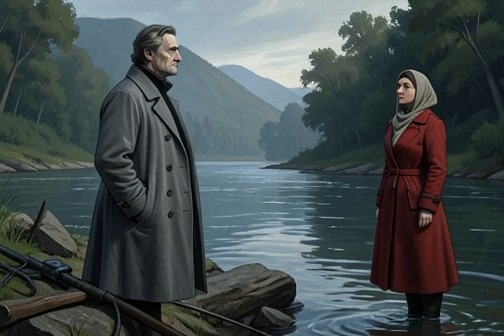
[Anthony Carter Kills Rachel Wood](entity:event-recall-event-anthony-carter-rachel-w-fd73cdc56945) is the drowning of [Rachel Wood](entity:character-recall-character-rachel-wood-c662d5d68a42), the [River Oaks](entity:location-recall-location-river-oaks-79a3cd29566a) woman who had tried to help Carter, a former homeless man she employed and connected with a group home. The killing shatters a relationship built through routine kindness, but the accounts surrounding it never make Carter’s actions fully intelligible: Doyle recounts the prosecution’s case to [Wolgast](entity:character-recall-character-wolgast-d9d268edab0b), while Carter remembers the violence, his remorse, and his failure to understand what happened. The event is both a death and an unresolved rupture, later shadowed by the fact that Carter is due to be executed for it.
## Background and the relationship
Carter’s circumstances before the killing are presented through the history Doyle reads to Wolgast. At thirty-two, Carter has no relatives, no father in his life from the beginning, and a childhood spent in a series of county foster homes. His record consists mainly of petty offenses, including panhandling and public nuisance. Doyle describes him as a small man, five feet four inches tall and 120 pounds, nicknamed T-Tone. These details establish not an elaborate criminal career but a precarious life and a person already accustomed to being overlooked.
Rachel Wood first encounters Carter beneath an overpass, holding a sign asking for food. She takes him home and makes him a sandwich, then finds him a place in a group home through calls and fundraising. She also recruits friends in River Oaks to give him work at their large houses. Carter begins cutting their lawns and pruning their hedges, while Rachel’s support makes this work possible. The arrangement continues for about two years. In Carter’s prison recollection, Rachel is remembered through small, repeated acts: she is always kind to him, gives him an extra five or ten, and brings iced tea on hot days on a little tray, as if he were a restaurant customer. The details make the later violence especially difficult to reconcile with the ordinary trust that preceded it.
## The encounter and drowning
The crisis begins when Carter comes to cut the lawn and Rachel’s five-year-old daughter, home sick from school, goes into the yard. The girl knows Carter from his regular visits, but on this occasion something frightens her. Doyle’s account says there may have been touching, but the court psychiatrist is uncertain about that possibility. The child screams; Rachel rushes outside, and the encounter becomes a struggle. The explanation does not resolve whether Carter touched the child or exactly how Rachel ended up in the pool: Doyle says she fell or was pushed.
Carter goes into the pool after Rachel, perhaps to help her, but she continues screaming and fights him off. Both are wet, yelling, and thrashing. The scene’s central reversal is stark: the man who had been welcomed to work around the family home becomes, in the child’s presence, the man struggling with her mother in the water. Doyle tells Wolgast that Carter drowns Rachel in front of her daughter. A neighbor hears the commotion and calls the police. When they arrive, Carter is sitting on the pool’s edge and Rachel is floating in it.
## Conflicting accounts and unresolved motive
Doyle presents facts that weigh against the killing being an accident. Rachel had been on the varsity swim team at SMU and still swam fifty laps each morning, a detail the prosecution emphasized. Carter also more or less admitted to killing her. When Wolgast asks what Carter said after his arrest, Doyle reports that Carter wanted Rachel to stop screaming and then asked for a glass of iced tea. The request recalls the drink Rachel used to bring him, turning a familiar gesture of care into a disturbing afterimage of the drowning. Wolgast is troubled by precisely these small details, which make the case feel more intimate without clarifying Carter’s state of mind.
Carter’s own recollection in prison does not undo the evidence of his responsibility. He does not claim that he did not kill Rachel; he says he is sorry, but that the event still does not make sense to him, however often he turns it over in his mind. He cannot explain why what happened between them took place, and after four years he finds no clearer understanding. He even doubts whether he is remembering it correctly, because the months and weeks in prison have blurred together. His remorse is therefore distinct from comprehension: he accepts that he did it, but cannot assemble a stable account of how the encounter became a death.
## Aftermath and narrative significance
The event continues into the years after the killing through its consequences for both families. Carter remembers Rachel’s husband visiting him once in Terrell, sitting behind the glass and crying as he spoke of forgiveness after praying over what Carter had done to his wife and children. Carter appreciates the man’s words as a Christian would, but suspects the forgiveness is something the husband has chosen partly to ease his own pain. The visit does not avert Carter’s execution or settle the meaning of the killing. Carter answers that he is sorry and says that if he sees Rachel in heaven, he will tell her what her husband did that day; the husband leaves in a hurry. It is the last visit Carter receives there, at least two years before the scene in prison.
Doyle’s account reaches Wolgast in the context of Carter’s approaching execution. Carter has been sentenced to die on June 2 for first-degree murder with depraved indifference, but his lawyer has left the state, the appeal has been turned down, and the replacement assigned through the Harris County public defender’s office has not opened the paperwork. The event’s aftermath thus includes not only Rachel’s death and her family’s loss, but Carter’s isolation as the execution date approaches with no one apparently attending to his case. The contrast between the charity that once gathered people around him and the abandonment surrounding his imprisonment gives the episode its wider force without erasing the violence he committed.
The narrative’s two angles preserve rather than resolve the gap between an external case and Carter’s inward confusion. Doyle recounts the scream, the struggle, the pool, the witness, and the prosecution’s evidence; Carter remembers a woman who was kind to him and an act he regrets but cannot understand. Neither account makes the other disappear. The murder remains a concrete, witnessed death, while its motive remains unsettled in Carter’s memory—a tension sharpened by the iced tea, an ordinary kindness that returns at the scene of the crime and in the words he gives after his arrest.
Event 2
Jeanette Shoots a Young Man in Memphis
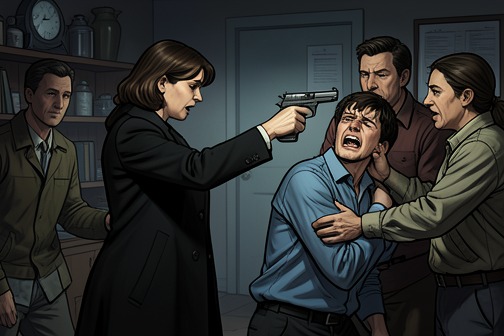
[Jeanette Shoots a Young Man in Memphis](entity:event-recall-event-jeanette-1cd388d1feef) is a turning point in [Jeanette](entity:character-recall-character-jeanette-dbded02c5756) and [Amy](entity:character-recall-character-amy-b0c9984bdc2f)’s flight from danger: a promise of a pleasant outing becomes an assault, and Jeanette shoots the young man who tries to restrain her. The immediate consequence is not safety but a hurried departure with Amy, while the shooting later shapes how authorities and others interpret the child’s mother.
## The Deceptive Invitation
The young man offers to take Jeanette somewhere nice and pay her more than she usually earns. Jeanette agrees on the condition that the trip last no more than an hour and that he take her back afterward. Instead, the journey lasts much longer, and he brings her to a fraternity house. Its prominent porch sign identifies the place for her; she understands it as a house where wealthy young men drink and behave as if consequence does not apply to them.
He invites her to meet his friends. Jeanette refuses and demands to be taken back. His response makes clear that returning is not an option. When she sees his expression, the apparently pleasant young man appears dangerous. The scene’s reversal is decisive: the offer of a paid outing has become an attempt to control where Jeanette goes and what happens to her.
## The Shooting
Jeanette opens the truck door and tries to leave, despite not knowing where she is. The young man gets out, grabs her, and attempts to restrain her. She understands that the fraternity house is where he intends to take her and that the situation is worsening. She also recognizes that he seems afraid, perhaps of the friends inside, though she cannot know whether that is truly what is driving him. His fear does not alter the immediate threat she faces.
Jeanette hits him as he tries to hold her, but he strikes her and knocks her down. As he attempts to pin her, she reaches for the revolver in her purse. The weapon gives her a means to stop him when she is otherwise at a disadvantage: she presses it against the side of his head and fires. He falls away, and Jeanette runs. The shooting changes the scene from an attempted escape into a life-or-death confrontation, leaving her with both a way out of the immediate danger and the consequences of having shot someone.
## Flight Back to Amy
Jeanette runs to a large boulevard, catches a bus, and makes her way across the city toward the airport and the motel. She does not know whether there is blood on her clothes, and she remembers leaving the revolver on the lawn. Her hand remains numb from firing it. These details accompany her flight as practical uncertainties rather than a pause for reflection: she must get back to Amy before anyone comes.
By sunrise, Jeanette reaches the motel. Amy is asleep with the television still on. Jeanette washes her face, brushes her teeth, changes clothes, and puts the bloodstained outfit into the dumpster behind the motel. She packs Amy’s belongings into the child’s Powerpuff Girls knapsack and her own clothes and money into a grocery sack. Then she wakes Amy gently, dresses her, gives her a cereal bar and warm grape soda, and takes her to the highway. The decision to leave follows directly from Jeanette’s expectation that someone may soon arrive; the shooting precipitates a new flight with Amy, not a return to their previous routine.
## Aftermath and Reinterpretation
The shooting later enters the authorities’ account of the events surrounding Amy’s removal from the convent. [Sister Arnette](entity:character-recall-character-sister-arnette-84114f0d0b39), unable to sleep after the day’s upheaval, learns from Detective Dupree that Amy’s mother has killed a young man. The information joins the earlier confusion over the men who came for Amy, the disturbance at the zoo, the police questioning, and the reporters outside the convent. For Sister Arnette, it complicates the image of the mother whose child had been taken: Jeanette is no longer known only through the loss of Amy, but through a killing reported by the detective.
The same history becomes an accusation against Amy in the [First Colony](entity:location-recall-location-ae4da2f9f3ed). When people seek someone to blame after eleven deaths, [Sam Chou](entity:character-recall-character-sam-chou-453081746287) points to [Caleb](entity:character-recall-character-caleb-685d38d3de8f)’s decision to admit the girl and declares that she is the reason the attackers came. The crowd’s demand that Caleb and the girl be put out rises into a repeated chant, while [Peter](entity:character-recall-character-peter-22e18a2305ec) senses that the remaining appearance of order is close to collapse. The accusation draws on the larger story of Amy’s arrival and the dangers associated with her, not on a direct account of Jeanette’s shooting; it nonetheless shows how episodes of violence and fear become simplified into blame directed at the vulnerable person who has become their focus.
The event therefore has two distinct consequences. For Jeanette, the shooting is the immediate break that sends her back to Amy and out onto the road. For those who hear about it later, it becomes a fragment of a story used to judge a mother and, in a very different crisis, to condemn the girl. The contrast between Jeanette’s urgent effort to escape and other people’s later certainty about who is to blame keeps the shooting from serving as a simple verdict on either woman.
Event 3
Amy Abandoned at the Sisters of Mercy Convent
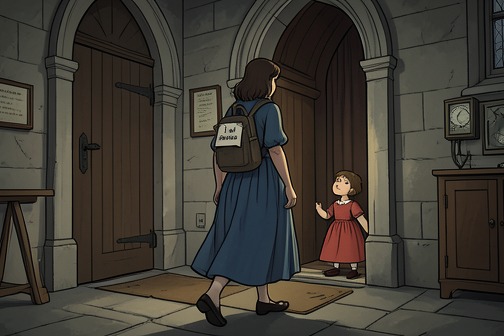
[Amy Abandoned at the Sisters of Mercy Convent](entity:event-recall-event-amy-dc5f0e51b616) is the quiet, deliberate separation that leaves six-year-old [Amy](entity:character-recall-character-amy-b0c9984bdc2f) in the care of the Sisters of Mercy and gives [Lacey](entity:character-recall-character-lacey-35e443bc02d4) the choice to turn an abandonment into an act of protection. [Jeanette](entity:character-recall-character-jeanette-dbded02c5756) invents a tow-truck pickup, embraces her daughter, and walks away; the note she leaves in Amy’s backpack confirms that this is not a temporary separation but a decision not to return.
## The Departure Arranged as an Errand
Jeanette prepares the convent visit so that leaving Amy will appear to be a practical necessity. In the kitchen, she uses the wall telephone to pretend to call AAA. The recorded message supplies the only voice on the line, but she tells the woman there that a wrecker is coming and that a man is waiting just around the corner. The story gives her a reason to go outside alone while making it sound as though the wait will be brief.
The woman offers to keep Amy while Jeanette sees to the car, assuming she is helping a mother through an inconvenience. Jeanette asks whether Amy will be any trouble; reassured that the sisters will be fine, she has only to accept the offer. The staged breakdown and the kindness it elicits make the deception work: the convent’s hospitality supplies the cover for Jeanette’s escape.
## The Kitchen Goodbye
At the oak table, Amy sits before a plate of cookies and a glass of milk that she has not touched. She has taken off her backpack and holds it in her lap. Jeanette watches her for as long as she can, then kneels and hugs her. Her instruction that Amy be good is the only thing she manages to say; she cannot find the words she intended to add.
The embrace is prolonged because Jeanette knows she is leaving for good. She thinks of the note inside the backpack, meant for the sisters to find when she fails to come back, and tries to preserve the warmth and smell of Amy in her memory. She is close to tears but holds Amy a little longer before letting her go. Then she leaves the kitchen, walks down the driveway to the street, and keeps going without turning the promised pickup into a return.
## The Note Makes the Abandonment Plain
Later, Lacey examines the pink backpack. Its contents—a stuffed rabbit, rolled underwear and socks, a toothbrush, and a half-empty box of strawberry cereal bars—do not resemble what a child would need for school. The small outside pouch holds the folded notebook paper. Its message is brief: “I’m sorry. Her name is Amy. She’s six years old.”
The note identifies the child and her age, but does not explain the mother’s circumstances or offer a route back to her. Lacey is struck not only by the few words but by the empty page surrounding them: Amy has been left with a name, an age, and a small bag of belongings to account for who she is. The note is therefore both practical information for the people who find her and the material proof that Jeanette meant to leave her behind.
## Lacey Chooses to Keep Amy
Lacey understands that pursuing the woman would be futile: Jeanette is already gone, and the note is no accident. She does not treat the abandonment as a misunderstanding that can be corrected by catching up with the mother. Instead, she folds the paper and puts it in the deep pocket of her skirt, then addresses the girl by her name and asks whether Amy is her name. Amy asks if she can have [Peter](entity:character-recall-character-peter-22e18a2305ec), a request that makes the rabbit in the bag more than an inventory item: it is the object she wants to keep close as the adults decide what happens next.
When a policeman asks whether the sisters should call Child Protection, he suggests that Amy could stay at the convent for the weekend while a description of Jeanette is circulated and Amy is entered in the missing-child database. Lacey quickly says she will keep her. Afterward, when the other sisters return from the Community Pantry, she tells them that Amy’s mother is a friend who has been called away to visit a sick relative and that Amy will stay only until Monday. The lie comes readily, and Lacey sees Amy’s flicker of agreement: the child knows how to keep secrets. This decision turns the scene’s abandonment into a provisional refuge, though it also obliges Lacey to conceal the truth from her community.
## A Separation That Becomes a Beginning
The event’s force lies in the contrast between the errand Jeanette invents and the permanence the backpack’s note reveals. The untouched cookies and milk, the rabbit, the few clothes, and the folded paper give the separation its concrete scale: Amy is left not with an explanation or a promise she can verify, but with a handful of belongings and a name Lacey can use to welcome her.
Jeanette’s departure is an ending to the mother’s immediate presence, but not to Amy’s story. Lacey’s decision to keep the child creates the conditions for her life at the convent, beginning with a small, deliberate refusal to let the authorities take her away at once. The scene establishes two sharply different responses to vulnerability: Jeanette leaves Amy behind, while Lacey accepts responsibility for her, first for a weekend and then, through the lie she tells the sisters, against the certainty that the separation is merely temporary.
Event 4
Bolivian Expedition Discovers Stone Statues
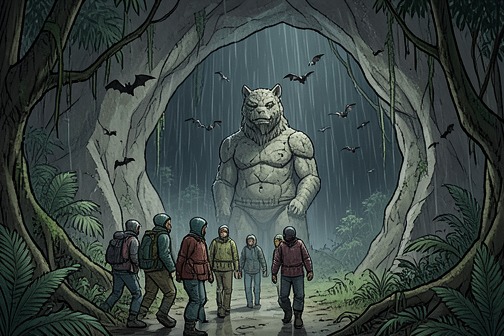
The Bolivian expedition’s discovery of stone figures is the expedition’s decisive archaeological find: a carved, humanlike yet distinctly animal form appears in a ravine landscape whose geological traces accord with local legend, and whose caves shelter vast numbers of bats. The figures’ resemblance to images from distant sites turns the find from an isolated curiosity into evidence of a recurring, unexplained pattern.
## The expedition and its approach
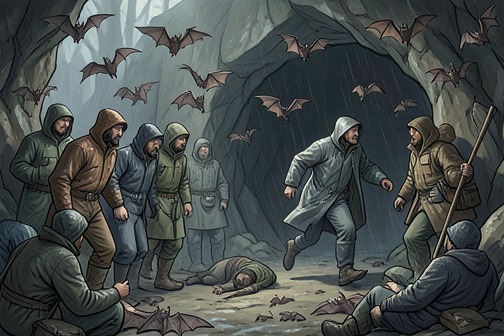
The discovery was made during a difficult journey through dense jungle. The expedition’s report describes persistent rain, demanding travel, and a campsite beside a river; at night, bats streamed from caves in the limestone cliffs. According to the expedition’s GPS, the party remained about twenty kilometers from its intended site when it examined the ravine and began moving east along it.
The cliffs offered a visible geological sequence: ordinary layers of river sediment interrupted by a charcoal-black band about four meters below the rim. The expedition member connected that dark line to the Chuchote legend, which attributed an ancient regional conflagration to Auxl, the sun god. The observation does not establish the legend’s historical truth, but it places the find in a landscape where physical traces and inherited explanation seem to meet.
## The figures and their resemblance
Just after noon, the party saw a statue. Its form was recognizably human but not wholly human: the posture bent toward the animal, the hands were clawlike, the teeth long, and the torso powerfully built. Despite the apparent age of the carving and centuries of exposure to wind, rain, and sunlight, its defining details remained visible.
The discoverer judged the resemblance to images previously encountered elsewhere to be unmistakable. The comparison extended across a temple at Mansarha, gravesite carvings at Xianyang, and cave drawings in Côtes d’Amor. The find therefore mattered not simply for what the statue depicted, but because it seemed to repeat a figure already present in geographically distant visual records. The report raises the question of how long the stone had endured, without supplying a date or a definitive explanation for the shared image.
## Documentation and growing uncertainty
The expedition communicated the discovery through images sent to Paul. In a later message, the team reported that it had counted nine figures. That number establishes that the find was not limited to the first statue encountered; the available account, however, does not specify the figures’ arrangement or establish whether all shared identical features.
The report’s confidence in the visual comparison coexists with uncertainty about the expedition’s safety and progress. As the party drew closer to the grave site, its member noted that some companions were ill or dead and doubted that the planned extraction could proceed. A separate account describes bat attacks on the expedition, deaths among its members, and further losses in a later swarm. These events place the discovery within a deteriorating expedition, but the evidence does not show that the statues caused the attacks or explain any connection between the carvings and the bats.
## Significance in the novel
The discovery begins with material evidence—a surviving stone image, a second count of nine figures, and a charcoal-dark geological layer—and expands through comparison with distant carvings and a local legend. The report preserves both what the expedition could observe and what it could not prove. Its archaeological importance lies in making a recurring, nonhuman form visible across places and records, while withholding a settled account of its origin or meaning.
Event 5
玻利维亚探险队遭蝙蝠袭击
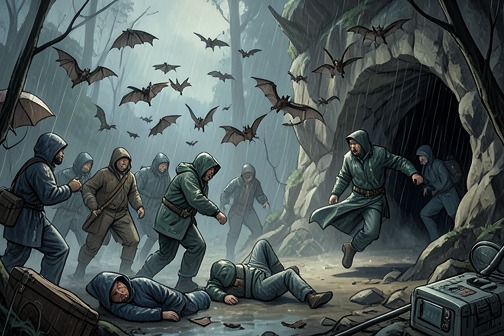
The Bolivian expedition’s bat attacks transform a troubled field mission into a lethal crisis, killing members of the party and soldiers, destroying vital supplies, and leaving the survivors to decide whether to evacuate or continue. Recounted in a letter addressed to Paul, the assault also gives its unnamed writer a new clarity about the mission and about the life he would return to.
## Causes and Background
The letter places the expedition less than five kilometers from its intended grave site, but the planned extraction is already in doubt: too many members of the party are sick or dead. The first attack comes two nights before the letter is written, a few hours after sunset, while most of the group is outside its tents doing evening chores. The writer, away from camp upriver in search of a GPS signal, hears the shouts and gunfire and returns after the swarm has moved downstream.
The attack is striking partly because its timing and direction make it seem deliberate. The writer wonders whether the bats had been scouting the group and waiting for an opportune moment, though the letter does not establish that they were. This remains an eyewitness account under pressure: the narrator describes what he saw and heard, but can only speculate about the swarm’s behavior and the illness that follows.
## The Attacks and Their Immediate Toll
The first assault kills four people, including Claudia. She tries to reach the river, apparently hoping it might help her escape the bats, but does not make it. Six other people are bitten or scratched. The writer describes their condition as resembling an unusually rapid form of Bolivian hemorrhagic fever, but emphasizes that its cause is uncertain: the expedition has contacted the CDC, yet without tissue analysis the diagnosis remains guesswork. Tim is among the most severely affected after trying to pull the bats away from Claudia, and the narrator doubts he will survive the night.
The bats return the following night despite the soldiers’ defensive perimeter. The writer estimates that they arrive by the hundreds of thousands, in a swarm large enough to blot out the stars. Three soldiers and [Cole](entity:character-recall-character-cole-7368d4bb14ba) are killed. Cole is taken off his feet by the swarm, and so little remains that the survivors can barely bury him. The scale of the losses makes the danger more than an isolated attack: the perimeter has not protected the camp, and the expedition has lost people on consecutive nights.
## Damage, Evacuation, and the Decision to Stay
On the night of the letter, the sky is quiet, and the expedition has built a line of fire around the camp that seems to be keeping the bats away. The pause offers some immediate protection, but the survivors are badly shaken and their resources have been reduced. During the previous night’s attack, a grenade belt goes into the fire. The resulting explosion kills a soldier and destroys the generator along with most of the supply tent’s contents. The letter does not explain how the belt reached the fire; it records the loss as an unresolved consequence of the chaos.
Despite the destruction, the group retains satellite communications and enough battery power to call for evacuation. The survivors are deciding what to do, and the narrator acknowledges that leaving may be the sensible course. His hesitation is personal as well as practical: he recognizes that his wife, [Liz](entity:character-recall-character-liz-d58adb6cf5d7), is dead and that he has been maintaining the hope that she might somehow return. He recalls ordinary images of life with her, including tea and walks by the Charles in falling snow, and understands that this imagined reunion will not happen. That recognition changes how he sees the risks of staying. He says the preceding days have clarified the stakes, that he does not regret being there, and that he may continue alone if necessary.
## The Letter’s Function and Significance
Addressed to Paul in case the writer does not return, the letter makes the disaster both a field report and a personal reckoning. Its sequence is precise: an account of the first attack, the worsening illness and deaths, the second swarm, the loss of equipment, and finally the decision still facing the survivors. Against these concrete dangers, the narrator places the death of Liz and the realization that there is no homecoming waiting for him. The assault does not resolve the expedition’s objective; it leaves the group close to the grave site but uncertain whether it can proceed.
The closing passage redefines the relationship between the writer and Paul. He calls Paul more than a friend, a brother, and reflects on the distance between their familiar lives and the riverbank in the Bolivian jungle where he writes. He describes himself as having entered a new era of life, shaped by the strange and dark passages that have brought him there. The letter ends without revealing whether he evacuates or presses on, preserving the immediate uncertainty that the attacks have created.
Event 6
Bolivian Ecotour Group Members' Unusual Recovery
The Bolivian Ecotour Group Members’ Unusual Recovery is the early medical mystery that gives [Project NOAH](entity:organization-recall-organization-project-noah-c1398c24632f) its rationale—and its warning. Four terminally ill Americans reportedly recover after an ecotour in the Bolivian jungle, their cancers disappearing alongside an illness resembling hantavirus. Scans reveal a dramatically reactivated thymus and accelerated cellular regeneration, but the apparent restoration is brief: all four die within eighty-six days. Their case points toward a possible viral source for extraordinary healing while showing that bodily renewal may overwhelm the body it transforms.
## Discovery and Circumstances
About ten years before [Bradford J. Wolgast](entity:character-recall-character-bradford-j-wolgast-79e5a082ce42) hears the account, the Centers for Disease Control receives a call from a doctor in [La Paz](entity:location-recall-location-la-paz-453b841f8041) about four American patients with high fever, vomiting, muscle pain, headache, and dangerously low blood oxygen. The patients say they had joined an ecotour deep in the jungle as part of a group of fourteen, become separated from the others, and wandered for weeks. Franciscan friars at a remote trading post eventually arrange their transport to La Paz.
The illness initially resembles hantavirus, but the patients’ medical histories make the case extraordinary. One has an inoperable brain tumor, two have acute lymphocytic leukemia, and the fourth has ovarian cancer. All are terminally ill, and all become well—not only recovering from the apparent infection but losing every trace of cancer. The tour was arranged by Last Wish, which [Wolgast](entity:character-recall-character-wolgast-d9d268edab0b) had understood to organize experiences such as skydiving for people nearing death. The recovery therefore begins as an unexplained outcome of exposure, not as a planned medical intervention.
## The Biological Anomaly
[Sykes](entity:character-recall-character-sykes-b45c9b02ba34) presents the findings to Wolgast as a layman’s account, distinguishing what investigators observed from what they merely suspect. Researchers cannot identify exactly what the patients encountered in the jungle: it might have been something they ate, something in the water, or another exposure. They cannot even establish precisely where the group had been. A viral agent is their leading explanation, but the cause remains unconfirmed.
The most striking finding is the thymus, a small gland behind the breastbone that ordinarily atrophies after puberty. In each of the four patients, it has not simply become active again; it has enlarged to three times its usual size. Though the scans make it look malignant, Sykes says it is not cancer. The patients’ immune systems are operating at an extraordinary level, with cellular regeneration greatly accelerated. The reported changes extend beyond disease recovery: despite being over fifty, the patients appear renewed in smell, hearing, vision, skin tone, lung capacity, strength, endurance, and sexual function. One man even grows back a full head of hair.
These effects make the case more than a possible cure for cancer. Sykes frames it as evidence that a single biological process might alter many forms of disease and decline at once. He asks Wolgast to consider how long human beings might live without cancer, heart disease, diabetes, or Alzheimer’s. The account thus moves from an obscure jungle exposure to a sweeping ambition: the search for a treatment capable of renewing the human body across conditions.
## The Cost of Recovery
The four survivors do not live long enough for their apparent recovery to become a stable cure. Each dies, and the longest survival is only eighty-six days. Their deaths are attributed to catastrophic failures including cerebral aneurysm, heart attack, and stroke. Sykes describes their bodies as having effectively blown a fuse: regeneration has not restored a durable balance but preceded fatal collapse.
That short interval changes the meaning of the cure. The returned health is real within the account, but so is its cost; the same process associated with renewed function may place intolerable demands on the body. The case therefore supplies both a promise and a limit for the research that follows. It suggests extraordinary regenerative capacity while offering no evidence that the benefit can be safely sustained.
## The Missing Group and Project NOAH
The remaining members of the fourteen-person ecotour are unaccounted for, as is the tour operator. Sykes says the operator proved shady and may have been using the trips as cover for drug smuggling, but this is presented as a likelihood rather than a confirmed explanation. The disappearances leave the four patients’ exposure impossible to reconstruct and the people who might explain it beyond reach.
For Wolgast, the case is not merely historical background. Sykes uses it to explain why Project NOAH believes it needs human test subjects, and why Wolgast is being asked to obtain them. He acknowledges that the program cannot disclose every detail, but argues that the recruits must be told something before signing away their lives. The four patients’ story makes the proposal intelligible: researchers seek the unknown factor behind apparent recovery. At the same time, their deaths and the missing ecotour group shadow that ambition with unresolved danger and uncertainty.
## Narrative Significance
The episode establishes the central contradiction behind the medical project: the prospect of curing multiple diseases is entangled with a process whose consequences are neither understood nor controlled. The evidence advances in stages—from symptoms, to the cancers’ disappearance, to abnormal thymus growth and regeneration, and finally to death—so that each apparent answer sharpens the remaining risk. A case first treated as a medical anomaly becomes the foundation for a program demanding human subjects, while the inaccessible jungle and vanished travelers leave the origin story incomplete.
Event 7
Anthony Carter Joins Project NOAH
[Anthony Carter Joins Project NOAH](entity:event-recall-event-anthony-carter-project-8a68fb17ed9a) marks the moment a condemned man trades an execution date for an unknown future. [Bradford J. Wolgast](entity:character-recall-character-bradford-j-wolgast-79e5a082ce42) secures Carter’s agreement by showing him a gubernatorial commutation, but withholds the purpose of the program and the terms of the transfer until Carter has accepted the promise of time. The recruitment is at once a reprieve and an erasure: official paperwork makes a living prisoner appear dead, while a sequence of transfers is designed to make his identity disappear from public view.
## Background and the planned disappearance
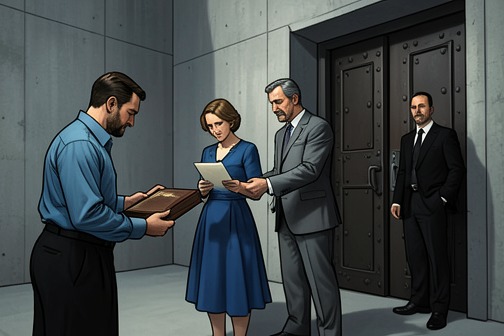
[Wolgast](entity:character-recall-character-wolgast-d9d268edab0b) and [Phil Doyle](entity:character-recall-character-phil-doyle-d6d7971daacd) return to Polunsky after breakfast at a Denny’s, where the warden is waiting with an envelope. Inside are a writ of commutation from the governor’s office and an order transferring Carter into federal custody. If Carter signs, the plan is to move him first to the federal lockup at El Reno, then through three more federal facilities. With each transfer, his trail is meant to grow harder to follow; in roughly two weeks to a month, a black van will bring the man now designated Number Twelve to the [Project NOAH compound](entity:location-recall-location-project-noah-compoun-622341a6082c) in [Colorado](entity:location-recall-location-colorado-e0fc68fd7477).
The envelope also contains Carter’s death certificate and a medical examiner’s report, both dated March 23. They declare that he will die in his cell from a cerebral aneurysm on the morning of March 23—three days after the documents are presented. This is not merely a false record written after the fact: the paperwork anticipates his death in order to make the state’s transfer of a living prisoner legible as something else. Wolgast puts the documents back in the envelope and feels the chill of how easily a person can be made to vanish.
## The offer at Polunsky
In the visiting area, Carter sits behind glass with a telephone wedged between his ear and shoulder. He is small in a loose-fitting prison jumpsuit, and Wolgast reads his expression not as fear or anger but as resignation. When Wolgast asks the guards to remove Carter’s shackles, one refuses, calling them standard. The barriers remain in place as Wolgast tries to persuade Carter to trust him.
Wolgast draws out the writ and presses it against the glass, comparing the reveal, in his own mind, to lifting a hat to show a rabbit. He identifies it as a commutation signed by Governor Jenna Bush and explains that Carter will never be sent to the needle. The reprieve is real, but it is also bait: the document Carter must sign, surrendering his whole person to [Project NOAH](entity:organization-recall-organization-project-noah-c1398c24632f), remains tucked away. Wolgast expects Carter to sign before he has a meaningful chance to read it, because by then the promise of release will already have shaped the choice.
Carter asks whether agreeing will get him out while Wolgast still refuses to say what the work is. Wolgast confirms that this is the bargain: Carter can leave Terrell that night if he says yes, or Wolgast can move on if he says no. The offer gives Carter freedom from the immediate execution but not knowledge of what awaits him. Its terms make consent possible while keeping its object deliberately obscure.
## Carter’s reason for accepting
Carter’s response is not a simple appetite for escape. As he studies the commutation, he remarks that he has always liked Jenna Bush, apparently mistaking her role in the political sequence; Wolgast lets the error pass and says only that he works for people who need Carter. Carter then returns to the central uncertainty: he will do something for Wolgast, but cannot know what it is. Wolgast leaves that imbalance intact rather than disclosing the project.
When Doyle enters with tea prepared as Wolgast requested—a glass on a saucer, a long spoon, lemon, and packets of sugar—Carter’s face slackens at the sight. Wolgast has begun to suspect that Carter’s conviction does not tell the whole story of the woman who died in the prison yard. The case seems to him to contain a locked, unexplained space. That uncertainty matters to the recruitment: Carter is not presented merely as a condemned body to be transferred, but as a person carrying an unresolved account of what happened.
Carter touches the moisture on the glass, rubs the water between his thumb and fingers, and concentrates on the small sensation before looking up at Wolgast. He says he needs time to figure out what happened with the woman. Wolgast promises him all the time in the world, an ocean of time. The promise answers Carter’s stated need more directly than any explanation of Project NOAH could: he is not told what he must become or do, but is offered the duration in which he hopes to understand the past. After another pause, Carter nods and asks what he has to do.
## Consequences and significance
The agreement sets the transfer in motion, but its consequences reach beyond a change of custody. Carter’s commutation, federal transfer order, and fabricated death record form a single mechanism: legal authority provides the cover for removing him, while the planned route through multiple facilities obscures where he has gone. The state’s paperwork does not simply conceal the destination; it replaces the prisoner’s continuing life with an officially certified death.
At the airport later that evening, Wolgast imagines Carter already in the back of a van on the way to El Reno. He expects the paper trail to be shredded and Carter’s federal identification number purged by day’s end, leaving only a rumor that the man existed. The recruitment scene therefore ends not with the revelation of Project NOAH’s purpose but with a threshold crossed under conditions of profound uncertainty: Carter has secured time and escaped the immediate execution, while the institution that saves him begins by making him disappear. The bargain’s moral tension lies in that double movement—rescue on one side, control and secrecy on the other—and in Wolgast’s promise of limitless time to a man whose new life will be taken into custody from its first step.
Event 8
Mall of America Massacre
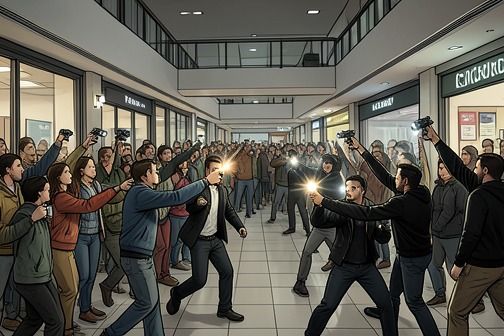
The [Mall of America Massacre](entity:event-recall-event-mall-of-america-8d7b551d2ef3) was a terrorist attack that killed three hundred holiday shoppers and became a defining backdrop to [Phil Doyle](entity:character-recall-character-phil-doyle-d6d7971daacd)’s entry into federal service. Remembered through its terrible scale and the security-camera footage repeatedly broadcast on CNN, the massacre turns private career history into part of a broader national reaction to violence.
## The Attack and Its Public Afterlife
The massacre took place during the holiday shopping season at the Mall of America. Iranian jihadists gunned down three hundred shoppers, and security cameras captured the violence. CNN replayed the footage in painstakingly gruesome detail, making the attack not only a mass killing but a recurring public spectacle.
The narration presents the footage as a measure of the event’s reach: the violence continued to confront viewers after the attack itself, through its circulation on television. The massacre’s significance in this passage lies both in the lives lost and in how its images shaped the atmosphere that followed.
## Doyle’s Response
Phil Doyle joined the [FBI](entity:organization-recall-organization-c3b9c0848e8c) after the massacre. The narration links his decision to the national shock of the attack, describing a moment when it seemed that half the country was ready to sign on to something—anything. Doyle’s enlistment is thus placed within a collective response, rather than treated as an isolated career choice.
The reference also provides a contrast between the scale of the event and the details of Doyle’s later path. A Purdue graduate with law-school applications already in progress, he completed training at Quantico and was posted to the [Denver](entity:location-recall-location-denver-bd410fc030e8) field office for counterterrorism. The massacre marks the point after which he entered that work, connecting a civilian aspiration to a changed security landscape.
## Narrative Significance
The event appears in a retrospective account of Doyle’s background, not as a directly narrated attack scene. Its consequences are conveyed through what came afterward: repeated television images, a wave of enlistment, and Doyle’s choice to serve. In the surrounding account of [Project NOAH](entity:organization-recall-organization-project-noah-c1398c24632f), this history also establishes the climate in which government and military assignments could attract volunteers, even when the project itself seemed to promise little. The massacre is therefore both a specific act of mass violence and the catalyst for a broader turn toward service and counterterrorism.
Event 9
卡特里娜飓风袭击新奥尔良
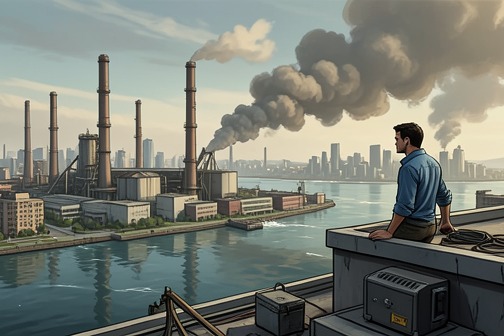
Hurricane Katrina is remembered as a turning point in the destruction of New Orleans: together with a later, even more powerful hurricane, it marked the end of the city as [Bradford Joseph Wolgast](entity:character-recall-character-bradford-joseph-wol-616cf315ccef) had known it and preceded its transformation into an isolated industrial zone. The reference makes the storm’s significance visible through its aftermath—displacement, pollution, and military control—rather than through a scene of the hurricane itself.
## Background and Recollection
Before the disaster, [Wolgast](entity:character-recall-character-wolgast-d9d268edab0b) had visited New Orleans during Mardi Gras and remembered a city animated by music and public life. His account contrasts that experience with the city’s later condition. Katrina struck in 2005; a few years later, Hurricane Vanessa arrived as a Category 5 storm, and the two disasters together brought that remembered city to an end.
## The City After the Storms
In Wolgast’s recollection, the city proper is no longer inhabited. Its former urban landscape has become a large petrochemical refinery, bordered by flooded and severely polluted lowlands. The surrounding water is described as hazardous, making environmental damage part of the disaster’s continuing legacy rather than a temporary consequence of the storm.
## Displacement and Control
The abandoned city and its industrial activity are enclosed by fencing and patrolled by Homeland Security forces. Fighter jets from Kessler Air Force Base patrol the airspace, which is closed to ordinary passage. Beyond the perimeter lies the [N.O. Housing District](entity:location-recall-location-n-o-housing-district-914ad33b7331), a vast settlement of trailers originally used for evacuees and later occupied by thousands of workers serving the industrial complex. The account describes the district as a neglected, dangerous place whose residents’ circumstances receive little official attention.
## Narrative Significance
The novel compresses the storms’ history into a decisive before-and-after: Katrina begins the end of the New Orleans Wolgast remembers, while the later hurricane completes the rupture. The aftermath joins environmental ruin to displacement and militarized boundaries, showing how a natural disaster can persist in the social order and geography it leaves behind. Katrina is therefore significant not only as a past catastrophe but as part of the chain of events that produced a city organized around industry, containment, and the management of displaced people.
Event 10
Hurricane Vanessa Strikes New Orleans
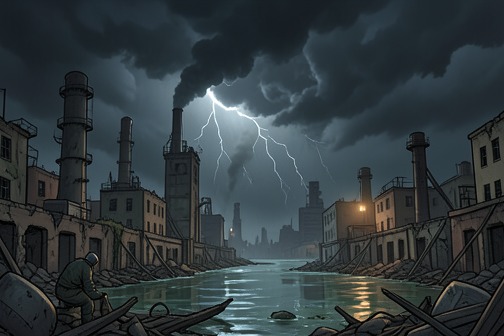
Hurricane Vanessa is one of the disasters that remade New Orleans, ending the city’s former life and leaving behind a restricted industrial zone, contaminated surroundings, and a vast district housing workers. Though the storm itself is recalled briefly, its consequences define the landscape through which [Bradford Joseph Wolgast](entity:character-recall-character-bradford-joseph-wol-616cf315ccef) and [Phil Doyle](entity:character-recall-character-phil-doyle-d6d7971daacd) travel and show how catastrophe can persist as infrastructure, exclusion, and environmental damage long after the event has passed.
## Background and the Storm’s Place in the City’s History
Before the storms, [Wolgast](entity:character-recall-character-wolgast-d9d268edab0b) had visited New Orleans for Mardi Gras and remembered a city alive through the night: he had spent nearly forty-eight hours awake, listening to jazz in Preservation Hall amid a crowd dancing and clapping. That memory sharply contrasts with the city’s later condition. Hurricane Katrina struck first; Vanessa followed a few years later as a Category 5 storm, with winds of 180 miles per hour and a thirty-foot storm surge. The account presents Vanessa not as an isolated weather event but as the second catastrophe in a sequence that ended the city as it had been known.
## The Remade New Orleans
By the time Wolgast and Doyle pass north of the city, nobody lives inside New Orleans proper. The former city has become a vast petrochemical refinery, encircled by flooded lowlands so polluted that contact with lagoon water is described as dangerous. The airspace is restricted and patrolled by fighter jets from Kessler Air Force Base; fencing and armed Homeland Security forces secure the perimeter. The storm’s consequence is therefore not simply physical destruction: the surviving geography has been reorganized around industry, contamination, and military exclusion.
## The [N.O. Housing District](entity:location-recall-location-n-o-housing-district-914ad33b7331)
Outside the perimeter, the N.O. Housing District extends ten miles in every direction. Its trailers were originally used to house evacuees, but the district now serves as a human-storage area for thousands of workers sustaining the industrial complex. The narration describes it as an outdoor slum, combining the character of a refugee camp with that of a frontier outpost. Violence there is widely understood to be extreme, yet goes largely unreported because the district is not officially recognized as a city or part of any state. The storm’s aftermath thus includes a political erasure: people remain necessary to the refinery’s operation while their home and its dangers fall outside ordinary civic recognition.
## Narrative Significance
Wolgast’s recollection of the old city makes the altered New Orleans legible as loss, while the present-day details show that the disaster’s effects extend beyond the ruined urban core. The flooded lowlands, industrial perimeter, and unrecognized housing district form a connected system: environmental harm and security measures shape who can live where, and whether their conditions register publicly. Vanessa is named in a compact historical passage, but its force in the narrative lies in the durable world it helped produce—a city no longer inhabited as a city, and a surrounding population whose labor is visible to industry even as its suffering is not.
Event 11
伊朗战争
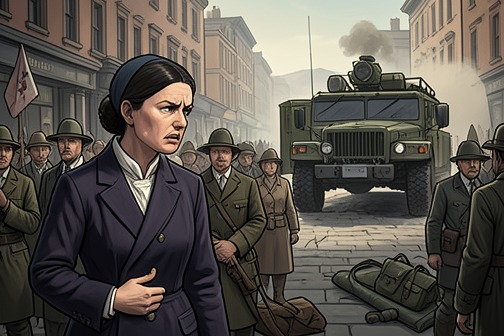
The [Iran War](entity:event-recall-event-d6e57693e443) enters the account not through a battlefield scene but through [Claudia Swenson](entity:character-recall-character-claudia-swenson-b4aca51d6d64)’s family history. Her younger brother’s conscientious objection gives a personal context to her refusal to accept the expedition’s militarization, making the conflict a measure of the principles at stake in the present.
## The War in Claudia’s Family
When [Mark Cole](entity:character-recall-character-mark-cole-71a16866ea9e) announces that the scientific expedition has become a military operation, Claudia threatens to leave rather than serve in what she calls an army. The account then identifies her as a Quaker and notes that her younger brother was a conscientious objector during the Iran War. That history helps explain why the military’s authority is not, for her, a neutral administrative change.
## Conscience and the Expedition
The war is only briefly named, and the account supplies no details about its course or outcome. Its significance lies instead in the family connection: Claudia’s brother had refused military participation, and Claudia’s own protest echoes that refusal. Her colleagues eventually persuade her to stay, but only after promising she will not have to salute anyone. The concession preserves her place on the expedition without erasing the ethical boundary that prompted her objection.
## Narrative Significance
By linking the present dispute to a brother’s wartime conscientious objection, the passage gives Claudia’s protest a history beyond the immediate arrival of armed forces. The Iran War remains largely offstage, but its mention turns the expedition’s militarization into a question of conscience as well as protection and command. The narrator presents the contrast without resolving it: Claudia stays, yet does so on terms that acknowledge her refusal to submit to military ritual.
Event 12
September 11 attacks
The [September 11 attacks](entity:event-recall-event-september-11-attacks-8e527031f862) enter the novel through [Richards](entity:character-recall-character-richards-4e735985d67b)’s memory, where they mark the end of an older model of war and the beginning of conflict dispersed across ordinary places and populations. The recollection gives a historical frame to the book’s wider concern with how violence changes not only institutions but also the ways people interpret danger, responsibility, and one another.
## Richards’s memory and the turning point
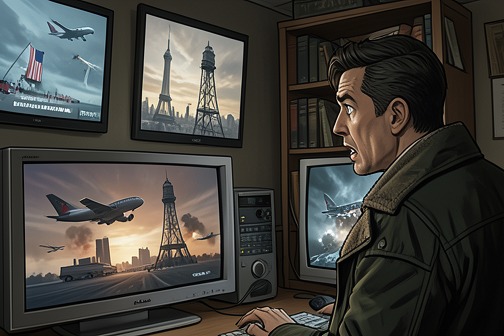
Richards remembers watching the planes strike the towers through repeated broadcasts. He was in Jakarta, and the event’s significance is conveyed less as a report of his assignment there than as a conviction that the old way of doing things had ended. In his view, war would no longer be confined to conventional battlefields: it would be carried out by people whose ordinary appearances let them move unnoticed, and it would reach transport, public gathering places, and private rooms alike.
His reflection is expansive and deeply cynical. The language of opposing faiths and political causes, he thinks, can be stripped down to competition over power and material advantage. The attacks become, in this account, the moment that makes a world of ubiquitous conflict legible to him. This is Richards’s interpretation of history, not a neutral statement that the event itself explains every later war.
## From public catastrophe to private choice
The novel places this memory alongside another consequential turning point: [Bradford J. Wolgast](entity:character-recall-character-bradford-j-wolgast-79e5a082ce42) realizes that federal agents selected him because his daughter [Eva](entity:character-recall-character-eva-a4f4507c5fab) had died. Her death is not the September 11 attacks, but it reveals a parallel way that catastrophe becomes usable by institutions: a private bereavement can be treated as a reason to recruit someone for a consequential task. The contrast is between Richards’s vision of a world remade by public violence and [Wolgast](entity:character-recall-character-wolgast-d9d268edab0b)’s discovery that personal loss has already shaped his role in the present.
Wolgast’s later reflections make that loss more than background. He understands his grief over Eva as part of why he could recognize the vulnerability of [Anthony Carter](entity:character-recall-character-anthony-carter-8ec78cbed354) and others. The novel thus moves between large-scale history and intimate aftermath, showing how events acquire force through the choices they make possible and the people those choices bind.
## Fear, blame, and collective action
Later scenes in the [First Colony](entity:location-recall-location-ae4da2f9f3ed) echo Richards’s belief that conflict can spread through everyday settings, but they show a different mechanism: fear circulates through a crowd and becomes accusation. After deaths in the community, [Sam Chou](entity:character-recall-character-sam-chou-453081746287) blames [Amy](entity:character-recall-character-amy-b0c9984bdc2f) and [Caleb](entity:character-recall-character-caleb-685d38d3de8f) and calls for them to be expelled. Voices in the gathering repeat his demand until [Peter](entity:character-recall-character-peter-22e18a2305ec) senses that the community’s appearance of order is close to giving way to violence. The scene does not establish that Amy caused the deaths; it shows how uncertainty can be turned into a target.
That hostility contrasts with the crowd’s earlier welcome for Peter’s traveling party. Hundreds of residents greet the newcomers with striking warmth, touching them and pressing babies forward, yet Peter senses that the welcome feels staged and disarming. The two scenes make collective feeling unstable: a crowd can offer apparent belonging, then organize around exclusion when danger and rumor take hold.
## The event’s narrative significance
The September 11 attacks are not presented as a full scene in the available account; they surface retrospectively inside Richards’s thoughts. That placement makes the event function as an interpretive hinge. Richards uses it to imagine war as something with no secure boundary between battlefield and ordinary life, while the later colony scenes test the same anxiety at a smaller scale, where accusation and group pressure threaten a community from within.
The novel does not collapse these different events into equivalents. Instead, it sets public catastrophe, personal bereavement, and communal fear beside one another. Across those scales, the recurring consequence is a struggle over how violence is understood: as a changed historical condition, as a reason someone is chosen, or as a story a frightened crowd tells about who must be cast out.
Event 13
Bolivian Expedition Disaster
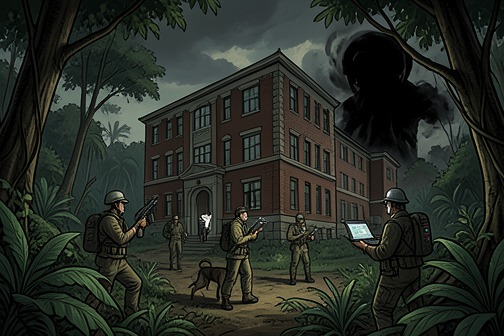
The [Bolivian Expedition Disaster](entity:event-recall-event-279c3d2f05a6) was the turning point that transformed [Project NOAH](entity:organization-recall-organization-project-noah-c1398c24632f)’s life-extension research into a deadly, concealed crisis. The expedition’s search for a virus ended in mass death in the Bolivian jungle, while the decision to erase what happened ensured that the disaster’s consequences continued beyond the few who survived.
## Scientific Ambition and the Expedition
The project grew from [Jonas Abbott Lear](entity:character-recall-character-jonas-abbott-lear-41e675fc1638)’s research into a family of viruses that might restore the thymus gland’s function, lengthen human life, and increase physical robustness. [Cole](entity:character-recall-character-cole-7368d4bb14ba) saw the work as a national undertaking with permanent implications and recruited [Richards](entity:character-recall-character-richards-4e735985d67b) to provide practical, off-the-books security. [Lear](entity:character-recall-character-lear-6e96f6e1dc1e) and Cole’s belief in the research carried them into the Bolivian jungle in search of dead tourists.
The mission’s underlying ambition gave the expedition its stakes: the virus was not merely a scientific curiosity, but a means of altering the human condition. Richards later understood the research as a dangerous attempt to bring a latent power under control. The expedition tested that ambition against a reality the project had not mastered.
## The Disaster in Bolivia
The tourists were not simply dead. They were infected, and they attacked the remaining research team. Nearly everyone was killed; the account identifies only Lear, [Tim Fanning](entity:character-recall-character-tim-fanning-ade1a2d1a7a0), a soldier, and a graduate student named Fortes as survivors. Richards’s retrospective description makes the reversal stark: the expedition went looking for the dead and found people transformed into something that could kill the living.
The account also notes that [Fanning](entity:character-recall-character-fanning-187bb339457c)’s presence prevented the expedition from being a total loss, though it does not make the nature or extent of that contribution more specific. The surviving group was small, and survival did not restore control over the project or undo the losses.
## Cover-Up and Consequences
The disaster was followed by an order from [Special Weapons](entity:organization-recall-organization-special-weapons-e574ec74456f): anyone who failed to reach the evacuation point was to be left behind. A missile strike in the mountains ensured that no further survivors could be recovered. Cole, who had recruited Richards and backed the project, was dead; many others were dead as well.
By the time Fanning was secured in [Colorado](entity:location-recall-location-colorado-e0fc68fd7477) and Lear was working there, the events in South America had been wiped from the system. The expedition therefore produced two consequences at once: it exposed the catastrophic danger of the research, and it was made difficult to examine through deliberate erasure. What remained was an official project built on the concealed aftermath of its first major failure.
## Significance in the Larger Story
The disaster links Project NOAH’s speculative promise of longevity to the later viral catastrophe. Its survivors and their work carry the consequences of an experiment whose risks became real before its sponsors could control them. The contrast between the ambition to make human life permanent and the expedition’s swift, extensive loss of life defines the event’s central irony.
Event 14
Project NOAH's First Human Trials
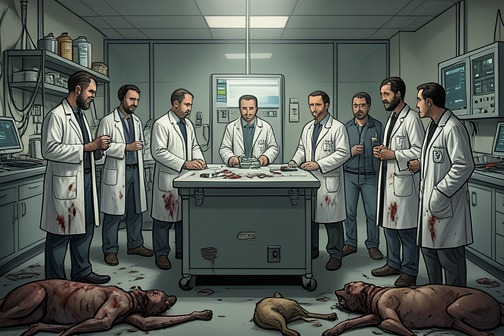
[Project NOAH's First Human Trials](entity:event-recall-event-project-noah-276dddb455be) mark the point at which the project’s experiments moved from animal testing to human subjects—and produced the first survivor who would reshape the crisis. The trials did not yield a stable cure or a controllable weapon: they yielded a lethal infection, a small group of transformed prisoners, and the beginnings of a threat whose reach exceeded the facility.
## Background and Experimental Progression
Years into the project, its record already included hundreds of dead monkeys, along with dogs and pigs, before the first human subjects were tested. Those initial subjects died within hours. Their deaths were part of a sequence of attempts to refine the virus: each adjustment weakened it enough for a subject’s body to withstand the infection, but survival did not mean recovery or ordinary human life.
[Giles Babcock](entity:character-recall-character-giles-babcock-00c5cffeff0b) was the first inmate to survive. He was followed by Morrison, Chávez, Baffes, and others; the surviving group ultimately numbered eleven former death-row inmates. The account’s grim arithmetic distinguishes these survivors from the many who died before them: a refinement could change the outcome from death within hours to survival, without making the process safe.
## The Survivors and Their Condition
The survivors became known as vampires, a term that captures how far the transformation had carried them from ordinary human physiology. Their skin had become a protein-based exoskeleton, described as so hard that Kevlar seemed comparatively soft. The breastbone was the exception: an area about three inches square was thin enough to penetrate. Even this vulnerability remained a theory rather than a confirmed rule.
The uncertainty extended to whether they could be killed at all. [Richards](entity:character-recall-character-richards-4e735985d67b) understood that [Sykes](entity:character-recall-character-sykes-b45c9b02ba34) was unsure, and the proposed extreme measure—firing an RPG down a vampire’s throat—underscored how poorly the project could control the beings it had created. The trials therefore produced a paradoxical result: subjects who survived the virus were difficult to destroy and of uncertain use to the project, while their transformation made them a source of fear even inside the facility.
## Containment Risk and the [Elizabeth Protocol](entity:rule-recall-rule-elizabeth-protocol-5bf2cd49cc57)
The danger was not confined to the original experiments. A technician was exposed after an unexplained breach in handling, became acutely ill, and died in the decontamination chamber. Richards sealed the level after seeing the technician’s condition on a monitor; the chamber was purged, and the level remained closed during a seventy-two-hour quarantine before it was reopened. The incident showed that the virus posed a continuing operational hazard, not merely a risk during deliberate testing.
Richards also kept the Elizabeth Protocol as a possible last resort, intending to end the experiment if the circumstances required it. Its name was linked to [Cole](entity:character-recall-character-cole-7368d4bb14ba) and to the memory of his dead wife, Elizabeth [Lear](entity:character-recall-character-lear-6e96f6e1dc1e). That choice connected the project’s institutional contingency planning to private grief, while the protocol itself reflected the unresolved problem at the center of the trials: the project had created survivors it could not reliably control or safely contain.
## Consequences and Significance
The trials’ consequences extend beyond the laboratory. In a later account of an expedition in Bolivia, a bat attack killed four people, including Claudia, and left six others seriously ill; the letter reports that the outbreak followed contact with the bats and that its cause remained uncertain without tissue analysis. The narrative places this catastrophe within the same expanding viral history, making the danger appear not as a sealed research failure but as a threat that reaches people beyond the project’s controlled setting.
The trials also establish the human cost underlying [Project NOAH](entity:organization-recall-organization-project-noah-c1398c24632f)’s later crisis. [Wolgast](entity:character-recall-character-wolgast-d9d268edab0b) recognizes that his daughter’s death was the reason he had been selected for the assignment, while his memories of [Eva](entity:character-recall-character-eva-a4f4507c5fab) shape his identification with the people recruited into the project. Against that personal history, the trial record’s numbers—hundreds of dead animals, human subjects dead within hours, and eleven surviving inmates—show how institutional ambition and bereavement converge in a process that creates neither restoration nor simple mastery over death.
Event 15
Jack and Sam Escape and Are Executed
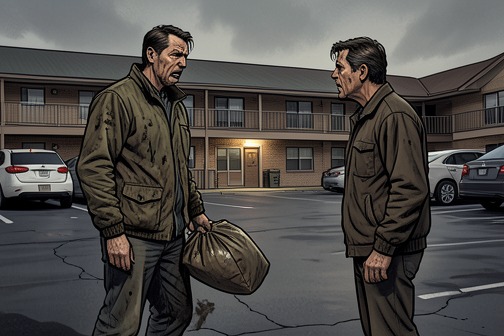
[Jack and Sam Escape and Are Executed](entity:event-recall-event-jack-sam-28a6df2b4369) is a recalled episode in which two men flee [Richards](entity:character-recall-character-richards-4e735985d67b)’s compound, describe recurring dreams, and are killed after Richards finds them. Their account gives the dreams a concrete human cost: they are not only an unsettling experience Richards suspects he shares, but also part of the crisis surrounding the compound and the men’s decision to run.
## Background and Escape
Richards regards the compound’s arrangement as coming apart. Keeping eighty men on a mountainside with little to occupy them has become untenable, and the dreams add another strain. He thinks he has dreams too, though he rarely remembers them; at times he wakes with the sense that something unusual happened during the night, as if he had gone away and just returned.
Jack and Sam, described as two sweeps who had gone absent without leave, escape by hiding in garbage bins. Richards finds them the next morning at a Red Roof motel beside the interstate, about twenty miles from the compound. They are waiting there to be caught, and their conversation quickly centers on what they have experienced in their dreams.
## The Dreams and Richards’s Response
Jack and Sam describe orange light, teeth, and voices calling their names from the wind. Richards listens while they try to explain what has happened to them. His recollection makes the encounter a rare moment of attention between him and the men: he allows them to speak for a time, and registers their distress, but does not turn that recognition into mercy.
The dreams matter to Richards personally as well. He cannot say with certainty that he shares them, because his own memories of sleep remain indistinct. The episode therefore places his uncertain experience beside the men’s more articulate reports, leaving the connection suggestive rather than fully explained.
## Execution and Significance
Richards ends the encounter by telling Jack and Sam that nobody is angry with them and that it is time to go. He drives them to a scenic place overlooking a river and shoots them in the forehead. The contrast between his reassurance and the deliberate killing makes the episode’s turn plain: their account is heard, but it does not alter their fate.
The escape and execution reveal the compound’s coercive order through Richards’s conduct rather than through a formal hearing. His response to the men’s dreams is at once attentive and lethal. In the larger narrative, their testimony also makes the recurring dreams harder to dismiss as Richards’s private impression: two other men describe the orange light and voices independently, before Richards kills them.
Event 16
Grey Witnesses His Father's Suicide
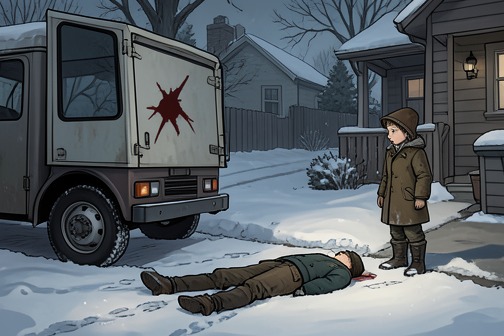
[Grey Witnesses His Father's Suicide](entity:event-recall-event-grey-d4db48766c8a) is the childhood event [Grey](entity:character-recall-character-grey-b078e5522afa) remembers while being abused by Kurt. At about six years old, Grey finds his father dead in the family truck after a rare snowfall. The memory links the loss of his father to the later replacement of that father by Kurt, revealing how an early experience of death and family upheaval returns inside Grey's subsequent trauma.
## Discovery in the Snow
Grey wakes before the rest of the household and sees snow outside, an unusual sight in [Texas](entity:location-recall-location-texas-f19b16f8e87c). At first, the bright, unfamiliar morning draws him to the window; then he notices his father's truck in the driveway. A dark red mark on the driver's window makes the scene feel wrong, though Grey initially wonders whether his father has arranged a joke or game for him.
The truck is running, and its fogged windshield and exhaust do not explain what Grey sees inside. He crosses the snowy yard, opens the door, and his father's body falls out. The discovery turns a morning that began in wonder into an encounter with death that Grey recognizes, even as a young child.
## The Death and Its Aftermath
Grey sees that his father has died by suicide with a gun. The discovery is especially stark because the gun carries an earlier family memory: his father had shown him its weight and warned him never to point it at anyone. The contrast between that instruction and the circumstances of his father's death gives the object a painful double meaning in Grey's recollection.
The scene is presented through the child's limited but direct understanding. Grey recognizes death from animals he has seen beside the road and understands that his father is gone. The memory's force comes not from explanation but from the child's movement from uncertainty about the truck to recognition of what has happened.
## How the Memory Returns
The episode is recalled later while Grey is being hurt by Kurt. Grey recognizes that the man abusing him is not his father: his father has been replaced by Kurt, who has taken on the role of a new daddy. The recalled suicide is therefore more than a separate childhood loss; it becomes part of the way Grey understands the violence and substitution shaping his life with Kurt.
The snowy discovery returns as a compressed sequence of contrasts: the rare brightness of the morning, Grey's expectation that his father might be playing a game, and the realization that the truck holds a death. By placing this memory within Grey's later experience of abuse, the narrative shows how an event from early childhood remains bound to his disrupted sense of family and safety.
Event 17
Grey Abused by Kurt in Childhood
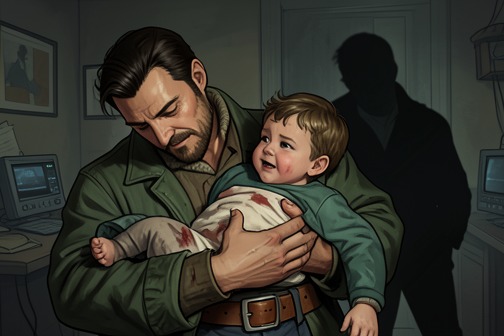
[Grey Abused by Kurt in Childhood](entity:event-recall-event-grey-kurt-c7f2acbc70f4) is a childhood trauma that resurfaces during [Grey](entity:character-recall-character-grey-b078e5522afa)’s later psychic contact. The recollection identifies Kurt as the man who replaced Grey’s father in his life and shows how the abuse becomes entangled with a second family rupture: his father’s suicide when Grey was about six.
## The Memory Returns
The scene begins not as a detached account of the past but as an intrusion into Grey’s present experience. As an overwhelming force reaches him, Grey sees Roy for the last time and is pulled into a memory of being punished. The recollection then shifts from the physical experience to the identity behind it: Grey recognizes that the person who had taken his father’s place was Kurt.
The memory’s broken, immediate progression links the childhood episode to the force affecting Grey now. Rather than recounting the abuse from a safe distance, the narration lets the past break into the present, making remembered violence part of the immediate psychic encounter.
## Kurt and Grey’s Father
Grey remembers that the man using the belt was not his father but Kurt, who had replaced him. The account establishes a distinction between Grey’s father and the man who became his substitute, while also connecting the abuse to the earlier loss of his father. Grey’s father had died by suicide in the front seat of his truck on a snowy morning; Grey was no more than six when it happened.
The memory therefore holds two experiences together without making them interchangeable: his father’s death and Kurt’s abuse. The narration presents the father’s absence as the circumstance in which Kurt became Grey’s substitute father, while Grey’s belated recognition makes clear that the memory’s personal identities had been obscured until this moment.
## Later Significance
The recollection is framed as a return of buried knowledge during Grey’s encounter with the force that has reached him. Its importance lies not only in what it reveals about childhood, but in how the past becomes active in the present: Grey’s recognition of Kurt occurs within the same episode as the other force’s presence, and the memory’s violence is experienced as something tearing at him from within.
The episode also places this wound within a broader pattern of remembered loss and consequential choices. Elsewhere, [Bradford J. Wolgast](entity:character-recall-character-bradford-j-wolgast-79e5a082ce42) reflects that the death of [Eva](entity:character-recall-character-eva-a4f4507c5fab) shaped why he was selected for his mission and that, after her death, he had lived as though carrying a ghost. These separate recollections do not establish a direct connection between [Wolgast](entity:character-recall-character-wolgast-d9d268edab0b) and Grey’s childhood, but they echo the novel’s recurring concern with past suffering returning to define present action.
Event 18
Lacey's Family Is Killed
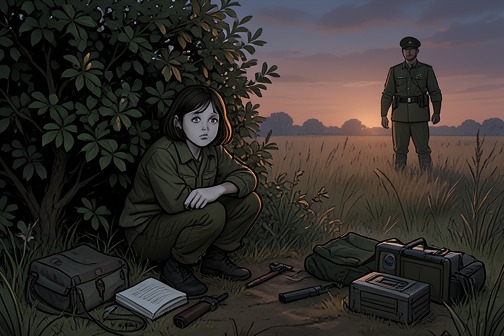
[Lacey](entity:character-recall-character-lacey-35e443bc02d4)'s family is killed in [Sierra Leone](entity:location-recall-location-sierra-leone-fd5c25b396a9) by soldiers, a childhood catastrophe whose memory is sealed off from her and disclosed to the reader only later. Its consequences surface in the present through Lacey's fragmented recollections and her fierce response to danger surrounding [Amy](entity:character-recall-character-amy-b0c9984bdc2f).
## The Killing and Its Aftermath
The account comes through [Sister Arnette](entity:character-recall-character-sister-arnette-84114f0d0b39)'s recollection of a psychiatric report forwarded by the superior general. Lacey had been found hiding in a field by [United Nations](entity:organization-recall-organization-e95d8c5557b2) peacekeepers, who turned her over to the sisters. The soldiers had killed her family and remained with Lacey for hours; she was left for dead. Arnette understands Lacey's survival and loss of memory through her own religious framework, calling the forgetting a form of divine mercy.
Lacey never tells the sisters what happened. She continues to believe that her parents and sisters are alive in Sierra Leone, attending palace balls and riding polo ponies. Arnette recognizes that this account is not simply an invented explanation: Lacey has not spoken otherwise since she was found, and the full history has remained hidden from the other sisters. Her silence preserves a life she can bear to inhabit, while leaving Arnette alone with the knowledge and worry.
## Trauma Returning in the Present
The event is recalled rather than narrated as a complete scene. Later, as Lacey runs through the zoo with Amy, its sounds overwhelm her: animal calls seem to become the gunfire of the field, and she hears again her mother's warning to run. The present crisis therefore opens a route back to the buried childhood danger. Lacey connects the threat to Amy with the dark man she senses pursuing the girl, and with the field where she herself had once been left.
The recollection remains divided between what happened to Lacey's body and what she can consciously remember. She recalls having sent her mind away from herself and imagined a protective warmth around the world. [The passage](entity:expression-recall-expression-the-passage-5e9495afb700) does not restore the entire memory or show Lacey learning Arnette's account; instead, the past presses into the present through sounds, fear, and the danger she perceives around Amy.
## Protection, Secrecy, and Consequence
Lacey's hidden history complicates Sister Arnette's first judgment of her. Arnette had considered Lacey a model sister, if unusually self-contained and mystical, and had interpreted her account of her family as part of the protection afforded by forgetfulness. When Amy appears and Lacey's explanation for caring for her seems implausible, Arnette recognizes that the story is a lie—but does not know the full history behind Lacey's silence.
In the zoo, Lacey's response to the sensed threat is immediate: she keeps Amy close and searches through the panicked crowd for an exit. Her past does not make her account of the danger objectively certain, but it gives the scene its force: the child once abandoned in a field is now trying to keep another child from being taken there. The killing thus remains a concealed event with continuing consequences, shaping Lacey's protective bond with Amy and the novel's presentation of trauma as something that returns indirectly rather than as a settled recollection.
Event 19
Rachel Wood Drowns
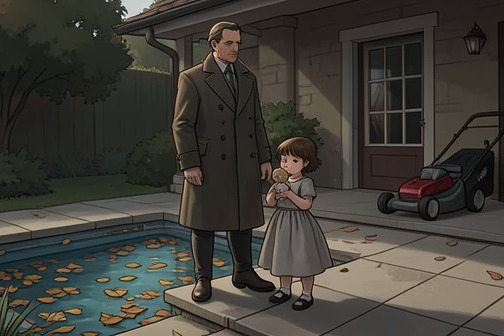
[Rachel Wood Drowns](entity:event-recall-event-rachel-wood-f56bfeb02b74) is the remembered event in which Rachel, in a state of profound distress, pulls [Anthony Carter](entity:character-recall-character-anthony-carter-8ec78cbed354) into a swimming pool and dies by drowning. Carter survives the struggle, but afterward treats what happened as a secret entrusted to him: the episode joins his love for Rachel to his helplessness before her death, and gives their relationship a final, private meaning.
## Background and immediate circumstances
The episode unfolds in December, on a raw, damp afternoon. Carter finds Rachel’s kindergarten-aged daughter, [Haley](entity:character-recall-character-haley-9c0afc41b58d), alone on the patio beside a pool full of winter leaves. Haley is dressed in school shorts and a blouse, without shoes, and holds a Barbie doll. She tells Carter that her father is in Mexico with his girlfriend and that her mother will not get out of bed. The front door is locked, and Carter cannot get an answer by ringing the bell or calling to the windows.
Carter gives Haley his old sweater to wrap around herself. He then mows the lawn, hoping the noise will wake Rachel and alert her to the child outside. Afterward, as he cleans the pool with a skimmer, he finds a tiny baby toad by the path. Its delicacy moves him; for a moment, with Haley watching and Rachel still inside, the small creature seems to offer the possibility that something might yet be set right. He calls Haley over to show it to her, describing it as a little baby thing like her.
## The fall into the pool
Rachel appears in the yard behind Carter, wearing a large T-shirt and with her hair disordered around her face. Carter begins to explain that he was about to show Haley something, but Rachel responds by ordering him away from the girl and telling Haley to run. Carter recognizes that this is not the composed woman he knew: her eyes are wild, and she seems not to recognize him.
Rachel shoves Carter with all her strength. He falls backward, catches his foot on the skimmer, and instinctively grabs the front of Rachel’s shirt. His weight pulls her with him, and both fall into the pool. The collision is not planned by Carter; he has been unable to stop their fall once his foot catches and his hand holds her clothing. In the water, however, Rachel clings to him and drags him downward.
## Rachel’s death and Carter’s survival
Carter cannot swim. He struggles to find the bright surface, while the pool’s chemical water fills his mouth, nose, and eyes. As Rachel holds him beneath the water, he understands the scene as the completion of a movement toward death that had been underway since their earlier meeting under a freeway, when she had stopped her car and said his name. The recognition does not give him control over what is happening: he thinks that he would die for her if she asked, but cannot make himself breathe underwater and end his own life.
They reach the bottom of the pool with Rachel still holding him. She takes one breath, then another, and then a third; the last bubbles rise beside Carter’s ear. She blesses him and lets him go. Rachel dies, while Carter remains alive. Her body rises among the leaves he had meant to clear from the pool, turning the ordinary yard work that preceded the struggle into part of the scene’s stark aftermath.
## Aftermath and meaning
Carter cannot remember getting out of the pool or what he said to Haley. The child cries loudly and then stops. When a neighbor and the police arrive, Carter has decided that he will not tell anyone what happened or what he saw and heard. He regards Rachel’s death as a secret she gave him—the last secret of who she was—and believes he is meant to keep it. The silence is not presented as an account of what the authorities learn; it is Carter’s own resolve to withhold his version of events.
The drowning closes the emotional arc of Carter’s love without turning it into rescue. He had seen Rachel’s unhappiness and tried to reach her through small acts of care, including tending the yard and attending to Haley, but could neither restore her nor choose death in her place. The moment after Rachel releases him is described as peaceful and brokenhearted, as though something that had gone on too long had found an end. Carter accepts that his work is over and carries Rachel in his mind as though part of her has passed into him. The remembered drowning thus becomes both a death and an act of witnessing: Carter survives, but the account he keeps for himself binds his survival to the secret of Rachel’s final act.
Event 20
Memphis Zoo Incident
The [Memphis Zoo Incident](entity:event-recall-event-75946fada3c6) is the episode in which [Amy Harper Bellafonte](entity:character-recall-character-amy-harper-bellafon-bdb158c68555)’s presence coincides with a widening disturbance among the animals and people at the zoo. Its central revelation comes in a quiet exchange at the polar bear tank: when Sister [Lacey](entity:character-recall-character-lacey-35e443bc02d4) Kudoto asks what the bears know, [Amy](entity:character-recall-character-amy-b0c9984bdc2f) answers, “[What I am](entity:expression-recall-expression-what-i-am-063b5ed5bd2e).” The ensuing disorder makes that statement more than a private mystery. It forces Lacey to flee with Amy, draws public and official attention to the girl, and ends with Amy taken away while Lacey is left behind.
## Setting and First Signs
Lacey and Amy enter the zoo together and stop at the polar bear tank, where visitors watch the bears through an underwater window. Amy releases Lacey’s hand and moves ahead, coming close to the glass as one of the bears swims up and touches it with its nose. Amy reaches toward the pane, and the animal opens its mouth on the other side. Lacey experiences the encounter as both frightening and compelling, while the surrounding crowd watches the bears as an attraction.
The scene changes when water surges over the glass and strikes Lacey, who is knocked backward into the crowd. As the visitors recoil, their attention shifts to Amy: she is kneeling before the tank with both hands on the glass, her head bowed and her lips moving as if in prayer. Lacey sees tears on Amy’s face and asks what is happening. Amy says, “They know,” and then, “What I am.” Lacey reads sadness, but not fear, in the girl’s expression. The statement supplies no explanation, yet it marks a change in the scene: Amy seems to recognize a kinship or knowledge in the bears that the other people present cannot share.
## The Disturbance Spreads
Lacey pulls Amy away from the tank, but the disturbance does not remain there. The bears grow increasingly frantic; sea lions begin throwing themselves in and out of the water, while gazelles, zebras, okapis, and giraffes run in circles and charge their fences. As Lacey carries Amy through the zoo, elephants stomp and trumpet, and a rhinoceros attacks its fence. The range of the commotion expands from one animal enclosure to many species, transforming the zoo from a place of spectatorship into a scene of collective panic.
The effect reaches visitors as well as animals. People run, call for children, push through one another, and stream toward the exits. A camera operator identifies Amy as the child at the center of the disturbance, and a security guard moves in; Lacey understands that they are being pursued and keeps running. Around them, the zoo’s routine public announcements continue to direct visitors toward the nearest exit, an orderly instruction set against the spreading disorder. Lacey searches for a way out while the cries of animals and crowds fill the pathways. The event gives no definitive account of how Amy’s influence works, but it places her at the center of a disturbance that crosses the boundary between human and animal behavior.
## Lacey’s Flight and Amy’s Removal
Lacey forces a path through the crowd and gets through the gate with Amy, heading into the parking lot as sirens approach. She does not know where she is going; her immediate purpose is simply to get away with the child. A rifle shot from inside the zoo halts her. A van used by the sisters arrives, driven by [Sister Claire](entity:character-recall-character-sister-claire-5cd1f66af926), with [Sister Arnette](entity:character-recall-character-sister-arnette-84114f0d0b39) in the passenger seat. A black sedan pulls in behind them, and two men emerge.
Lacey clutches Amy to her chest as people try to separate them. When she cries for help, Arnette tells her that the men are from the [FBI](entity:organization-recall-organization-c3b9c0848e8c) and asks her to comply. Lacey refuses to let go, but Arnette herself takes Amy from her. The separation echoes the earlier moment in Lacey’s life when she was taken from a traumatic scene: she fights and cries out as Amy is lifted away, then collapses into sobs when the child is sealed inside a car and driven off. Amy calls Lacey’s name as she is carried away. The event therefore ends not with the two reaching safety together, but with their bond made unmistakable through a forced separation.
## Public Fallout and Narrative Significance
The zoo incident becomes part of a broader public crisis around Amy. In the aftermath, Sister Arnette recalls the chaos, the sisters’ questioning at the police station, the reporters and television trucks outside the convent, and the news that a child had been trampled and two animals had been shot during the disturbance. In the same investigation, officials connect the girl at the zoo with the child identified as [Amy Bellafonte](entity:character-recall-character-amy-bellafonte-f3e918c4537d). The incident thus helps transform a puzzling scene witnessed by zoo visitors into a matter of law enforcement and public attention.
The episode also sharpens the contrast between what Amy means to Lacey and what she represents to the people trying to take her. Lacey’s response is intimate and protective: she carries Amy, shields her, and risks being stopped rather than release her. Later, when asked to explain her judgment of one of the men involved in the pursuit, Lacey says that he loves Amy. The zoo incident itself does not explain Amy’s nature or settle the identity of those who seek her, but it establishes two consequential facts: Amy’s presence is associated with an extraordinary disturbance, and Lacey’s attachment to her persists even when official authority demands separation. The glass at the bear tank briefly holds Amy and the animals on opposite sides; the crisis that follows makes that boundary, and the boundary between child and mystery, harder to sustain.
Event 21
Amy Taken from the Convent
[Amy Taken from the Convent](entity:event-recall-event-amy-2c645b4b9a72) marks the point at which [Amy](entity:character-recall-character-amy-b0c9984bdc2f)’s care at the Sisters of Mercy is overridden by a federal protection operation. Bradford [Wolgast](entity:character-recall-character-wolgast-d9d268edab0b) and [Phil Doyle](entity:character-recall-character-phil-doyle-d6d7971daacd) arrive to take her into custody as a federal witness; the sisters’ attempt to keep her safe gives way to a painful separation, with Sister [Lacey](entity:character-recall-character-lacey-35e443bc02d4) resisting until Amy is carried away.
## The agents’ arrival and stated purpose
The operation begins at the convent, where the sisters live apart from ordinary contact with men. [Sister Arnette](entity:character-recall-character-sister-arnette-84114f0d0b39) opens the door but keeps the screen latched while she asks the visitors what they want. Wolgast identifies himself and Doyle as [FBI](entity:organization-recall-organization-c3b9c0848e8c) agents, and confirms that their visit concerns Amy. The agents’ dark suits and imposing presence make the living room feel suddenly smaller, a visible change in the protected domestic space the sisters have built.
Wolgast does not disclose the full reason for the operation. He tells the sisters that Amy is a federal witness and that the agents have come to place her under protection. The explanation is meant to establish their authority and frame the removal as protective, but it also alarms Arnette. The information leaves the sisters with little knowledge of what Amy has witnessed or why the government wants her, sharpening the conflict between official safeguards and the sisters’ instinct to hold on to a child in their care.
## The zoo and the break in ordinary life
The removal follows an outing to the zoo, where [Sister Lacey and Amy](entity:relation-recall-relation-sister-lacey-and-amy-0833e4c7060a) share an ordinary moment at the polar bear enclosure. Amy releases Lacey’s hand and goes close to the glass as a bear swims up and bumps its nose against it. Lacey watches as Amy reaches toward the glass, separated from the animal by a transparent barrier. The encounter briefly places wonder and cautious proximity at the center of the day, before the arrival of the agents makes the zoo a site of flight and separation.
As events turn chaotic, Lacey runs from the zoo carrying Amy. A rifle shot stops her, and the sisters’ blue van arrives with [Sister Claire](entity:character-recall-character-sister-claire-5cd1f66af926) driving and Arnette in the passenger seat. The FBI sedan pulls in behind them. The van’s familiar role in the sisters’ errands contrasts with the agents’ vehicle and the abrupt federal intervention: the refuge the sisters have brought into the parking lot cannot keep the operation at bay.
## Lacey’s resistance and Amy’s removal
When people try to take Amy, Lacey clutches her to her chest and calls for help. Her resistance is physical and desperate, while Arnette urges her to comply because the men are FBI agents. The conflict is not simply between Lacey and the agents: Arnette, trying to follow the official demand, becomes the person who helps separate Lacey from Amy. That reversal makes the loss immediate within the convent community itself.
Lacey is left on the ground as Amy is lifted away. She hears Amy calling her name, then hears the car doors close and the vehicle depart. The scene ends not with an explanation of Amy’s destination or her witness status, but with the audible and relational fact of departure: Amy is gone, Lacey is overwhelmed, and Claire stays beside her. The agents’ stated promise of protection therefore arrives for the sisters as separation, with the security of federal custody measured against the attachment Amy and Lacey have formed.
## Consequences and significance
The event establishes a lasting distinction between protection as an institutional claim and protection as a lived bond. The agents say they are acting for Amy’s safety, but their limited explanation leaves the sisters frightened and unable to judge what awaits her. Lacey’s refusal shows how thoroughly Amy has become someone she cannot simply hand over, while Arnette’s intervention reveals the painful cost of accepting the authority of the FBI.
The removal also gives the larger story a decisive change of setting and control: Amy passes from the convent’s care into the hands of federal agents. The scene’s movement from the zoo’s ordinary outing to a hurried escape, confrontation, and departing car compresses that transfer into a single rupture. Its emotional center is the separation itself, especially Amy calling Lacey as the car carries her away; its plot consequence is that Amy’s future is now governed by a protection operation whose purpose the sisters have only partly been told.
Event 22
Wolgast’s Attempt to Escape with Amy at the Spring Fair
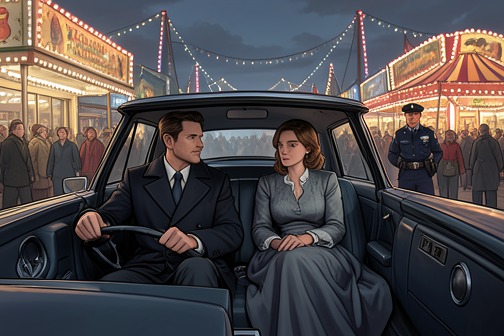
[Wolgast’s Attempt to Escape with Amy at the Spring Fair](entity:event-recall-event-wolgast-amy-07a913bf5676) is the failed break in which [Wolgast](entity:character-recall-character-wolgast-d9d268edab0b) tries to turn an ordinary public outing into a route out of the mission: he plans to take [Amy](entity:character-recall-character-amy-b0c9984bdc2f) through the fairground crowds and disappear before [Phil Doyle](entity:character-recall-character-phil-doyle-d6d7971daacd) can stop him. The attempt matters because it makes Wolgast’s private decision to protect Amy collide openly with his assignment. For a few minutes, the fair seems to offer cover; then Doyle’s return exposes the limits of that freedom, and the pair are led back toward the parking lot under the gaze of a police officer.
## The fair as cover
The Spring Fling is underway at Branch County Consolidated High School after the rain has passed. Families stream toward the school carrying blankets, coolers, and lawn chairs; parking attendants direct traffic into a muddy field. Wolgast shuts off the Tahoe and sees Amy watching the fair’s lights and sounds from the back seat. The brightness and bustle offer a temporary contrast to the covert purpose of their trip, but they also place the group in a crowded public setting where every movement may be observed.
Wolgast’s opportunity takes shape among the attractions. He sees Doyle at the beer tent, telling an animated story to a red-haired woman, performing the identity of a personable fiber-optic salesman from Indianapolis. The scene echoes Amy’s own earlier invention of a sick grandmother in [Colorado](entity:location-recall-location-colorado-e0fc68fd7477) to explain herself to a woman in line. Wolgast recognizes how a cover story can become a practiced self, but the sight of Doyle absorbed in his invented role also gives him a window in which to consider leaving.
## A decision made on the carousel
As Amy rides the carousel, Wolgast’s thoughts gather into a direct plan: take her and go. He reasons that Doyle has lost track of time and is distracted. The Tahoe is still available, and Wolgast remembers that the idea may have been latent as far back as the parking lot in Little Rock. He does not know how he will find Amy’s mother, but postpones that problem; in the moment, getting Amy away takes precedence over the mission, the Bureau, [Sykes](entity:character-recall-character-sykes-b45c9b02ba34), Carter, and even Doyle. He experiences the choice not as a tactical adjustment but as the purpose around which his life seems to have converged.
When the ride stops, Wolgast lifts Amy from her horse and kneels to speak with her at eye level. He tells her they are going to leave, but she objects that she should not run. Wolgast affirms the objection and tells her they will go. The exchange makes the escape a decision shared with Amy rather than a movement he undertakes without her awareness, even though Wolgast is the one who has formed the plan and controls the route.
## The attempt and Doyle’s interception
They leave the carousel from the far side, away from the beer tent. Wolgast quickly lifts Amy over the ride’s fence, climbs over himself, and takes her hand as they head through the wet grass toward the rear of the fairgrounds. His intention is to find the main gate or another exit, then reach the Tahoe before Doyle notices. A chain-link fence blocks the direct way out toward the trees and highway, forcing them to follow the perimeter back around. Their shoes and trousers grow wet as they circle toward the food stands and the picnic table where they had eaten.
The main exit is only about a hundred feet away when Wolgast pauses to scan the fair. He tells Amy to go straight out without looking up. Doyle calls to him from behind, points to his watch, and reminds him that they had agreed to an hour. Wolgast claims that they had lost Doyle and were going to look for him; Doyle says he had been caught in conversation and comments on Wolgast’s wet clothes. Wolgast answers that the rain explains them, but Doyle repeats the explanation and makes clear that he understands what has happened.
Doyle reveals that the beer tent was a test, not an accidental distraction: he and Amy had never been out of his sight. He calls the attempted flight what it is without raising his voice, reminding Wolgast that they are partners and that they have a job to do. The interception turns Wolgast’s moment of apparent clarity into a failed escape. Doyle is younger and stronger, and Wolgast has left his weapon in the car; even the possibility of distracting Doyle on the way back offers little assurance.
## Return under observation
Wolgast’s hope collapses. He cannot bring himself to look at Amy, and silently apologizes to her through the hand he is still holding. With Doyle following several paces behind, he and Amy walk through the exit toward the parking lot. The attempted escape therefore ends not in flight but in a subdued return to the vehicle, with Wolgast’s protective impulse exposed and defeated for the moment.
Their passage is also watched by an off-duty Oklahoma state trooper. Two hours earlier, he had seen a wire report about a girl kidnapped by two white men at the [Memphis Zoo](entity:location-recall-location-0d5a37363bd0); after clocking out, he came to the high school to meet his wife and watch his children ride the bumper cars. As Wolgast, Amy, and Doyle leave the fair, the trooper follows them with his eyes. The detail adds an outside observer to a scene already shaped by surveillance: Wolgast had believed the crowd could conceal the pair, while Doyle had been watching them all along, and now a stranger with knowledge of the kidnapping report is also tracking their movement.
## A failed threshold
The fair’s rides and crowds briefly make escape seem possible, but each apparent opening closes: Doyle’s distraction proves to be a test, the fence prevents a direct exit, and the trooper’s attention adds another risk beyond the immediate confrontation. The scene’s reversal is especially sharp because Wolgast’s resolve grows as the carousel turns, while the physical route back toward the gate forces the pair into Doyle’s reach. What begins as a plan to make Amy safe ends with her still in Wolgast’s hand, but moving in the direction Doyle has dictated. The failure does not erase Wolgast’s choice; it establishes the conflict between his commitment to Amy and the covert mission he can no longer treat as his sole purpose.
Event 23
Amy Bellafonte's abduction from the convent
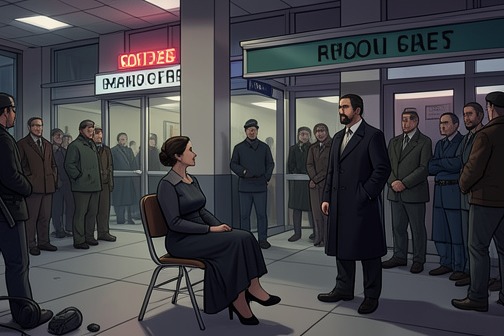
[Amy Bellafonte's abduction from the convent](entity:event-recall-event-amy-bellafonte-s-abduct-a3b2b97ddf80) is the novel’s initiating breach of trust: men who present themselves as federal agents take a child from her custodians, then the principal agent later identifies himself as one of her kidnappers and offers to surrender. The episode leaves [Sister Arnette](entity:character-recall-character-sister-arnette-84114f0d0b39) sleepless, [Lacey](entity:character-recall-character-lacey-35e443bc02d4) absent, and, much later, becomes part of the chain of suspicion through which a frightened community blames [Amy](entity:character-recall-character-amy-b0c9984bdc2f) for its dead.
## The convent and the breach of trust
The immediate aftermath is told through Sister Arnette’s distress. At ten o’clock she cannot sleep or even close her eyes. The day’s events return as a sequence she cannot make coherent: men came for Amy and deceived her and the other sisters; the zoo erupted in shouts and screams, with people running and Lacey refusing to let go of Amy; then came hours at a police station, where repeated questioning felt vaguely accusatory, followed by reporters, camera trucks, spotlights at the windows, and a phone that rang until [Sister Claire](entity:character-recall-character-sister-claire-5cd1f66af926) unplugged it. The apparent authority of the men has not reassured the convent. It has made the deception harder to comprehend.
The investigation deepens Arnette’s uncertainty rather than resolving it. Detective Dupree tells her that Amy’s mother killed a boy and was a prostitute. Arnette recalls that she had also trusted the men because they looked respectable. The contradiction is stark: people who seemed trustworthy were in fact kidnappers, while the detective’s account turns Amy’s absent mother into another source of fear and judgment. The episode’s stakes thus extend beyond who took the child; it exposes how easily a recognizable appearance or official role can substitute for knowledge.
The convent’s own immediate loss becomes undeniable when the sisters try to open Lacey’s room. Arnette, sobbing, begs the others to help. Sister Claire gently unclenches one of her fists and finds blood in her palm; Arnette has dug her fingernails into herself. When she insists that they open the door, Sister Tracy fetches a screwdriver from the toolbox under the kitchen sink because no one knows where the key is. The room contains an unslept-in bed and curtains shifting at the open window. [Sister Lacey Antoinette Kudoto](entity:character-recall-character-sister-lacey-antoin-69b848be4c04) is gone. The small domestic details—the missing key, the improvised tool, the untouched bed—give the disappearance a plain physical reality that the day’s official explanations had obscured.
## The kidnappers surrender
The episode’s defining reversal comes when [Wolgast](entity:character-recall-character-wolgast-d9d268edab0b) does not continue to conceal what he and Doyle have done. In a diner, he approaches Kirk, a civilian eating French toast, and says that he needs to report a kidnapping. He indicates Amy and explains that she is the girl everyone is looking for. With the room listening, he identifies himself and Doyle as the kidnappers and presents his credentials. Kirk asks whether they are [FBI](entity:organization-recall-organization-c3b9c0848e8c) agents and whether they really took the girl; Wolgast confirms both the abduction and his intention to surrender, waiting until Kirk has finished breakfast before addressing him as a deputy.
The scene turns the language of law enforcement inside out. Wolgast’s credentials are real enough to be placed on the counter for inspection, yet he uses them to confess rather than to secure cooperation. His public admission explains why the sisters cannot reconcile the men’s claimed federal identity with their role in taking Amy. It also makes the distinction between official authority and moral legitimacy central to the event: an agent can wield the signs of law while committing an abduction, and a surrender can begin with the perpetrator naming himself.
## Fear becomes blame
The abduction’s later consequences emerge in the [First Colony](entity:location-recall-location-ae4da2f9f3ed), where a new crisis gives old fear a target. After the deaths there, [Sam Chou](entity:character-recall-character-sam-chou-453081746287) insists that [Caleb](entity:character-recall-character-caleb-685d38d3de8f) let Amy in and declares her responsible for the deaths. He turns suspicion into a proposed remedy, calling for Caleb and Amy to be put outside the walls. His accusation supplies the crowd with a simple cause and a human target, even though [Peter](entity:character-recall-character-peter-22e18a2305ec) answers that they do not know Amy caused the deaths.
Sam’s speech becomes collective action almost at once. One voice in the assembly repeats the demand, then another joins, until the crowd chants for Caleb and Amy to be put out. Peter sees the scene poised near violence as [Ian](entity:character-recall-character-ian-3cefd5118552) tries to quiet the crowd and the pretense of order falls away. The event echoes the original abduction in a changed form: Amy is again treated as someone others may claim, remove, or deliver to danger, this time by a community that recasts its fear as justice. The novel links the covert taking of a child to the later public logic of scapegoating without making the two acts identical.
## Arrival and the counter-image
A later arrival among people from away offers a revealing contrast to the crowd’s hostility in the colony. When travelers appear, the onlookers freeze, then greet them with excitement. Hundreds press around Peter, clapping his shoulder, shaking his hand, or bringing babies forward; others touch him briefly and withdraw. Peter is momentarily swept into the welcome, but also finds it exhausting and strangely staged. The orange-clad crowd’s warmth is real in its effects, yet its intensity disarms him and separates him from his companions.
This scene does not undo the blame directed at Amy or prove that every crowd will turn against an outsider. Instead, it sharpens the novel’s attention to the unstable force of collective feeling. A crowd can welcome travelers with apparent joy, or convert fear into a chorus demanding that vulnerable people be expelled. Across the episode’s consequences, the decisive danger is not simply that Amy is taken: it is that trust, authority, and belonging can be reassigned abruptly, while the people caught in that change have little power to refuse.
Event 24
Randall Sheriff’s Office Shootout
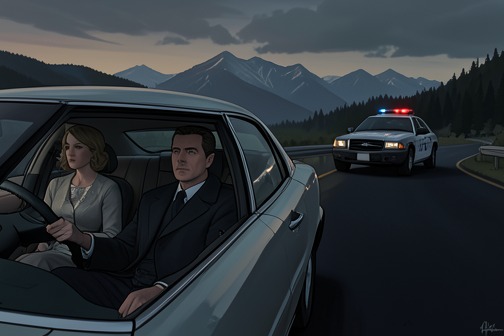
The [Randall Sheriff’s Office Shootout](entity:event-recall-event-randall-a464ebf062e2) is the failed surrender of [Bradford J. Wolgast](entity:character-recall-character-bradford-j-wolgast-79e5a082ce42), [Amy Harper Bellafonte](entity:character-recall-character-amy-harper-bellafon-bdb158c68555), and [Phil Doyle](entity:character-recall-character-phil-doyle-d6d7971daacd) near [Randall, Oklahoma](entity:location-recall-location-randall-oklahoma-6a986c6d2976). [Wolgast](entity:character-recall-character-wolgast-d9d268edab0b) approaches local law enforcement because he believes surrender is the remaining way to protect [Amy](entity:character-recall-character-amy-b0c9984bdc2f); [Richards](entity:character-recall-character-richards-4e735985d67b)’s intervention kills that possibility. By the time Richards removes the group from town and destroys their Tahoe, Wolgast has lost control of the escape he had tried to end on his own terms.
## Causes and Background
Somewhere west of Randall and south of the Kansas border, Wolgast decides to surrender. He and Doyle have spent hours driving hard in the Tahoe, following a route Doyle assembled from GPS directions as pursuing lights repeatedly vanish and return behind them. Near dawn, with Amy asleep in the back seat, Wolgast pulls into a car wash and waits with Doyle while police cruisers pass. The decision to surrender arises from an exhausted flight that has failed to shake the pursuit, not from any belief that the danger has ended.
Wolgast makes his intention explicit at a local stop, telling Kirk that he needs to report a kidnapping and identifying Amy as the girl everyone is looking for. He then shows Kirk his credentials and asks to surrender to him as a deputy. Wolgast’s move is a reversal: the federal agent who has taken Amy away now seeks local authorities, apparently hoping to end the chase through ordinary law enforcement. But the people pursuing the group remain close enough to reach the office, and the attempted surrender cannot secure Amy’s safety.
## The Shootout
Richards appears at the sheriff’s office while Wolgast’s right hand is being held for fingerprinting. Wolgast recognizes the danger from Doyle’s expression before Richards has fully explained himself. Richards shoots a woman at the office, then kills Kirk and Price as the room’s witnesses react in shock. The sudden violence transforms the office from a place where Wolgast has sought help into another site of danger, with Amy nearby as a witness.
Amy begins to cry. Wolgast gives Doyle the key and gathers her against his chest, apologizing as he holds her. Richards hands Doyle Amy’s small backpack and orders the group to leave, threatening further violence if they stay. The exchange leaves Wolgast with no practical choice: he can comfort Amy, but he cannot protect her by remaining in the office or resume the escape he had planned.
Richards makes Doyle drive the Tahoe out of town to an open field, where an unmarked helicopter is waiting. Sirens approach as the group boards. From the air, Wolgast sees nine police cars moving toward the Tahoe; Richards has the helicopter hover while they are still closing in. He tells Wolgast to watch, and a flash and concussion leave the vehicle destroyed, a smoking hole where it had stood. Richards laughs through the headset as the helicopter carries the group away.
## Consequences and Aftermath
The immediate result is not a return to custody but a forced transfer under Richards’s control. The Tahoe’s destruction also eliminates the vehicle that had carried Wolgast, Doyle, and Amy through their flight. Wolgast holds Amy in the helicopter, experiencing the departure as another loss of agency: he had chosen surrender, but Richards has replaced that choice with removal by air. The local pursuit is left behind, while the group is taken away from Randall.
The larger consequence for Wolgast becomes clear in his subsequent imprisonment. He expects Richards to kill him and spends weeks confined, wondering what is happening to Amy and whether he will see her again. In that confinement he reflects on the decisions that brought him there, connecting his work with [Anthony Carter](entity:character-recall-character-anthony-carter-8ec78cbed354) to his own grief over his daughter [Eva](entity:character-recall-character-eva-a4f4507c5fab)’s death. The shootout therefore marks not just a failed handover but a decisive break in Wolgast’s attempt to act as Amy’s protector: he is separated from her and left to reckon with the personal loss that had helped make him vulnerable to the mission.
## Narrative Significance
The scene turns the ordinary language of surrender, credentials, and local authority into a dead end. Wolgast seeks to report a kidnapping and submits himself to a deputy, but the arrival of Richards exposes how little protection those procedures offer against the forces already pursuing Amy. The shift from the office to the helicopter compresses the reversal: the group moves from a place where Wolgast hopes to choose what happens next to a vehicle in which Richards dictates their direction.
The event also establishes a pattern that recurs elsewhere in the novel: fear and uncertainty can become collective action, while institutional authority may fail to restrain violence. Later, residents of the [First Colony](entity:location-recall-location-ae4da2f9f3ed) turn anxiety about Amy into a public demand to expel her and [Caleb](entity:character-recall-character-caleb-685d38d3de8f), and a welcoming crowd at Haven unsettles [Peter](entity:character-recall-character-peter-22e18a2305ec) by seeming both joyful and carefully managed. Those episodes differ in scale and circumstance, but the Randall scene provides an early, stark instance of vulnerable people being swept into events controlled by others. Its defining change is the collapse of Wolgast’s attempted surrender into renewed flight, followed by his separation from Amy.
Event 25
Amy Awakens from Her Coma
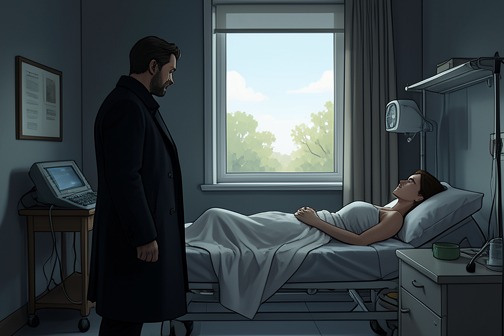
[Amy Awakens from Her Coma](entity:event-recall-event-amy-362ea7e4b330) is the turning point in which [Bradford J. Wolgast](entity:character-recall-character-bradford-j-wolgast-79e5a082ce42) answers [Amy](entity:character-recall-character-amy-b0c9984bdc2f)’s apparent approach to death not with a medical procedure but with the story he has never told anyone: the loss of his daughter [Eva](entity:character-recall-character-eva-a4f4507c5fab) and the love that remains bound to that loss. As [Wolgast](entity:character-recall-character-wolgast-d9d268edab0b) finishes, he asks Amy to return to him; he opens his eyes, and Amy opens hers. The parallel gesture makes her awakening an intimate response to his testimony, though the novel does not establish a medical explanation for it.
## The Crisis and the Observation Room
The scene begins when [Colonel Sykes](entity:character-recall-character-colonel-sykes-4dc3a58c6453) gives Wolgast the reason for his summons: Amy may be dying. After nearly five weeks confined to his room, Wolgast is escorted across the compound and down into the Chalet’s underground level. [Sykes](entity:character-recall-character-sykes-b45c9b02ba34) leads him past the Main Lab to an observation room, where Amy lies alone on a hospital bed in dim blue light. She is connected to an IV; color-coded hoses hang from ceiling tracks, and an empty plastic chair stands beside her. The sparse room places Wolgast before a child in grave danger, but initially offers no personal contact—only a broad window separating him from her.
That separation is overcome through attention and speech rather than through any described treatment. On the third day, Wolgast tells Amy his story while medical staff come and go, taking her blood and changing her bags. A camera watches from over his shoulder. He knows he may be observed, but says the story anyway: he has kept it private, and the urgency of Amy’s condition brings it into the open.
## Wolgast’s Story of Eva
Wolgast begins with Eva as a little girl whose parents loved her. He recalls holding her against his bare skin the night after her birth and describes her as having become part of him, alive in his heart. That memory gives his account a precise emotional center: the attachment he tells Amy about is not an abstract account of fatherhood but a bond he experienced as inseparable from himself.
He then describes Eva’s illness. Her heart began to shrink while the rest of her body grew; eventually her growth stopped too. Wolgast says he would have given her his heart, but could not save her. When she died, he felt that he died with her. He explains that he and [Lila](entity:character-recall-character-lila-4c6ac2a9b9c8) could no longer love one another as they had, because their love had become inseparable from sadness and from missing their daughter. In telling Amy this, Wolgast connects his present care for her to the bereavement that had altered his marriage and his sense of who he was.
## The Return and the Awakening
As the story reaches its end, Wolgast turns from Eva to Amy. He tells her that finding her felt like Eva had come back to him, and urges her to come back. The appeal does not erase the distinction between the two girls: rather, it reveals how Wolgast’s grief shapes his attachment to Amy and gives his plea its particular force. He has made the previously private story available to Amy, addressing her not as an unseen patient but as someone who can receive what he has never shared.
The scene closes with a closely matched pair of actions. Wolgast lifts his face and opens his eyes; Amy opens hers too. The narrative places the two gestures side by side but does not specify a physiological mechanism or establish that Wolgast’s words medically cause the awakening. Its significance lies in the sequence the scene makes visible: a story of loss is spoken, a plea for return follows, and Amy’s awakening answers it in the form of an opening of her eyes.
## Narrative Significance
Wolgast’s telling is itself an action in the scene. His grief has long been something he carries privately, even as memories of Eva recur; here, he gives that grief a beginning, a history, and an ending in the presence of Amy. The account does not resolve his loss or restore his marriage to Lila. Instead, it shows him using the language of that loss to reach toward a child whose survival has become urgent to him.
The scene’s emotional reversal rests on both connection and uncertainty. Amy’s isolation in the observation room gives way to a direct address sustained over the third day, and the final paired opening of eyes gives that address a visible response. Yet the text does not explain whether the awakening is caused by Wolgast’s testimony, a medical change, or something else. The scene preserves that uncertainty while making the act of telling the clearest human event: Wolgast entrusts Amy with his story, and her return is narrated immediately after his plea.
Event 26
Wolgast and Amy Escape Project NOAH
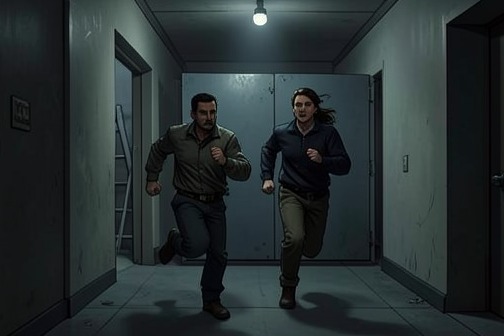
[Wolgast and Amy Escape Project NOAH](entity:event-recall-event-wolgast-amy-project-noa-fc696cb4d112) is the escape from the breached facility that carries [Wolgast](entity:character-recall-character-wolgast-d9d268edab0b) and [Amy](entity:character-recall-character-amy-b0c9984bdc2f) out of the Chalet and into the night. Their route depends on [Jonas Lear](entity:character-recall-character-jonas-lear-9637288902a2)’s knowledge of a maintenance passage, Wolgast’s effort to climb the central ventilation shaft with Amy, and the help of [Phil Doyle and Sister Lacey](entity:relation-recall-relation-phil-doyle-and-siste-4f06ea76137f). The escape succeeds, but it is not a clean rescue: Doyle stays behind, and [Lacey](entity:character-recall-character-lacey-35e443bc02d4) leaves the car to draw the infected away so Wolgast can take Amy to safety.
## Background and the route out
After the breach, [Lear](entity:character-recall-character-lear-6e96f6e1dc1e) leads Wolgast through the corridor while Wolgast carries Amy. They encounter the aftermath of the attack inside the facility, and Wolgast shields Amy’s face from what lies ahead. Their way forward is not an ordinary exit: in a room with lockers and benches, Lear unlocks a door marked MECHANICALS and pries open a metal panel with a small knife. The opening is only about a yard square, but it leads to a passage and a vertical maintenance tube. Lear tells Wolgast that a ladder runs inside the tube all the way to the top.
At the base of the ventilation shaft, the height and Amy’s weakness turn the route into a physical problem. A faint light descends from above; far overhead, Wolgast can make out an emergency light and the still blades of a giant fan. Amy briefly opens her eyes, but she has no strength to climb. Wolgast works out how to move her weight from arm to arm, hooking an elbow through the ladder rungs as he changes hands. He begins climbing with Amy held against him, one rung at a time. The narrow passage is thus both their way out and the setting for the escape’s central act of care: Wolgast must carry Amy through a route neither can manage alone.
## Doyle and Lacey make the escape possible
Elsewhere in the Chalet, Doyle waits hidden beneath a desk until Lacey finds him. When Wolgast and Amy reach him, Doyle and Wolgast are both wearing oversized scrubs. Doyle searches the room’s drawers for a penknife, stands on a chair to undo the screws, and helps Wolgast lower Amy into his arms before Wolgast drops to the floor. Doyle confirms that it is time to leave. The group moves through the quiet hall toward the front entrance, passing dead soldiers, while gunfire continues outside.
At the entrance, Lacey tells Wolgast to take Amy. Doyle has already made provision for the next part of the escape: he gives Wolgast the keys to a Lexus and explains that the car is for Wolgast and Amy. Wolgast recognizes what the gesture means, and Lacey confirms it with a nod. She kisses Amy’s hair, then kisses Wolgast on the cheek; he experiences the gesture as a deep calm and certainty. The goodbye is brief, but its practical meaning is unmistakable: Doyle and Lacey are helping Wolgast get Amy away, even as they remain behind.
Wolgast and Doyle race toward the car with Amy. Their flight is immediately interrupted by [Anthony Carter](entity:character-recall-character-anthony-carter-8ec78cbed354), now transformed and pursuing them. Carter attacks [Richards](entity:character-recall-character-richards-4e735985d67b) outside the Chalet; Richards fires an RPG, but Carter avoids the shot and brings Richards down as the grenade destroys the front of the building. The blast also strikes Wolgast, throwing him down and separating him from Amy. After the impact, Wolgast gets back to the car with Amy, and they continue trying to escape the burning Chalet.
## Doyle’s death and the pursuit
Doyle runs toward the Lexus, waving his .45 and urging Wolgast to go. Carter lands on the roof of the car. Wolgast brakes, and Carter tumbles onto the hood but holds on. Doyle fires three times; one round strikes Carter’s shoulder, but the creature is not stopped. When Carter sees Doyle, he launches himself from the car and falls upon him. Doyle is killed in an instant, leaving Wolgast to drive away with Amy.
The loss changes the escape from a shared flight into a desperate effort by Wolgast to get Amy beyond the pursuing danger. He accelerates across the grass and onto the pavement, driving away from the burning Chalet. Yet Lacey, who is also in the car, has been wounded in the arm. Once Wolgast pulls to the side of the road, she tells him that she will not go with them. Her injury does not alter the decision: she understands that her part in the journey ends there, while Amy must continue with Wolgast.
## Lacey’s sacrifice and the ending
Lacey tells Wolgast to care for Amy and makes clear that Amy is his responsibility. Before he can answer, she steps out and closes the door. In the rearview mirror, Wolgast sees her running back the way they came, waving her arms to attract the infected. The action gives the others time to get away, but its cost is evident: Lacey is deliberately drawing the threat toward herself. Wolgast drives on and forces himself not to look back.
The escape therefore ends with survival bought through separation. Amy leaves the facility with Wolgast, but Doyle has died protecting their flight, and Lacey has sacrificed her chance to leave with them. The car carries the two survivors away from the Chalet, while the final image of Lacey running back toward danger completes the pattern that has made their escape possible: each opening in the route out has been secured by someone choosing to stay behind.
Event 27
Colorado Fever Outbreak and Year Zero
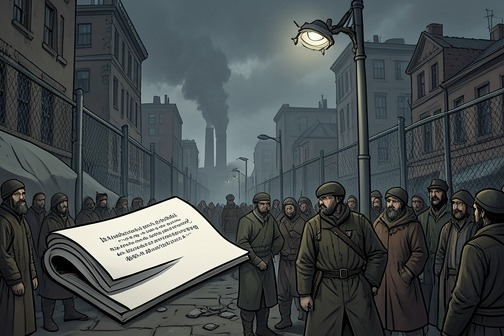
The [Colorado Fever Outbreak and Year Zero](entity:event-recall-event-colorado-fever-year-zer-cc94c2ddc3f6) marks the collapse of ordinary political and social life and the beginning of a new historical order. First encountered through newspaper reports read by [Bradford J. Wolgast](entity:character-recall-character-bradford-j-wolgast-79e5a082ce42) as he protects [Amy](entity:character-recall-character-amy-b0c9984bdc2f), the outbreak is presented not as one isolated disaster but as a cascade: illness, violence, border closures, military retreat, displacement, and the breakdown of reliable public knowledge. [Wolgast](entity:character-recall-character-wolgast-d9d268edab0b)’s conclusion that humanity has been overcome by events gives the crisis its defining meaning: the old world has not simply suffered an emergency; it has lost the capacity to contain it.
## The outbreak becomes public knowledge
The crisis reaches Wolgast in fragments. At Milton’s Dry Goods, he finds a copy of USA Today whose entire issue amounts to two folded sheets. Its headline announces that [Colorado](entity:location-recall-location-colorado-e0fc68fd7477) has been overrun by a “Killer Virus,” with borders sealed and outbreaks reported in Nebraska, Utah, and Wyoming. The smallness of the paper contrasts with the scale of what it reports: a national emergency compressed into a few pages, already difficult to distinguish from rumor and official messaging.
The report dates the president’s first address to May 18, eight days after the crisis began. The administration describes Colorado fever as a deliberate attack by extremists and promises both containment and punishment, while offering no details of the alleged evidence. Meanwhile, the virus is reported in neighboring states, domestic and international air travel is halted, and Colorado’s borders are closed. The announcement presents a government asserting control at the very moment the reported spread demonstrates how quickly control is slipping away.
The reported symptoms include dizziness, vomiting, and high fever, with an incubation period as short as six hours. Some patients, the article says, develop markedly increased strength and aggression. An anonymous Colorado health official reports that patients are killing others and that hospitals have become war zones; the Centers for Disease Control spokesman calls some accounts hysteria while conceding that communication with officials inside the quarantine zone has broken down. The official fatality estimate reaches as high as fifty percent, but the same report acknowledges that authorities cannot establish what is happening inside the zone. The epidemic is therefore defined both by its danger and by the failure of institutions to know or communicate its full extent.
## From quarantine to national breakdown
The first newspaper’s account already shows emergency measures producing a crisis of movement. Cities including [Denver](entity:location-recall-location-denver-bd410fc030e8), Colorado Springs, and Fort Collins have been placed under martial law, while residents flee despite orders to “evacuate in place.” Reports that federal forces may use deadly force against refugees remain unconfirmed, as do reports that the National Guard is moving ill people from hospitals to an undisclosed location. The uncertainty matters: citizens are acting amid fragmentary information, while authorities use quarantine, military deployment, and population control to manage a threat they cannot clearly describe.
A later issue, dated July 10 and found among the belongings of Carl and Martha, records a much wider collapse. The headline reports that the “Vampire” virus has reached the East Coast, that millions are dead, and that the quarantine line has shifted east to central Ohio. The paper says Chicago has fallen after infected people overwhelmed [Army](entity:organization-recall-organization-army-4156bb3447b9) and National Guard forces near the South Loop. The government withdraws from the city and establishes a new defensive line between Toledo and Cincinnati, while casualty estimates exceed thirty million dead and another three million infected. Officials deny reports of troops abandoning their posts even as the perimeter retreats, leaving the language of reassurance increasingly at odds with events.
The same report describes major portions of St. Louis, Memphis, Tulsa, and Des Moines burning, with the cause of the fires officially unconfirmed. It also records scarce fuel, shortages of food and medical supplies, and refugees stranded on roads with no clear destination. A family’s journey from Akron toward Johnstown, normally a two-hour drive, has taken twenty hours; their intended refuge may itself be affected. These accounts make the catastrophe legible through more than casualty totals: it dismantles the ordinary systems that make movement, care, and shelter possible.
## Fragmenting authority and competing explanations
As the outbreak spreads, national authority ceases to be uncontested. The [United Nations](entity:organization-recall-organization-e95d8c5557b2) passes an international quarantine resolution forbidding ships and aircraft from approaching within two hundred miles of North America. European states close borders or restrict travel. Within the United States, [California](entity:location-recall-location-california-fd5bbc3f2eb4) declares itself a sovereign republic and places federal military and law-enforcement assets in the state under the California National Guard. The federal administration rejects the secession and warns that personnel resisting its authority will be treated as unlawful enemy combatants. The crisis thus produces not merely a common enemy but a struggle over who can command resources and define legitimate action.
Political and religious explanations also diverge. The White House attributes the epidemic to anti-American extremists without disclosing supporting evidence; public-health officials admit that communication has failed. In [Texas](entity:location-recall-location-texas-f19b16f8e87c), [Houston](entity:location-recall-location-houston-bb963be7f802)’s mayor presents the crisis in explicitly religious, end-times terms and urges people to gather at the stadium in expectation of salvation. Across the country, churches and synagogues report record attendance. These responses do not resolve the uncertainty. They show how people and institutions reach for competing frameworks—national security, public health, sovereignty, and faith—when no account can make the events manageable.
## Wolgast’s reckoning and [Year Zero](entity:time-recall-time-year-zero-15adc7e3e175)
Wolgast reads the July report after losing the shelter and fragile routine that had briefly surrounded him and Amy. He understands that the catastrophe has advanced on a scale that no single article can contain: between their arrival at the camp on May 2 and the news reported in July, the world has changed within weeks. The newspapers offer the public chronology, but his reading turns that chronology into a personal recognition. The term he recalls from aviation is OBE, “Overcome by events”; now, he understands, it applies to the human race.
His response is practical as well as interpretive. He gathers food, batteries, propane, fuel, and weapons, keeps watch through the night, and burns the newspaper after reading it. The printed account has given him vital information, but it cannot offer a dependable future or a place to return to. Its destruction makes visible the difference between knowing that the old order has failed and being able to do anything about that failure. Wolgast’s immediate obligation is to keep Amy safe, not to restore the system that has collapsed.
The idea of an age beginning at zero acquires a longer afterlife than the emergency reports themselves. In [Ida Jaxon](entity:character-recall-character-ida-jaxon-65002fc73cad)’s recollection of the children arriving at the settlement that becomes the [Sanctuary](entity:location-recall-location-df14f0ddab0f), Terrence explains the walls and lights as protection until the war is over and compares the place to Noah’s ark. The children’s evacuation and the story of the flood translate catastrophe into a language of refuge and survival. Elsewhere, Wolgast’s earlier reading of the biblical account of Noah—that Noah lived nine hundred and fifty years and died—had helped him recognize the personal reason federal agents had selected him: his grief over [Eva](entity:character-recall-character-eva-a4f4507c5fab). Together, these episodes give the Noah image both a public and a private resonance, linking mass survival to the intimate losses that shape the survivors.
## Consequences and narrative significance
Year Zero is less a single instant than the name for a rapid, uneven process. The newspaper chronology shows the disease spreading and state capacity retreating; the later life of the survivors shows how that rupture is carried forward in evacuation, guarded settlements, and inherited memories. The papers’ shifting headlines compress enormous change into a sequence of brief reports, while Wolgast’s reading supplies a human measure of their scale: each new fact narrows the space in which ordinary plans remain possible.
The outbreak also establishes a recurring conflict between fear and collective action. Years later, in the [First Colony](entity:location-recall-location-ae4da2f9f3ed), residents blame Amy and [Caleb](entity:character-recall-character-caleb-685d38d3de8f) for deaths and turn apprehension into a chant demanding that they be expelled. In Haven, Olson describes a system in which four animals and two people are offered at each new moon to keep the Many away. These later events are not the outbreak itself, but they echo its central social pressure: danger and uncertainty can make populations seek a target, accept coercive arrangements, or surrender judgment to a crowd. Against that pattern, Wolgast’s commitment to protect Amy and the children’s promise to look after one another preserve fragile, personal forms of responsibility.
The event’s decisive consequence is therefore both historical and moral. The former United States cannot maintain its borders, communications, or command over its own territory, and the survivors inherit a world organized around containment and the memory of loss. The name Year Zero expresses the break, but the story resists treating the catastrophe as a clean beginning: people carry grief, old beliefs, and obligations across it. The new age starts not with a settled explanation of what happened, but with the work of protecting others when institutions and assurances have failed.
Event 28
Great Viral Cataclysm
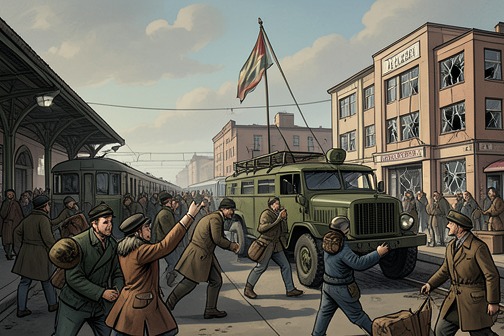
The [Great Viral Cataclysm](entity:event-recall-event-great-viral-cataclysm-5de7c9900ab6) is the pandemic and collapse that end the old world and shape the societies that follow. The novel presents it not as a single battlefield event but as a widening emergency: outbreaks spread beyond [Colorado](entity:location-recall-location-colorado-e0fc68fd7477), authorities impose quarantine and military control, and ordinary people struggle to understand whether the infected are patients, attackers, or both. Its legacy persists in the rules of the [First Colony](entity:location-recall-location-ae4da2f9f3ed) and in the fear that recurs whenever an outsider appears.
## Outbreak and public response
A contemporary news report describes Colorado fever spreading into Nebraska, Utah, and Wyoming. The president attributes the epidemic to domestic extremists backed by foreign enemies, promises containment, and places the military on high alert; air travel is grounded, while reports from inside the quarantine zone describe a breakdown in communications and hospitals overwhelmed by violence. The reported symptoms include dizziness, vomiting, and high fever, followed in some cases by heightened strength and aggression. The report estimates that as many as fifty thousand people may already have died, while acknowledging uncertainty about how many succumbed to illness and how many were killed by the infected.
The state’s response turns public health into population control. Colorado’s borders are closed, cities are placed under martial law, and residents flee despite orders to shelter in place. Reports of deadly force against refugees remain unconfirmed, as do accounts of the National Guard moving patients to undisclosed locations. Elsewhere, federal agents’ credentials and movements are checked through a centralized system, reflecting a wider emergency apparatus in which travel and identity are closely monitored.
## [Philadelphia](entity:location-recall-location-0c859ef79004) and the children’s evacuation
As the crisis reaches the eastern quarantine zone, authorities order children aged four to thirteen in Philadelphia’s designated safe areas and nearby counties to report to 30th Street Station for immediate departure. [Ida Jaxon](entity:character-recall-character-ida-jaxon-65002fc73cad) later remembers the station as a place of crowds, soldiers, dogs, and fear. Her mother sends her with a small suitcase, understanding that the separation may be permanent. The evacuation converts the catastrophe into a family rupture as well as a logistical response: children are removed from their homes under military authority, with little certainty about what awaits them.
Ida recalls that outbreaks had taken New York, Pittsburgh, and Washington, D.C. She had relatives in those places and little reliable knowledge of what had happened beyond the United States. Her parents explain that the attackers called “jumps” were sick people, a distinction Ida finds hard to reconcile with the warlike response and the soldiers surrounding her. The gap between the illness’s apparent human origin and the violence it produces becomes one of the catastrophe’s lasting moral confusions.
## Memory, fear, and inherited explanations
The Cataclysm reaches the reader through retrospective testimony as well as public records. Ida’s childhood recollection supplies what official language cannot: the uncertainty of a child who fears she may one day become dangerous to her family simply because she has been ill. Her mother reassures her that her sickness is not the same, but Ida remembers that the explanation did not make the war around her intelligible. Her father, [Monroe Jaxon III](entity:character-recall-character-monroe-jaxon-iii-6021083939a9), keeps a gun nearby and listens to the radio; in one remembered moment, he tells Ida that God has abandoned them. His despair gives the crisis a religious dimension without resolving its causes.
The vocabulary for the infected changes across generations. Ida says her family called them “jumps,” while other names later included flyers, smokes, drinks, and virals. Her cousin Terrence calls them vampires, but her father rejects the comparison as a distinction between fiction and lived danger. The changing labels do not settle what the infected are; they show how survivors repeatedly try to name a threat that has overturned familiar categories.
## The catastrophe’s afterlife
In the First Colony, the disaster is converted into enforced secrecy. Children in the [Sanctuary](entity:location-recall-location-df14f0ddab0f) are forbidden to learn about the world outside the walls, the virals, [the Watch](entity:organization-recall-organization-55c42cde2379)’s duties, or the Great Viral Cataclysm; anyone who knowingly tells a minor is subject to being put outside the walls. This law makes collective memory a security risk and protects children by withholding the history that explains their society. The catastrophe therefore survives not only in memory but in institutions that regulate what may be remembered and said.
That inherited fear resurfaces when [Amy](entity:character-recall-character-amy-b0c9984bdc2f), a Walker, is blamed for deaths in the [Colony](entity:location-recall-location-colony-b1797dbf3402). [Ian](entity:character-recall-character-ian-3cefd5118552) dismisses concern for her by contrasting her with his own child, and [Sam Chou](entity:character-recall-character-sam-chou-453081746287) publicly claims that [Caleb](entity:character-recall-character-caleb-685d38d3de8f) and Amy brought the danger upon the community. Calls to put them out spread through the crowd until the gathering seems on the verge of violence. The episode echoes the original crisis’s pattern: fear compresses uncertainty into accusation, and a vulnerable outsider becomes a convenient explanation for collective danger.
The response is not uniformly hostile. When [Peter](entity:character-recall-character-peter-22e18a2305ec)’s party reaches Haven, residents in orange jumpsuits greet the travelers with striking warmth, touching them, offering greetings, and presenting babies; Peter nevertheless senses that the welcome may be staged to disarm them. The contrast underscores how catastrophe can produce both guarded suspicion and urgent communal longing. Across these later scenes, the Great Viral Cataclysm remains the event that explains the survivors’ institutions and fears, but it does not dictate a single response to the strangers who arrive at their gates.
Event 29
Philadelphia Children’s Evacuation
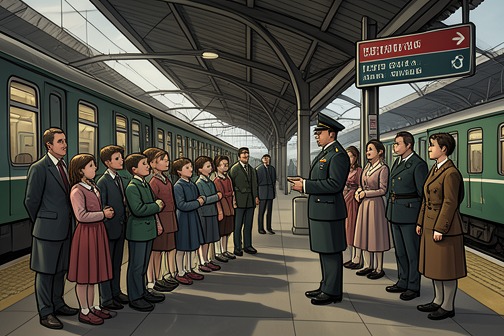
[Philadelphia Children’s Evacuation](entity:event-recall-event-f98ae2c7af0b) was a wartime operation to remove children from [Philadelphia](entity:location-recall-location-0c859ef79004) and nearby counties and carry them by train to safety. In [Ida Jaxon](entity:character-recall-character-ida-jaxon-65002fc73cad)’s later account, the evacuation’s decisive meaning lies in its contradiction: a system organized to preserve children’s lives also separated them from their families and subjected them to military force, while the surviving train delivered the children who would form the [Sanctuary](entity:location-recall-location-df14f0ddab0f)’s first community.
## Order and Stakes
The evacuation was announced as an order from the U.S. Military Forces Command for the Eastern Quarantine Zone, issued under General Travis Cullen and Philadelphia mayor George Wilcox. It applied to children aged four through thirteen living in designated uninfected Safe Zones in Philadelphia and the three counties west of the Delaware River: Montgomery, Delaware, and Bucks. Children were directed to report to [Amtrak 30th Street Station](entity:location-recall-location-30-e099958d32ac) for immediate embarkation. The order’s geographic precision and mandatory language made the operation an administrative sorting of a vulnerable population, not a family-directed departure.
The notice required children to bring identity documents, and forbade parents or guardians from entering the station. It threatened that anyone interfering with the evacuation, or attempting to board without authorization, would be shot. The state thus defined protection through separation: children were to be moved away from danger, but their caregivers were barred from accompanying them, and the order enforced that division through the threat of lethal violence.
## The Departure from Philadelphia
Ida remembers the evacuation against a city already under military presence and threat. Her father woke her at night after bridges had been destroyed and aircraft had passed overhead; he dressed her for the cold and told her to say goodbye to her mother. Ida’s mother held her for a long time, crying, while her father eventually made them part. The farewell makes the official category of evacuee painfully personal: the child’s journey began not with a choice to leave, but with a separation imposed on her family.
Ida and her father walked through the night toward the station. As they went, more people joined the movement toward the evacuation point, carrying their belongings. At the station, a large crowd pressed toward a gap in the fence where soldiers were admitting people. Ida’s father held her hand and told her to stay with him. The crowd, the military entrance, and the long wait turned the station into a bottleneck where the promise of orderly transport collided with fear and mounting disorder.
The train itself made the operation’s scale and security measures visible. From a bridge, Ida saw a train that seemed to stretch for a hundred cars, with no windows and poles bearing nets along its sides. Armed soldiers stood on the roof in protective suits. The train was designed to keep moving through danger, but its defenses also signaled that the children were being transported through a conflict zone rather than carried out of an ordinary emergency.
## Separation and Violence at the Station
The crowd surged as people tried to reach the train. Ida lost her father in the press of bodies and was carried along by the movement around her. She saw people shot and bodies on the ground; the evacuation’s coercive terms were no longer merely written on a notice but enacted at the station. Her father’s hand was no longer there, and the child who had set out with him was suddenly alone amid a crowd moving without regard to individual ties.
A large man picked Ida up and carried her toward a path down from the bridge, calling for someone to take her. Ida understood that the man believed he would not survive, but he still lowered her to people below, who lifted her onto the train. The act made her boarding possible, yet it did not reunite her with her family: as the train moved, she came to believe she would not see her mother, father, or anyone she had known before. Her passage into safety was also a passage out of her former life.
## The Journey and the Train’s Design
Ida recalls the children’s journey chiefly as a prolonged condition of confinement: they were crowded together, hungry, and exposed to the heat and noise of fires and gunfire outside. Two Watchers were assigned to their car. Ida later identifies them as FEMA personnel rather than [Army](entity:organization-recall-organization-army-4156bb3447b9) soldiers, correcting the assumption that everyone in uniform belonged to the military. One of the Watchers was a Chou, a member of the First Family; he later married another Watcher and had further wives, one of them Mazie Chou’s grandmother.
The train did not stop when cars were lost. It had been constructed so that a car reached by the infected could be detached and left behind. The repeated explosions Ida heard marked the removal of those cars. The mechanism preserved the forward movement of the rest of the train by sacrificing sections that could no longer be kept secure; as Ida’s account makes clear, the children in the separated cars were part of the cost of that design. She refuses to describe their fate further, making the limit of her recollection part of the telling rather than turning the loss into spectacle.
## Arrival and the Sanctuary’s Founding
By the time the train reached [California](entity:location-recall-location-california-fd5bbc3f2eb4), only three cars remained, two of them mostly empty. Ida found her cousin [Terrence Jaxon](entity:character-recall-character-terrence-jaxon-17636f3f71c0) among the children. Terrence had been placed in the engine car by his father, Carleton Jaxon, a shipyard welder who had helped build the train. He had been told to stay near the driver and follow instructions. His place at the front helped him survive a journey that had eliminated cars behind them, and his reunion with Ida gave her a familiar companion after the loss of her parents.
Terrence promised to look after Ida, and she says he did so until his death. He was the first Jaxon to become [Household](entity:organization-recall-organization-8cceddf9c58a), a family connection that endured across generations. The children were taken by bus from the desert arrival point to a walled settlement, where soldiers and FEMA vehicles supplied food, clothing, weapons, and animals. There, they were placed in the Sanctuary, in the room where the Littles continued to sleep in Ida’s later account.
Terrence explained the settlement as their new home, protected by lights and walls, and likened it to Noah’s ark. The comparison transformed a military evacuation into the founding story of a community: the train had gathered children from a collapsing world, and the walls offered a place in which they could live together. Yet the ark image does not erase the separation that brought them there. Ida’s account holds both meanings at once—the Sanctuary began as refuge, but its founding depended on children being taken from their families and on many never arriving.
Event 30
Enactment of the One Law
The [Enactment of the One Law](entity:event-recall-event-faadaa78da0b) is the [First Colony](entity:location-recall-location-ae4da2f9f3ed)’s founding legal settlement, ratified in 17 [A.V.](entity:time-recall-time-a-v-6d5f45c78ebb) It defines who governs, how work and resources are organized, and how residents are treated in matters of security, infection, and public order. Its language of fairness and common defense is inseparable from the severe punishments and emergency powers through which the [Colony](entity:location-recall-location-colony-b1797dbf3402) protects itself.
## Establishing the Colony’s Legal Order
The document presents itself as an act of collective institution-building. The [Household](entity:organization-recall-organization-8cceddf9c58a) declares that the law is intended to safeguard domestic order, provide equal shares, protect the [Sanctuary](entity:location-recall-location-df14f0ddab0f), ensure fairness in work and trade, and provide for the Colony’s common defense and material assets. These goals apply to all souls living within the walls and are framed as provisions for the period of waiting until [the Day](entity:expression-recall-expression-the-day-f60047ce504a) of Return.
Ratified in the Year of Our Waiting, 17 A.V., the law gives the Colony a durable structure for governing life behind its walls. Its formal language establishes not only rules but a political community: the residents are addressed as colonists, their safety and labor are made matters of common administration, and the Household is empowered to settle disputes and direct the Colony through civil emergencies.
## The Household and the [Seven Trades](entity:organization-recall-organization-28f2bbcf3dd0)
The Household is composed of the oldest surviving member of each of the [First Families](entity:organization-recall-organization-15b4ab675918): Patal, Jaxon, Molyneau, Fisher, Chou, Curtis, Boyes, and Norris. The provision also includes people who have joined a family through marriage, including Walker families. If the oldest surviving member declines to serve, another person of the same surname may take that place. The Household elects one of its members as Head of the Household, who serves without a secondary trade.
The Household consults with the [Board of Trades](entity:organization-recall-organization-e565cd654ac0) on defense, production, illumination, and the distribution of equal shares. It retains final authority in disputes and civil emergencies. The Seven Trades divide work both inside and beyond the walls, including work at the [Power Station](entity:location-recall-location-power-station-4b50cf227bce), turbines, grazing fields, and pits. The Watch, Heavy Duty, Light and Power, Agriculture, Livestock, Commerce and Manufacturing, and Sanctuary-[Infirmary](entity:location-recall-location-infirmary-f03feacdd737) each administer their own work; their heads form the Board of Trades and report to the Household. The arrangement distributes daily responsibilities among specialized groups while reserving ultimate political authority to the Household.
The Watch is expressly recognized as one of the Seven Trades, equal to the others. Its prescribed structure includes at least one First Captain, three Second Captains, fifteen Full Watch, and a number of runners to be determined. Firearms and piercing weapons within the Colony are to be stored in the [Armory](entity:location-recall-location-13f2e9ac6e79) under [the Watch](entity:organization-recall-organization-55c42cde2379)’s protection. This centralization links public defense to the same governing order that controls the Colony’s resources and sets its rules.
## The Sanctuary and the Colony’s Children
The law places children in the Sanctuary, identified as F. D. Roosevelt Elementary School, until they turn eight. On their eighth birthday, they leave its walls and select a trade, subject to the Colony’s needs and approval from both the Household and Board of Trades. A child’s equal share reverts to the Household to which the child belongs upon release from the Sanctuary, and is carried with the child at marriage.
The Sanctuary’s protective role is also one of enforced secrecy. Children must not be told about the world beyond the Colony’s walls, the Virals, the Watch’s duties, or the [Great Viral Cataclysm](entity:event-recall-event-great-viral-cataclysm-5de7c9900ab6). Anyone who knowingly gives such information to a minor may be put outside the walls. In this way, the [One Law](entity:rule-recall-rule-one-law-9912891377ce) defines childhood through both shelter and restriction: children are kept inside a designated institution, assigned a place in the Colony’s future workforce at eight, and protected from knowledge through the threat of expulsion against those who tell them the truth.
## Equal Shares, Quarantine, and Punishment
The law grants Walkers—residents outside the First Families—equal shares and says that no one may deprive them of those shares. It specifies an exception for unmarried men who choose to live in the barracks under the shares of their trades. The provision makes equal shares a stated right across family lines, while tying one group’s allocation to residence and trade.
Public safety is defined through strict quarantine and the possibility of immediate confinement or execution. Anyone, whether from a First Family or a Walker family, who has direct physical contact with a Viral must be quarantined for at least thirty days. Symptoms identified as signs of infection may lead to immediate confinement and, at the Watch’s discretion, merciful execution. The law thus makes both contact and visible symptoms grounds for state intervention, with the Watch empowered to act against residents regardless of family status.
Other rules extend the same punitive authority to movement, communication, and violence. Anyone who opens the gates, in whole or in part and by accident or design, between the Second [Evening Bell](entity:time-recall-time-evening-bell-a6c06098c9b6) and First [Morning Bell](entity:time-recall-time-morning-bell-5bf2b7e00c25) faces being put outside the walls. Owning, operating, or encouraging the operation of a radio or other signaling device carries the same penalty. Deliberately causing another person’s death without sufficient provocation of infection is likewise punishable by expulsion beyond the walls. The law specifies the prohibited actions and a shared sanction, making exclusion from the Colony a central instrument of discipline.
## Emergency Power and the Law in Practice
The One Law’s authority is not limited to its original provisions; later scenes show the Household invoking civil emergency as a practical power. After a crisis leaves many residents lost and fear and confusion spread, the Household suspends activity beyond the Wall, orders the herd and Heavy Duty crews to remain inside, and keeps the gate closed. [Caleb](entity:character-recall-character-caleb-685d38d3de8f) is remanded to the lockup, but the Household postpones judgment because of the scale of the losses and the unsettled situation. The episode shows emergency governance operating through restrictions on movement and work, while delaying rather than immediately imposing a sentence.
During another confrontation, [Ian](entity:character-recall-character-ian-3cefd5118552) declares that the Household is suspended, announces martial law, and imposes an immediate curfew. This declaration shows how swiftly ordinary government can be set aside in the name of order. Read alongside the document’s reservation of final authority to the Household in civil emergencies, the law’s promise of common defense has a double edge: it organizes mutual survival, but it also creates the institutional means to restrict residents’ movement and information and to remove them from the community.
The text’s form reinforces that tension. It is a written charter, specific about offices, work, age, time, and penalties, but it governs a society whose security depends on walls and collective vigilance. Equal shares and the recognition of Walkers stand beside rules enforced through quarantine, lockup, the Watch, and expulsion. The One Law preserves the Colony by defining who belongs and under what conditions, making protection and coercion parts of the same founding order.
Event 31
Banning Library and Mall Incident
The [Banning Library and Mall Incident](entity:event-recall-event-banning-library-and-mal-99dbbb72bcb1) is a linked sequence of discovery, horror, and escape: [Peter Jaxon](entity:character-recall-character-peter-jaxon-2e8e6889b3d3)’s party finds a makeshift infirmary of dead children in a derelict library, then confronts virals in the nearby mall, where [Peter](entity:character-recall-character-peter-22e18a2305ec) loses [Theo](entity:character-recall-character-theo-107bd6003b61) and is helped by an unknown girl. The events reveal that the old world’s ruins preserve not only the aftermath of infection but also evidence of human cruelty, and they turn survival into a matter of sacrifice, quick judgment, and fragile aid.
## The Library and Its Warnings
Near the [Empire Valley Outlet Mall](entity:location-recall-location-empire-valley-outlet-6e66fdf453c3), on the north edge of town, the library stands as a squat square building surrounded by hardpan and tall weeds. Peter’s party takes shelter behind a filling station while Theo scans the structure with binoculars. Sand has risen against the windows, but those above ground remain intact, and the building appears secure enough to enter.
The entryway preserves ordinary messages from the lost world: advertisements for a used car, weight loss, and a babysitter, alongside a notice for children’s story hour on Tuesdays and Thursdays. A larger yellow sheet interrupts this domestic clutter with stark emergency instructions: “[STAY ALIVE. STAY IN WELL-LIGHTED AREAS.](entity:expression-recall-expression-stay-alive-stay-in-fdfe52fe9b39)” Beneath it are directions to report signs of infection and not let strangers into one’s home. The notices make the library a fragment of a society that tried to govern fear with public warnings; inside, the contrast between those rules and what happened to the children gives the signs a grim afterlife.
## The Children in the Cots
The party moves quietly through stacks where books lie scattered across the floor like drifts of snow. Upstairs, sunlight fills a broad room in which shelves have been pushed aside for rows of cots. A body lies on every cot. [Alicia](entity:character-recall-character-alicia-1f68a746a0ea) estimates that there are about fifty. At first, the room might be mistaken for an infirmary; then Theo finds a small, floppy stuffed doll among the remains.
Peter sees the pattern in the small bodies, the toys clutched in their tiny hands, and the dozens of syringes strewn across the floor. The objects change the meaning of the room: these are not simply victims of an epidemic being cared for in a shelter, but children who were subjected to a deliberate procedure. Peter cannot finish saying what they are. Theo refuses to search farther and insists that they burn the building.
They pull books from the shelves and pile them near the front desk. The pages catch quickly, and the party retreats fifty meters to watch the library burn. Peter drinks from his canteen, but the taste of death remains; he understands that the sight will stay with him. He also realizes that Zander had come to the library not only for books, but to see the children. The discovery thus attaches a specific human motive to the ruin, even as the children’s fate remains an accusation the party cannot undo.
## Fire and the Mall Attack
As the fire takes hold, sand at the library’s base begins to shift. A section collapses, and six virals claw out from the sand that had covered the basement windows, driven into the midday light by the flames. Their cries cut through the air. More emerge through the smoke as the upper windows burst, their bodies burning and trailing fire. The burning library, intended to erase the horror inside, instead exposes another danger hidden beneath it.
The attack carries into the mall. In the atrium, a viral drops through the roof and lifts Theo toward the ceiling. Another seizes him by the ankle and flings him out through the open roof. Peter sees his brother’s astonished face as Theo disappears, then hears himself calling Theo’s name. The loss is immediate and irreversible; even Peter’s rifle offers little control, because the virals move too quickly for his shots to find them.
When a viral descends toward Alicia, she steps directly beneath it, holding her rifle away from her body as it lands. She fires through its mouth. The creature falls, and the other virals abruptly turn their attention toward her. Her action buys a moment in a fight where the attackers’ speed makes ordinary aiming almost useless, while [Caleb](entity:character-recall-character-caleb-685d38d3de8f) is moved out of danger behind a restaurant counter.
## The Girl Beneath the Carousel
Separated from the others as the virals search the mall, Peter is led by an unknown girl to a trapdoor set flush with the carousel platform. She takes his hand, pulls him to the center, and descends into a crawl space beneath the ride; Peter follows and seals the hatch. In the cramped hiding place, slats in the decking admit strips of dusty light onto machinery, a rumpled bedroll, bottles of water, and neatly stacked tins of food. The supplies suggest that the girl has made a concealed refuge there, though the party knows little about her.
When the virals find them and force their way through the door, the girl guides Peter through a hall toward a stairwell marked for roof access. At its entrance, she stops, meets his eyes, and presses her closed mouth to his cheek. The gesture is brief and wordless. She then backs into the dark and signals him to go on alone, leaving Peter to climb toward danger while she remains behind.
## Escape and Aftermath
On the roof, Peter is injured and believes the virals will reach him. Alicia and Caleb arrive on horseback and call for him to jump. Peter recalls Theo’s capture, his father by the sea, and the girl’s protection as he makes the leap. A dune piled against the building’s base cushions his fall; he is not able to judge the height from the roof. Still clutching his axe, he climbs onto a horse behind Alicia.
Alicia and Caleb had escaped the atrium through a restaurant kitchen and a corridor leading to a loading dock. When they found a bay door rusted shut except for a narrow opening, they used a length of pipe as a wedge to force a passage through. Outside, they came upon two horses grazing among tall weeds. Alicia and Caleb were circling the mall when they heard the crash of Peter’s escape and saw him on the roof. Their route out and the horses’ presence make the rescue possible, but they do not undo Theo’s loss or explain how the horses survived the attack.
After they clear [Banning](entity:location-recall-location-banning-cf909775ca50), the survivors stop on the power station road to water the animals, sharing what little remains in their canteens. Peter’s elbow is wrapped in a strip cut from his jersey; the wound is shallow but may need stitches. He has not told anyone about the girl, not even Alicia. The incident therefore ends with survival carrying an unresolved absence: Theo is gone, the children’s discovery remains with Peter, and the girl’s intervention is known only to him.
## Consequences and Significance
The events at the library and mall later feed the [Colony](entity:location-recall-location-colony-b1797dbf3402)’s fear of [Amy](entity:character-recall-character-amy-b0c9984bdc2f) and Caleb. In a dispute over a friend’s fate, [Ian](entity:character-recall-character-ian-3cefd5118552) argues that she brought her trouble on herself; when Peter asks about the girl, Ian answers that he has a child and does not care about “some Walker.” Peter eventually accepts that Ian has reason to be angry and calls his own earlier stance foolish. That personal exchange shows how grief and responsibility can narrow concern to one’s own family, making the unknown girl’s aid to Peter all the more striking.
At a later assembly, [Sam Chou](entity:character-recall-character-sam-chou-453081746287) blames Caleb for letting the girl in and declares her responsible for the deaths. He urges the crowd to put both of them out, and the call becomes a rising chorus. Peter sees that accumulated fear has broken through the appearance of order and that the scene is poised for violence. The library discovery and mall attack thus extend beyond their immediate casualties: the fear surrounding the girl becomes fuel for scapegoating, while the crowd’s later embrace of travelers from elsewhere offers a contrasting picture of collective feeling—warm and welcoming, yet so staged in its intensity that Peter is disarmed by it. The episode makes safety unstable in both directions: a refuge can conceal atrocity, and a community can turn terror into a demand for expulsion.
## Fire and the Mall Attack
As the fire takes hold, sand at the library’s base begins to shift. The ground collapses, and six virals claw into the midday light from the sand that had covered the basement windows. Their shrieks cut through the air. More emerge through the black smoke as the upper windows burst, their bodies burning and trailing flame. The fire meant to erase the horror inside instead exposes a danger buried beneath the building.
The attack continues at the mall. In its atrium, a viral drops through the roof and lifts Theo toward the ceiling. Another catches him by the ankle and flings him through the opening overhead. Peter sees his brother’s astonished face as Theo disappears, then hears himself calling his name. The loss is immediate; Peter’s rifle offers little control when the virals move too quickly for his shots to find them.
When a viral plunges toward Alicia, she steps directly beneath it, holding her rifle away from her body as it descends. She fires through its mouth. The creature falls, and the other virals abruptly turn toward her. Her action creates a brief opening in a fight where speed makes ordinary aiming almost useless, while Caleb gets behind a restaurant counter.
## The Girl Beneath the Carousel
As virals search the mall, an unknown girl takes Peter’s hand and pulls him to a metal ring set into the carousel platform. She opens the flush trapdoor and climbs down, leaving only her face visible until Peter follows and seals the hatch above them. Beneath the ride, strips of dusty light fall across machinery, a rumpled bedroll, plastic water bottles, and rows of tins. The provisions suggest a concealed refuge, but Peter has no time to learn who the girl is or how long she has lived there.
The virals find them and begin breaking through. The girl leads Peter along a long hall toward a stairwell marked for roof access. At the stairwell door, she pauses and meets his eyes. Then, rising onto her toes, she presses her closed mouth briefly against his face—a kiss on the cheek—and backs into the dark, signaling him to go on alone. Her silent gesture offers a moment of tenderness in the pursuit, but also leaves Peter to escape without her.
## Escape and Aftermath
On the roof, Peter is bleeding from his elbow and expects the virals to reach him. Alicia and Caleb come around the building on horseback, riding fast, and call for him to jump. As he prepares to leap, Peter thinks of Theo being lifted away, of his father standing at the sea’s edge, and of the girl who had covered him with her own body and kissed his cheek. He jumps. The distance proves less than he imagined: a tall dune banked against the building absorbs his fall, and he reaches the ground still clutching his axe.
Alicia and Caleb had escaped the atrium through the restaurant kitchen and a chain of hallways leading to a loading dock. Its large bay doors were rusted shut, but one stood open by a crack; they used a length of pipe as a wedge and forced it wide enough to scramble through. Outside, two horses were grazing among tall weeds. Alicia and Caleb were circling the mall when they heard the crash and saw Peter on the roof, enabling them to reach him before the virals did. The horses’ survival remains unexplained, but the dune, the improvised wedge, and the animals together turn a narrow chance into an escape route.
After clearing Banning, the survivors stop on the power station road to water the horses. They have only the water in their canteens; after drinking, they pour what remains into their hands for the animals to lick. Peter’s elbow is wrapped in a strip cut from his jersey. The wound is shallow, though it may need stitches. He has not told anyone about the girl, not even Alicia, so the rescue leaves a private remainder beside the visible losses: Theo is gone, and the person who helped Peter vanish back into the mall.
## Escape and Aftermath
On the roof, Peter is bleeding from his elbow and expects the virals to reach him. Alicia and Caleb come around the building on horseback, riding fast, and call for him to jump. As he prepares to leap, Peter thinks of Theo being lifted away, of his father standing at the sea’s edge, and of the girl who had covered him with her own body and kissed his cheek. He jumps. The distance proves less than he imagined: a tall dune banked against the building absorbs his fall, and he reaches the ground still clutching his axe.
Alicia and Caleb had escaped the atrium through the restaurant kitchen and a chain of hallways leading to a loading dock. Its large bay doors were rusted shut, but one stood open by a crack; they used a length of pipe as a wedge and forced it wide enough to scramble through. Outside, two horses were grazing among tall weeds. Alicia and Caleb were circling the mall when they heard the crash and saw Peter on the roof, enabling them to reach him before the virals did. The horses’ survival remains unexplained, but the dune, the improvised wedge, and the animals together turn a narrow chance into an escape route.
After clearing Banning, the survivors stop on the power station road to water the horses. They have only the water in their canteens; after drinking, they pour what remains into their hands for the animals to lick. Peter’s elbow is wrapped in a strip cut from his jersey. The wound is shallow, though it may need stitches. He has not told anyone about the girl, not even Alicia, so the rescue leaves a private remainder beside the visible losses: Theo is gone, and the person who helped Peter disappears back into the mall.
Event 32
Walker Arrival and Colony Breach
[Walker Arrival and Colony Breach](entity:event-recall-event-walker-arrival-and-colo-7d60b6d4a2e9) marks a decisive collapse of the [First Colony](entity:location-recall-location-ae4da2f9f3ed)’s defenses: a young Walker arrives at the [Main Gate](entity:location-recall-location-main-gate-19515df4c23c), the Colonel is killed outside the Wall, and a viral gets inside and attacks the [Sanctuary](entity:location-recall-location-df14f0ddab0f). The night leaves [Teacher](entity:character-recall-character-teacher-69708f0c03f0) and [Arlo](entity:character-recall-character-arlo-6065992d452a) dead, the girl gravely wounded, and [Caleb](entity:character-recall-character-caleb-685d38d3de8f) under arrest; in the days that follow, the [Colony](entity:location-recall-location-colony-b1797dbf3402) turns fear into accusation and the event becomes a test of whether its residents can still distinguish a threatened person from a threat.
## Background and the Colonel’s Last Night
The breach began with the Colonel’s unexplained return to the catwalks. He had been absent for days, but his comings and goings were so irregular that [Peter](entity:character-recall-character-peter-22e18a2305ec) had not considered the absence unusual. Shortly after half-night, the Colonel appeared near Firing Platform Three, fingering his necklace of teeth as he looked across the quiet field. He spoke to no one and did not look for [Alicia](entity:character-recall-character-alicia-1f68a746a0ea); a runner later claimed to have seen him descend toward the pens. The account does not explain why he went outside or what he intended to do.
When the Colonel was next seen, he was running across the field toward three approaching virals. The Colony’s Watchers spotted the creatures and called out that there was sign, but their arrows from the catwalks could do little at that distance. The virals overwhelmed the Colonel before the defenders could intervene. Only afterward, in piecing together the night, did the residents identify him as the beginning of the disaster.
## The Walker Reaches the Main Gate
A lone girl emerged from the shadows and ran toward the Main Gate. At first, the defenders mistook her for another viral; the Colony was already on edge, and those on the Wall were prepared to shoot at movement in the dark. Arrows and bolts crossed the field. One struck the girl in the shoulder, but she kept going. [Hollis](entity:character-recall-character-hollis-9dabe1791537) later could not say for certain whether he had fired the shot.
Alicia recognized that the figure was human and shouted for the Watchers to hold their fire and get ropes. With Soo absent, no one else was in a position to give the order to go over the Wall. Alicia nevertheless climbed onto the rampart and descended by rope, landing in the dust before running toward the girl. The choice reversed the logic of the defense: the Colony’s wall was meant to keep danger out, but Alicia risked her life beyond it to reach someone the defenders had nearly treated as danger itself.
Caleb reached the wheelhouse first, a fact later used to implicate him and clear Peter of blame. By the time Alicia reached the gate, it was open just wide enough for her to scramble through with the girl. Caleb had released the brake, and the gate’s counterweights were already pulling the doors open. Peter, Ben Chou, [Ian Patal](entity:character-recall-character-ian-patal-e35a1c552b5d), and [Dale Levine](entity:character-recall-character-dale-levine-106f6809f490) seized the wheel and tried to reverse it, but their efforts came too late. Of the three virals outside, one made it through. That single breach was enough: it headed straight for the Sanctuary.
## The Sanctuary Attack and the Cost
The viral reached the Sanctuary and vaulted through a broken window into the Big Room. Hollis arrived as it dropped into the courtyard; [Mausami](entity:character-recall-character-mausami-fe0eb6d9db69) entered the room from another hallway. The children were mostly still in their beds, frightened and confused, while a few had hidden beneath their cots. The viral stood over Dora’s crib. Mausami and Hollis called and waved to draw its attention away from the child; Hollis then took aim with his crossbow.
A glint at the viral’s neck made Hollis recognize the key on a lanyard. He understood who the creature was just as he fired: it was his brother, Arlo. Hollis killed him with a shot to the chest, and the recognition turned a defensive act into a personal loss. The next morning, residents also found Teacher dead beneath the Big Room’s window, with a blade in her hand. The account suggests she may have heard the viral and tried to confront it, but her exact actions were not witnessed. The Walker herself was in the [Infirmary](entity:location-recall-location-infirmary-f03feacdd737), dying from the bolt wound.
## Blame, Fear, and Public Judgment
By midmorning the Colony had a shared account of the night, though not necessarily a settled understanding of it: a young Walker had appeared outside, Caleb had opened the gate, and a viral had entered. [The Colonel](entity:character-recall-character-the-colonel-de79fe3ddfe2)’s death was described as an apparent suicide, even though no one knew how he had got over the Wall. Arlo had been killed by his brother, and Teacher had died in the Sanctuary. The facts assembled into a story of disaster, but they did not resolve responsibility or motive.
Caleb’s arrest and the Walker’s presence became combustible facts. When Peter asked [Ian](entity:character-recall-character-ian-3cefd5118552) what he thought of the girl, Ian answered from the position of a parent whose own child was inside the Colony; he said he did not care about a Walker. [Sam Chou](entity:character-recall-character-sam-chou-453081746287) later asserted that the girl was responsible for the deaths and demanded that she and Caleb be put out. His accusation moved quickly from a claim about the cause of the attack to a demand for punishment. Voices in the crowd took up the call, repeating that they should be put out, while the gathering approached violence. Fear had become collective action before the facts could be fully sorted.
## Narrative Significance
The event makes the Colony’s defenses and its social order fail together. The gate is physically breached because its mechanism has been released and gravity carries the doors open; the Sanctuary is then exposed by the one viral that gets through. At the same time, the defenders’ first response to the Walker is to treat a human being as an enemy, while Alicia’s decision to go outside interrupts that reflex at considerable risk to herself. The night therefore places protection and exclusion in direct conflict.
The deaths also complicate any easy division between the Colony and its attackers. Arlo is not an anonymous viral to Hollis but his brother, recognized at the moment Hollis kills him. The girl is not simply the cause invoked by the crowd: she is wounded, near death, and in need of help. Yet Sam’s speech turns her into a scapegoat and links her to Caleb as a target for collective punishment. The breach’s lasting importance lies not only in the lives it takes, but in how quickly fear presses the Colony toward abandoning the distinctions its rules and defenses are meant to preserve.
Event 33
The Night of Blades and Stars
[The Night of Blades and Stars](entity:event-recall-event-the-night-of-blades-and-73f1f84f8613) is the retrospective name for a sequence of attacks and deaths that shattered [First Colony](entity:location-recall-location-ae4da2f9f3ed)’s long-held sense of security. Its defining turn came when the colony’s lights failed for less than three minutes: in the darkness, attackers crossed the Wall, while [Jimmy Molyneau](entity:character-recall-character-jimmy-molyneau-1db574026964)’s concealed crisis culminated in the deaths of [Soo Ramirez](entity:character-recall-character-soo-ramirez-1329007c7cf5) and [Dana Curtis](entity:character-recall-character-dana-curtis-99449827e2c7). The name makes the catastrophe sound like one night, but the account stresses that it unfolded across separate nights, with intervening days and events no single witness could fully understand.
## A catastrophe compressed into one name
The narrative cautions that the episode was “three separate nights, with a pair of days between.” The name arose from the way survivors and later tellers remembered the sequence: time contracted, separate events seemed to form a single continuous calamity, and a precise interval was imposed on a story whose parts overlapped. The chapter title, “The Night of Blades and Stars,” thus identifies both a historical disaster and the act of remembering it as one.
The opening circumstances emphasize how long the colony had lived according to an established pattern. For ninety-two years, eight months, and twenty-six days, its people had lived “[Under the lights](entity:expression-recall-expression-under-the-lights-1d43cd2bff0d).” That extended period of protection makes the outage more than a technical interruption. The colony’s security depended on an infrastructure that residents experienced as constant, and the attack found its opening when that constant failed.
The events did not happen in one place or unfold in a single line. On the night that set the rest in motion, residents across the colony acted on impulses or incomplete information. [Old Chou](entity:character-recall-character-old-chou-bdfcd61a0735) and [Walter Fisher](entity:character-recall-character-walter-fisher-dcc483cd53f8) were both drawn toward the [Storehouse](entity:location-recall-location-04a8df169c44), although Walter’s drunkenness delayed him by a day. Jimmy, meanwhile, stood outside his home trying to decide whether to go to the [Lighthouse](entity:location-recall-location-lighthouse-46b9bcc7e35a) and kill whoever was there, an intention that had been building throughout the day but that he could not explain. The account’s divided chronology makes confusion part of the event itself: no one participant could see the whole pattern.
## Jimmy Molyneau and the deaths on the Wall
Jimmy’s private crisis intersected with the colony’s larger emergency. He was secretly in love with Soo Ramirez, yet he also loved his wife, Karen, and their daughters, Alice and Avery. The thought of his children had previously helped draw him out of periods of darkness. On this night, however, the impulse to turn off the lights seemed to him detached from his sleeping family and beyond the reach of that attachment. He climbed to Firing Platform Nine, the isolated “odd-man post,” where he knew Soo would be on duty.
The account describes Jimmy killing Soo and Dana Curtis, who was stationed on Platform Eight. His actions were bound up with a confused, unexplained purpose: he had not, he later believed, intended to kill Soo, but had wanted to tell her something. The narrative leaves that intention unresolved rather than supplying a motive that would make the deaths seem comprehensible. Jimmy, Soo, and Dana were all gone by the time the night’s other events came into view.
The scene is seen only incompletely by [Galen Strauss](entity:character-recall-character-galen-strauss-66f2c422fedc), approaching from another platform. His acute glaucoma severely limits what he can make out, and the narration stresses that the events on Platform Nine would remain unknown to anyone except those directly involved; even they did not understand them. This restricted sightline connects Jimmy’s personal violence to the larger pattern of fragmented knowledge that defines the crisis. The killings occur within the same darkened emergency as the breach, but the surviving account cannot neatly explain how one strand relates to the other.
## The blackout and the breach
The power failure began shortly after half-night. A power surge flipped the main breaker while [Michael Fisher](entity:character-recall-character-michael-fisher-a6afbff1cc99) was away from the Lighthouse panel, briefly outside to reset a vent on the battery stack. [Elton](entity:character-recall-character-elton-c912b066acb2) was asleep in the Lighthouse, and [Michael](entity:character-recall-character-michael-119cca2a9432) returned quickly to restore the system. [Ian Patal](entity:character-recall-character-ian-patal-e35a1c552b5d) later defended Michael’s actions at the colony meeting: leaving to vent the stack was proper, and there was no way he could have anticipated the surge. The lights were out for less than three minutes, but the Wall was breached during that interval.
The first reported danger was a large pod gathering at the fireline. By the time power returned, Jimmy Molyneau, Soo Ramirez, and [Dana Jaxon](entity:character-recall-character-dana-jaxon-611ad26f9013) had been taken; their bodies were seen at the base of the Wall being dragged away. The report distinguishes these losses from Jimmy’s killing of Soo and Dana Curtis at the firing platforms: the shared names and parallel deaths do not make them the same people or the same incident.
A second, smaller group of three approached from the south and attacked near Platform Six, where a large female viral had been killed sixteen days earlier. The seam that had enabled that earlier climb had since been repaired, so the three attackers gained no purchase there. As [the Watch](entity:organization-recall-organization-55c42cde2379) concentrated on Platform Six, a third group, or a division of the second, reached the unstaffed Platform Nine and came over the Wall, moving directly down the catwalk. The uncertainty about whether this was one pod or two reinforces the difficulty of reconstructing a coordinated attack from scattered observations.
## The fighting and its human cost
The assault became a melee before the colony could repel the group that had crossed the Wall. Three more Watchers were killed: Gar Phillips, Aidan Strauss, and [Kip Darrell](entity:character-recall-character-kip-darrell-3c649df149a8), the young runner who had first reported the massing attackers. [Sunny Greenberg](entity:character-recall-character-sunny-greenberg-d1df9b0354bb), leaving her post at the lockup to join the fighting, was missing and presumed lost. Old Chou was also missing; his wife, Constance, had awakened to find him gone, and the colony suspected that he had gone to the Wall during the night, though it had no direct evidence that he had been taken there. No virals were reported killed.
The attack’s losses gathered into a visible community of bereaved survivors. At the meeting called after the assault, Karen Molyneau stood with Alice and Avery; Russell Curtis stood with his daughters; and Constance held their child close. Other families had lost children, parents, or spouses. Their grief formed a bond, but also set them apart from those who had not lost someone. The disaster therefore changed more than the colony’s defensive situation: it divided the survivors according to the losses they carried.
[Peter](entity:character-recall-character-peter-22e18a2305ec) had run with [Alicia](entity:character-recall-character-alicia-1f68a746a0ea) from the trailer park toward the Wall when the lights went out, hoping to fight alongside the others. [Ian](entity:character-recall-character-ian-3cefd5118552) ordered them to the [Sanctuary](entity:location-recall-location-df14f0ddab0f) instead, which had been left undefended amid the confusion. Peter later understood that his view of the attack had been made both less immediate by distance and more troubling by what he could not see. He believed he should have been on the Wall, a response that gives the colony’s military failure a personal consequence for those who survived it.
## Memory, explanation, and significance
At the assembly, Ian presented the known facts while acknowledging their limits. He explained the breaker failure, Michael’s absence from the panel, the sequence of attacks, the dead, and the missing. His account could establish what had happened operationally, but not why the attack had taken this form or how every disappearance should be understood. The colony had faced an assault whose tactical quality seemed unprecedented; its nearest comparison was Dark Night, though that earlier attack had shown no comparable evidence of organization.
The episode’s structure resists a simple, unified explanation. The power outage, the attacks on different sections of the Wall, Jimmy’s actions, and the absences of Old Chou and Sunny overlap in time without becoming one fully knowable event. The retrospective title gives that disorder a memorable shape, while the narrative keeps exposing the seams beneath it: delayed discoveries, partial witnesses, mistaken assumptions, and losses that cannot all be confirmed.
The catastrophe marks the end of the colony’s long reliance on the lights as an assurance of safety. Less than three minutes without power were enough for the Wall to fail and for multiple groups to enter or attack, while the human toll continued to exceed what the immediate reports could establish. “The Night of Blades and Stars” endures not as a precise account of one night, but as a name for the moment when First Colony’s defenses and its confidence in a single, orderly version of events failed together.
Event 34
Amy’s Arrival at the First Colony
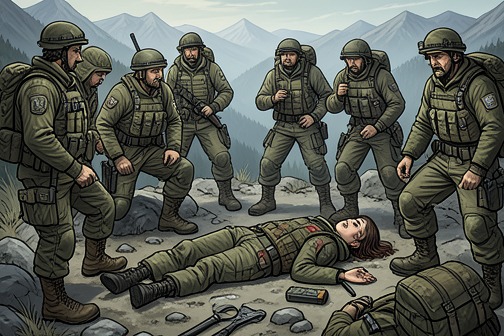
[Amy](entity:character-recall-character-amy-b0c9984bdc2f)’s arrival at the [First Colony](entity:location-recall-location-ae4da2f9f3ed) is both evidence that life persists beyond the colony and a mystery the people within its walls cannot readily welcome. Found gravely wounded and unable to tell her story, the girl called the Girl from Nowhere brings together [Sanjay Patal](entity:character-recall-character-sanjay-patal-1b5342a80ede)’s long-standing dreams, the community’s buried hope, and [Peter](entity:character-recall-character-peter-22e18a2305ec)’s recognition of a promise he had not understood when it was first made.
## Discovery and Significance
Sanjay Patal, Head of the [Household](entity:organization-recall-organization-8cceddf9c58a), considers whether the story began years earlier, with dreams that had accompanied him since childhood in the [Sanctuary](entity:location-recall-location-df14f0ddab0f). He is certain—or nearly certain—that he had never dreamed of the girl herself. She has appeared among them as an impossibility made flesh, absent from both the part of his mind he identifies as himself and the secret, dreaming part he experiences as something separate.
The name Girl from Nowhere has become hers in little more than a morning. It captures what the community knows and what it does not: she has arrived from beyond the known life of the colony, but nothing about her explains where she came from or who might have sent her. Her presence turns the possibility of other survivors into an immediate fact, without supplying the reassurance that fact might ordinarily bring.
For Sanjay, the arrival also gathers strands of his private history around the girl. [Mausami](entity:character-recall-character-mausami-fe0eb6d9db69), his daughter; [Babcock](entity:character-recall-character-babcock-2e8932f05c41), the voice within his dreams; Gloria; and the guns all seem, in his thoughts, to converge in the mystery of her presence. The event therefore enters the story not as a straightforward rescue, but as an encounter whose meaning presses on several unresolved parts of his life at once.
## The Wounded Stranger
When Sanjay sees the girl in the [Infirmary](entity:location-recall-location-infirmary-f03feacdd737), she appears to be sleeping, though he is unsure whether sleep is the right description. He has sent [Sara](entity:character-recall-character-sara-c8609d6444c6) and Jimmy to the outer room and left Ben and Galen guarding the door; he cannot quite explain why he wants to examine the girl alone. Her injury is plainly serious, and what Sara has reported gives him reason to think she may not survive. Yet her quiet breathing and still face resist that expectation, leaving him with the impression that she is more resilient than she looks.
The Household has already examined the girl’s blood-soaked pack, wearing heavy gloves, and burned her clothing and belongings. Its contents offer practical items—a pocketknife, a can opener, and heavy twine—but also objects with no settled explanation: a smooth, rounded rock, a piece of sun-bleached bone, an empty-locket necklace, and a copy of Charles Dickens’ A Christmas Carol Illustrated Edition. The bolt has passed through the book, and its pages are swollen with her blood. [Old Chou](entity:character-recall-character-old-chou-bdfcd61a0735) remembers Christmas as a gathering in the [Time Before](entity:expression-recall-expression-time-before-74b5e81c02e9), like First Night, but the group does not know enough to interpret the book or the rest of the stranger’s possessions. The objects make the arrival more concrete while deepening the uncertainty surrounding it.
With the pack unable to explain her and the girl unable to speak, the people around her have no account of how she reached them. Sanjay understands the broad implication: someone somewhere is still alive, and the girl has somehow made her way to the colony. Yet the expected response—an open declaration that they are not alone—never comes. During the first hours after her arrival, the community answers the news with anxious silence.
## Sanjay’s Buried Hope
Sanjay connects that silence to the teaching people receive when they leave the Sanctuary. [Teacher](entity:character-recall-character-teacher-69708f0c03f0) is dead, but what Teacher told them on the day they emerged still shapes how they understand the world. Once they know it as a place swarming with death, the hopeful child they had been can seem like someone distant from their present selves. Sanjay remembers seeing the pain on Mausami’s face when she came out as one of the worst experiences of his life.
The colony’s response to the girl is thus not simply a failure to recognize good news. Its people have learned to put hope aside, preserve it out of reach, and continue with the duties of living. Sanjay recognizes that he, Gloria, and Mausami have all done this. Amy’s arrival challenges that guarded arrangement: evidence of another living person ought to reopen the world, but the survivors have been formed by a history that makes openness difficult.
This tension gives the discovery its decisive turn. The fact of survival is not enough to restore hope by itself. The girl arrives without an explanation, and her presence cannot undo what the colony has learned about danger or loss; instead, it confronts the community with the possibility it has trained itself not to expect.
## Peter’s Recognition
Peter’s later recollection gives the arrival a different shape. Years afterward, he remembers the events surrounding the girl’s appearance as a sequence of movements: people drawing together, separating, and being pulled back into one another’s paths by an unknown force. The image of that pattern makes the arrival more than a single discovery in the Infirmary; it becomes the beginning of a set of connections whose significance will only become clear in retrospect.
When Peter entered the Infirmary the previous night and saw the girl, his response was recognition rather than horror or surprise. He understood her as the girl of the carousel, the hallway, the hurried movement in the dark, and the kiss followed by a closing door. Her arrival therefore reconnects an earlier encounter to the present emergency. What might have seemed like disconnected moments becomes, for Peter, part of a continuing relation.
The kiss had remained a puzzle to him during the long hours on the catwalk, while he stood [the Mercy](entity:expression-recall-expression-the-mercy-a30fe16a4bb9) for [Theo](entity:character-recall-character-theo-107bd6003b61). Seeing her in the Infirmary changes its meaning: he reads it as a promise to find him. That interpretation does not give the silent girl a spoken explanation, but it makes her earlier gesture legible to Peter as a commitment carried across separation. Her arrival fulfills the shape of that promise without resolving the larger mystery of where she came from.
## Narrative Role
The event is presented through two distinct forms of looking back and looking inward. Sanjay’s perspective makes Amy’s presence collide with the colony’s learned fear and his own dreams; Peter’s later recollection arranges the surrounding encounters into a pattern that he could not fully see at the time. Together, their responses prevent the arrival from being reduced to either a hopeful announcement or a medical emergency. It is both, and also the point at which separate histories begin to appear joined.
Amy remains unable to tell her story in these scenes. The people around her inspect her possessions, speculate about the world they signify, and interpret her earlier gestures, but they cannot establish who brought her there or what happened before she arrived. That silence keeps the discovery open-ended. The colony has proof that it is not alone, yet the person who carries that proof is also the one person who cannot explain it.
Event 35
The Colony’s Dark Night
[The Colony’s Dark Night](entity:event-recall-event-the-colony-s-dark-night-f06c39ed8ec6) is the catastrophe that marked the [Colony](entity:location-recall-location-colony-b1797dbf3402)’s beginnings and remained a defining wound in its history. The event is recalled through the losses it caused, the community’s lasting isolation, and the competing ways survivors remember what happened: as private grief, as a reason to fear newcomers, and as a past that must be recorded before it disappears.
## The remembered catastrophe
In [Peter](entity:character-recall-character-peter-22e18a2305ec)’s recollection of the Colony’s history, Dark Night is the event in which [Liza Chou](entity:character-recall-character-liza-chou-676a3ad72a49) and her family were lost, either killed or taken up. Peter remembers Liza from their childhood in the [Sanctuary](entity:location-recall-location-df14f0ddab0f), where she had been one of the older children. Years later, when [Alicia](entity:character-recall-character-alicia-1f68a746a0ea) says she thinks she has seen Liza, that uncertain sighting brings the catastrophe’s unresolved losses into the present: Peter remembers the name, but not even whether Liza was killed or taken up.
[Auntie](entity:character-recall-character-auntie-c55342ae0d86)’s account of the First Night gives the catastrophe a broader communal frame. She remembers the children being taken to the Sanctuary and told that its lights and walls would protect them until the war was over. The promised return of the [Army](entity:organization-recall-organization-army-4156bb3447b9), with more children and soldiers, never came. After the buses and trucks left, the gates were sealed; the lights came on so brightly that they blotted out the stars. Auntie and Terrence stood outside together, understanding that this was where they would live from then on. In her memory, the beginning of life inside the Colony is inseparable from the loss of the world beyond it.
## Losses carried across generations
The catastrophe’s consequences persist in individual lives as well as in the Colony’s origin story. Auntie remembers people who died, including Terrence, who was taken up at twenty-seven, and Lucy, who died in childbirth. She also remembers those who ended their own lives, whose absence remains especially difficult for her to think about. The people of the First Night have mostly been dead or taken up for so long that their names have faded from common memory; Auntie’s recollection resists that erasure by holding particular people and losses together.
The dead and missing are not only a matter of the past. When [Sam Chou](entity:character-recall-character-sam-chou-453081746287) blames the Walker girl for the deaths of eleven people and calls for her and [Caleb](entity:character-recall-character-caleb-685d38d3de8f) to be put out, fear turns the Colony’s history of loss into an argument for expulsion. The crowd takes up his demand in a growing chorus. Peter sees that the community’s restraint has given way and that the scene is on the verge of violence. Dark Night’s remembered danger thus becomes part of the logic by which frightened survivors judge a new crisis, even when the girl’s responsibility has not been established.
## Memory as a record
Auntie treats remembrance as work that would otherwise go undone. She writes not only how the community came to live in the Colony, but also about the [Time Before](entity:expression-recall-expression-time-before-74b5e81c02e9) and the people who have since died or been taken up. Her memory book is a handmade volume wrapped in lambskin, filled with small handwriting made with a crow feather and homemade ink; she makes its paper from boiled sawdust, forming sheets on old window screens. The material care of the book answers the fragility of the history it holds: individual names and experiences can vanish unless someone records them.
Auntie says she writes about the world before, the train that brought them to the Colony in the fire, and the people she remembers, so that someone may someday want to know what happened there. Her account also establishes the emotional limits of remembering: she describes missing people, but says the hardest memories are of those who chose to end their lives. The archive preserves grief without making every loss equally speakable.
## A history told in layers
The event reaches the reader through recollection rather than a single complete account of the catastrophe itself. Peter’s uncertainty about Liza and Auntie’s personal memories preserve different scales of the past: one childhood acquaintance whose fate remains unclear, and a community formed by isolation and repeated loss. Later, [Sara Fisher](entity:character-recall-character-sara-fisher-f6ac279572de)’s journal is presented as a document at a conference devoted to the [North American Quarantine Period](entity:state-recall-state-north-american-quaranti-ac9e278aa0bf), placing a survivor’s account within a future effort to study and transmit the period’s history.
This layered telling makes Dark Night more than a past disaster. The Colony’s present fears, its endangered sense of order, and Auntie’s painstaking record all bear its imprint. The catastrophe has not been reduced to a settled public explanation: its people survive in stories, some named and some nearly forgotten, and the act of preserving those stories becomes part of how the community understands what it has endured.
Event 36
Discovery of the Military Weapons Bunker
[Peter](entity:character-recall-character-peter-22e18a2305ec)’s group discovers the Military Weapons Bunker after [Hollis](entity:character-recall-character-hollis-9dabe1791537) leads them to a featureless rock face at sunset. Concealed doors open into a vast, powered vault, where stored weapons and dwindling but usable energy transform an apparently empty mountainside into both refuge and arsenal. The discovery answers the group’s immediate need for safety while giving physical form to the prospect of another war.
## The concealed entrance
The bunker is where Hollis promised it would be. He guides the group to the place where the third mountain stands between two others, turns east, and stops after half a click. The sun is setting behind them, leaving only a narrow strip of light across the horizon; ahead, they see an unbroken wall of rock. When [Alicia](entity:character-recall-character-alicia-1f68a746a0ea) says she cannot see anything, Hollis explains that the concealment is the point.
With his rifle slung, Hollis scrambles up the rock face. Peter watches him climb about ten meters before he disappears. The disappearance briefly turns the mountain itself into a puzzle: [Michael](entity:character-recall-character-michael-119cca2a9432) asks where Hollis went, and then the face of the mountain begins to move. A pair of doors, camouflaged to blend into the hillside, withdraws into the rock and exposes a dark cavern. Hollis stands at its entrance, having revealed a passage that was invisible from the approach.
## Inside the vault
The opening leads not to a small shelter but to a vast vault carved into the mountain. Rows of shelving run deep into the dark, crowded with pallets of crates stacked high above the group. A forklift stands near the entrance beside a metal panel. When Hollis flips a switch, glowing ropes along the walls and ceiling cast light across the room, while mechanical ventilation starts with an airy hum. The bunker’s scale and working systems make it clear that the mountain hides an engineered installation, not merely a cache.
Hollis activates another switch, bringing a yellow warning beacon to life above the doors. Gears engage, and the doors begin sliding back into their pockets; as they close, bands of shadow pass across the floor. Their hard impact echoes through the vault. For Peter and the others, the closure marks a sharp change in circumstance: they have crossed from an exposed journey into a sealed space that appears to offer safety.
The bunker is technologically equipped, but not self-sustaining. Michael recognizes the lighting as fiber optics and asks about its power source. Hollis explains that a solar array on the mountain’s southern face supplies it, and that Demo found the place through that array. The battery stack can no longer hold much charge, so the group can draw directly from the panels for only a few hours at a time. Portable generators offer another option; nearby, a fuel depot contains gas, diesel, and kerosene that remain usable if drained properly. Hollis judges the available fuel to be more than the group could ever use, even as the failing battery makes clear that [the bunker](entity:location-recall-location-abbbaf79b4b8)’s resources have limits.
## A storehouse for another war
As Peter advances among the shelves, the bunker’s contents change his understanding of the place. Its construction suggests endurance: whoever built it intended it to last. Yet its provisions are not books, food, or the ordinary materials of a home. Peter sees crates of weapons, stored remnants of a lost war and potential instruments in a war still to come. The resemblance he senses between this vault and the library is therefore pointed: both are repositories, but one preserves words and the other preserves arms.
The discovery consequently offers more than immediate shelter. The rock face that concealed the vault protected a stockpile from view, while its remaining lights, ventilation, generators, and fuel make it usable in the present. At the same time, the weakening battery and the group’s dependence on fuel prevent the bunker from becoming an effortless refuge. Its promise rests on what can still be made to work—and on the weapons waiting in its crates.
## Discovery and consequence
Hollis’s knowledge of the site gives the group access to a place they would not have found by searching the bare mountain. His explanation connects the hidden entrance to the solar array and to Demo, who found the bunker by locating that source of power. The group’s entry is thus both a practical discovery and the payoff of information passed along by people who know the terrain and its concealed infrastructure.
The scene’s suspense depends on delayed recognition. First there is only rock; then Hollis vanishes, the mountain moves, and a hidden interior opens into view. That progression turns concealment into revelation without displacing the practical stakes: once inside, the group has light, ventilation, doors that can close, and stored fuel, but it also confronts the scale of the weapons held there. The bunker is at once a haven from immediate danger and a material reminder that the conflict has not necessarily ended.
Event 37
Battle of the Ring
The [Battle of the Ring](entity:event-recall-event-battle-of-the-ring-2b20f37b2917) is the uprising at Haven in which [Peter](entity:character-recall-character-peter-22e18a2305ec)’s rescue party and Olson’s people turn a recurring sacrifice ceremony into an assault on [Babcock](entity:character-recall-character-babcock-2e8932f05c41)’s rule. Its decisive revelation is that Haven’s apparent order rests on a bargain with Babcock: four animals and two people are offered at each new moon to keep the Many away. The battle challenges that bargain, brings Peter’s group into the ring, and places [Amy](entity:character-recall-character-amy-b0c9984bdc2f) within Babcock’s awareness.
## Background and Stakes
Peter’s party has no secure reason to trust Olson, but, as the plan is made, they have no alternative. The group divides its weapons and its approach: Olson and his men will attack from ground level, while Peter and the others enter from above. The ring is the prison’s former central courtyard, roofed over except where part of the dome has fallen away. Guard catwalks remain suspended above the floor, with ducts wide enough for a person to crawl through; stairs at either end descend to three tiers of caged balconies. Olson expects the crowd to fill those tiers and a smaller group to operate the fireline below.
The ceremony explains what the attackers are entering. Babcock is due to come through the roof opening on the east side; four cattle will be driven through a gap in the fireline from the opposite side, followed by two human sacrifices. Olson says the exchange is repeated with every new moon and keeps the Many away. He describes the Many as other virals belonging to Babcock—of his blood—and insists that Babcock does not merely command them: he is them.
Olson also revises the history of Haven’s first settlers. They were not refugees but children brought by train, intending to hide in the tunnels of [Yucca Mountain](entity:location-recall-location-yucca-mountain-fcce97f14e98). Babcock was already there, and the dream began. Olson recounts the belief that killing the woman in that dream binds a person to Babcock and the ring. The account reframes Haven as a place shaped by captivity and ritual, rather than the refuge its existence might suggest.
## The Ceremony Becomes an Assault
At the new moon, Babcock feels hunger and reaches out from what he calls the Place of Return. The human offerings are pushed through the opening; the men who brought them withdraw, and the fire closes behind them. The crowd chants for the ring as Peter listens from a ventilation shaft. He and his companions cannot coordinate their descent with Olson’s group or communicate with those among the crowd, so the attack depends on timing and guesswork.
Peter crawls out onto the catwalk and drops feet-first through an opening, falling farther than expected before striking the metal. His pistol slips away. Below, he glimpses a bound figure in a sleeveless shirt and recognizes the name Armando, then identifies the captive as [Theo](entity:character-recall-character-theo-107bd6003b61). That recognition makes the rescue immediate: the plan is no longer an abstract strike against Babcock, but an attempt to reach Peter’s brother amid the ceremony.
## Resistance and Reversals
[Jude](entity:character-recall-character-jude-c859762b9a2d) is shot by [Hollis](entity:character-recall-character-hollis-9dabe1791537) while Peter confronts him. The wound brings Jude down and ends his immediate threat, but the larger assault is already unfolding around the fireline. [Mausami](entity:character-recall-character-mausami-fe0eb6d9db69) and Amy had entered by the main tunnel shortly before the crowd arrived and hidden beneath the stairs. When Peter calls for Theo to run, Mausami turns to the fuel pump, choosing a lever without knowing its function. She succeeds in stopping the flames. The crowd recoils from the wires, and the ceremony’s controlled boundary gives way to confusion.
Babcock breaks from the cattle and rises into view. In that moment he senses Amy as something outside the Twelve and [Zero](entity:character-recall-character-zero-fcbce7fba002), yet carrying what he perceives as a seed of permanence. The battle therefore changes scale: Amy is not only present in the rescue party but newly registered by the force governing the ring. At the same time, Mausami is shot in the thigh. She recognizes that she has carried out her part of the rescue and thinks of Theo and their unborn son, while the fight around her continues.
## Collapse of the Ring
Babcock launches himself upward and catches a ceiling strut, then lands on the catwalk. His declaration, “I am Babcock. [We are Babcock](entity:expression-recall-expression-we-are-babcock-52455adaaeb3),” gives voice to the collective identity Olson has described: the enemy is not simply one creature but a controlling unity bound to the Many. [Alicia](entity:character-recall-character-alicia-1f68a746a0ea) fires an RPG past Peter. The explosion throws Peter and Alicia backward, and the catwalk begins to fall. Its supports hold briefly before rivets pop and the metal gives way from the ceiling, turning the attackers’ elevated route into a collapsing structure.
The battle thus overturns the ceremony without making the outcome simple. The fireline is stopped, the rescue party reaches the arena, and Babcock becomes directly engaged; but the ring itself is breaking apart, and the people inside it remain exposed to the violence they have set in motion. Its central reversal is from an orderly, repeated sacrifice to a chaotic confrontation in which the settlement’s hidden bargain can no longer protect it.
## Collapse of the Ring
Babcock launches himself upward, catches a ceiling strut, and lands on the catwalk. His declaration, “I am Babcock. We are Babcock,” gives voice to the collective identity Olson has described: the enemy is not simply one creature but a unity bound to the Many. Alicia fires an RPG past Peter. The explosion throws Peter and Alicia backward, and the catwalk begins to fall. Its supports hold briefly before the structure tears from the ceiling, turning the attackers’ elevated route into a collapsing platform.
The battle overturns the ceremony without resolving the danger. Mausami has stopped the fireline, the rescue party has entered the arena, and Babcock is directly engaged; yet the ring itself is breaking apart, leaving everyone inside exposed to the confrontation they have set in motion. The decisive reversal is from a controlled, recurring sacrifice to an unstable assault in which Haven’s hidden bargain can no longer contain the crisis.
## Resistance and Reversals
Jude is shot by Hollis while Peter confronts him. The attack on the ceremony is also underway around the fireline: Mausami and Amy entered through the main tunnel before the crowd arrived and hid beneath the stairs. When Peter calls for Theo to run, Mausami reaches the fuel pump and pulls a lever, not knowing what it controls. The flames die, the crowd backs away from the wires, and the ceremony’s carefully maintained boundary gives way to confusion.
Babcock breaks from the cattle and rises into view. He senses Amy as a presence outside the Twelve and Zero, yet carrying what he perceives as a seed of permanence. The battle therefore changes scale: Amy is not only part of the rescue but has come to the attention of the force governing the ring. Mausami is shot in the thigh; she realizes she has acted and thinks of Theo and their unborn son as the struggle continues.
## Consequences and Significance
The attack turns Haven’s recurring rite into an open challenge to the order it maintained. Peter’s rescue party has found Theo among the captives; Mausami has interrupted the fireline; and Babcock has become aware of Amy, whom he distinguishes from the Twelve and Zero. Yet the assault does not yield a secure escape or a settled victory. Babcock reaches the catwalk, Alicia fires the RPG, and the blast brings the elevated structure down. The ring’s physical collapse mirrors the collapse of the community’s arrangement with Babcock: the sacrifices no longer preserve a controllable boundary, while those who resisted remain caught inside the danger. The battle exposes what Haven’s ritual concealed and forces its inhabitants and rescuers into direct conflict with the power behind it.
Event 38
Peter’s Party Captured by the Second Expeditionary Force
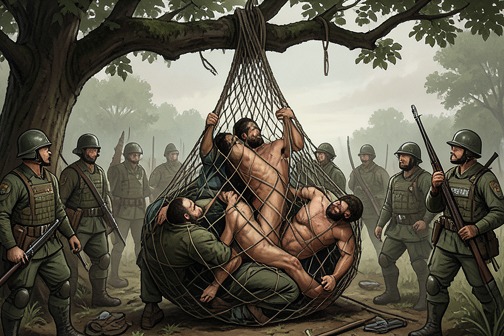
[Peter’s Party Captured by the Second Expeditionary Force](entity:event-recall-event-peter-f9d1e83e4168) marks a sudden reversal on [Peter](entity:character-recall-character-peter-22e18a2305ec)’s journey: a downriver march ends in a concealed net, and the people caught with him are taken to a [Texas](entity:location-recall-location-texas-f19b16f8e87c) garrison. What first appears to be a trap set for unknown intruders becomes the group’s introduction to an organized military community. They arrive with their packs returned but their weapons withheld, under a status the soldiers call protection—neither prisoners nor free to leave as they please.
## The concealed capture
The party is traveling downriver after breaking camp. Near half-day, [Alicia](entity:character-recall-character-alicia-1f68a746a0ea), walking at the head of the line, abruptly stops and signals for silence. She studies the leaf-covered ground, brushes the dead leaves aside, and recognizes the danger only moments before the trap is sprung. A heavy net lifts the entire group into the air, holds them briefly at its highest point, then drops them together. Its ropes leave them tangled in a single captive mass, unable to distinguish where one person ends and another begins.
Peter cannot reach his knife, and cutting the ropes would send everyone plunging to the ground. The net’s spinning motion slows and stops, then accelerates in the opposite direction. As the group turns, Peter sees movement in the brush; a voice below calls them strags, the soldiers’ abbreviation for stragglers. The capture has not been carried out by the infected creatures Peter fears, but by armed people waiting in the woods. That recognition shifts the immediate danger without restoring the group’s freedom: they have been caught by a force with its own territory, methods, and rules.
## Taken under protection
By midafternoon, the soldiers have marched the party north over a ridge and down toward their garrison. Peter’s group had missed the muddy trace leading there; hoofprints and tire tracks mark a route they had not found while traveling on their own. The soldiers return the party’s packs but keep its weapons. Their classification is deliberately intermediate: [Major Greer](entity:character-recall-character-major-greer-cb1418f974c3) says they are under protection, a condition that distinguishes them from ordinary prisoners without allowing them to go where they wish.
The force that has detained them is a long-range patrol unit. [Greer](entity:character-recall-character-greer-16720ef59957) and his fifteen men have been in the woods for weeks. Their equipment and bearing announce a military order before Peter learns its history: they carry rifles and pistols, and some men also have crossbows. Their faces are streaked with mud and charcoal. Greer’s soldiers are mostly quiet, while Muncey, the radio operator, is more talkative; he carries a hand-cranked radio whose generator protrudes from its base. The party has not merely stumbled upon a patrol but crossed into the reach of a force capable of sustained operations and communication.
## The garrison and Texas
The garrison appears in a bowl-shaped valley beyond a hill. Canvas tents and vehicles sit within a timber perimeter wall at least fifteen meters high, its posts sharpened at the top. Floodlights stand around the compound; horses graze in a paddock, and soldiers move among buildings and along a catwalk above the wall. Peter also sees at least half a dozen Humvees, two large tankers, and an assortment of trucks. A large flag flies at the center, red, white, and blue with a single white star. From the ridge, the enclosed base looks to Peter like a whole city and the heart of a world he had believed in without ever actually picturing.
The lights are especially striking to [Michael](entity:character-recall-character-michael-119cca2a9432), who notices that the garrison has them. Muncey describes the area inside the fence as Texas territory, and Greer explains the political fact behind the name: these soldiers are not the [United States Army](entity:organization-recall-organization-united-states-ar-bc24e4a38db1), because there is no U.S. [Army](entity:organization-recall-organization-army-4156bb3447b9) anymore. They serve Texas instead. The capture therefore reveals more than the presence of a patrol. It gives Peter’s party a first view of a successor military power with territory, infrastructure, vehicles, livestock, and a national identity.
## Strangers at the gate
As the party approaches the gate, a crowd of armed men gathers to look at them. Some stand bare-chested despite the cold drizzle; all are smooth-shaven and armed. Greer warns Peter that people will stare and that he will have to get used to it. The attention makes the party’s outsider status visible: the soldiers have brought in people they call stragglers, but Greer says that none are usually brought in this far west. Farther east, he says, stragglers can still be found; in Oklahoma, the [Third Battalion](entity:organization-recall-organization-third-battalion-9920392aea89) once found an entire town. Here, the patrol is not even looking for them.
That answer leaves the immediate purpose of the net unresolved in the available scene. The soldiers have captured Peter’s party, but Greer’s account suggests the patrol did not set out expecting to find people in this remote area. The contrast between the party’s accidental encounter and the garrison’s organized world supplies the event’s larger consequence: Peter’s journey has crossed a boundary into a political and military order he did not know was there. The group is safer from immediate exposure to the wilderness only in a qualified sense, since its weapons are gone and its movement is controlled by those who brought it inside the fence.
## Narrative significance
The capture turns a journey through the woods into an encounter with a community built around armed discipline and defended territory. Its first image is not the flag or the lights but the net: an unseen structure that makes travelers into captives before they can understand what has happened. The garrison then reverses the scale of that first image. What seemed an isolated trap belongs to a much larger system, one with patrols, a chain of command, vehicles, communications equipment, and a claim to Texas.
The sequence also preserves uncertainty rather than resolving the encounter as a simple rescue or imprisonment. Peter’s party is no longer alone in the woods, but it is not free; its packs are restored while its weapons are withheld, and protection is the term applied to that uneasy middle ground. By ending this phase at the gate, the narrative makes entry into the garrison both an arrival and a loss of autonomy, setting up the party’s dependence on a power whose reach and purposes it has only begun to discover.
Event 39
Disappearance of the First Expeditionary Force
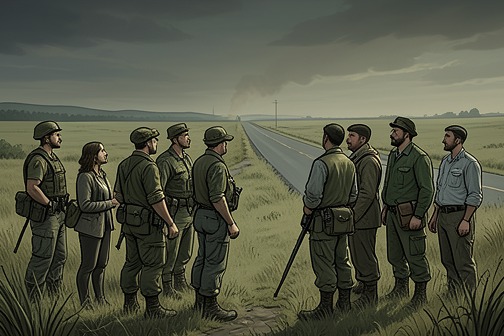
The [Disappearance of the First Expeditionary Force](entity:event-recall-event-15ae229d93e6) became a defining catastrophe in the military history of the post-catastrophe world: Colonel [Niles Coffee](entity:character-recall-character-niles-coffee-03a5abc4b720)’s unit vanished, Coffee was presumed lost with his men, and the Expeditionary more or less disbanded in the aftermath. Decades later, the account is unsettled by [Alicia Donadio](entity:character-recall-character-alicia-donadio-cab4991829b2), who reveals that Coffee survived the disappearance and was killed only three months before she speaks of him. The event thus carries two histories at once: the apparent end of a legendary force, and the long survival of the man whose loss seemed to confirm it.
## The disappearance and its aftermath
The account looks back thirty years, to when [Kerrville](entity:location-recall-location-kerrville-65e5e7477952) sent out the [First Expeditionary](entity:organization-recall-organization-first-expedition-f35bb28de576). At that time, viral creatures were so numerous that, as General Vorhees later put it, a person could hardly walk a hundred meters without encountering one. The force lost half a dozen men on a good day. Against that background, the disappearance of Coffee’s unit did not register as an isolated mystery; it landed as the disaster that seemed to close a chapter in organized expeditions.
Vorhees recalls that Coffee was a legend. When his unit disappeared, people largely concluded that the effort was over, and the Expeditionary more or less disbanded. The force’s collapse was therefore not simply a consequence of losing personnel. The apparent disappearance of its celebrated commander and unit drained the undertaking of the expectation that it could continue, making the event a marker of how dangerous travel beyond established settlements had become.
## [Alicia](entity:character-recall-character-alicia-1f68a746a0ea)’s disclosure
The old account returns abruptly to the present when Alicia stands at attention before General Vorhees and identifies herself through Coffee. She conveys the First Expeditionary colonel’s regards, prompting Vorhees to recognize the name and answer that Coffee was lost with all his men thirty years earlier. Alicia rejects that version: Coffee survived. Her correction transforms the meaning of the disappearance without erasing its consequences. The unit was still believed lost, and the Expeditionary still came close to dissolution, but its commander had not died at the time people assumed.
Alicia then supplies the fact that makes the distinction final: Coffee was killed in action three months earlier. Asked who she is, she identifies herself as his adopted daughter, Private Alicia Donadio of the First Expeditionary, baptized and sworn. Her military bearing and concise identification connect the absent colonel to a continuing personal and institutional legacy. Coffee’s survival was not merely an exception to an old report; Alicia stands before the general as evidence of the life and allegiance that continued beyond the force’s presumed end.
## A changed world
Vorhees places the old disappearance beside the much later journey of [Peter](entity:character-recall-character-peter-22e18a2305ec)’s party from [California](entity:location-recall-location-california-fd5bbc3f2eb4). In Coffee’s day, he says, they would not have made it twenty steps to the latrine. Now they have crossed vast distances, a contrast that prompts Peter to ask whether the viral creatures are dying off. Vorhees does not say they are gone: there are still plenty. Instead, he describes a changed pattern, with creatures gathering in clusters and burrowing into mines, caves, and other enclosed places, while stretches of countryside can now be traveled without seeing one.
The change reframes what the First Expeditionary’s loss can mean. Its disappearance belongs to a period when a force could lose men continuously and the world beyond Kerrville seemed nearly impassable; the later journey reveals that conditions have shifted, not that the old danger was imaginary. The force’s apparent destruction and the present-day possibility of long-distance travel form a stark contrast between two phases of the same devastated world.
## Legacy and unresolved history
The event survives in competing but related forms: as a collective memory that Coffee and his men were lost, as a military rupture that helped bring the Expeditionary to an end, and as a story Alicia can correct from within the force’s own lineage. The discrepancy is precise. Coffee survived the thirty-year-old disappearance, but not the three months immediately preceding Alicia’s disclosure. His later death does not undo his survival; it marks the actual end of a life that the earlier report had prematurely closed.
The scene also makes remembrance consequential rather than merely ceremonial. Vorhees recognizes Coffee’s name, Alicia answers the official account without hesitation, and her adopted-daughter relationship gives that correction a personal as well as military authority. At the same time, the wider account of changing viral behavior resists a simple explanation for the disappearance: the force’s fate is recalled as a landmark of an exceptionally lethal period, while the excerpt does not establish exactly what happened to every member of Coffee’s unit. What it does establish is how deeply the presumed loss shaped the Expeditionary—and how a later encounter could reopen its history.
Event 40
Peter and Amy Leave the Garrison for the Mountains
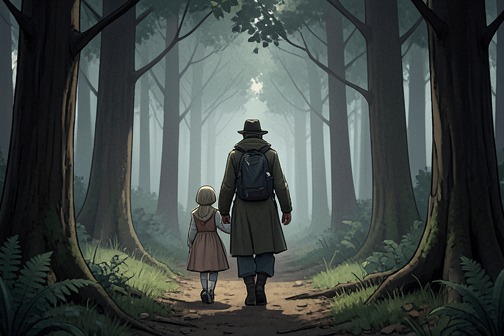
[Peter and Amy Leave the Garrison for the Mountains](entity:event-recall-event-d8cbec9104da) is the quiet departure that turns [Peter](entity:character-recall-character-peter-22e18a2305ec)’s resolve into action: after choosing not to leave with his companions, Peter sets out with [Amy](entity:character-recall-character-amy-b0c9984bdc2f) to continue the mission they came to undertake. Its decisive movement is both outward and inward—away from the garrison, and toward the truth Peter believes he must pursue, even as he gives up the life and relationships he might otherwise have kept.
## The Decision to Continue
Peter’s choice takes shape through what he refuses to ask of others. As he speaks with [Hollis](entity:character-recall-character-hollis-9dabe1791537), he urges him to take the convoy with [Sara](entity:character-recall-character-sara-c8609d6444c6) and [Michael](entity:character-recall-character-michael-119cca2a9432), recognizing that Sara is unlikely to go without Michael. He makes clear that this is not reluctant permission extracted from him but what he wants for them. Hollis, in turn, explains that he loves Sara and invokes Vorhees’s account of the oath taken by his men: he is no longer suited to the task, if he ever was. Peter accepts the change in their companionship without asking Hollis to defend it further.
The question of what Peter himself will do receives an answer he already knows: he will do what they came to do. That answer follows a night of inward reckoning. Remembering [Theo](entity:character-recall-character-theo-107bd6003b61)’s account of their father’s final ride, Peter understands that his father went because he could not bear not knowing. The recollection gives Peter a way to understand his own decision: he feels sadness, but also peace, as though the decision has freed him from the uncertainty that preceded it.
## Remembering and Choosing
Before leaving, Peter visits [Major Greer](entity:character-recall-character-major-greer-cb1418f974c3), who shows him drawings the general had kept so as not to forget them. [Greer](entity:character-recall-character-greer-16720ef59957) gathers the drawings into a cardboard folder and places them in a trunk, then tells Peter that a part of someone lives on as long as another person remembers them. By showing Peter the private images, Greer passes their memory to him as well. The exchange makes remembrance part of the departure: Peter is leaving the garrison, but not without carrying what others have entrusted to him.
Greer recognizes that Peter has made his decision and asks whether he will leave with all five companions or alone. Peter confirms that he will leave in the morning. The choice is therefore not a sudden escape but a decision stated openly to Greer after Peter has considered what it means for the group. He does not resolve the separation by pretending it costs nothing; rather, the scene places his departure beside the acts of memory and acknowledgment that make it consequential.
## The Farewell to [Alicia](entity:character-recall-character-alicia-1f68a746a0ea)
Peter’s departure also requires him to give up Alicia. He understands what they mean to each other, and the recognition brings neither surprise nor regret so much as gratitude and clarity: he knows that he is giving her up. He draws her into his jacket and holds her, reversing the earlier goodbye in Vorhees’s tent, when she had held him. The repeated gesture turns the earlier scene around; this time Peter is the one who offers the embrace, and Alicia is the one who grows still within it.
Alicia recognizes what is happening. Peter says that she has looked after him long enough and that he wanted to thank her. He then walks away, leaving her alone in the icy wind outside the silent barracks. The farewell is not presented as a quarrel or a repudiation of their bond. Its force comes from Peter’s gratitude and from the tenderness with which he makes a choice that separates them.
## Preparing to Leave
Peter does not sleep well. In the final hour before dawn, unable to wait any longer, he rises and packs with the cold in mind. He takes blankets, extra socks, sleeping sacks, ponchos, and a tarp with sturdy rope; on his way back from the barracks the previous night, he had also taken an entrenching tool, a hand axe, and two heavy parkas from the supply tent. The inventory makes the journey tangible: Peter is not simply declaring an intention but equipping himself and Amy to travel through winter conditions.
Hollis is still asleep, his bearded face buried in blankets, when Peter leaves. Outside, the cold takes his breath; the garrison is quiet, though a few men are moving, and smoke and warm food drift from the mess. Peter does not stop to eat. In the women’s tent, he finds Amy alone on her bunk with a small pack on her lap. He has told her nothing beforehand, and Sara is still in the infirmary with Sancho and the others. When Amy asks whether it is time, Peter tells her it is.
## The Ride into the Breaking Day
At the gate, Peter turns to Amy, who is sitting above him, and asks whether she is ready. She nods, snow caught in her hair and on her lashes, and gives him a faint smile. Eustace helps Peter up onto the horse. Peter gives Eustace his blade and asks him to deliver it to Major Greer, trusting Greer to understand the gesture; the weapon remains behind even as Peter leaves.
The gate opens. Peter takes one last look toward the barracks, which remain quiet and unchanged, and silently says goodbye before urging the horse forward. He and Amy ride out into the breaking day. The unchanged garrison emphasizes the finality of the movement: no alarm or confrontation drives them away. Instead, the departure completes Peter’s decision, carrying him and Amy from the safety and relationships of the encampment toward the mission still ahead.
Event 41
Lacey Detonates the Underground Bomb, Killing Herself and Babcock
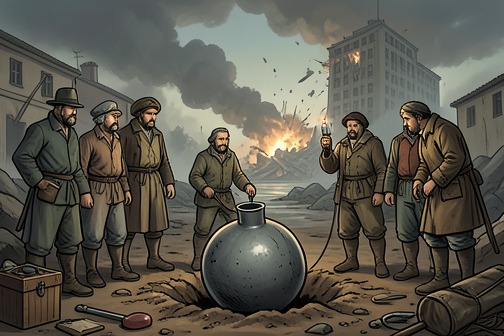
[Lacey Detonates the Underground Bomb, Killing Herself and Babcock](entity:event-recall-event-526c10069d4c) is the culmination of [Lacey](entity:character-recall-character-lacey-35e443bc02d4)’s years-long vigil: she activates a half-kiloton device beneath the Chalet, deceives [Peter](entity:character-recall-character-peter-22e18a2305ec) and [Amy](entity:character-recall-character-amy-b0c9984bdc2f) into escaping without her, and draws [Babcock](entity:character-recall-character-babcock-2e8932f05c41) into the blast. The act destroys the place where the viral subjects were made and costs Lacey her life; in its aftermath, the narrative turns toward the revelation of Amy as a figure bound to the Twelve and to [Zero](entity:character-recall-character-zero-fcbce7fba002).
## Causes and Purpose
The bomb had been installed as a fail-safe in case the virals escaped. Jonas had explained its scale and limits to Lacey: it was powerful enough to destroy the Chalet and its underground floors, concealing what had happened there, but small enough not to register on satellites. When the upper levels lost power and [Sykes](entity:character-recall-character-sykes-b45c9b02ba34) was gone or dead, Jonas could not bring himself to set it off with Amy still present. Lacey, by contrast, accepts the task once Peter and Amy can be sent away from the blast.
Her choice is more than a response to the facility’s danger. She understands the place itself as something that must be erased, and casts its destruction in the terms of a new beginning: as God wiped away the world in Noah’s time, she imagines becoming the waters that make another world possible. This conviction connects the bomb’s practical function—to destroy the Chalet and hide its history—to Lacey’s belief that the destruction can also release what remains trapped there.
## Setting the Bomb and Saving Peter and Amy
With Peter and Amy watching, Lacey kneels beside the small, suitcase-shaped military device. She follows Jonas’s instructions, opens its panel, and types ELIZABETH into the keyboard. After the screen prompts her for a time, she enters five minutes and confirms the countdown. These precise steps make the act deliberate: the bomb is not an accidental detonation or a weapon aimed at Peter and Amy, but a timed sacrifice arranged to give them a chance to leave.
Lacey then leads Peter and Amy down the hall toward the tunnel door, telling them that they must get out immediately. Once they are on the far side, she closes the door and drops the bolts, leaving them locked away from her. Amy calls for her, but Lacey continues the deception because she believes Amy must survive and, in time, help the others reach their final passage. When she is sure the two have gone, Lacey releases the bolts and opens the door again. Alone, she waits at the entrance and calls the virals toward the place where they were made.
## Babcock and the Final Confrontation
The countdown gives Lacey only minutes. She sees Babcock at the mouth of the tunnel and takes his arrival as confirmation that her long vigil has not been in vain. The scene frames their final meeting through her religious understanding: she regards Babcock as a being of terrible design and sees his presence as part of the divine purpose she believes she has served. Rather than flee, she runs into the tunnel, drawing him farther inside and away from Peter and Amy.
The pursuit carries Lacey back through the Chalet’s rooms, among the equipment of its former experiments. When Babcock confronts her, she identifies herself as one of the Twelve. As the timer reaches zero, the bomb collapses in on itself and kills them both. The blast fulfills the device’s intended role against the facility while completing Lacey’s decision to remain behind and ensure Babcock is caught in its destruction.
## Consequences and Significance
Lacey’s sacrifice separates Peter and Amy from the danger long enough for them to escape, but it also closes the story of the Chalet through the same act that destroys it. The bomb is simultaneously a military fail-safe, an instrument for erasing evidence, and the means by which Lacey acts on her belief that the place of the virals’ creation must be wiped away. The countdown makes the choice irreversible; the locked door makes clear that she will not let Peter and Amy share its cost.
After Lacey’s death, the narrative shifts to Amy’s identity. It describes her as one of the Twelve and also as the other one, Zero, calling her the Girl from Nowhere and the one who lived a thousand years. That revelation places Lacey’s last act beside a larger transformation: she dies trying to free the virals and entrusts Amy with the knowledge that will make their final passage possible. Her vigil ends in death, but the act opens onto the possibility of release for those the Chalet made.
Event 42
Mountain Cabin Battle and Alicia’s Infection
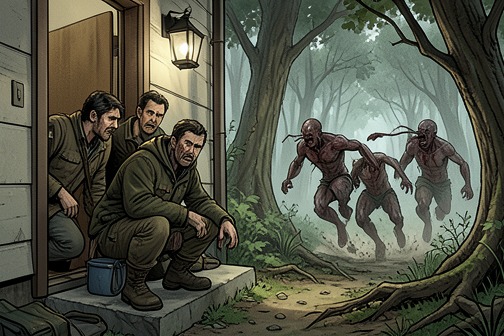
The [Mountain Cabin Battle and Alicia’s Infection](entity:event-recall-event-01acd5861b41) is the assault on a mountain house where a small group of survivors makes a stand against the infected. Its decisive turn comes when [Alicia](entity:character-recall-character-alicia-1f68a746a0ea), after directing the defense, is overwhelmed as she tries to hold the bedroom; the group survives the immediate attack, but Alicia’s infection brings the danger inside the shelter and leaves [Peter](entity:character-recall-character-peter-22e18a2305ec) confronting the consequences at close range.
## Approach to the House
The battle begins with the group racing toward gunfire at dawn. After cresting a ridge, [Michael](entity:character-recall-character-michael-119cca2a9432) sees a house below and horses outside; [Sara](entity:character-recall-character-sara-c8609d6444c6) and Alicia are waving from the doorway. The infected are close behind, moving through the trees, so the newcomers rush down the embankment and into the house. [Greer](entity:character-recall-character-greer-16720ef59957) and [Hollis](entity:character-recall-character-hollis-9dabe1791537) are already inside, carrying a tall chest of drawers, and Michael warns them that the creatures are right behind.
The house offers a place to regroup, not lasting safety. The group’s hurried arrival and the infected’s immediate pursuit make the defense a continuation of the chase rather than a planned engagement. With the threat at the doors and windows, the survivors have little time to choose where to stand or how to protect one another.
## The Defense Breaks
The infected strike the doors and windows together, and breaking glass and splintering wood announce that the house’s boundary is failing. Peter is bracing a bureau with his shoulder when the impact throws him backward into [Amy](entity:character-recall-character-amy-b0c9984bdc2f). Everyone fires: Hollis and Greer from the bedroom, and Alicia, Michael, Sara, Amy, and Peter from elsewhere in the house. Alicia calls for a retreat when the door begins to collapse.
Peter pulls Amy into the bedroom, where Hollis holds the window. Greer is down beside the bed with a head wound, but he insists that what struck him was only glass. Alicia changes her magazine and orders Hollis to keep the window covered. She tells the others to get ready: the bedroom is now the position they will defend. This shift concentrates the group in one room, but the front door gives way before they can secure it.
## Alicia Is Infected
When the door breaks, Alicia turns toward it and fires. She keeps the attackers back through several shots, but by the time the fourth infected reaches her, her ammunition is spent. As she tries to reload, she cannot stop it from reaching her. The attack infects her at the neck, turning the defense’s commander into another casualty of the breach.
Hollis steps forward and shoots the infected, then Peter drags Alicia away from the doorway and tries to stop the bleeding. Her breathing becomes irregular. Amy and Sara are on the floor against the wall, while Peter holds Alicia upright and calls her name; another infected enters through the curtain, and Peter uses his last two rounds, one of them hitting its target. The fight has not ended, but the immediate reversal is unmistakable: the group has lost its secure position, and Alicia’s condition becomes a new crisis within the larger one.
## Consequences and Narrative Significance
The account of Alicia’s fall is recalled by Peter as a sequence of separate details, rather than as a continuous action. That retrospective form fixes the moment in his memory and emphasizes the helpless interval between her empty weapon, her attempt to draw a blade, and the attack. The battle is therefore both a collective defense and a personal memory of failure: Peter is close enough to pull Alicia away and try to help, but cannot undo what has happened.
The scene also places practical leadership under pressure. Alicia directs the retreat and organizes the bedroom defense; Hollis protects the window and stops the infected that attacks her; Peter protects Amy and then tends to Alicia. Their cooperation buys time, but it cannot restore the house’s defenses or prevent the infection. The episode ends with Alicia still breathing, leaving the consequences of the attack unresolved in the immediate scene.
## The Group Under Pressure
The defense depends on a rapid redistribution of responsibility rather than a single fighter’s command. Alicia calls for a retreat as the entry gives way, then chooses the bedroom as the place to hold; Hollis covers the window, Greer remains beside the bed despite being hurt, and Peter moves Amy out of the exposed room. When Alicia falls, Hollis immediately shoots the attacker, while Peter pulls her from the doorway and tries to help her. The sequence shows how each person’s action answers an urgent failure elsewhere, yet even coordinated effort cannot make the house secure again.
## Peter’s Recollection and the Unfinished Fight
Peter later remembers Alicia’s fall not as a blur, but as a sequence of separate details: the last shell casings striking the floor, the empty clip dropping as she reached to reload, and the infected reaching her before she could draw her knife. That fragmented order gives the moment the shape of a memory that cannot be revised: the attack arrives between one defensive action and the next. After Hollis shoots the infected, Peter pulls Alicia away and holds her, trying to stop the bleeding. Her breathing is already uneven. When another infected enters through the curtain, Peter fires his final two rounds; the first misses, the second hits. Even that immediate response does not settle Alicia’s fate. The scene closes with her alive but gravely affected, leaving the consequences of the infection open.
## The Last Defensive Actions
With Alicia down, Peter pulls her away from the doorway and tries to help as Hollis shoots the infected that attacked her. The remaining group stays under fire: Amy and Sara shelter against the wall, and another infected enters through the curtain. Peter has only two rounds left; the first misses, the second hits. His last shot answers the immediate threat, but neither restores the house’s defenses nor reverses Alicia’s infection. The scene ends with her still breathing, the survivors’ position compromised, and the outcome of her condition unresolved.
Event 43
Peter’s Party Returns to the Farm and Reunites with Family
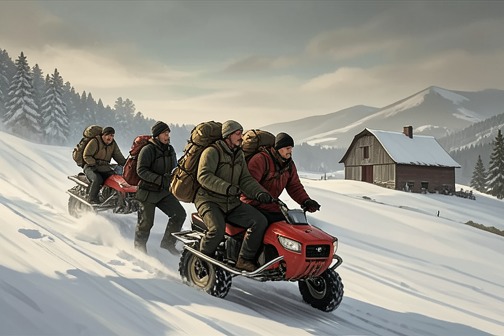
[Peter’s Party Returns to the Farm and Reunites with Family](entity:event-recall-event-bce8a6318003) is the homecoming that closes the party’s 112-day stay in the mountains and brings [Peter](entity:character-recall-character-peter-22e18a2305ec), [Theo](entity:character-recall-character-theo-107bd6003b61), and [Mausami](entity:character-recall-character-mausami-fe0eb6d9db69) back together after separation, danger, and a new birth. Its emotional turn is from apparent absence to unexpected life: Peter approaches a quiet, altered [farmstead](entity:location-recall-location-fa4374b9c41f) fearing that his family is gone, then finds Theo and Mausami asleep beside their baby. The reunion offers a place to return to, but not a return to the old order; the family has changed, and [Conroy](entity:character-recall-character-conroy-88b97a2c245c) has died in their absence.
## The Descent from the Mountain
The party comes down as the river is thawing, traveling over the snow with packs and blades. [Michael](entity:character-recall-character-michael-119cca2a9432) drives the Sno-Cat, [Greer](entity:character-recall-character-greer-16720ef59957) rides beside him, and the others travel above them, facing wind and sun as they descend into country they have reclaimed. The movement is deliberately collective: they come down as one, and the plain statement that they are going home gives their journey a destination defined by attachment as much as geography.
Their departure follows 112 days on the mountain. During that time they saw no viral. Snowfall had trapped them for days in an old hotel [lodge](entity:location-recall-location-47b34bba89ec), where they found a large stone building secured with plywood and screws, but no bodies. The rooms were furnished and the kitchen stores remained, yet the house was cold and silent. That uneasy refuge forms the immediate background to the descent: the group has endured isolation in a place that offered shelter without certainty, and now must carry its hard-won survival back into the valley.
## The Road Back
At the old iron bridge, the party crosses the river, turns west, spends a night outdoors, and reaches the garrison by the end of the second day. Spring has arrived at the lower elevation; most of the snow is gone, leaving mud across the exposed ground. At the garrison they exchange skis for the battalion’s abandoned Humvee and take food, fuel, and weapons from the underground cache before setting out again.
Their return remains a journey through uncertainty rather than a safe passage. The fuel they can carry should take them as far as the Utah line, perhaps a little farther, after which they may have to continue on foot. They head south around the hills and travel through dry country marked by red rock formations, finding improvised shelter at night in a grain elevator, an empty semi-truck, or a tepee-shaped gas station. The virals associated with [Babcock](entity:character-recall-character-babcock-2e8932f05c41) are gone, but the group knows that others remain, including those associated with Sosa, Lambright, Baffes, Morrison, and Carter. They have learned not only what the Twelve were, but that the other virals can be set free; that knowledge accompanies them home without making the road safe.
## An Empty House, Then a Reunion
When the party approaches the farmstead from the south, [Sara](entity:character-recall-character-sara-c8609d6444c6) drives the Humvee while Peter watches through binoculars. The dusty wind and falling temperature make the approach difficult, and the houses initially seem as empty and abandoned as they had before. Theo and Mausami do not come out at the sound of the engine. Sara brings the vehicle to the main house, switches it off, and the others get out into the silence.
[Alicia](entity:character-recall-character-alicia-1f68a746a0ea) offers to go in, but Peter insists on taking the lead. Inside, he immediately sees signs that the house has changed: the furniture has been rearranged to make it more comfortable, and old photographs stand on the mantel above a cold hearth. The kitchen is tidy, with everything scrubbed and put away. These domestic details deepen his fear rather than dispel it; the rooms look cared for, but no one answers when he calls for Theo, and the fire has long since gone out.
Peter checks one bedroom and finds it empty before opening the other. There he discovers Theo and Mausami asleep in the big bed. Mausami faces away beneath a blanket, while Theo lies on his back with his left leg splinted from ankle to hip. Between them, wrapped in heavy swaddling, is their baby, whose small face is visible through the opening. The group’s return thus finds the family not merely surviving but enlarged: Theo and Mausami have a child, and the house’s quiet has concealed a life that Peter had feared was lost.
Theo wakes, smiles despite his broken teeth, and greets the unexpected visitors with, “Well, I’ll be damned,” followed by, “Will you look what the wind blew in.” His welcome breaks the tension of Peter’s arrival. The greeting is casual and affectionate rather than ceremonious, and its surprise emphasizes how far the travelers have come from the household they left behind.
## The Cost of Coming Home
The reunion does not erase what happened during the party’s absence. Mausami’s first request is that they bury Conroy. She says she would have done it herself, but she could not manage it while caring for Theo and the baby; the animal had been left where he was for three days after the attack. Peter carries what remains to the yard of graves, where [Hollis](entity:character-recall-character-hollis-9dabe1791537) and Michael have dug a hole beside the others and marked its boundary with stones.
Conroy’s grave is made to resemble the existing graves, so that without the freshly turned earth it would be difficult to distinguish. The detail gives the homecoming a second, quieter movement: the living return to one another, but the return also requires the dead to be acknowledged and placed among the community’s other losses. The family’s recovery is therefore neither a clean restoration nor a simple happy ending. The farmstead is home again because its people have found one another there, yet its altered rooms, Theo’s splinted leg, the newborn, and the new grave all show that the household has been remade by what happened while the travelers were away.
## Narrative Significance
The event gives the journey a recognizably mythic shape of departure and return, but the homecoming is presented through concrete domestic thresholds rather than triumph. The party descends together into reclaimed country, crosses back through the garrison, and follows a precarious route toward the farm; at the last, the decisive discovery is not a victory over the remaining danger but a sleeping family in a familiar bed. The house’s ordinary arrangement of photographs, furniture, and kitchenware becomes evidence that life has continued in the travelers’ absence.
The scene also sets collective movement against intimate recognition. The party returns as a group, but Peter enters alone, calls for Theo, and finds the answer in the room where Theo, Mausami, and their child lie together. Then the request to bury Conroy draws the wider group back into shared care. Home is consequently both a family reunion and a communal duty: people come back to one another, and they make room among the graves for the life that did not make it back.